
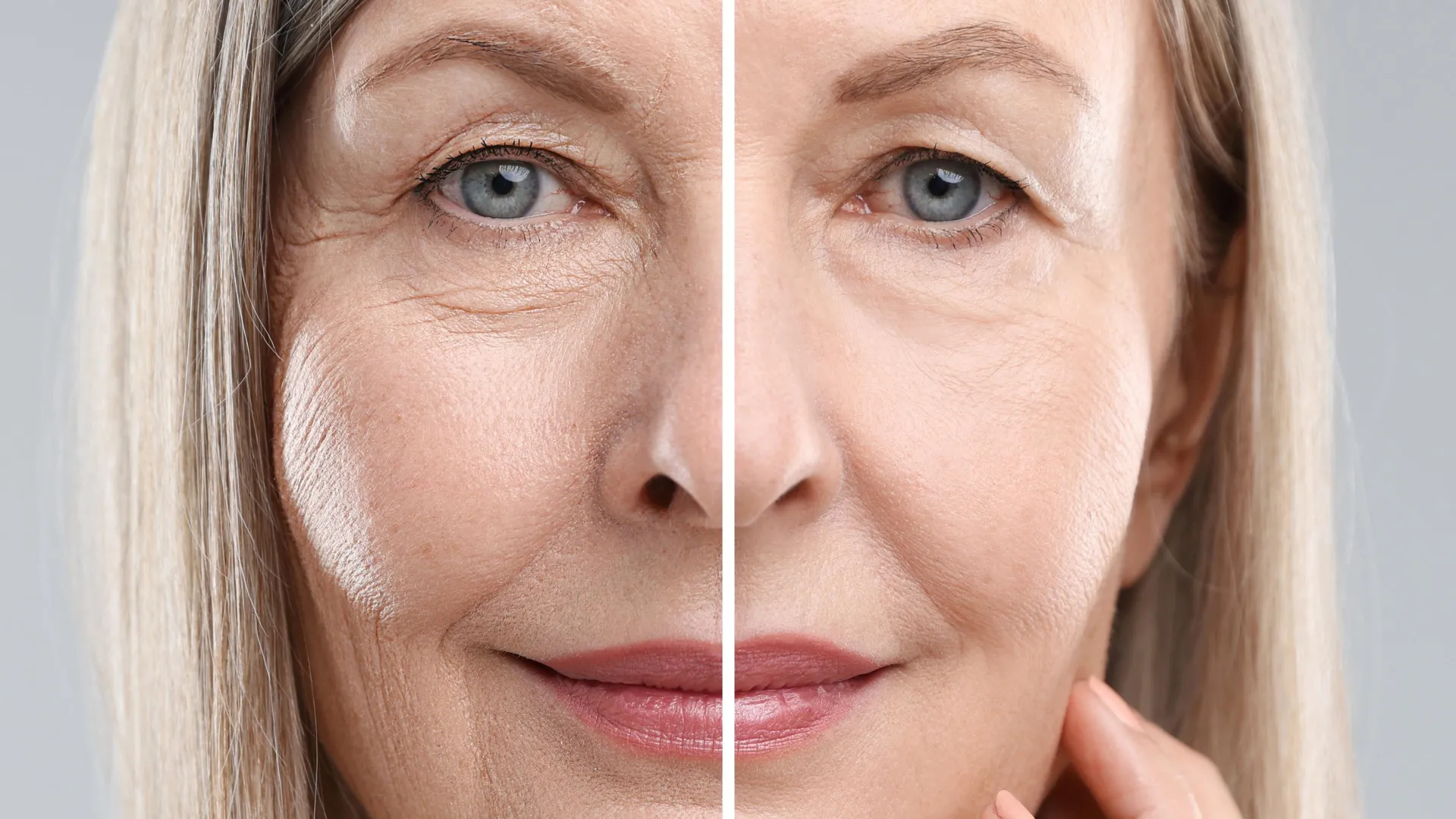
A groundbreaking investigation from the NYU School of Global Public Health indicates a tangible connection between apprehension regarding the aging process and accelerated biological aging at the cellular level, particularly observed in women. This research posits that the subjective experience of fearing one’s own aging is not confined to mental anguish but can manifest as measurable physical changes, potentially influencing long-term health outcomes.
"Our findings suggest that an individual’s internal perception of aging may be directly influencing objective markers of biological senescence," stated Mariana Rodrigues, a doctoral candidate at NYU’s School of Global Public Health and the lead author of the study, which has been published in the esteemed journal Psychoneuroendocrinology. She further elaborated, "Concerns about growing older are not merely psychological burdens; they appear to leave a discernible imprint on the body, carrying significant health implications."
It is a widely acknowledged phenomenon that a considerable portion of the adult population harbors anxieties related to aging. These concerns frequently encompass fears of diminishing physical capabilities, susceptibility to illness, and the potential loss of autonomy. Prior scientific inquiry has already established that persistent psychological stress can exert an influence on the biological aging trajectory, often through mechanisms involving epigenetic modifications – alterations that dictate how genes are expressed without changing the underlying DNA sequence.
"While established research has consistently demonstrated associations between general anxiety, depression, and overall mental well-being with a spectrum of physical health conditions, the specific link between the act of worrying about aging and the biological processes of aging itself has remained an area largely unexplored until now," Rodrigues observed.
Vulnerability of Women to Aging-Related Apprehensions
The research highlights a potential heightened susceptibility among women to developing anxiety surrounding the aging process. Societal pressures that often emphasize youthfulness and specific aesthetic standards, coupled with concerns related to reproductive capacity, can contribute to elevated stress levels, particularly during midlife.
Rodrigues further elaborated on this point, explaining, "Women navigating midlife frequently find themselves juggling multiple responsibilities, including the care of their own aging parents. Witnessing the physical and cognitive decline of older family members can understandably trigger anxieties about their own future health and well-being."
Methodology: Unpacking the Study’s Design and Epigenetic Markers
To rigorously investigate the intricate relationship between anxiety about aging and the biological mechanisms of aging, the research team meticulously analyzed data collected from 726 women who were participants in the Midlife in the United States (MIDUS) study. These participants were prompted to report the extent of their worries concerning aspects such as diminishing physical attractiveness, the onset of health complications, or the possibility of being past the optimal age for childbearing.
Crucially, blood samples from these participants underwent sophisticated analysis utilizing two well-validated epigenetic clock methodologies. The DunedinPACE clock was employed to quantify the rate of biological aging, essentially measuring how quickly an individual’s body is aging at a cellular level. Concurrently, the GrimAge2 clock was used to estimate the cumulative biological damage that has occurred over time.
The findings revealed a discernible pattern: women who articulated higher levels of anxiety about the prospect of growing older exhibited indicators of accelerated epigenetic aging, as measured by the DunedinPACE clock. Existing scientific literature has previously established that this accelerated epigenetic aging is correlated with increased physical frailty and a greater propensity for developing age-related diseases.
Interestingly, not all categories of aging-related concerns exerted an equal influence on biological aging markers. Specifically, worries directly pertaining to declining health demonstrated the strongest correlation with a faster rate of biological aging. In contrast, anxieties focused on physical appearance and reproductive potential did not exhibit a statistically significant association with epigenetic aging. The researchers surmise that concerns about health may possess a more enduring and pervasive nature over the lifespan, whereas worries about beauty and fertility might naturally diminish in intensity as individuals advance in age.
The Intertwined Nature of Mental and Physical Health
The implications of these findings are profound, serving to underscore the deeply interconnected nature of mental and physical health throughout an individual’s life. This connection often persists even when these two domains are addressed and managed in separate clinical or societal frameworks.
Adolfo Cuevas, an associate professor of social and behavioral sciences at NYU School of Global Public Health and the senior author of the study, emphasized the significance of this discovery. "Our research successfully identifies anxiety about aging as a quantifiable and, importantly, a modifiable psychological determinant that appears to be actively shaping the biology of aging," he remarked.
However, the researchers are keen to introduce a note of caution regarding the interpretation of their findings. They acknowledge that the study captures a snapshot in time, meaning it cannot definitively establish causality or completely rule out the influence of other contributing factors. For instance, certain coping mechanisms associated with anxiety, such as smoking or excessive alcohol consumption, could potentially mediate the observed link. When the research team incorporated these health behaviors into their statistical analysis, the association between anxiety regarding aging and epigenetic aging weakened to the point where it was no longer considered statistically significant.
Consequently, further longitudinal research is deemed essential to fully comprehend the long-term impact of anxiety about aging on biological aging processes and to develop effective strategies for supporting individuals who grapple with these profound fears.
"Aging is an inevitable and universal human experience," Rodrigues concluded, advocating for a broader societal dialogue. "It is imperative that we initiate a comprehensive conversation about how our collective societal norms, structural frameworks, and interpersonal relationships can better address the multifaceted challenges associated with aging."
Jemar R. Bather, also affiliated with NYU School of Global Public Health, contributed as a co-author to this study. The research received vital financial support from the National Institute of Diabetes and Digestive and Kidney Diseases through grants R01DK137246 and R01DK137805.
About the Author












