
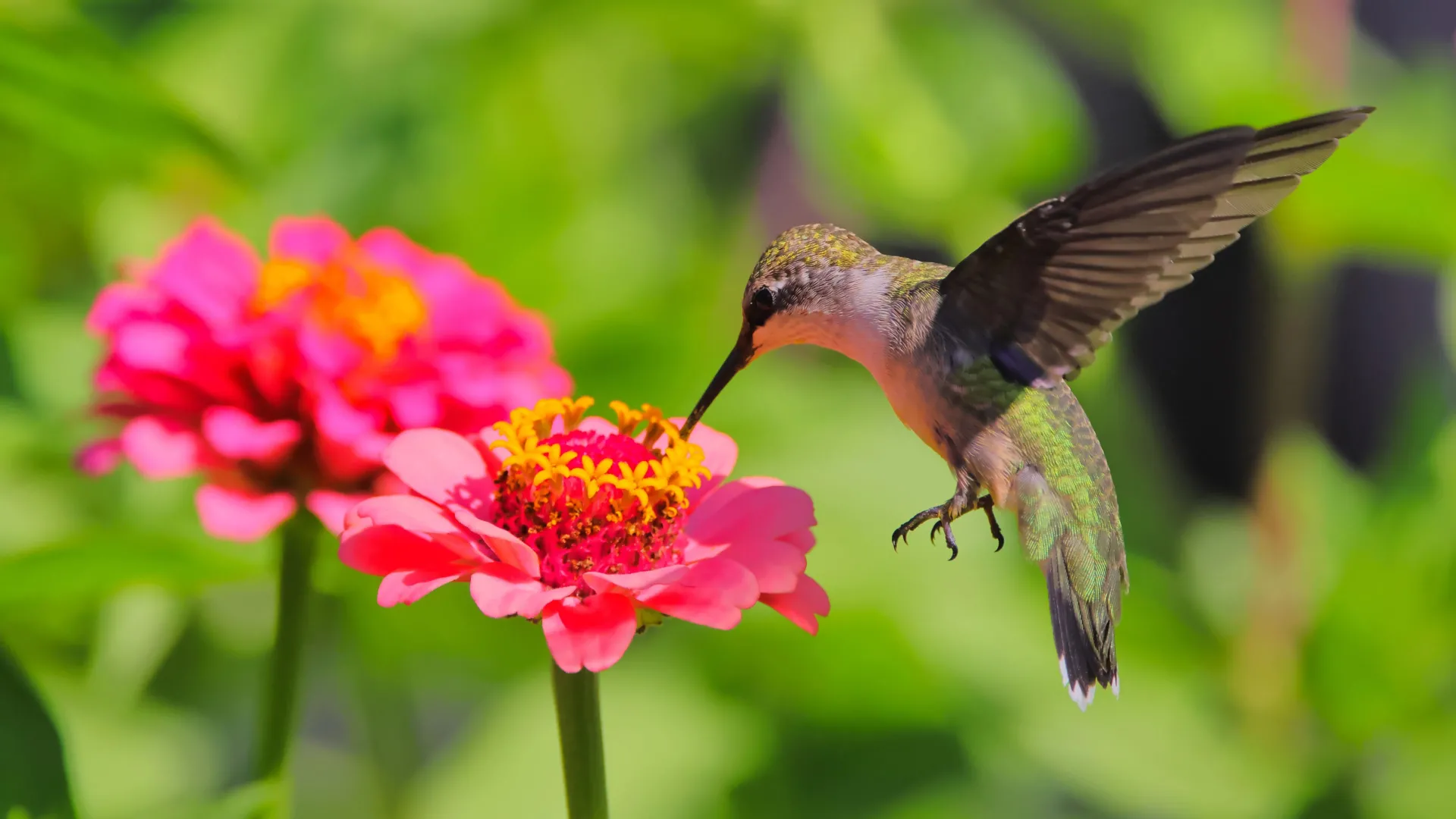
The intricate dance of pollination, wherein bees and hummingbirds traverse from blossom to blossom, facilitating plant reproduction while sustaining themselves on floral sugary secretions, has revealed an unexpected dietary component: minute quantities of alcohol. This discovery, emerging from a comprehensive, first-of-its-kind analysis of alcohol content within floral nectar, indicates that these vital pollinators are regularly consuming ethanol alongside their primary energy source. Biologists at the University of California, Berkeley, meticulously examined nectar samples from a diverse array of plant species, detecting the presence of ethanol in a significant majority of the specimens. Out of 29 plant types investigated, at least one sample from 26 contained measurable amounts of this compound, primarily attributed to the natural fermentation processes of yeasts acting upon sugars. While most detected levels were trace, one notable sample registered an ethanol concentration of 0.056% by weight, a quantity roughly equivalent to one-tenth of a standard proof unit.
The implications of even these seemingly negligible alcohol concentrations are noteworthy when considering the metabolic demands and feeding behaviors of these pollinators. For species like hummingbirds, nectar constitutes a fundamental and substantial source of sustenance, with daily consumption often ranging from 50% to an astonishing 150% of their body weight. Extrapolating from these feeding patterns, researchers have calculated that an Anna’s hummingbird, a common resident along the Pacific coast, might ingest approximately 0.2 grams of ethanol per kilogram of its body mass on a daily basis. This intake is strikingly comparable to the amount of alcohol a human might consume in a single standard alcoholic beverage.
Despite this consistent exposure, bees and hummingbirds do not exhibit overt signs of intoxication. Scientific observations suggest that these creatures consume alcohol incrementally throughout their foraging activities, thereby avoiding the acute effects of inebriation. Prior research conducted by the same scientific team demonstrated that hummingbirds will readily consume sugar water solutions containing up to 1% alcohol, but their feeding frequency noticeably declines when concentrations exceed this threshold. This suggests an inherent ability to regulate their intake, potentially favoring nectar concentrations that do not induce impairment.
Beyond the immediate impact of intoxication, the presence of ethanol in nectar raises questions about its potential influence on pollinator behavior and physiology, particularly given that nectar often contains other bioactive compounds like nicotine and caffeine, known to modify animal responses. The possibility exists that ethanol, even in low concentrations, could exert subtle yet significant effects. Doctoral student Aleksey Maro, a key researcher in the nectar analysis, posited that while hummingbirds are highly efficient metabolic machines, rapidly processing consumed substances, the broader implications of ethanol’s presence are not fully understood. He highlighted that ethanol might possess signaling or appetitive properties, contributing to foraging decisions or other behavioral nuances independent of its intoxicating effects, much like its multifaceted roles in human consumption.
Robert Dudley, a professor of integrative biology at UC Berkeley and a senior figure in the research, echoed this sentiment, suggesting that ethanol might confer adaptive advantages for foraging biology. He speculated that the rapid metabolic rate of these birds likely mitigates severe inebriation, but acknowledged that other consequential impacts on their behavior remain a subject for further investigation. The findings of Maro, Corl, and Dudley, alongside UC Berkeley colleagues Rauri Bowie and Jimmy McGuire, were formally presented in the scientific journal Royal Society Open Science, providing a robust foundation for ongoing research into pollinator-nectar interactions.
Experimental evidence further illuminates the tolerance levels of hummingbirds to alcohol. Earlier studies involving feeders positioned outside Dudley’s office revealed that Anna’s hummingbirds displayed little aversion to sugar water with low alcohol content, below 1% by volume. However, a notable shift occurred at a 2% concentration, where the birds’ visits to the feeder were approximately halved, reinforcing the notion of a regulated intake mechanism. Dudley inferred that concentrations between zero and 1% are likely more representative of naturally occurring levels encountered in the wild, suggesting that pollinators have evolved to navigate these moderate concentrations.
Adding another layer to this understanding, a separate investigation led by former graduate student Cynthia Wang-Claypool identified ethyl glucuronide, a metabolic byproduct of ethanol, within the feathers of hummingbirds, including Anna’s. This biochemical marker strongly indicates that these avian species not only ingest alcohol but also possess the physiological machinery to process it, a mechanism akin to that observed in mammals. Collectively, these research threads converge to suggest a compelling hypothesis: that birds and other animals, potentially including our own evolutionary ancestors, may have developed a tolerance, and in some instances, even a preference for alcohol over extended periods of exposure. Ammon Corl, a postdoctoral fellow involved in the study, emphasized the complementary nature of these findings: laboratory experiments confirm the consumption and metabolism of ethanol, while the current widespread detection in nectar solidifies its natural occurrence in their diet.
To gain a broader perspective on alcohol consumption patterns, the research team quantified ethanol levels using an enzymatic assay and subsequently estimated daily alcohol intake for several nectar-feeding species. This estimation was contingent on their respective caloric requirements and available, albeit limited, detailed feeding data. The focus was primarily on two hummingbird species and three sunbird species from South Africa, which occupy analogous ecological niches to hummingbirds in the Americas, feeding on plants such as honeybush. The researchers then drew comparisons between these avian intakes and those of other animals, including the European honeybee, the pen-tailed tree shrew, fruit-eating chimpanzees, and humans consuming a single standard alcoholic drink daily. The pen-tailed tree shrew emerged with the highest estimated intake at 1.4 g/kg/day, while the honeybee exhibited the lowest at 0.05 g/kg/day. Nectar-feeding birds, in contrast, fell within a comparable range, consuming approximately 0.19 to 0.27 g/kg/day when relying on natural nectar sources. Interestingly, the experimental data from feeders indicated that Anna’s hummingbirds might consume even greater quantities of alcohol from artificially sweetened, fermented sugar water (0.30 g/kg/day) compared to their natural nectar diet.
This comprehensive research initiative is an integral component of a larger, five-year project funded by the National Science Foundation. The overarching goal of this endeavor is to gather extensive genetic data from hummingbirds and sunbirds, aiming to unravel the intricate mechanisms of their adaptation to diverse environmental conditions and varied food sources, including high-altitude living, diets rich in sugars, and nectar that frequently undergoes fermentation. Professor Dudley articulated that these cumulative studies point towards a widespread array of physiological adaptations across the animal kingdom that enable survival and thriving in the ubiquitous presence of dietary ethanol. He further posited that the responses observed in humans might not be universally representative of all primates or animals in general. The possibility of other physiological detoxification pathways or distinct nutritional benefits derived from ethanol for animals with lifelong chronic exposure warrants significant further exploration, underscoring the profound implications of comparative biology in understanding ethanol ingestion.
About the Author












