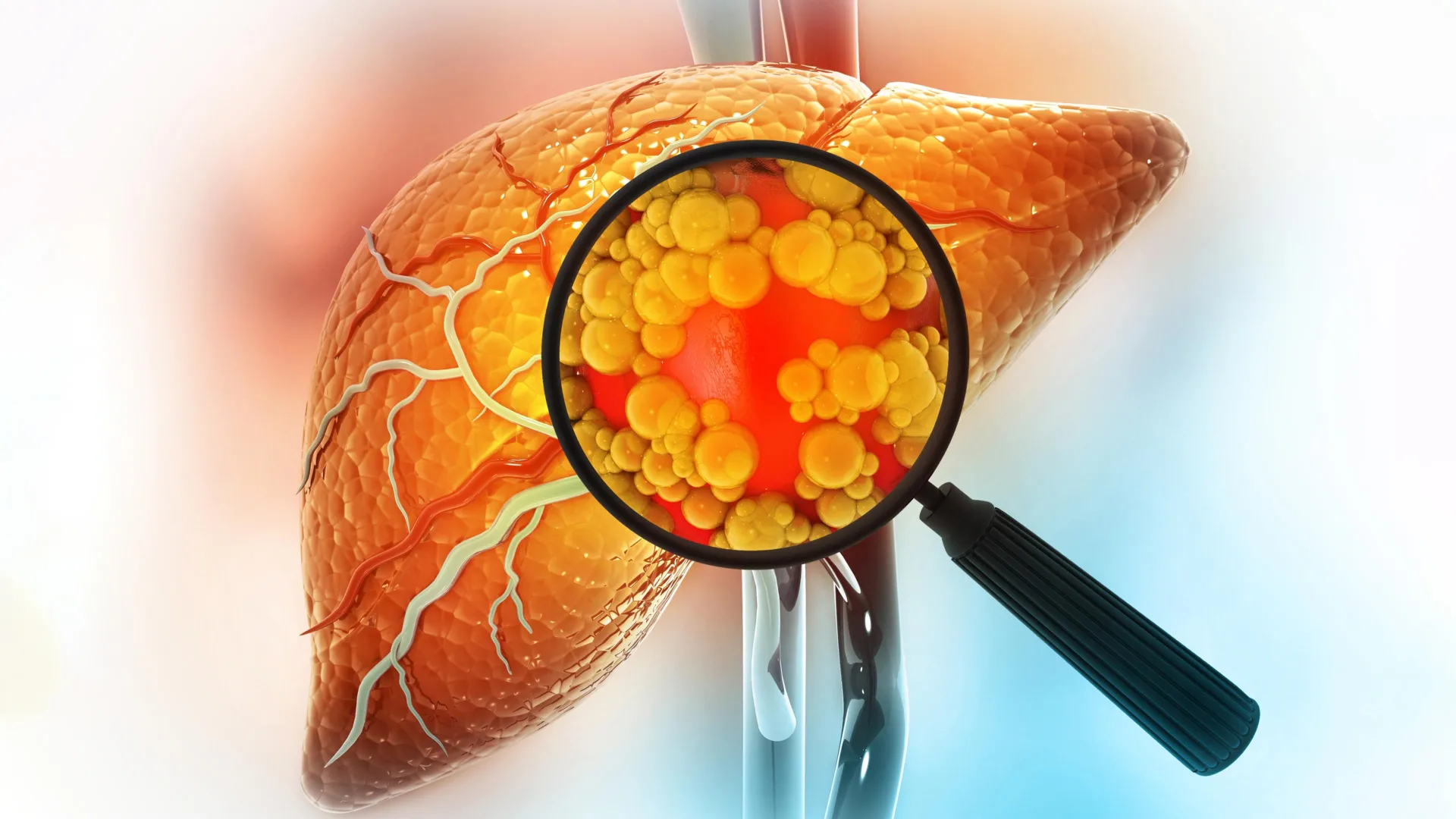
A groundbreaking investigation by researchers at the University of California, Los Angeles (UCLA) has pinpointed a specific type of immune cell that proliferates within aging tissues and plays a significant role in the progression of fatty liver disease, offering a potential new avenue for therapeutic intervention. The study demonstrates that the targeted elimination of these detrimental cells in laboratory animals led to a remarkable abatement of inflammation and a complete reversal of liver damage, even when the subjects continued to consume a diet detrimental to their health. This discovery, published in the esteemed journal Nature Aging, challenges long-held assumptions about cellular aging and immune system function.
The central focus of this research is the phenomenon of cellular senescence, a biological process initiated by cellular stress that halts cell division without triggering cell death. These persistent, non-dividing cells, colloquially termed "zombie cells," remain embedded within tissues, continuously emitting signaling molecules that provoke chronic inflammation and thereby damage neighboring healthy cells. Senior author Anthony Covarrubias, affiliated with the Eli and Edythe Broad Center of Regenerative Medicine and Stem Cell Research at UCLA, eloquently likens the impact of these cells to a single disabled vehicle disrupting traffic flow on a busy highway, emphasizing that even a small accumulation can instigate widespread systemic disruption within an organ.
For a considerable period, the scientific community has debated whether macrophages, the body’s professional phagocytes responsible for clearing cellular debris and pathogens, could themselves undergo senescence. Many researchers expressed skepticism, partly because healthy, functioning macrophages exhibit certain molecular characteristics that overlap with those observed in senescent cells, creating a diagnostic challenge in differentiating between the two states. The UCLA team successfully navigated this ambiguity by identifying a definitive molecular fingerprint. Their meticulous analysis revealed that the co-expression of two proteins, p21 and TREM2, serves as a reliable indicator of macrophages that have entered a senescent state, have lost their functional integrity, and are actively contributing to localized inflammation.
This newly established marker enabled the researchers to observe a striking age-related alteration in the liver’s macrophage population. In young laboratory mice, senescent macrophages constituted a mere 5% of the total macrophage population within the liver. However, as the animals aged, this proportion surged dramatically, reaching between 60% and 80% in older mice, a trend that closely mirrored the observed increase in chronic liver inflammation associated with the aging process. This correlation strongly suggests a direct causal link between the accumulation of senescent macrophages and age-induced liver pathology.
Beyond the natural process of aging, the study unearthed a significant environmental factor contributing to the proliferation of senescent macrophages: elevated cholesterol levels. The researchers discovered that excessive cholesterol can actively induce macrophages to enter a senescent state. In controlled laboratory experiments, when healthy macrophages were exposed to high concentrations of low-density lipoprotein (LDL) cholesterol, they ceased to divide and commenced the secretion of inflammatory proteins, displaying the characteristic p21-TREM2 signature indicative of senescence. Ivan Salladay-Perez, the lead author of the study and a graduate student in the Covarrubias laboratory, explained that while macrophages possess a natural capacity to manage cholesterol, chronic exposure to high levels becomes pathological. He further elaborated that in conditions like fatty liver disease, which are often driven by overnutrition and excessive blood cholesterol, this surplus cholesterol appears to be a primary driver behind the expansion of the senescent macrophage population. This finding has broader implications, suggesting that diets rich in fat and cholesterol might accelerate biological aging by promoting macrophage senescence not only in the liver but potentially in other vital organs such as the brain, heart, and adipose tissue.
To rigorously assess the therapeutic potential of eliminating these senescent cells, the research team administered a compound known as ABT-263, a drug specifically designed to target and eradicate senescent cells, to laboratory mice. The outcomes were profoundly encouraging. In mice that had been deliberately fed a diet high in fat and cholesterol, the administration of ABT-263 resulted in a substantial reduction in liver size, decreasing from approximately 7% of body weight to a healthier range of 4-5%. Concurrently, the body weight of these treated animals also decreased by roughly 25%, falling from around 40 grams to approximately 30 grams. Macroscopically, the livers of the treated mice appeared significantly smaller and healthier, exhibiting a normal reddish hue, in stark contrast to the enlarged, yellowish livers observed in the untreated control group. The results strongly indicate that the selective removal of senescent macrophages can elicit significant metabolic improvements, even in the absence of dietary modifications. Salladay-Perez expressed his astonishment at the findings, noting that clearing senescent cells not only arrested the progression of fatty liver disease but actively reversed its effects.
The investigators sought to determine the relevance of these findings to human liver disease by examining an existing genomic database derived from human liver biopsies. Their analysis revealed that the same senescent macrophage signature identified in mice was significantly elevated in diseased human livers when compared to healthy ones, providing compelling evidence that macrophage senescence may indeed contribute to the pathogenesis of chronic liver disease in humans. This issue carries particular urgency in densely populated areas like Los Angeles, where estimates suggest that between 30% and 40% of residents are affected by fatty liver disease, with even higher prevalence rates observed within Latino communities. The current therapeutic landscape for this condition is limited, and effective early detection tools remain scarce. Covarrubias, who also holds a faculty position in microbiology, immunology, and molecular genetics, described the escalating rates of fatty liver disease in younger individuals as a burgeoning public health crisis, expressing optimism that their research offers crucial insights into the underlying drivers of the disease and identifies specific cell types amenable to targeted therapies.
While ABT-263 proved effective in mice, its inherent toxicity precludes its widespread use in human patients. The UCLA research team is now actively engaged in screening for safer pharmaceutical compounds that can selectively eliminate senescent macrophages without inducing adverse side effects. Furthermore, their ongoing investigations are exploring whether similar cellular senescence mechanisms are at play in other age-related diseases. For instance, in the central nervous system, microglia, the resident macrophages of the brain, may become senescent when confronted with substantial amounts of cellular debris, potentially contributing to neurodegenerative conditions such as Alzheimer’s disease.
These findings lend significant support to the geroscience hypothesis, a theoretical framework positing that a common underlying mechanism of aging drives multiple age-related diseases. In this context, the accumulation of senescent macrophages could be implicated in a spectrum of conditions, ranging from metabolic disorders like fatty liver disease to cardiovascular diseases such as atherosclerosis, neurodegenerative diseases like Alzheimer’s, and even certain forms of cancer. Salladay-Perez articulated this broader perspective, suggesting that a comprehensive understanding of the fundamental processes that fuel inflammation during aging could pave the way for treatments that address not only fatty liver disease but also atherosclerosis, Alzheimer’s, and cancer, all by targeting these shared mechanisms. The study received vital financial support from the National Institutes of Health, the Glenn Foundation for Medical Research, the American Federation for Aging Research, and the UCLA-UCSD Diabetes Research Center.
About the Author