Maintaining physical vitality becomes increasingly significant with age, with a particular emphasis on preserving muscle mass and functional strength. For individuals navigating their sixties and beyond, the focus often shifts from high-intensity training to sustainable practices that support daily independence and overall well-being. Upper arm strength, frequently overlooked, plays a critical role in numerous routine activities, from lifting groceries to engaging with grandchildren, and its decline can impact quality of life. While traditional resistance training certainly holds value, bodyweight exercises offer an accessible, joint-friendly, and highly effective alternative for enhancing musculature and combating age-related changes, often yielding benefits that surpass conventional weightlifting for this demographic.
A fundamental physiological shift that occurs with aging is sarcopenia, a progressive and generalized skeletal muscle disorder characterized by accelerated loss of muscle mass and function. This process typically initiates around the age of 30, with an estimated decline of 3% to 8% of lean muscle tissue per decade. Beyond the third decade of life, the rate of muscle atrophy tends to accelerate, particularly after 60, impacting not just strength but also metabolic rate, balance, and bone density. The aesthetic concern commonly referred to as "upper arm flab" or "bat wings" is often a direct manifestation of this muscle loss combined with reduced skin elasticity and collagen production. As the underlying muscle structure diminishes, the skin, having lost its firm foundation, can appear looser. Addressing this requires more than just targeting superficial fat; it necessitates rebuilding and maintaining the muscle beneath.
The pursuit of muscular strength in later life is not merely about appearance; it is a cornerstone of healthy aging. Robust upper body strength contributes to improved posture, reduces the risk of falls by aiding in stabilization and recovery, and facilitates the execution of essential daily tasks without strain or assistance. It empowers individuals to remain active, independent, and engaged in their communities. Given these profound benefits, integrating a consistent exercise regimen becomes paramount.
While free weights and gym equipment are valuable tools, they may present challenges for some older adults due to joint discomfort, perceived complexity, or accessibility issues. This is where bodyweight exercises shine, providing a powerful and versatile solution. As certified personal trainer and nutritionist Joe Ghafari, Co-Founder and Head Coach of Visiting Wrld, explains, functional bodyweight movements inherently demand stability, engaging a broader spectrum of muscles than isolated weightlifting. "When you move your own body, you’re engaging the stabilizer muscles in your shoulders and core. You’re teaching your body to move as one unit," Ghafari notes. This holistic engagement enhances proprioception and coordination, crucial for preventing injuries and improving overall functional mobility. Furthermore, the convenience of bodyweight exercises — requiring minimal to no equipment and capable of being performed virtually anywhere — significantly boosts adherence and consistency, which Ghafari emphasizes as the ultimate drivers of progress.
Incorporating these exercises into a morning routine offers additional advantages. Starting the day with physical activity can boost energy levels, stimulate metabolism, and establish a positive tone for the hours ahead. The early morning commitment ensures that exercise is prioritized before the demands of the day intervene, fostering a consistent habit. For individuals over 60, a carefully selected set of bodyweight exercises can effectively target the upper arms, promoting muscle hypertrophy and improving tone, often more efficiently than weightlifting alone due to the integrated functional demands.
Here are five highly effective bodyweight exercises that can significantly contribute to upper arm strength and definition for individuals over 60, specifically targeting areas susceptible to age-related changes:
1. Wall Pushups:
This exercise offers a scalable entry point into upper body strengthening, focusing on the chest, shoulders, and triceps. To perform, stand facing a sturdy wall, about an arm’s length away. Place your hands slightly wider than shoulder-width apart on the wall at chest height. Lean forward, bending your elbows to bring your chest closer to the wall, maintaining a straight line from head to heels. Push back to the starting position with control. Wall pushups are excellent for developing foundational pushing strength without placing excessive stress on the wrists or shoulders, making them ideal for those new to exercise or recovering from injury. They improve functional strength needed for pushing open doors or bracing oneself. As strength increases, the distance from the wall can be adjusted, or the exercise can be progressed to incline pushups on a sturdy counter or bench.
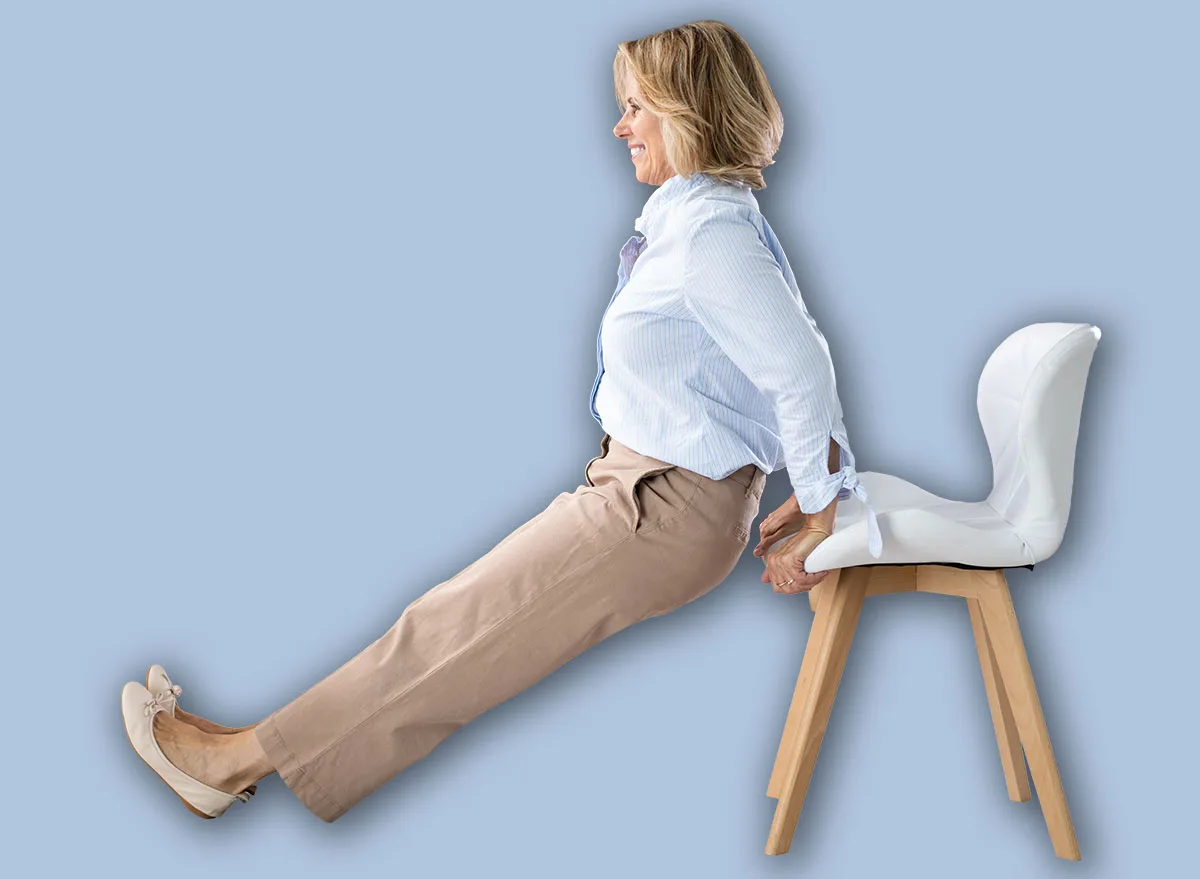
2. Seated Triceps Dips:
Targeting the triceps, the primary muscle responsible for the "bat wing" appearance, this exercise is remarkably effective. Position yourself on the edge of a sturdy chair or bench, hands gripping the edge beside your hips, fingers pointing forward. Slide your hips off the chair, supporting your weight with your arms and feet. Keeping your back close to the chair, slowly lower your body by bending your elbows until your arms form a 90-degree angle. Push back up to the starting position, focusing on contracting the triceps. This movement strengthens the back of the arms, crucial for everyday actions like pushing up from a chair or reaching overhead. Modifications include keeping knees bent for less resistance or extending legs for more challenge. The controlled nature of the movement also enhances shoulder stability.
3. Arm Circles:
Often underestimated, arm circles are excellent for improving shoulder mobility, warming up the muscles, and enhancing endurance in the deltoids and upper back. Stand tall with your feet shoulder-width apart, arms extended straight out to your sides, parallel to the floor. Begin making small forward circles, gradually increasing the size of the circles. After a set duration or number of repetitions, reverse the direction, making backward circles. This exercise, while seemingly simple, engages the shoulder girdle muscles, promoting blood flow and flexibility. It is particularly beneficial for maintaining range of motion, which can diminish with age, and for preparing the shoulders for more demanding movements. Varying the size and speed of the circles can add different dimensions to the workout.
4. Shadow Boxing:
Shadow boxing is a dynamic, full-body exercise that significantly improves upper body power, coordination, and cardiovascular health. Stand with a slight bend in your knees, feet staggered (one foot slightly forward), and hands up in a guard position near your chin. Begin punching into the air, alternating hands, incorporating jabs, crosses, hooks, and uppercuts. Focus on fluidity, proper form, and core engagement with each punch. This exercise not only sculpts the arms, shoulders, and back but also enhances cognitive function through coordination, improves reaction time, and provides a cardiovascular workout without impact. It’s a fantastic way to develop functional power, beneficial for tasks requiring quick, controlled arm movements, and can be incredibly engaging and enjoyable.
5. Inverted Wall Planks:
This exercise, also known as a reverse plank or wall-supported plank, is an innovative way to build core and posterior chain strength, indirectly supporting arm and shoulder stability. Lie on your back on the floor, facing a wall. Place your feet flat against the wall, knees bent at a 90-degree angle, similar to a bridge position. Press through your heels into the wall and lift your hips off the floor, forming a straight line from your shoulders to your knees. Hold this position, engaging your glutes and core. While primarily a core and glute exercise, maintaining this position requires significant stabilization from the shoulders and triceps, making it a powerful isometric move for overall upper body support. It builds endurance and strength in the supporting muscles, which is vital for maintaining good posture and preventing back pain.
Adopting a comprehensive approach to health is critical for individuals over 60. While these bodyweight exercises are highly effective for strengthening and toning the upper arms, they should be complemented by a balanced diet rich in protein to support muscle synthesis, adequate hydration, and sufficient rest. Consulting with a healthcare provider or a certified fitness professional before starting any new exercise program is always advisable, especially to tailor routines to individual health conditions and capabilities. Consistency remains the most influential factor in achieving and sustaining results. By integrating these accessible and functional bodyweight movements into a daily morning ritual, seniors can proactively combat age-related muscle decline, enhance their physical independence, and cultivate robust upper arm resilience for a vibrant and active life.
About the Author