
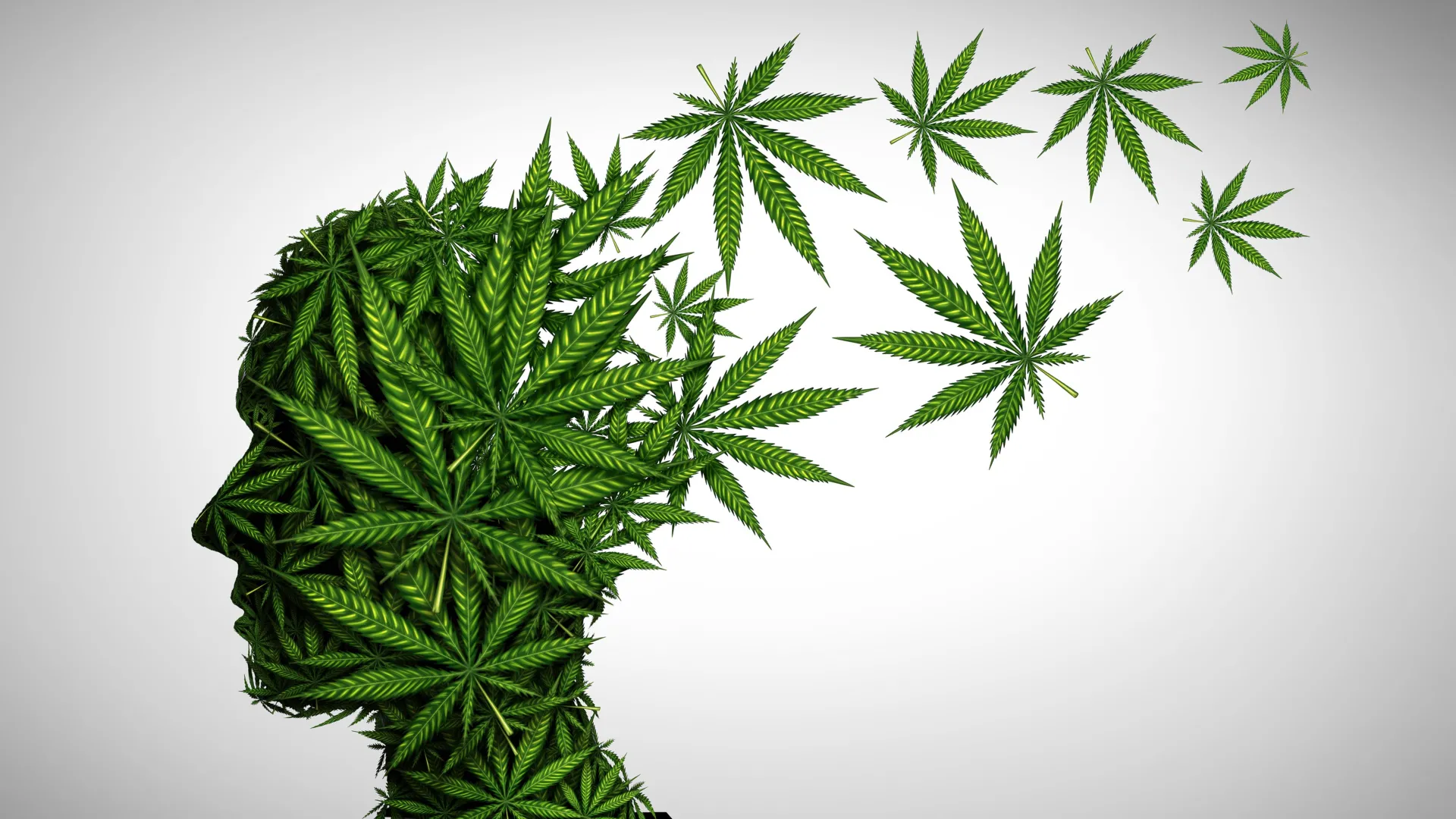
A recent scientific investigation has unearthed compelling evidence suggesting that the consumption of tetrahydrocannabinol (THC), the primary psychoactive compound in cannabis, can significantly impact memory formation and retrieval processes, leading not only to haziness but also to the potential creation of entirely fabricated memories. This groundbreaking research, conducted by scientists at Washington State University (WSU), indicates that individuals who have ingested THC are more prone to recalling information that was never actually presented to them and exhibit diminished capacity in executing routine memory-dependent tasks, such as remembering future actions.
The study, meticulously documented and published in the esteemed Journal of Psychopharmacology, represents one of the most thorough examinations to date of cannabis’s intricate influence on human memory. Its findings extend beyond simple recall exercises, like memorizing a sequence of words, to encompass a broader spectrum of memory functions that are integral to daily life. These include, but are not limited to, the ability to retain knowledge of scheduled appointments, effectively track ongoing conversations, and accurately attribute the origin of specific pieces of information.
Intriguingly, the research team observed no substantial discrepancies in memory performance between participants who received a moderate dose of 20 milligrams of THC and those who were administered a higher dose of 40 milligrams. This particular outcome suggests that even relatively modest quantities of THC can exert a considerable disruptive effect on memory capabilities.
The experimental design aimed to scrutinize a diverse array of memory systems. Dr. Carrie Cuttler, the study’s senior author and an associate professor of psychology at WSU, highlighted the novelty of this comprehensive approach. "Prior investigations predominantly focused on one or two isolated memory types, such as recalling lists of words," Dr. Cuttler explained. "Our study is the first to comprehensively assess numerous distinct memory systems concurrently. The consistent finding is that acute cannabis intoxication appears to broadly impair the majority of these systems."
To conduct this in-depth analysis, Dr. Cuttler, in collaboration with co-author Dr. Ryan McLaughlin, an associate professor in the Department of Integrative Physiology and Neuroscience at WSU, enlisted the participation of 120 individuals who regularly used cannabis. These participants were randomly allocated to one of three groups in a double-blind experimental protocol: vaporizing a placebo substance, vaporizing 20 milligrams of THC, or vaporizing 40 milligrams of THC. The double-blind nature of the study ensured that neither the participants nor the researchers administering the tests were aware of which substance was being consumed, thereby minimizing potential bias.
Following the administration of their assigned substance, each participant underwent approximately one hour of rigorous memory assessments. These evaluations were designed to measure a wide range of memory functions, including verbal memory (the ability to recall spoken or written information), visuospatial memory (the capacity to remember visual and spatial information), prospective memory (remembering to perform actions in the future), source memory (recalling the origin of information), false memory (the tendency to recall nonexistent events or details), episodic content memory (recalling personal experiences), and temporal order memory (remembering the sequence of events).
The results indicated a significant performance deficit among participants who had consumed cannabis compared to the control group that received the placebo. Across the spectrum of tests, cannabis consumption demonstrably affected the majority of the measured memory parameters, with statistically significant differences observed in 15 out of the 21 individual assessments.
The most pronounced cognitive alterations were noted in the domains of false memory and source memory. These cognitive functions are crucial for accurate recollection and for discerning the provenance of acquired knowledge. In a specific test designed to probe false memory, participants were presented with lists of semantically related words that shared a common thematic link, but the central keyword unifying the list was deliberately omitted. Subsequent recall tests revealed that individuals who had ingested cannabis were significantly more likely to assert that they remembered hearing words that had never been spoken or displayed.
"We observed a striking tendency for participants to generate words that were absent from the original lists," Dr. Cuttler remarked. "These fabricated words sometimes pertained to the theme of the list, while at other times, they appeared entirely unrelated." Furthermore, participants who used cannabis encountered greater difficulties in accurately identifying the source of previously acquired information. Deficiencies in source memory can have serious ramifications, potentially hindering an individual’s ability to distinguish between information received from reliable sources, casual conversations, or online platforms.
The implications of these memory distortions are considerable, particularly in contexts where precise recall is paramount. For instance, inaccuracies in memory, or the influence of leading questions during eyewitness testimonies, can significantly shape an individual’s recollection of events.
Beyond these specific memory types, the researchers also documented impairments in prospective memory, which is fundamentally the ability to remember and execute future intentions. This form of memory underpins numerous everyday responsibilities, such as adhering to medication schedules, attending scheduled meetings, or remembering to pick up items on the way home. "These are capacities we rely upon incessantly in our daily routines," Dr. Cuttler emphasized. "If you have a task you need to accomplish at a later time, it is advisable to avoid being under the influence of cannabis when that task needs to be remembered."
Interestingly, one specific memory function, episodic content memory – the recall of personal experiences – did not exhibit a statistically significant effect in this particular study. Dr. Cuttler cautioned that further investigation is warranted before definitive conclusions can be drawn regarding cannabis’s impact on this type of memory.
The study emerges at a time when cannabis consumption is experiencing a notable rise in prevalence across numerous jurisdictions, including states like Washington. Despite the expanding legal frameworks surrounding cannabis across North America, a considerable number of its short-term cognitive effects remain incompletely understood. A significant factor contributing to this research gap has historically been the classification of cannabis as a Schedule I substance under federal law, which has imposed considerable restrictions on scientific inquiry.
"We are currently residing in a state where cannabis use is exceedingly common, yet our understanding of its immediate cognitive consequences remains limited," Dr. Cuttler stated. "Our ultimate objective is to empower individuals with the knowledge necessary to make informed decisions regarding the potential risks and benefits associated with cannabis use." This research contributes a crucial piece to the growing body of evidence informing public health discourse and individual decision-making in an evolving societal landscape.
About the Author












