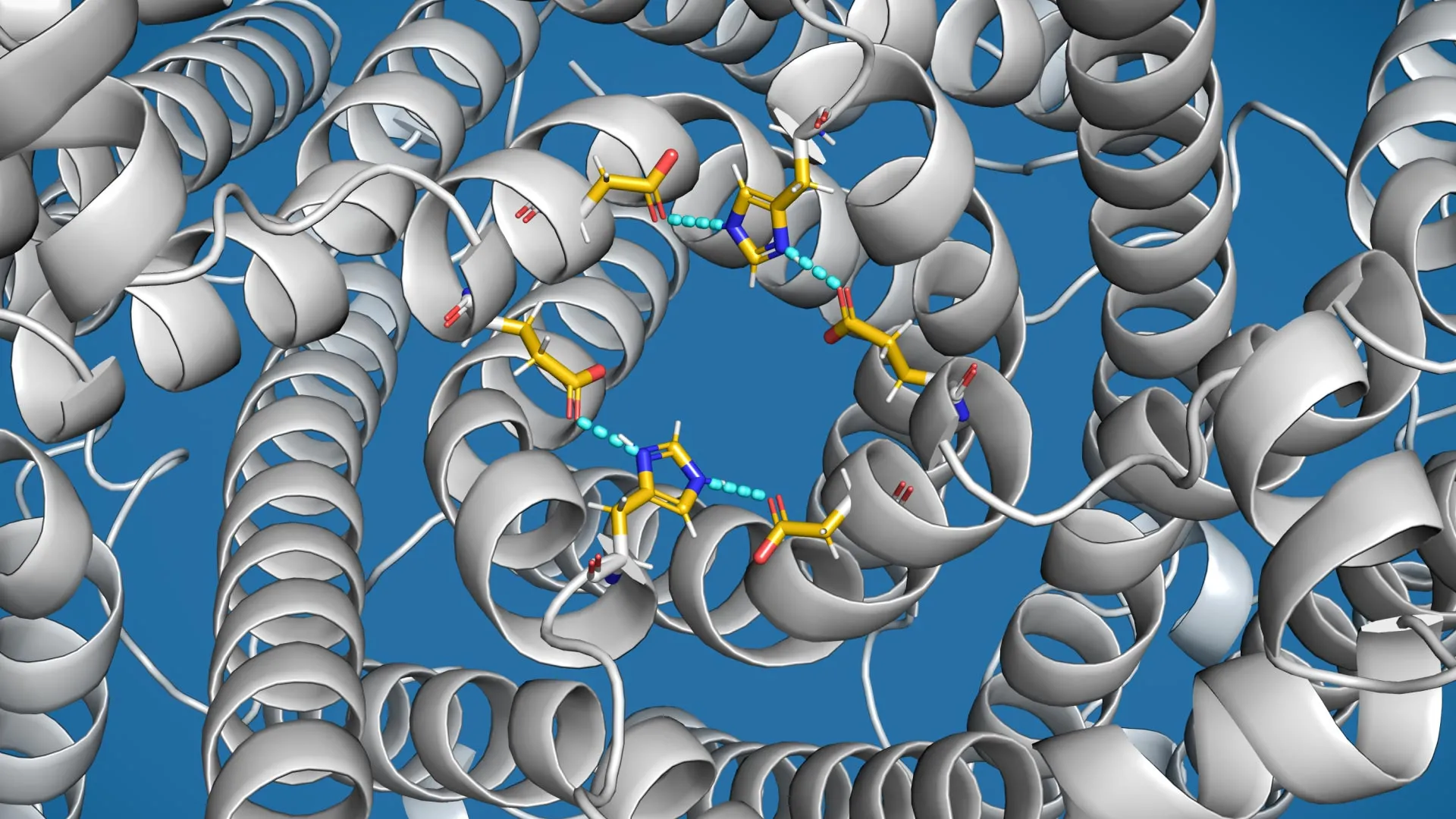
An international consortium of researchers has elucidated the critical role of a previously enigmatic cellular protein, TMEM175, in maintaining the delicate internal environment of lysosomes, the cell’s waste disposal and recycling organelles. This groundbreaking discovery, published in the prestigious journal Proceedings of the National Academy of Sciences (PNAS), not only clarifies the long-standing mystery surrounding TMEM175’s function but also unveils its profound implications for understanding and potentially treating neurodegenerative conditions, most notably Parkinson’s disease. The collaborative effort involved scientists from the University of Applied Sciences Bonn-Rhein-Sieg (H-BRS), Ludwig Maximilian University of Munich (LMU Munich), Technical University of Darmstadt (TU Darmstadt), and Nanion Technologies, with leadership from Professor Christian Grimm of LMU Munich and Dr. Oliver Rauh of H-BRS.
Lysosomes are indispensable cellular components, functioning as the cell’s primary degradation machinery. These membrane-bound sacs house a potent cocktail of enzymes that are responsible for breaking down a wide array of cellular debris, including misfolded proteins, damaged organelles, and engulfed pathogens. The efficacy of these enzymatic processes is intrinsically linked to the internal milieu of the lysosome, which must maintain a highly acidic pH, typically ranging from 4.5 to 5.0. This acidic environment is crucial for activating the lysosomal hydrolases that carry out the digestive functions. The generation and strict regulation of this acidic state are orchestrated by a proton pump, which actively transports hydrogen ions (protons) into the lysosome. However, this active pumping necessitates a sophisticated system to prevent the lysosomal lumen from becoming excessively acidic, a condition that could disrupt cellular homeostasis and lead to cellular dysfunction.
The newly revealed function of TMEM175 positions it as a vital component of this regulatory system, acting akin to a sophisticated "overflow valve." While the proton pump works diligently to acidify the lysosome, TMEM175 appears to modulate the proton concentration by allowing protons to efflux under specific conditions, thereby preventing an undesirable drop in pH. This fine-tuning mechanism is essential for maintaining the optimal acidity required for efficient waste degradation without causing detrimental acidification. The study suggests that when TMEM175 is compromised, either through genetic mutations or other cellular dysfunctions, this crucial pH balance is disrupted. Such dysregulation can impede the proper breakdown of cellular waste, particularly protein aggregates, which are a hallmark of several neurodegenerative diseases.
The connection between lysosomal dysfunction and neurodegeneration has been a growing area of scientific interest. Many neurodegenerative disorders, including Alzheimer’s disease, Huntington’s disease, and Parkinson’s disease, are characterized by the accumulation of abnormal protein deposits within neurons. These aggregates are believed to arise from a failure in the cell’s protein turnover pathways, including lysosomal degradation. The findings regarding TMEM175 provide a direct molecular link, suggesting that a malfunctioning "overflow valve" in lysosomes could directly contribute to the buildup of toxic protein species that ultimately lead to neuronal death, a central pathological feature of Parkinson’s disease.
For years, TMEM175, a transmembrane protein identified by its genetic nomenclature, remained a molecular enigma. Its cellular localization and precise function were subjects of intense debate and speculation within the scientific community. The initial lack of understanding was reflected in its rather uninspired designation. However, as research into the molecular underpinnings of neurodegenerative diseases gained momentum, TMEM175 began to attract significant attention due to emerging correlations between its genetic alterations and an increased susceptibility to conditions like Parkinson’s. This growing body of evidence spurred dedicated efforts to unravel its true purpose within the cellular machinery.
Subsequent investigations gradually established TMEM175 as an ion channel, a protein complex embedded within cell membranes that facilitates the passage of charged particles (ions) across the lipid bilayer. The critical question that persisted, however, was the specific type of ions TMEM175 transported and how this transport influenced cellular processes, particularly in the context of both healthy cellular function and disease states. While it was known to be present in the lysosomal membrane, its role in ion flux remained contentious, with some studies proposing it primarily facilitated the movement of potassium ions, while others suggested a role in proton transport.
Dr. Oliver Rauh, a leading figure in this research, described TMEM175 as one of the most perplexing ion channels he has encountered in his career. His research journey with TMEM175 began approximately six years prior, at a time when its primary function was widely believed to be the transport of potassium ions. The prevailing hypothesis was that this potassium flux played a role in regulating the lysosomal membrane potential, indirectly influencing cellular processes. However, the current study, conducted under the umbrella of the CytoTransport research collaboration, has definitively demonstrated that TMEM175 is not merely a potassium channel. Instead, it possesses a dual functionality, capable of conducting both potassium ions and protons. This dual transport capability is what underpins its critical role in directly regulating the proton concentration, and thus the pH, within the lysosomes.
The experimental methodologies employed were crucial in deciphering TMEM175’s complex behavior. Professor Christian Grimm, an expert in electrophysiological techniques for measuring ion channel activity, spearheaded the application of the "patch clamp" method. This sophisticated technique allows researchers to isolate and record the electrical currents flowing through individual ion channels or small populations of channels embedded in a cell membrane. By applying the patch clamp method to lysosomal membranes, the team was able to meticulously analyze how TMEM175’s activity varied under different cellular conditions, specifically in response to changes in the lysosomal pH.
The experimental results provided compelling evidence that TMEM175 acts as a pH sensor. It exhibits a dynamic response, altering its proton conductance in direct relation to the acidity of its environment. When the lysosomal lumen reaches a certain critical level of acidity, TMEM175 appears to modulate its proton permeability, effectively preventing further excessive acidification. This regulatory mechanism is key to maintaining the optimal pH range for lysosomal enzyme activity. Conversely, in conditions where TMEM175 function is impaired, this pH sensing and regulatory capacity is lost, leading to a cascade of cellular problems.
The authors emphasize that their findings provide a foundational understanding of lysosomal function and the previously debated role of the TMEM175 channel. This newly acquired knowledge is not merely academic; it holds significant promise for the development of novel therapeutic strategies. By understanding how TMEM175 contributes to lysosomal health, researchers can now explore ways to target this protein to correct dysfunctions associated with neurodegenerative diseases. The TMEM175 protein represents a promising "target structure" for the design and development of new pharmacological agents aimed at treating or even preventing the onset and progression of devastating neurodegenerative conditions such as Parkinson’s disease. Future research will likely focus on developing molecules that can modulate TMEM175 activity, either by enhancing its function in deficient states or by correcting its aberrant behavior in disease. This breakthrough marks a significant step forward in the quest for effective treatments for these debilitating neurological disorders.
About the Author