Neural Versatility: Groundbreaking Research Challenges Decades-Old Assumptions About Brain Cell Function.
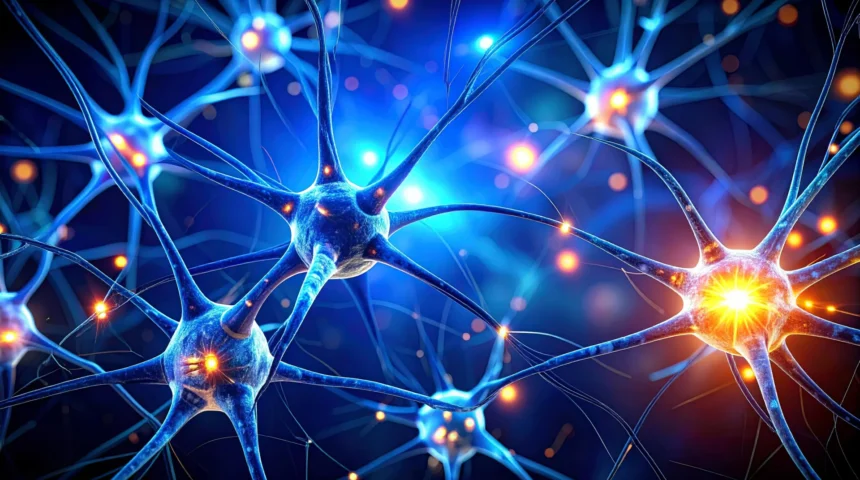
A significant body of neuroscience research, poised to redefine our understanding of neural architecture, suggests that the fundamental operational principles of brain cells may have been subject to a long-standing misconception. The implications of this new perspective, detailed in a recent publication in the esteemed journal Nature, extend to how we interpret the brain’s remarkable computational prowess and its susceptibility to dysfunction. This pioneering work, which garnered substantial pre-publication interest with over 11,000 downloads of its preliminary version, directly confronts a foundational debate that has occupied neuroscientists for generations: the degree of specialization inherent in the individual cells that comprise our complex nervous system.
For many years, a prevailing model depicted brain cells, or neurons, as akin to specialized tools in a sophisticated biological machine. In this analogy, each neuron would be assigned a discrete, singular function, much like a hammer is designed solely for pounding nails or a saw for cutting wood. This "specialist" hypothesis posited a highly organized, modular system where specific cell types were exclusively dedicated to processing particular types of information or executing defined tasks. However, an alternative view, gaining traction through this latest investigation, proposes a more fluid and adaptable model. This perspective likens neurons to versatile multi-tools, such as a Swiss Army knife, capable of engaging with and processing a diverse array of inputs and contributing to a multitude of functions.
Researchers affiliated with Columbia University’s Zuckerman Institute have undertaken an exhaustive analysis of a vast repository of mouse brain activity recordings. These data, meticulously compiled through a global scientific consortium, provided an unprecedented scope for examining neural behavior. The findings from this extensive examination reveal a nuanced reality that challenges the strictly specialized view. While acknowledging the existence of certain neurons that indeed operate with a high degree of specialization, the overwhelming majority of neurons, the study concludes, demonstrate a capacity to respond to and process a broad spectrum of informational signals. This suggests that the brain’s operational framework is far more flexible than previously assumed.
Dr. Stefano Fusi, a principal investigator at the Zuckerman Institute and a senior author on the paper, articulated the need for a paradigm shift in how we conceptualize brain organization. He emphasized that the brain should not be envisioned as a rigid mechanical assembly where each component has an immutable and precisely defined role. Instead, Dr. Fusi posits that the brain’s remarkable efficacy stems from the inherent plasticity of its constituent neurons. He explained that most neurons possess the intrinsic ability to exhibit a wide range of responses, a characteristic that is crucial for the brain’s capacity to successfully address and resolve an immense diversity of complex challenges and tasks.
This discovery holds profound implications for our understanding of cognitive function. It offers a potential explanation for the brain’s extraordinary ability to perform intricate operations, from learning and memory to decision-making and motor control. Furthermore, by shedding light on the fundamental mechanisms of neural operation, this research lays a critical groundwork for investigating the underlying causes of neurological disorders and for developing more effective strategies aimed at restoring compromised brain function.
The central question addressed by this research – the specialization versus generalization of neurons – has been a persistent and often contentious subject within the field of neuroscience for decades. Dr. Lorenzo Posani, a co-lead author of the study and a principal investigator at the Paris Brain Institute, highlighted the deeply entrenched and often strongly held convictions surrounding this debate. Dr. Posani, who conducted this pivotal research while at Columbia’s Zuckerman Institute, noted that the enduring nature of this question is partly attributable to the disparate experimental methodologies employed by researchers over the years.
Historically, the investigation into neuronal function has been hampered by a lack of uniformity in research design. Studies have often differed in the species of animal used, the specific brain regions examined, and the cognitive or motor tasks the animals were required to perform. Such variability in experimental conditions inevitably led to conflicting conclusions. Some studies identified neurons exhibiting highly specific response patterns, seemingly dedicated to single functions, while others revealed cells with much broader, more generalized response profiles. This divergence in findings contributed to the sustained uncertainty and debate.
To circumvent these limitations and establish a more cohesive understanding of neural activity, the researchers adopted a rigorous and standardized approach. Their study focused exclusively on mice engaged in a singular type of task, ensuring a consistent behavioral context. Crucially, they simultaneously analyzed neural activity across a remarkable number of brain regions, drawing upon datasets of an unprecedented scale for neuroscience research. This comprehensive approach aimed to capture a holistic view of neural dynamics rather than isolated observations.
The extensive dataset, a product of the International Brain Laboratory consortium, meticulously documented the activity of individual neurons across 43 distinct regions within the mouse cerebral cortex. The thorough analysis of this rich data yielded a significant insight: while neurons situated in primary sensory areas, such as those responsible for processing visual input, tended to exhibit more specialized response patterns, the majority of neurons across other cortical regions displayed a considerably wider spectrum of activity. This overarching finding strongly suggests that generalist neurons, capable of diverse engagement, represent the dominant operational mode for a substantial portion of the cerebral cortex.
Dr. Fusi further clarified that this conclusion does not negate the existence of specialized neurons altogether. Rather, he emphasized, these highly specialized cells are likely the exception rather than the rule. Their existence does not diminish the pervasive versatility observed in the broader neuronal population.
Despite the remarkable versatility of individual neurons, the brain demonstrably maintains a distinct regional organization, with certain areas dedicated to specific broad functions. The study found that even when a neuron was highly versatile, its activity pattern during a particular task allowed researchers to accurately infer its functional module or network affiliation. However, membership in a specific brain module did not imply that a neuron was restricted to a single function within that module. This finding suggests a hierarchical organization where broad functional areas are comprised of highly adaptable cellular units.
Dr. Posani offered an analogy to illustrate this concept: comparing it to the mapping of voter opinions within a population. While clear demographic clusters might emerge, indicating general voting preferences, a closer examination reveals a significant diversity of individual opinions within those clusters. Similarly, brain regions may exhibit general functional tendencies, but the individual neurons within them are capable of a much wider range of informational processing.
An additional striking characteristic of neural activity uncovered by the research is the unique nature of each neuron’s versatility. The study observed that not only do most neurons engage with multiple types of information, but their individual patterns of activity rarely precisely mirror those of other neurons, even within the same functional area. Shuqi Wang, a doctoral student at the École Polytechnique Fédérale de Lausanne and a co-lead author on the study, explained that this inherent diversity among neurons is a key factor contributing to the brain’s exceptional flexibility and its impressive computational capabilities. Each neuron, in essence, contributes a unique facet to the collective processing power.
The researchers propose that this widespread neuronal versatility is the underlying mechanism that enables individual brain cells to simultaneously represent multiple distinct types of information. For instance, a single neuron might respond not only to the color of an object but also to its shape, processing both "red" and "circle" concurrently. When large groups of these versatile neurons collaborate, they can generate what scientists refer to as "high-dimensional" representations of information. These complex representations are capable of encoding numerous characteristics simultaneously, allowing the brain to make fine distinctions, such as differentiating between a red circle and a black square.
This intricate interplay of versatile neurons grants the brain a profound flexibility in how it processes incoming data and generates appropriate responses. Instead of requiring a completely new and dedicated neural circuit for every novel task or piece of information, the brain can leverage existing, combinational patterns of neural activity. Dr. Fusi highlighted this advantage, stating that these high-dimensional representations can be effectively "reused" across a vast array of different tasks, significantly enhancing the brain’s efficiency and adaptability.
The implications of these findings extend beyond a fundamental understanding of neural mechanisms to influence the very methodologies employed in brain research. Because a single neuron can carry information pertaining to multiple variables, attempting to decipher its precise role by analyzing its activity in isolation can be exceedingly challenging, if not misleading. A more accurate and comprehensive picture of neural function emerges when scientists analyze the coordinated activity of large populations of neurons, mirroring the brain’s own integrated processing approach.
This represents a significant shift in perspective for the neuroscience community. Dr. Fusi noted that for many decades, the field has been largely focused on analyzing the activity of individual neurons, often discarding data from cells whose responses did not fit neatly into predefined categories or could not be easily understood in isolation. The new findings suggest that this reductionist approach may have overlooked the crucial insights offered by the collective, versatile behavior of neuronal populations.
Looking ahead, the researchers are keen to determine if these principles of neuronal versatility observed in mice also apply to the human brain. Collaborations are underway with research groups, including Ueli Rutishauser’s team at Caltech, to investigate the activity patterns of human neurons. Furthermore, the scientific community aims to explore whether the degree of neuronal specialization varies depending on the specific demands or complexity of a given task. As Dr. Fusi concluded, there remains a vast frontier of discovery in unraveling the intricate workings of the brain. The foundational publication for this research is titled "Rarely categorical and highly separable: how neural representations change along the cortical hierarchy," appearing in the journal Nature. The authorship team includes Lorenzo Posani, Shuqi Wang, Samuel P. Muscinelli, Liam Paninski, and Stefano Fusi. The research was supported by grants from the National Institutes of Health, the Simons Foundation, the Kavli Foundation, the Gatsby Foundation, and the Swartz Foundation, with additional contributions from the National Science Foundation and the Department of Defense. Dr. Posani also received specific funding through an NIH grant.

Related News