Mounting Global Hunger and Malnutrition Threaten 2030 Zero Hunger Goal, UN Report Cites Systemic Failures and Pandemic Impact.
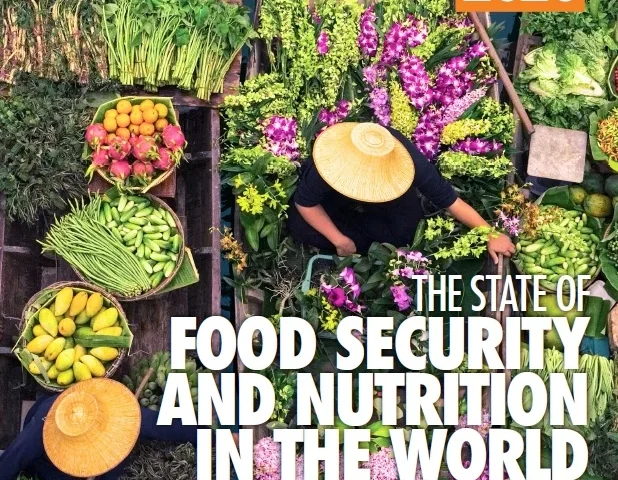
A recent comprehensive analysis by five leading United Nations agencies reveals a deeply concerning trajectory for global food security, indicating a significant reversal in efforts to eradicate hunger and malnutrition worldwide. The collaborative report, titled "The State of Food Security and Nutrition in the World" (SOFI), underscores that the global community is considerably off track from achieving Sustainable Development Goal 2 (SDG 2), which aims to achieve Zero Hunger by the year 2030. This critical assessment, a joint undertaking by the Food and Agriculture Organization of the United Nations (FAO), the International Fund for Agricultural Development (IFAD), the United Nations Children’s Fund (UNICEF), the UN World Food Programme (WFP), and the World Health Organization (WHO), paints a stark picture of escalating food insecurity exacerbated by the ongoing global health crisis.
The findings from 2019 are particularly alarming, demonstrating a persistent and accelerating rise in the number of individuals experiencing chronic undernourishment. Approximately 690 million people globally were identified as hungry that year, marking an increase of 10 million from 2018 figures and a cumulative rise of nearly 60 million over the preceding five-year period. This upward trend, which began in 2014 after decades of decline, signifies a troubling regression in the fight against global food deprivation. Despite updated data methodologies, including revised calculations for populous nations like China and a dozen other countries, which led to a recalculation of overall figures, the fundamental trajectory of increasing hunger remains unequivocally negative. The report’s authors, the heads of the five collaborating agencies, collectively emphasize that, half a decade after the global commitment to end hunger and all forms of malnutrition, progress is faltering significantly.
The geographical distribution of this escalating crisis highlights distinct regional vulnerabilities. Asia continues to bear the largest burden in absolute terms, with an estimated 381 million people experiencing undernourishment. However, the most rapid expansion of hunger is observed across the African continent, which registered 250 million undernourished individuals. Latin America and the Caribbean account for another 48 million. While the global prevalence of undernourishment, measured as the overall percentage of hungry people, has remained relatively stable at 8.9 percent, the absolute numbers are undeniably climbing, mirroring the growth of the global population over the last half-decade. This suggests that the world is failing to keep pace with population expansion in terms of ensuring basic food access.
Africa, in particular, faces a disproportionately severe challenge. With 19.1 percent of its population undernourished, the continent’s hunger rate is more than double that of Asia (8.3 percent) and Latin America and the Caribbean (7.4 percent). Current projections indicate that if these trends persist, Africa will tragically host over half of the world’s chronically hungry population by 2030, underscoring an urgent need for targeted and robust interventions in the region.
The emergence of the COVID-19 pandemic in early 2020 has further complicated an already dire situation, acting as a potent accelerant for existing vulnerabilities within global food systems. While the full repercussions of lockdowns, supply chain disruptions, and economic contractions are still unfolding, the SOFI report projects a significant surge in hunger as a direct consequence. Estimates suggest that an additional 83 million to potentially 132 million people could be pushed into chronic hunger by the close of 2020, primarily due to the severe economic recession triggered by the pandemic. This unprecedented setback poses an immense threat to the already precarious efforts to achieve SDG 2, pushing the target even further out of reach. The pandemic has starkly illuminated the fragility of food systems, defined as the intricate network of activities and processes involved in food production, distribution, and consumption, revealing their susceptibility to global shocks.
Beyond the stark numbers of chronic hunger, the report delves into the pervasive and multifaceted challenge of malnutrition in all its forms. Achieving food security is not merely about providing sufficient calories; it necessitates access to nutritious food that supports healthy growth and development, particularly for children. Yet, a fundamental barrier to this goal is the prohibitive cost of healthy diets for a vast segment of the global population. The report provides compelling evidence that a healthy dietary pattern far exceeds the international poverty threshold of US$1.90 per day. Even the most economical healthy diet costs approximately five times more than a diet composed primarily of starchy staples. Nutrient-dense foods such as dairy products, fresh fruits, vegetables, and protein-rich sources (both plant and animal-based) are identified as the most expensive food groups globally, placing them out of reach for billions.
Startlingly, the report estimates that over 3 billion people worldwide are unable to afford a healthy diet. This challenge is most acute in sub-Saharan Africa and southern Asia, where an estimated 57 percent of the population faces this affordability barrier. However, the issue is not confined to developing regions, with no area, including North America and Europe, being entirely immune to the prevalence of unhealthy dietary patterns driven by economic constraints. The consequences of this affordability crisis are manifest in the global struggle against malnutrition. In 2019, between a quarter and a third of all children under the age of five—approximately 191 million—suffered from stunting (being too short for their age) or wasting (being too thin for their height), both critical indicators of chronic undernutrition. Concurrently, another 38 million children in the same age group were overweight, illustrating the complex dual burden of malnutrition. Among the adult population, obesity has reached pandemic proportions, further complicating global health outcomes.
The report also highlights the profound "hidden costs" associated with prevailing unhealthy dietary patterns and unsustainable food systems. It calculates that the health-related costs stemming from unhealthy diets could reach an astonishing US$1.3 trillion annually by 2030, largely due to the increased prevalence of diet-related non-communicable diseases. Furthermore, the social cost attributed to greenhouse gas emissions linked to current food production and consumption practices is estimated at US$1.7 trillion. The report argues that a global shift towards healthy, sustainable diets could substantially mitigate these economic and environmental burdens. Such a transformation could nearly offset the projected health costs and reduce diet-related greenhouse gas emissions by up to three-quarters, offering substantial economic savings and environmental benefits.
In response to this multifaceted crisis, the SOFI report issues a powerful call to action, advocating for a fundamental transformation of global food systems. The primary objective of this systemic overhaul must be to reduce the cost of nutritious foods and thereby enhance the affordability of healthy diets for all. While specific strategies will naturally vary based on national and local contexts, the overarching solutions demand coordinated interventions across the entire food supply chain, within the food environment, and through the political economy that shapes trade, public spending, and investment policies.
The report urges national governments to integrate nutrition considerations into their agricultural policies, moving beyond mere calorie production to focus on diverse, nutrient-rich food output. It emphasizes the need to actively reduce cost-escalating factors throughout the food supply chain, from production and storage to transport, distribution, and marketing. This includes improving efficiencies, minimizing food loss and waste at every stage, and supporting local small-scale producers to cultivate and market more nutritious food items, ensuring their equitable access to markets. Prioritizing children’s nutrition is identified as a critical imperative, recognizing the profound and irreversible impacts of early childhood malnutrition. Furthermore, fostering behavioral change through targeted education and communication campaigns, and embedding nutrition goals within national social protection frameworks and investment strategies, are deemed essential components of a comprehensive response.
The heads of the five United Nations agencies responsible for this critical assessment reaffirm their unwavering commitment to supporting this monumental global shift. They pledge to ensure that these transformative efforts unfold in a sustainable manner, benefiting both humanity and the planet. The report serves as a sobering reminder that the aspiration of Zero Hunger by 2030 remains a distant and increasingly challenging goal, demanding immediate, concerted, and transformative action from all stakeholders worldwide.

Related News