Unveiling a Surprising Chemical Reactivity in Microplastics Through Water Interaction.
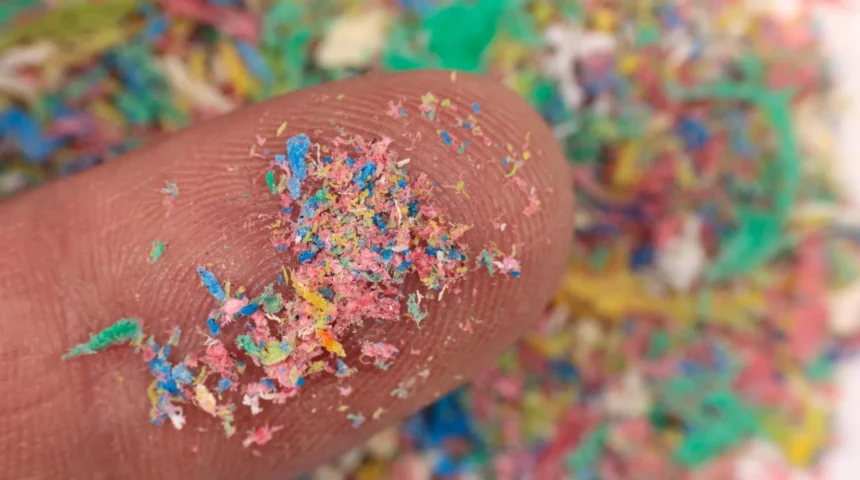
Plastic, a ubiquitous material lauded for its perceived chemical inertness and durability, is now understood to exhibit a more complex and potentially hazardous nature when fragmented into microscopic particles. Contrary to the long-held belief that these tiny plastic remnants, known as microplastics and even smaller nanoplastics, are inert environmental contaminants, recent groundbreaking research has illuminated a previously unrecognized chemical process. This new understanding reveals that these pervasive plastic fragments can actively transform the aqueous environments they inhabit, generating highly reactive molecules that pose a significant threat to biological systems.
A collaborative endeavor between scientists at Columbia University and the University of California, Berkeley, has meticulously detailed the specific chemical transformations occurring at the interface of microplastics and water. Published in the prestigious journal Nature, their findings fundamentally challenge the notion of microplastics as mere passive debris, suggesting instead a dynamic role in mediating harmful chemical reactions. The research team’s pivotal discovery centers on the dramatic increase in surface area as larger plastic items degrade into increasingly smaller particles. This amplified surface area provides a fertile ground for unexpected interactions with water molecules, leading to the formation of potent reactive species.
Professor Wei Min of Columbia University’s Departments of Chemistry and Biomedical Engineering articulated the core finding: "As plastic fragments into smaller and smaller particles, its surface area increases enormously. Then microplastics change the water that surrounds them, generating high-energy, reactive radicals (reactive oxygen species, ROS) that very likely contribute to biological damage that we see in animals and potentially in humans as a result of microplastic exposure." This insight provides a crucial mechanistic link, potentially explaining observed adverse health effects previously attributed solely to the physical presence of microplastics.
The implications of this discovery are particularly profound when considering the potential entry of microplastics into the human body. Biological fluids, such as blood and intracellular environments, are predominantly aqueous, creating conditions ripe for the propagation of these newly identified chemical reactions. Instead of merely existing as inert foreign bodies, microplastics within these watery biological matrices may actively engage in chemical processes that generate reactive oxygen species (ROS). These highly reactive molecules are well-established agents of cellular damage, capable of compromising vital cellular components and tissues. While the research does not definitively establish a causal link to specific human diseases, it offers a compelling explanation for the potential deleterious impacts of microplastic exposure.
This current investigation builds upon prior extensive work by Professor Min’s laboratory, which had already underscored the alarming ubiquity of microscopic plastic contamination. In a significant 2024 study, the Columbia team developed an advanced laser-based microscopy technique, enabling the detection of plastic particles at unprecedentedly small scales. Their application of this technology revealed an astonishing average of approximately 240,000 detectable plastic fragments within a single liter of bottled water, with the majority being nanoplastics. This figure was substantially higher, a tenfold to hundredfold increase, compared to previous estimations, thereby intensifying scrutiny on the pervasive presence of microplastics and nanoplastics throughout the global food supply.
The attention garnered by this earlier research into the sheer volume of microplastics has catalyzed a growing concern regarding their potential impact on human health. In response to escalating scientific and public awareness, the U.S. federal government initiated a substantial $144 million initiative in 2026 dedicated to investigating toxic microplastics within the human body. Concurrently, the U.S. Environmental Protection Agency took a significant step by including microplastics on a federal list of contaminants of potential concern in drinking water, marking their formal recognition as a public health issue.
Furthermore, a growing body of scientific literature published in leading journals such as the New England Journal of Medicine, Nature Medicine, and Nature Health has reported associations between exposure to microplastics and nanoplastics and severe health outcomes, including an increased risk of heart attacks, strokes, dementia, and brain tumors. However, a persistent question has remained: given the generally accepted inert nature of bulk plastics, how could these minuscule fragments contribute to such significant biological harm? The recent findings from Columbia and UC Berkeley offer a critical piece of the puzzle by identifying an overlooked chemical pathway that could elucidate these potential health risks.
Dr. Naixin Qian, a lead researcher in Wei Min’s laboratory, elaborated on the mechanism: "Our research found that when microplastics interact with water, as they do when they’re in bottled water, or when they’re absorbed into our bloodstream, they spontaneously generate what we call reactive oxygen species (ROS). ROS are textbook examples of the kinds of molecules that can damage animal and human tissue." This statement directly addresses the fundamental question of how inert materials can induce biological damage.
A particularly surprising revelation from this research is the active role that water itself plays in initiating these harmful chemical reactions. Many plastics possess hydrophobic properties, meaning their surfaces repel water. When water encounters these surfaces, the molecular arrangement and the behavior of charged particles at the water-plastic interface deviate from their usual dynamics. The researchers discovered that these interactions facilitate the transfer of electrons between different chemical species, a process that consequently leads to the formation of highly reactive radical species. The smaller the plastic fragments become, the greater their surface-to-volume ratio, thereby amplifying the number of sites where these critical reactions can occur.
Professor Min further explained this phenomenon: "Water is a key active player here, rather than just a spectator. It’s integral to making these microplastics reactive. Water molecules become chemically active when they come into contact with plastic, which is hydrophobic. Contact between the water and plastic creates an environment that facilitates electron transfer, and the formation of reactive radicals. When plastics fragment into smaller particles, their increasing surface-to-volume ratio creates more of these chemically active areas." This insight reframes our understanding of the interaction between plastics and their environment, highlighting water as a catalyst rather than a passive medium.
To rigorously investigate this complex chemical process, the Columbia University researchers conducted a series of both chemical and biological experiments. Complementing these empirical studies, collaborators in Professor Teresa Head-Gordon’s laboratory at UC Berkeley employed advanced theoretical calculations and sophisticated computer simulations to probe the molecular-level interactions between plastic surfaces and water. The Berkeley team’s theoretical framework provided a compelling explanation for how hydroxide ions, which carry a negative electrical charge, can become concentrated in the thin layers of water immediately adjacent to a hydrophobic plastic surface. Within this localized environment, these concentrated ions are more prone to donating electrons, thereby forming hydroxyl radicals. Hydroxyl radicals are notoriously reactive chemical entities, capable of inflicting significant damage upon biological molecules. Their formation thus presents a plausible bridge between the physical degradation of plastics and the biological consequences observed by researchers.
The implications of this fundamental discovery extend beyond human health, potentially paving the way for the development of safer plastic materials. By elucidating the precise chemical mechanisms responsible for the generation of harmful reactive molecules, scientists may be able to engineer plastics that are less prone to such transformations when exposed to water. Professor Head-Gordon stated, "Our fundamental work that the most hydrophobic microplastics interacting with water can drive chemical reactivity could ultimately lead to new engineering solutions by redesigning the chemistry of these commodity plastics to reduce the toxic outcomes on health and the environment."
The environmental ramifications are equally significant. Microplastics, originating from diverse sources such as industrial effluents, wastewater discharge, and everyday consumer activities, readily find their way into rivers, lakes, and oceans. The newly identified chemical reactions could have profound impacts on aquatic organisms and the delicate balance of aquatic ecosystems. Dr. Beizhan Yan from Columbia University’s Lamont-Doherty Earth Observatory emphasized the multifaceted origins of microplastics, noting their generation from plastic manufacturing facilities and laundromats, as well as common household practices like microwaving food in plastic containers or exposing bottled water to sunlight during storage. He further stated, "This work has significant implications for environmental and human health. In certain environments, such as discharges from plastic manufacturers and laundromats, microplastics can form and enter aquatic environments. This work also indicates that radicals can form on hydrophobic plastic surfaces in water, which could affect ecosystems and human health following exposure. In addition, various uses and processes in our daily lives can generate microplastics, including microwave heating, sunlight exposure of bottled water during storage. This foundational work provides a potential pathway for understanding their health impacts."
In essence, this research introduces a critical new dimension to the ongoing concerns surrounding plastic pollution by demonstrating that microplastics are not merely inert particles but active participants in chemical transformations. It establishes a foundational understanding for future investigations into how these pervasive materials interact with living systems and opens promising avenues for developing strategies to mitigate their detrimental effects on both human health and the environment.

Related News