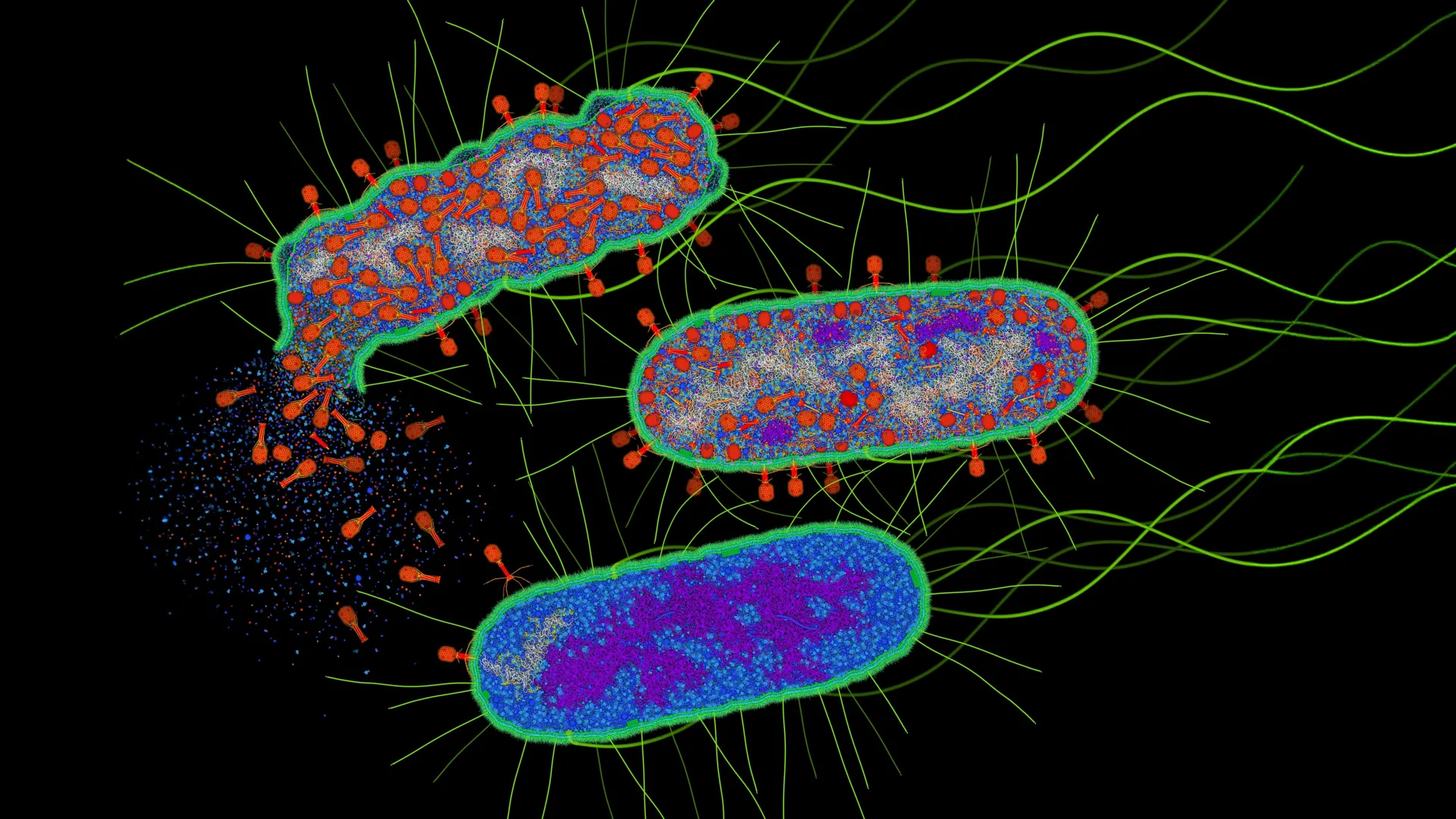
The escalating global health crisis posed by antibiotic-resistant bacteria has intensified the scientific community’s search for innovative therapeutic strategies. Among the most promising avenues being explored is phage therapy, an ancient approach that leverages bacteriophages—viruses specifically evolved to infect and eradicate bacterial cells. Unlike broad-spectrum antibiotics, these highly selective viruses target harmful microbes without collateral damage to beneficial human cells, offering a potent weapon against pathogens that have developed formidable resistance to conventional drugs. However, the successful implementation of phage therapy hinges on a profound understanding of the intricate arms race between bacteria and their viral predators. Bacteria, far from being passive hosts, possess sophisticated immune systems designed to detect and neutralize viral invaders, presenting significant hurdles for therapeutic phage development.
A groundbreaking study published in the prestigious journal Science has shed critical new light on one such bacterial defense mechanism, revealing a previously unknown method by which bacteria sense a viral assault. This pivotal discovery uncovers how a specific viral enzyme, paradoxically, serves as the very alarm bell that triggers a bacterial immune response. Researchers identified that a particular protease, produced by certain phages, directly modifies a vital sensor molecule within the bacterial cell. This enzymatic cleavage acts as a precise signal of infection, initiating a robust immune cascade. The insights gained from this research are poised to significantly advance the development of more effective phage therapies capable of circumventing bacterial resistance strategies.
Dr. Sam Hobbs, an assistant professor of biochemistry at the University of Utah Health and the lead author of the paper detailing these findings, articulated the profound impact of this revelation. "Unraveling the intricacies of this widespread form of bacterial immunity was an extraordinary moment of realization for our team," Hobbs remarked, highlighting the significance of deciphering a mechanism that has eluded scientists for a considerable time.
The investigation centered on a bacterial antiviral defense system known as CBASS (cyclic GMP-AMP synthase-based anti-phage signaling system). This sophisticated pathway represents a "last resort" for an infected bacterium, orchestrating a cellular self-sacrifice to prevent the propagation of the invading virus to neighboring cells. When activated, CBASS triggers a form of programmed cell death, effectively quarantining the infection by eliminating the host cell before the viral replication cycle can be completed. This extreme measure underscores the necessity for unparalleled precision in viral detection; a false alarm would lead to the unnecessary demise of a healthy bacterium.
The research team meticulously uncovered that the activation of this critical defense mechanism is inextricably linked to the very machinery a virus employs for its own replication. Specifically, certain types of bacteriophages produce a class of proteins called proteases, enzymes renowned for their ability to cleave other proteins. The study elucidated that a protease originating from the invading phage directly interacts with and modifies a host protein, thereby generating the crucial signal that initiates the entire CBASS signaling pathway. This direct interaction between a viral effector and a bacterial sensor represents a novel paradigm in host-pathogen recognition.
Hobbs elaborated on this surprising interaction, stating, "We found that the phage’s protease actively targets and cleaves a protein belonging to the bacterial host. This enzymatic action is what directly switches on the entire signaling cascade." This mechanism stands in stark contrast to other well-documented antiviral immune pathways, which often detect viral genetic material, such as DNA or RNA, or other general molecular patterns associated with infection. In the case of CBASS activation, the trigger is not the presence of viral components themselves, but rather the specific enzymatic activity of a viral protein acting upon a host molecule. "This represents an entirely novel mode of activation for these host defense proteins," Hobbs emphasized, expressing his astonishment at the unexpected nature of the discovery. "It was a mechanism I would not have predicted."
The implications of this finding extend far beyond merely understanding bacterial defenses against phages. The CBASS system exhibits remarkable evolutionary kinship with certain innate immune pathways found in humans. This deep evolutionary connection suggests that the fundamental principles underlying this antiviral defense mechanism have been conserved across an immense span of biological history, dating back to the common ancestor shared by bacteria and humans. Such conservation highlights the universal importance of these pathways in safeguarding cellular integrity against viral threats.
Bacteria, with their rapid life cycles and relative genetic simplicity, provide invaluable experimental systems for probing fundamental questions about immunity. Scientists can quickly study complex immune processes in these microorganisms and then translate these insights into more intricate biological models that are more closely related to humans. This translational potential underscores the broader relevance of bacterial immunity research.
Hobbs underscored the profound lessons gleaned from this evolutionary preservation. "The fact that these defense systems have been maintained across such diverse organisms for billions of years strongly indicates their critical importance," he noted. "The very cells are providing us with evidence that this is an indispensable pathway for maintaining the capacity to combat viral infections. It’s an incredibly compelling insight and offers a unique vantage point into the essential components of antiviral defense."
The practical applications of this discovery are significant, particularly for advancing phage therapy. By understanding precisely how bacteria detect and respond to viral attacks, scientists can now strategize to develop phages that are better equipped to overcome these defenses. This could involve engineering phages that either evade the CBASS detection mechanism entirely or, conversely, designing phages to specifically activate CBASS in targeted pathogenic bacteria, forcing them to self-destruct. Such precise manipulation holds immense promise for developing highly effective, pathogen-specific treatments for persistent and multi-drug resistant infections, offering a powerful new tool in the fight against antibiotic resistance. Further research will undoubtedly explore these avenues, paving the way for a new generation of antimicrobial interventions.
This work was generously supported by a consortium of funding bodies, including the Pew Biomedical Scholars program, the Burroughs Wellcome Fund, the G. Harold and Leila Y. Mathers Foundation, the Cancer Research Institute (CRI3996), the Parker Institute for Cancer Immunotherapy, the Massachusetts Consortium on Pathogen Readiness, and the National Institute of General Medical Sciences of the National Institutes of Health (1DP2GM146250-01). The content presented herein reflects solely the responsibility of the authors and does not necessarily represent the official views of the National Institutes of Health.
About the Author