
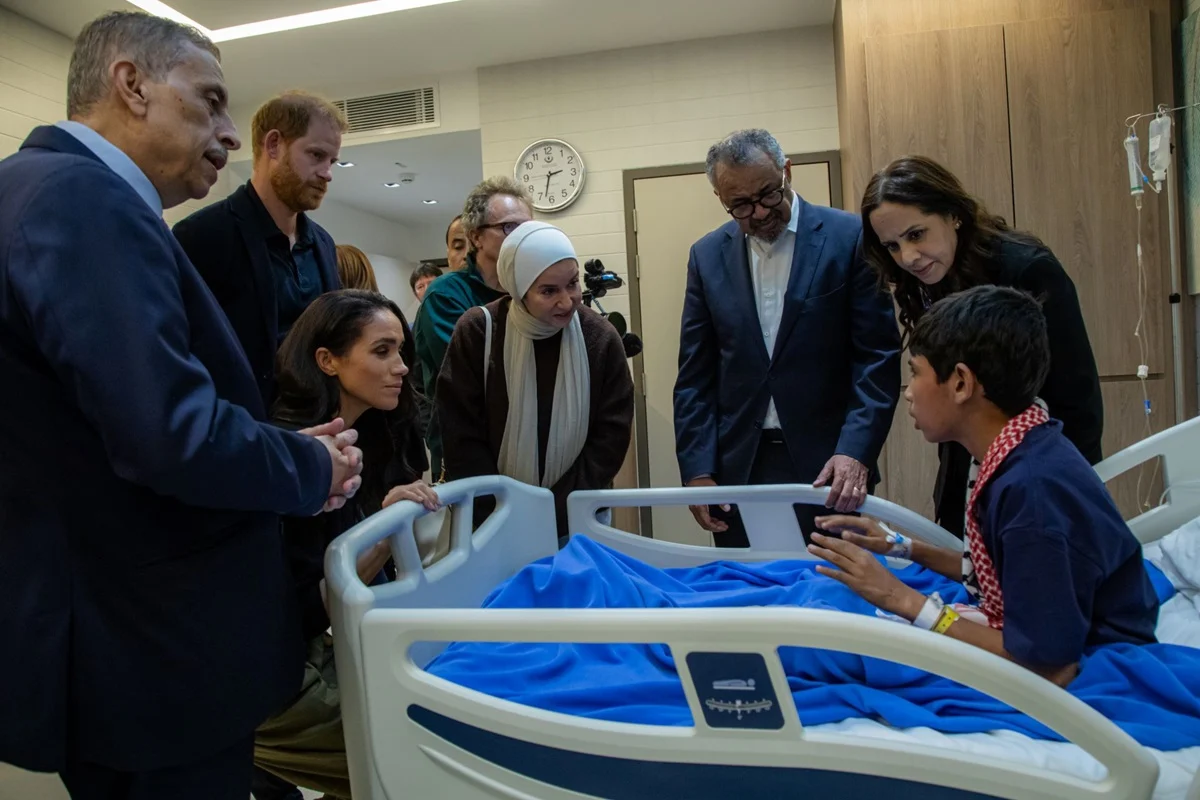
The Director-General of the World Health Organization (WHO), Dr. Tedros Adhanom Ghebreyesus, recently concluded a significant two-day official visit to the Hashemite Kingdom of Jordan, a journey that underscored the nation’s profound commitment to advancing global health priorities. This high-profile visit served to acknowledge the robust and multifaceted partnership between the WHO and Jordan, specifically highlighting their collaborative efforts in strengthening national health systems, ensuring universal health coverage (UHC), spearheading humanitarian health responses, and integrating mental health services into mainstream care. The delegation’s presence emphasized Jordan’s critical leadership in addressing both domestic health challenges and the complex humanitarian crises afflicting the broader region.
A cornerstone of Dr. Tedros’s itinerary was a crucial audience with His Majesty King Abdullah II. This meeting, held at the highest level of state, reinforced Jordan’s steadfast dedication to elevating health as a paramount national and international imperative. Discussions between the two leaders centered on strategies for enhancing the resilience and accessibility of health infrastructures, broadening access to essential medical services for all citizens and residents, and sustaining crucial support for emergency health interventions throughout the Middle East. A particular focus was placed on the dire health needs of the Palestinian population, particularly those patients evacuated from Gaza for specialized medical treatment within Jordanian facilities, and the substantial refugee communities Jordan has generously hosted for decades. Dr. Tedros conveyed his deep gratitude to King Abdullah II for his unwavering advocacy for UHC and extended appreciation to the Jordanian populace for their remarkable solidarity and benevolence in providing healthcare services to over three million refugees, predominantly from Gaza and Syria, residing within the kingdom’s borders.
Beyond merely hosting large refugee populations, Jordan has emerged as a beacon of humanitarian leadership, exemplified by initiatives such as His Majesty’s Medical Corridor. This vital program facilitates the transfer of critically ill and injured children from Gaza, delivering life-saving specialized care that would otherwise be unattainable. Dr. Tedros lauded these efforts, stating, "Jordan consistently demonstrates to the global community the profound meaning of prioritizing health and human dignity above all else." This sentiment encapsulates Jordan’s enduring role as a stable anchor in a volatile region, shouldering immense responsibilities with grace and effectiveness. The nation’s experience in managing large-scale humanitarian health operations offers invaluable lessons for global preparedness and response mechanisms.
During his visit, the WHO Director-General personally witnessed the impact of these initiatives by visiting a medical facility that receives substantial support from the WHO, providing highly specialized care to children evacuated from Gaza. This poignant visit allowed Dr. Tedros to engage directly with young patients and their families, offering a firsthand perspective on the human toll of conflict and the critical importance of timely medical intervention. He also met with frontline healthcare professionals, whose tireless dedication ensures the delivery of life-saving treatments for severe injuries, oncological conditions, and other serious illnesses. This interaction underscored the indispensable role of the medical evacuation corridor through Jordan and highlighted the urgent need for continued, robust international funding to guarantee that children and other vulnerable individuals can access the essential care they desperately require. The scenes observed reinforced the notion that while political solutions are paramount, humanitarian aid remains an immediate necessity for survival and dignity.
The comprehensive nature of the visit also included a significant high-level assembly with a diverse array of health stakeholders, including representatives from donor nations, various United Nations agencies, and prominent philanthropic organizations. The primary objective of this gathering was to deliberate on financing priorities essential for bolstering Jordan’s health system and sustaining ongoing humanitarian health operations. A key area of discussion involved strategies for significantly expanding access to mental health services, particularly in countries, like Jordan, that bear the burden of hosting vast refugee communities. Dr. Tedros commended the robust collaborative spirit among partners and their sustained pledge to invest in health initiatives, both within Jordan and across the broader regional landscape. The discussions emphasized that sustainable health infrastructure is not merely about treating illness but building societal resilience against future shocks.
Further solidifying the partnership, Dr. Tedros engaged in bilateral discussions with the Jordanian Minister of Health. These talks concentrated on strategies to further reinforce Jordan’s national health system and accelerate progress towards achieving universal health coverage. Jordan has distinguished itself globally through its progressive adoption of a primary healthcare-centric model for UHC, notably integrating mental health services directly into routine care pathways. This innovative approach ensures that psychological support is not an isolated specialty but an accessible component of comprehensive wellness. The WHO actively champions this pioneering work through the Director-General’s Special Initiative for Mental Health, an ambitious global program designed to expand quality mental health services. This initiative recognizes that mental well-being is fundamental to overall health and productivity, especially in populations exposed to trauma and displacement.
A notable aspect of several engagements during the visit was the participation of the Duke and Duchess of Sussex, Prince Harry and Meghan. Attending in their capacity as founders of Archewell Philanthropies, they are long-standing advocates and supporters of the WHO’s global mission. Archewell Philanthropies has a track record of backing various WHO programs, ranging from efforts to ensure equitable global access to COVID-19 vaccines to facilitating medical evacuations and funding crucial mental health programs. Prince Harry, in particular, actively participated as a key ally in the WHO’s mental health initiatives, emphasizing the critical importance of strategic investment in mental well-being across diverse communities and emergency contexts, with a specific focus on the needs of men, young people, and children. Their involvement brought increased visibility and resources to these often-overlooked areas of health.
Dr. Tedros publicly acknowledged their contribution, stating, "I wish to express my gratitude to our dedicated partners, including Prince Harry, Duke of Sussex, and Meghan, Duchess of Sussex, whose profound commitment to both mental health advocacy and humanitarian action has been instrumental in generating visibility, securing vital resources, and instilling hope in some of the world’s most vulnerable populations. Their collaborative spirit significantly advances the WHO’s fundamental mission to ensure health for everyone, everywhere." Prince Harry echoed these sentiments, remarking, "It is a distinct honor to accompany the Director-General of the World Health Organization in Jordan, a nation that consistently leads by exemplary standards of compassion, resilience, and innovation. Through the work of Archewell Philanthropies, my wife and I have personally witnessed the transformative impact of WHO’s endeavors to bolster mental health and deliver essential, life-saving care during emergencies. We remain profoundly dedicated to raising awareness, diminishing the pervasive stigma, and broadening access to vital mental health support for all individuals affected by conflict and crisis. Mental health is an indispensable foundation for recovery, upholding human dignity, and fostering long-term peace, and we are proud to stand shoulder-to-shoulder with the WHO and its global partners in making this a universal priority."
The second day of Dr. Tedros’s visit further deepened his understanding of Jordan’s integrated healthcare approach. His itinerary included a visit to Jordan’s National Center for Rehabilitation of Addicts, a facility that benefits from WHO support and provides comprehensive medical, psychological, and social services. This highlights Jordan’s commitment to addressing public health challenges beyond acute care, recognizing addiction as a complex health issue requiring holistic treatment. He also engaged with local community leaders and women’s groups, including representatives from the Jordanian Hashemite Fund for Human Development (JOHUD), exploring grassroots health initiatives and community-driven development. The visit concluded with a stop at the King Hussein Cancer Center, where discussions revolved around recent advancements in cancer treatment and opportunities for enhanced regional collaboration in oncology, positioning Jordan as a regional leader in specialized medical care.
These concluding engagements, along with additional meetings with partners supporting humanitarian operations, served to powerfully reinforce Jordan’s indispensable role as a strategic regional hub for medical evacuation, rapid emergency response, and the cultivation of resilient health systems. The WHO’s visit not only celebrated past achievements but also solidified future pathways for continued collaboration, ensuring Jordan remains at the forefront of global efforts to safeguard health and well-being in a challenging geopolitical landscape. The enduring partnership between Jordan and the WHO serves as a testament to what can be achieved when national leadership, international cooperation, and a deep commitment to humanity converge.
About the Author












