
Amman, Jordan – The Hashemite Kingdom of Jordan recently hosted a high-profile, two-day State visit from Dr. Tedros Adhanom Ghebreyesus, the Director-General of the World Health Organization (WHO), underscoring the nation’s critical contributions to global health, particularly in the areas of universal health coverage, robust emergency response, and advancing mental well-being across the Middle East. The visit served as a significant affirmation of the enduring partnership between the WHO and Jordan, highlighting the Kingdom’s strategic importance as a beacon of stability and compassion in a volatile region.
A central component of Dr. Tedros’s itinerary involved a pivotal audience with His Majesty King Abdullah II. This high-level engagement reflected not only the gravity of the WHO delegation’s visit but also Jordan’s unwavering leadership in prioritizing health initiatives, both domestically and on the international stage. Discussions during this crucial meeting revolved around strategies for fortifying national health infrastructures, broadening access to essential medical services for all citizens and residents, and ensuring sustained support for humanitarian health interventions throughout the region. Particular emphasis was placed on the dire health needs of the Palestinian population, including patients requiring specialized medical evacuation from Gaza for treatment within Jordan, and the substantial refugee communities residing within the Kingdom’s borders.
Dr. Tedros expressed profound gratitude to His Majesty King Abdullah II for his steadfast dedication to the principle of universal health coverage (UHC). UHC, a fundamental goal of the WHO, aims to ensure that all people have access to the health services they need, when and where they need them, without financial hardship. Jordan’s commitment to this principle is evident in its national health policies and its ongoing efforts to integrate comprehensive care models. The Director-General further extended his appreciation to the Jordanian monarch and its citizens for their exemplary solidarity and remarkable generosity in extending health services to over three million refugees, primarily those displaced from Syria and Gaza, who have sought refuge within the country. This immense humanitarian undertaking places considerable strain on national resources, yet Jordan continues to uphold its moral obligations with dignity and resolve.
Furthermore, Dr. Tedros lauded Jordan’s broader leadership in humanitarian efforts, specifically acknowledging His Majesty’s Medical Corridor initiative. This vital program facilitates the transfer of critically ill and injured children from Gaza, providing them with life-saving specialized care that is otherwise unavailable in their conflict-affected homeland. The Medical Corridor exemplifies Jordan’s proactive approach to mitigating human suffering, demonstrating what it truly signifies to prioritize health and humanity above all else, even amidst regional complexities. This initiative requires intricate logistical coordination, secure transit routes, and significant medical capacity, showcasing Jordan’s unique capability as a regional medical hub.
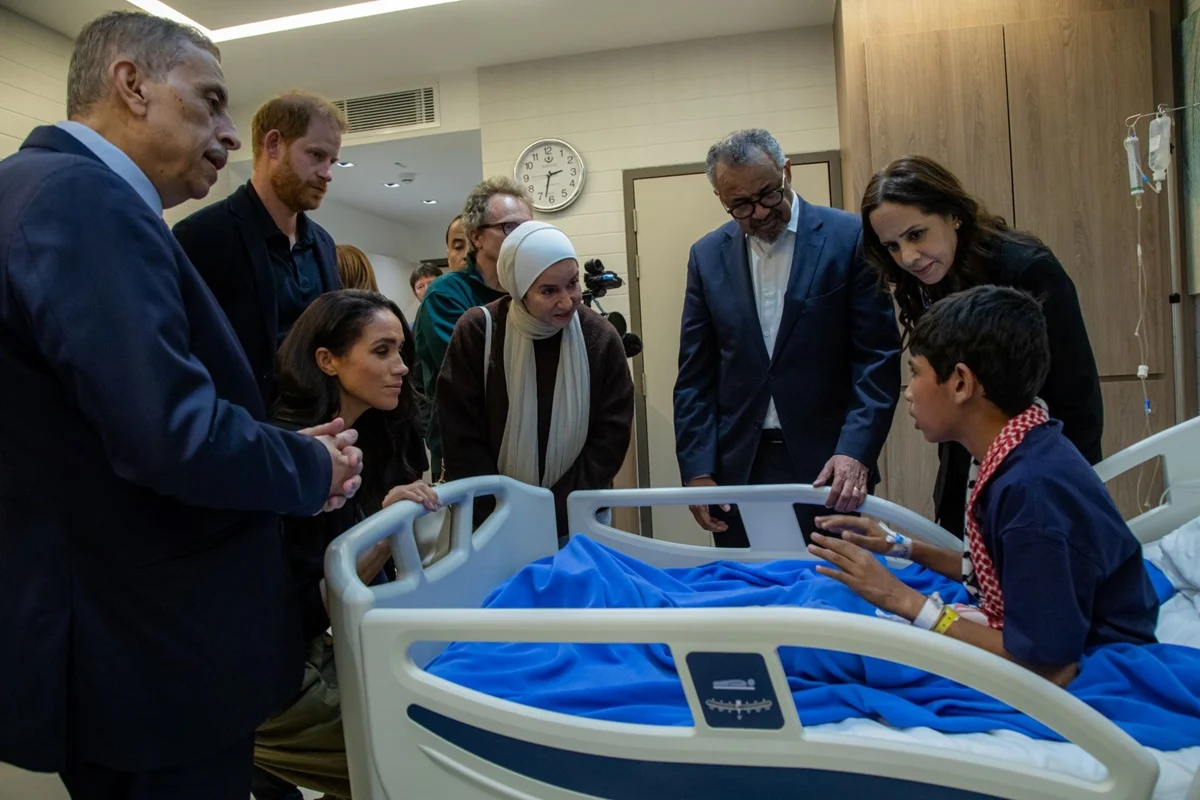
During his visit, the Director-General personally witnessed the impact of these efforts through a visit to a WHO-supported hospital dedicated to providing specialized medical care for children evacuated from Gaza. He spent time with young patients and their families, gaining firsthand insight into the traumatic experiences they have endured and the critical treatments they are receiving for severe injuries, cancer, and other grave conditions. He also engaged with the dedicated frontline health workers who tirelessly deliver these life-saving interventions. This visit underscored the indispensable role of the medical evacuation pathway through Jordan and reinforced the urgent global imperative for sustained international funding and operational support to ensure that children and other vulnerable individuals can continue to access vital medical attention. The emotional toll on both patients and healthcare providers in such circumstances is immense, highlighting the need for comprehensive support systems.
A significant component of Dr. Tedros’s agenda included convening a high-level consultative meeting with an array of health partners, representatives from donor nations, various United Nations agencies, and prominent philanthropic organizations. The primary objective of this gathering was to delineate and prioritize financing strategies essential for bolstering Jordan’s national health infrastructure and sustaining ongoing humanitarian health operations. A key focus of these discussions was the imperative to scale up mental health services, particularly within communities hosting large refugee populations, where psychological trauma and stress are pervasive. Dr. Tedros commended the robust collaborative spirit and unwavering commitment demonstrated by all partners to invest strategically in health outcomes, not only within Jordan but also across the broader regional landscape. The financial burden on host countries like Jordan, which bear the brunt of prolonged humanitarian crises, necessitates a diversified and predictable funding mechanism from the international community.
Further deepening the collaborative dialogue, Dr. Tedros engaged in bilateral discussions with the Jordanian Minister of Health. These talks concentrated on strengthening the Kingdom’s national health system and accelerating its progress towards achieving UHC. Jordan has garnered international recognition for its pioneering leadership in adopting a primary health care-centric approach to realize UHC goals. This includes the seamless integration of mental health services into routine care, thereby ensuring that individuals can access crucial psychological support as part of their regular medical consultations. The WHO continues to actively support these progressive efforts through its Director-General’s Special Initiative for Mental Health, which aims to catalyze global action and investment in mental health care. Integrating mental health into primary care removes significant barriers, such as stigma and accessibility, making services more readily available at the community level.
Notably, Dr. Tedros was accompanied during several key engagements by Prince Harry, Duke of Sussex, and Meghan, Duchess of Sussex. In their capacities as founders of Archewell Philanthropies, the Duke and Duchess have been long-standing proponents of the WHO’s global endeavors. Archewell’s philanthropic contributions have supported a diverse range of WHO initiatives, spanning from advocating for equitable access to COVID-19 vaccines during the pandemic to facilitating medical evacuation programs and championing mental health initiatives. Prince Harry, specifically, participated as a vocal ally of the WHO’s mental health advocacy, emphasizing the critical importance of investing in mental health across diverse communities and within emergency settings. He drew particular attention to the unique mental health challenges faced by men, young people, and children in these contexts, advocating for tailored support mechanisms.
Dr. Tedros publicly acknowledged the invaluable contributions of these partners, stating, "I wish to extend my gratitude to our partners, including Prince Harry, Duke of Sussex, and Meghan, Duchess of Sussex, whose profound commitment to mental health and humanitarian action has been instrumental in elevating visibility, mobilizing vital resources, and instilling hope within some of the world’s most vulnerable communities. Their collaborative efforts are directly contributing to the advancement of WHO’s overarching mission to ensure health for all." This highlights the power of celebrity advocacy in bringing global attention to critical public health issues.
Echoing this sentiment, Prince Harry articulated his perspective on the visit: "It is an immense privilege to join the Director-General of the World Health Organization in Jordan, a nation that consistently sets an example through its compassion, remarkable resilience, and innovative spirit. Through the work of Archewell Philanthropies, my wife and I have personally witnessed the profound impact of WHO’s tireless efforts to bolster mental health provisions and deliver life-saving care in emergency situations. We remain deeply committed to raising awareness, actively working to reduce the pervasive stigma surrounding mental illness, and expanding access to essential mental health support for all individuals affected by conflict and crisis. Mental health is unequivocally fundamental to the process of recovery, upholding human dignity, and fostering long-term peace, and we are proud to stand shoulder-to-shoulder with the WHO and its global partners to elevate it as a paramount global priority." His words underscore the interconnectedness of mental health with broader societal well-being and peacebuilding.
The second day of Dr. Tedros’s comprehensive visit was dedicated to exploring further facets of Jordan’s health infrastructure and community engagement. His itinerary included a visit to Jordan’s National Center for Rehabilitation of Addicts, a facility supported by the WHO that delivers integrated medical, psychological, and social services crucial for recovery. He also engaged with influential community leaders and various women’s groups, including representatives from the Jordanian Hashemite Fund for Human Development, recognizing their vital role in grassroots health promotion and community empowerment. The visit also encompassed the esteemed King Hussein Cancer Center, where discussions focused on recent advancements in cancer care and opportunities for enhanced regional collaboration in specialized oncology. Addressing addiction and cancer care in a region with significant population displacement presents unique challenges that Jordan is actively confronting.
The State visit concluded with additional high-level engagements with partners actively supporting humanitarian operations, serving to further reinforce Jordan’s indispensable and enduring role as a strategic hub for medical evacuation, emergency response coordination, and building health system resilience across the Middle East. Jordan’s geographical position, stable governance, and established medical infrastructure make it an unparalleled partner in regional health security, a role that will continue to require robust international collaboration and investment.
About the Author












