
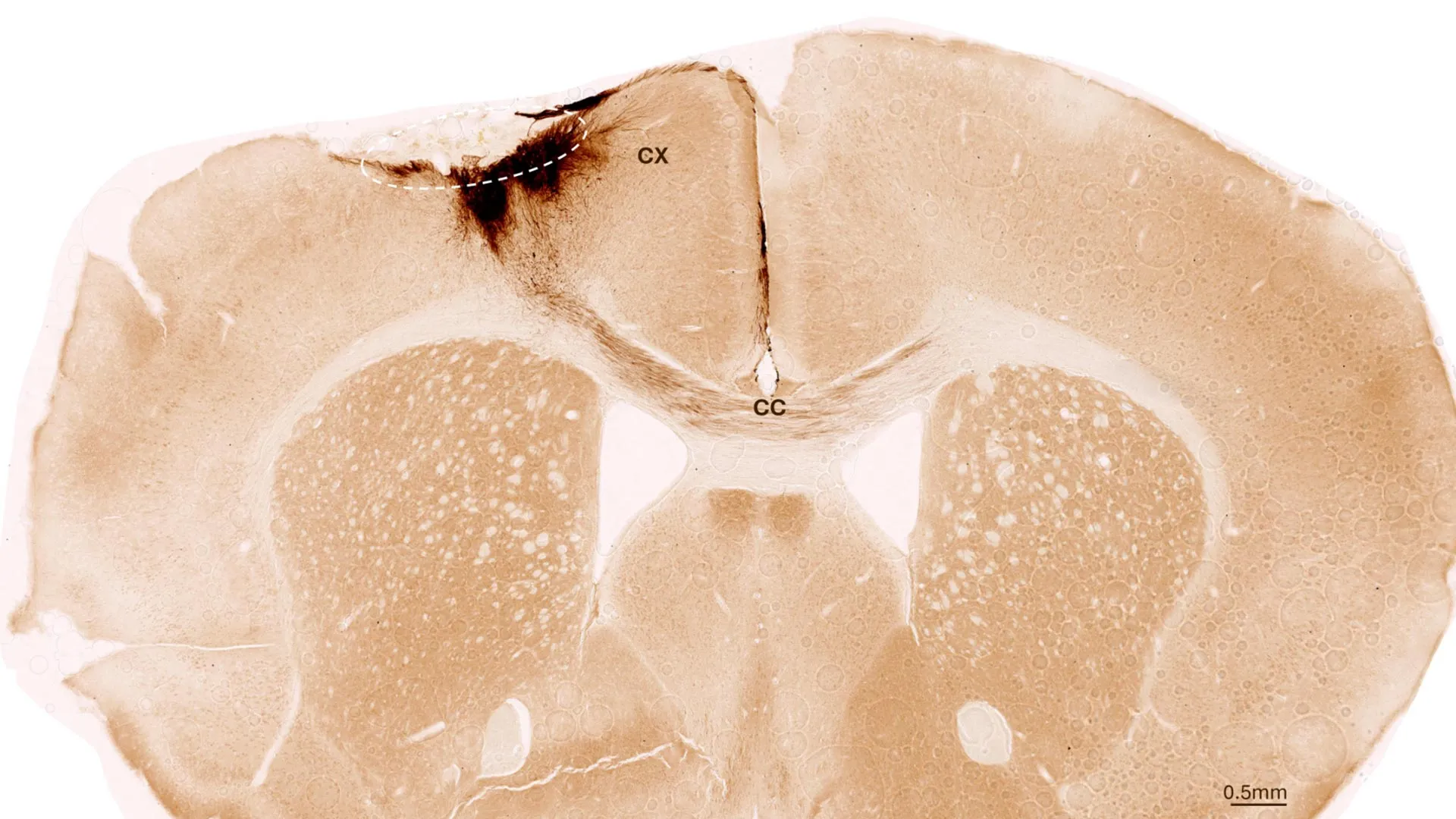
Cerebrovascular accidents, commonly known as strokes, represent a leading cause of long-term disability globally, affecting millions annually and leaving a significant portion of survivors with debilitating neurological impairments. The conventional understanding has long held that brain tissue destroyed by a stroke is permanently lost, with current therapeutic interventions primarily focused on limiting initial damage rather than regenerating lost neural structures. However, a significant paradigm shift may be on the horizon, as groundbreaking research from the University of Zurich (UZH) demonstrates that human neural stem cell transplantation can not only repair stroke-induced damage but also extensively restore motor function and trigger a cascade of regenerative processes within the brain of murine models. This innovative approach offers a beacon of hope for developing future treatments capable of rebuilding neural networks and reversing the lasting effects of stroke.
Stroke pathology is fundamentally characterized by the interruption of blood flow to a region of the brain, leading to oxygen deprivation (ischemic stroke) or hemorrhage (hemorrhagic stroke). Both mechanisms result in the rapid death of brain cells, culminating in a lesion that manifests as a range of neurological deficits, from paralysis and speech difficulties to cognitive impairments. For roughly half of all stroke survivors, these challenges become a persistent reality, profoundly impacting their quality of life and independence. The absence of treatments capable of stimulating de novo brain tissue formation has underscored the urgent need for novel therapeutic strategies focusing on true regeneration.
Against this backdrop, the UZH team, spearheaded by Christian Tackenberg, Scientific Head of Division in the Neurodegeneration Group at the Institute for Regenerative Medicine, and postdoctoral researcher Rebecca Weber, embarked on an ambitious journey to explore the potential of neural stem cells. Their collaborative efforts with a group led by Ruslan Rust at the University of Southern California have yielded compelling insights into how these pluripotent cells could serve as architects of brain repair. Neural stem cells possess a remarkable inherent capacity to differentiate into various cell types found within the nervous system, including neurons, astrocytes, and oligodendrocytes, making them prime candidates for reconstructive medicine.
The experimental design meticulously mirrored crucial aspects of human stroke to enhance the translational relevance of the findings. Researchers induced permanent strokes in laboratory mice, ensuring the resulting brain lesions closely recapitulated the structural and functional damage observed in human patients. A critical element of the study involved the use of human neural stem cells, which were meticulously derived from induced pluripotent stem cells (iPSCs). These iPSCs are generated by genetically reprogramming ordinary adult somatic cells, such as skin cells, to revert to an embryonic-like state, thereby regaining their developmental versatility. This process circumvents ethical concerns associated with embryonic stem cells and allows for the generation of patient-specific cells in future clinical applications. To prevent immunological rejection of the human cells by the murine hosts, the mice were genetically modified to be immunodeficient, ensuring the transplanted cells could survive and integrate effectively.
A pivotal discovery pertained to the optimal timing of cell transplantation. The research indicated that deferring the stem cell implantation by one week post-stroke yielded superior outcomes compared to immediate transplantation. This delay is hypothesized to allow the acute inflammatory phase of stroke to subside, creating a more conducive microenvironment for the transplanted cells to thrive and integrate. From a clinical perspective, this finding holds immense practical significance, as it provides a crucial window for medical teams to prepare and administer the therapy, alleviating the pressure of immediate intervention during the critical emergency period following a stroke event.
One week after inducing the strokes, the human neural stem cells were precisely delivered directly into the damaged cerebral regions of the mice. Subsequent monitoring, utilizing advanced imaging techniques and sophisticated biochemical analyses over a five-week period, revealed remarkable cellular events. Christian Tackenberg highlighted that the transplanted stem cells not only demonstrated robust survival within the host brain but also underwent significant differentiation, with a majority transforming into functional neurons. Crucially, these newly formed neurons established intricate communicative connections with the pre-existing neuronal networks of the host brain. This capacity for integration is paramount, as the mere generation of new neurons is insufficient for functional recovery; they must seamlessly become part of the brain’s complex circuitry to restore lost neurological functions.
Beyond the direct replacement and integration of neurons, the studies uncovered a much broader spectrum of restorative processes. The transplanted stem cells acted as powerful orchestrators of a comprehensive healing response within the damaged brain tissue. Investigators observed the formation of new blood vessels, a process known as angiogenesis, which is vital for re-establishing nutrient and oxygen supply to ischemic areas. Furthermore, the treatment led to a significant reduction in inflammatory processes, mitigating secondary damage that often exacerbates initial stroke injury. An improved integrity of the blood-brain barrier was also noted. This barrier, a highly regulated protective interface between circulating blood and brain parenchyma, is frequently compromised after a stroke, contributing to edema and further inflammation. The restoration of its integrity is a critical step towards stabilizing the cerebral microenvironment and fostering recovery. Tackenberg emphasized that the depth of their analysis, extending beyond immediate post-transplantation effects, provided a more holistic view of the complex regenerative mechanisms at play.
The biological transformations observed at the cellular and tissue levels translated directly into tangible functional improvements. The mice subjected to stem cell transplantation exhibited a remarkable reversal of motor impairments that were initially induced by the strokes. These improvements were quantitatively assessed using advanced AI-assisted analysis of the animals’ walking patterns, providing objective and precise measurements of restored mobility and coordination. The correlation between cellular regeneration and functional recovery provides compelling evidence for the therapeutic potential of this approach.
In anticipation of eventual human application, the researchers meticulously designed the experimental protocols with clinical translation in mind. For instance, the human neural stem cells were produced using a defined protocol developed in collaboration with the Center for iPS Cell Research and Application (CiRA) at Kyoto University, critically avoiding the use of animal-derived reagents. Eliminating such materials from the production process is a vital consideration for human therapies, as it can significantly reduce potential safety risks, such as immune reactions or pathogen transmission, and streamline regulatory approval pathways.
Despite these encouraging preclinical results, the journey towards clinical trials in humans is fraught with challenges that the research team is actively addressing. A primary concern in any stem cell-based therapy is the potential for uncontrolled cell growth within the brain, which could lead to tumor formation. To mitigate this risk, Tackenberg’s group, in continued collaboration with Ruslan Rust, is diligently working on developing a sophisticated "safety switch" mechanism. This engineered safeguard would allow for the precise control and elimination of transplanted cells if any adverse growth patterns emerge, enhancing the safety profile of the therapy.
Furthermore, the invasiveness of direct brain grafting for cell delivery is a practical hurdle for widespread clinical adoption. To overcome this, the team is exploring less invasive administration routes. An exciting avenue of research involves developing an endovascular injection approach, where stem cells could be delivered through the bloodstream via catheters. This method, which would bypass the need for open-brain surgery, holds the promise of being significantly more practical and less risky for patients, making the therapy accessible to a broader population of stroke survivors.
The path from preclinical success to human trials is long and rigorous, requiring extensive safety assessments and optimization. However, the precedent for translating induced stem cell therapies into human testing already exists. Tackenberg points to ongoing clinical trials in Japan utilizing induced stem cells for the treatment of Parkinson’s disease, a neurological disorder with parallels to stroke in terms of neuronal loss. This serves as an encouraging indicator that regulatory bodies are increasingly open to evaluating the safety and efficacy of these advanced regenerative approaches. With the robust evidence of extensive brain repair and functional recovery demonstrated in these murine studies, stroke could indeed be among the next neurological conditions for which a clinical trial involving human neural stem cells becomes a tangible reality, heralding a new era in regenerative medicine for brain injury.
About the Author









