
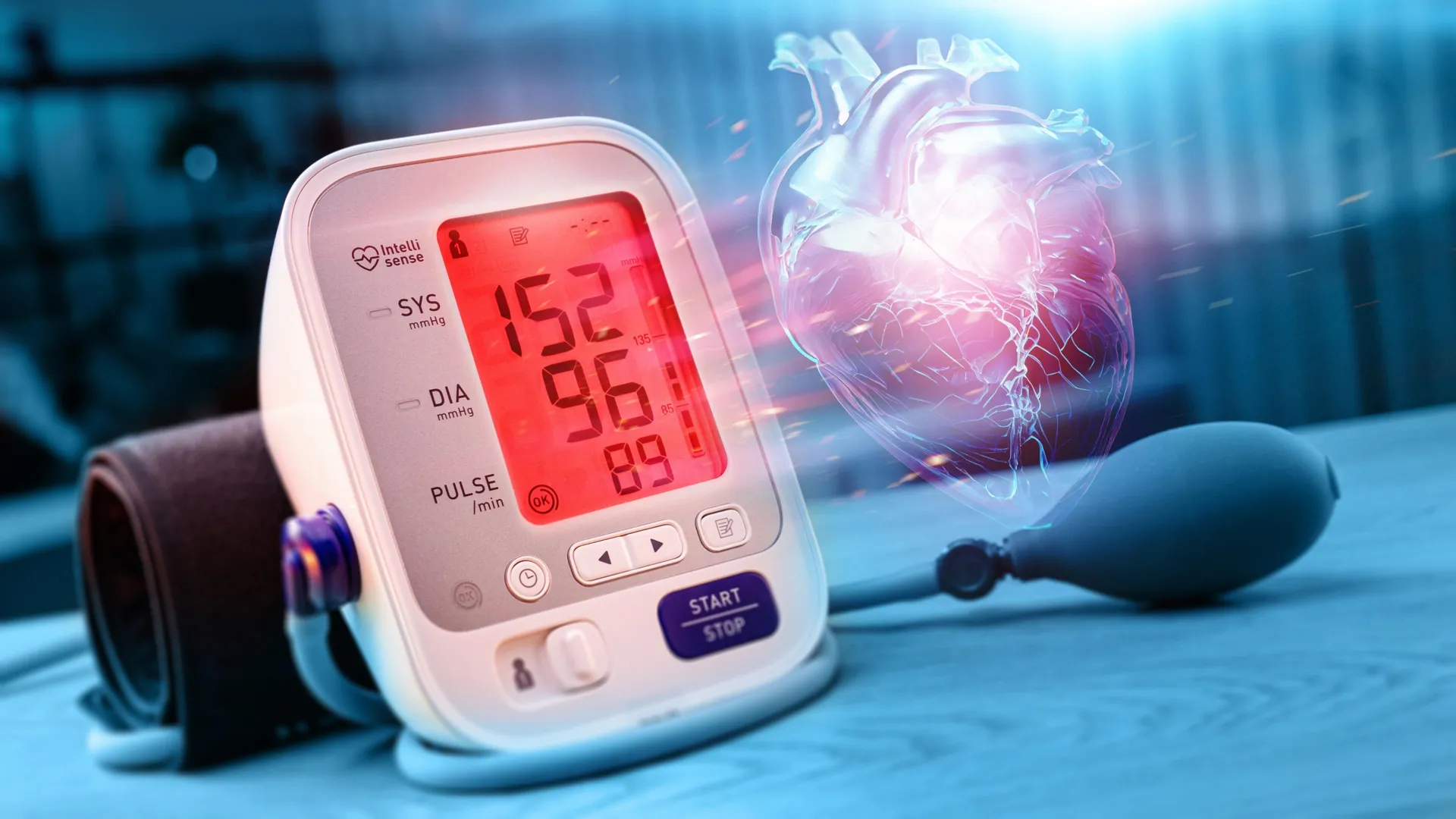
Hypertension, commonly known as high blood pressure, represents a silent epidemic, affecting billions globally and serving as a primary modifiable risk factor for a cascade of life-threatening conditions including heart disease, stroke, and kidney failure. While essential hypertension, influenced by genetics and lifestyle, accounts for the majority of cases, a significant proportion – estimated to be as high as one in five – stems from an often-overlooked and underdiagnosed endocrine disorder: primary aldosteronism (PA). This condition, characterized by the autonomous overproduction of aldosterone, a critical hormone, has historically posed a diagnostic challenge, frequently leading to delayed intervention and preventable complications. However, pioneering research leveraging advanced wearable technology is now poised to fundamentally reshape how healthcare professionals identify and manage this elusive cause of elevated blood pressure.
Aldosterone, produced by the adrenal glands situated atop the kidneys, plays a pivotal role in maintaining the body’s delicate balance of sodium and potassium, thereby regulating blood volume and pressure. In individuals with primary aldosteronism, an excess of this hormone triggers the kidneys to retain more sodium and excrete more potassium, leading to increased fluid retention, elevated blood pressure, and potentially damaging effects on various organ systems. Beyond hypertension, untreated PA significantly escalates the risk of severe cardiovascular events, including myocardial infarction and cerebrovascular accidents, and is also linked to a higher incidence of type 2 diabetes and metabolic syndrome. The gravity of these associated risks underscores the urgent need for more effective diagnostic strategies.
The inherent difficulty in diagnosing PA through conventional means lies in the dynamic and episodic nature of aldosterone secretion. Standard clinical practice typically relies on a single blood test to measure aldosterone and renin levels, often performed during a brief clinic visit. This snapshot approach is fundamentally limited because, as recent scientific investigations reveal, aldosterone levels in PA patients do not remain uniformly elevated throughout the day. Instead, they exhibit significant temporal variability, characterized by intermittent surges and quiescent periods. Crucially, these hormonal bursts are particularly prominent during nighttime hours when routine blood sampling is rarely conducted. A single daytime measurement, therefore, carries a substantial risk of missing these critical fluctuations, leading to an underestimation of the condition’s prevalence and severity.
Addressing this critical diagnostic gap, an international collaborative effort involving leading research institutions – including the University of Bristol and the University of Manchester in the United Kingdom, the University of Bergen in Norway, and esteemed partners in Stockholm and Athens – embarked on a groundbreaking study. Their innovative solution involved the deployment of a sophisticated portable device, originally conceived and developed at the University of Bristol, designed for continuous, real-time monitoring of hormone levels in a patient’s natural home environment. This revolutionary technology, dubbed "U-RHYTHM," has since been further refined and commercialized by the spinout company Dynamic Therapeutics in 2023, signaling its readiness for broader application.
The proof-of-concept study meticulously tracked 60 participants across the collaborating sites. Each individual wore a lightweight, mobile phone-sized device secured at the waist, which non-invasively sampled hormone levels directly from the skin every 20 minutes over a comprehensive 24-hour period. This continuous, unobtrusive data collection allowed participants to carry out their normal daily activities, including sleeping, offering an unparalleled insight into their physiological rhythms without the constraints or artificiality of a hospital setting. The wealth of data gathered through this method provided a granular view of hormone kinetics previously unattainable with intermittent sampling.
The continuous monitoring unveiled a striking and previously unobserved phenomenon: distinct nocturnal surges in aldosterone, alongside its closely related steroid precursors, 18-hydroxycortisol and 18-oxocortisol. These nighttime bursts were not merely random fluctuations but presented as a significant diagnostic signature, particularly pronounced in patients whose primary aldosteronism originated from an issue affecting only one of their adrenal glands (unilateral PA). The clinical relevance of this discovery was further substantiated by a crucial finding: these characteristic hormone spikes completely vanished following the surgical removal of the affected adrenal gland, unequivocally linking these dynamic patterns to the underlying pathology of the disease. This direct correlation provides robust evidence that these nocturnal bursts are not merely an artifact but a critical indicator of PA.
Dr. Thomas Upton, a Clinical Research Fellow at the University of Bristol and Senior Clinical Fellow at Bristol Hospitals NHS Foundation Trust, underscored the transformative potential of these findings. "Primary aldosteronism stands as the most common identifiable cause of secondary hypertension we encounter in our specialized clinics, potentially affecting millions across the UK and beyond," Dr. Upton elaborated. "The current diagnostic pathway, hampered by the circadian variability of hormone production and its inherent complexity, frequently results in significant delays or, regrettably, a complete failure to diagnose. Our study, by enabling continuous monitoring in a patient’s natural habitat, offers a realistic and dynamic understanding of hormonal changes over time. This novel approach holds the promise to fundamentally revolutionize hypertension diagnostics and, crucially, to curtail the incidence of preventable cardiovascular morbidity and mortality, particularly from heart disease and strokes."
Further elaborating on the scientific implications, Dr. Eder Zavala, a UKRI Future Leader Fellow at the University of Manchester and a senior author of the research, commented, "By continuously tracking hormones across a full 24-hour cycle, we succeeded in uncovering a previously obscured pattern of nocturnal hormonal activity. This revelation significantly deepens our comprehension of primary aldosteronism’s pathophysiology, paving the way for earlier detection and more precisely targeted, effective therapeutic interventions for affected individuals." Dr. Zavala also posited that advanced mathematical and computational analyses of these detailed daily hormone profiles could eventually facilitate the identification of even earlier or more subtle manifestations of the disease, thereby expanding opportunities to improve outcomes for patients grappling with high blood pressure.
The paradigm shift suggested by these discoveries necessitates a critical re-evaluation of current clinical practice guidelines for hypertension diagnosis. Professor Stafford Lightman, Professor of Medicine at the University of Bristol and the visionary inventor behind the U-RHYTHM technology, emphasized this imperative. "Our findings strongly indicate that clinicians may need to fundamentally rethink their screening strategies for this disorder," Professor Lightman stated. "While the Endocrine Society’s clinical practice guidelines already recommend considering primary aldosteronism in all individuals presenting with hypertension, the future of diagnosis should logically evolve beyond reliance on single-point blood tests. Instead, it should embrace the tracking of the body’s natural hormone rhythms over extended periods, with particular emphasis on overnight patterns, which appear to harbor vital diagnostic clues. Subsequent research will be crucial in defining optimal clinical pathways that integrate dynamic hormone measurement to ensure the prompt and accurate diagnosis of this common yet frequently missed, and potentially curable, etiology of high blood pressure."
This move towards dynamic, continuous monitoring offers profound implications for patient care. Given that primary aldosteronism is a treatable condition—and in cases of unilateral adrenal involvement, often curable through surgical intervention—early and precise diagnosis can dramatically reduce the lifelong burden of chronic hypertension and its devastating cardiovascular sequelae. The ability to identify and address the root cause of high blood pressure before irreversible organ damage occurs represents a monumental stride towards personalized medicine and preventative healthcare for millions.
The extensive research received generous backing from a consortium of prominent funding bodies, including EU Horizon 2020, the Trond Mohn Foundation, the UKRI Biotechnology and Biological Sciences Research Council (BBSRC), the Medical Research Council, University Hospitals Bristol and Weston NHS Foundation, the Swedish Medical Research Council, and the Knut and Alice Wallenberg Foundation. This collaborative funding underscores the widespread recognition of the project’s significance. Furthermore, the findings align strategically with the University of Bristol’s ‘Grand Challenge’ initiative, which focuses on Understanding and Preventing Cardiovascular Disease, and builds upon existing NIHR-funded programs dedicated to the early identification of individuals at risk for hypertension and other cardiovascular risk factors. The next phase will involve translating these groundbreaking research insights into actionable clinical protocols, ensuring that the benefits of dynamic hormone measurement reach patients globally.
About the Author









