
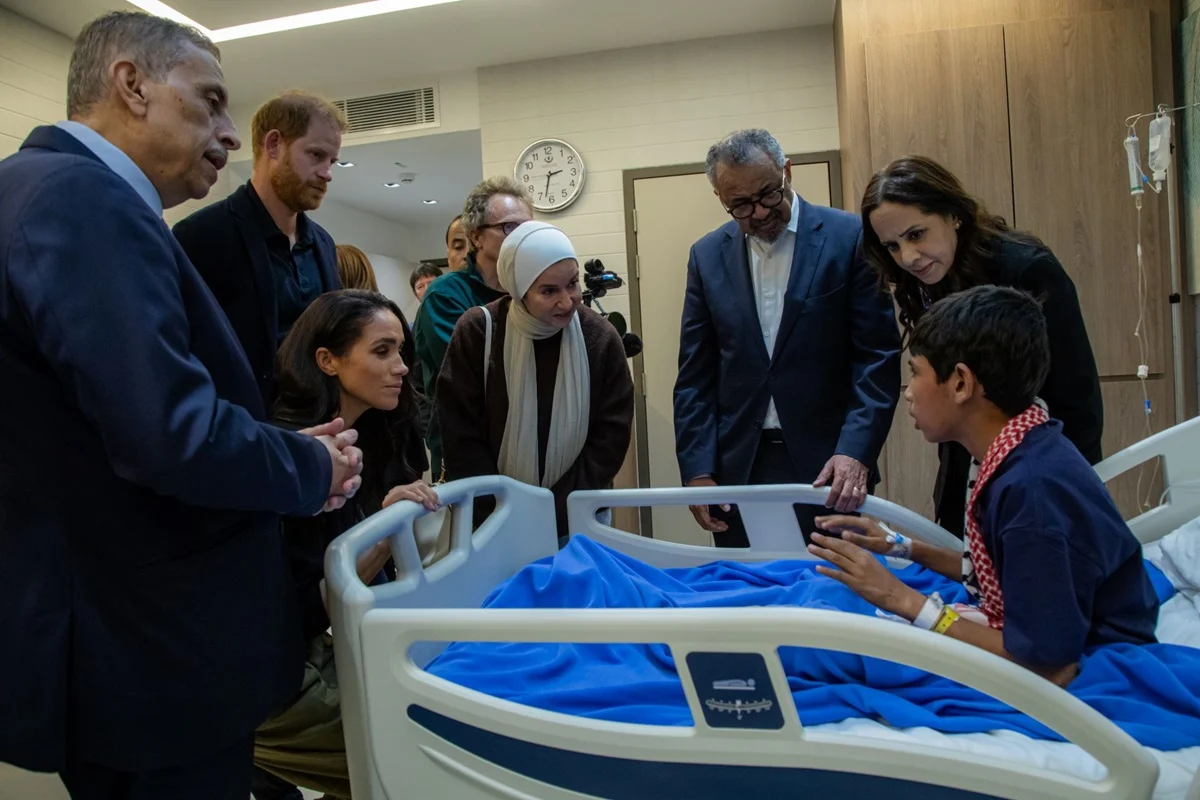
Amman, Jordan – The Hashemite Kingdom of Jordan recently hosted the Director-General of the World Health Organization (WHO), Dr. Tedros Adhanom Ghebreyesus, for a significant two-day state visit, underscoring the profound and enduring collaboration between the global health body and the nation. This high-level engagement served to acknowledge Jordan’s exemplary commitment to advancing universal health coverage (UHC), bolstering mental health services, and providing critical humanitarian health assistance amidst complex regional challenges. The visit emphasized Jordan’s pivotal role not merely as a recipient of aid, but as an active leader and indispensable partner in global health initiatives.
A central point of Dr. Tedros’s itinerary was a crucial audience with His Majesty King Abdullah II. This meeting underscored the strategic importance of the visit and highlighted Jordan’s consistent elevation of health as a fundamental national and international priority. Discussions between the two leaders delved into various critical areas, including strategies for fortifying national health infrastructures, broadening access to essential medical services, and ensuring sustained support for emergency health responses across the broader Middle East. Particular attention was given to the urgent health needs of the Palestinian population, especially those patients who have been medically evacuated from Gaza to Jordan for specialized treatment, and the millions of refugees seeking refuge within the Kingdom’s borders.
Dr. Tedros conveyed his profound appreciation for King Abdullah II’s unwavering dedication to the principles of universal health coverage, acknowledging the monarch’s vision for ensuring equitable access to healthcare for all. He extended heartfelt gratitude to His Majesty and the people of Jordan for their remarkable solidarity and boundless generosity in extending comprehensive health services to an immense refugee population, numbering over three million individuals, predominantly displaced from Gaza and the Syrian Arab Republic. This humanitarian effort, sustained over many years, positions Jordan as a global exemplar of compassion and responsibility.
The WHO Director-General further commended Jordan’s broader leadership in humanitarian affairs, specifically citing the King’s Medical Corridor initiative. This vital program facilitates the delivery of urgent, specialized medical care to severely ill and injured children from Gaza, offering a lifeline to those caught in the throes of conflict. Dr. Tedros underscored that Jordan’s actions consistently demonstrate a profound commitment to prioritizing health and humanity, setting a powerful precedent on the international stage.
During his visit, Dr. Tedros personally witnessed the impact of WHO-supported interventions by visiting a hospital in Jordan dedicated to providing specialized medical care to children evacuated from Gaza. He spent time interacting with young patients and their families, offering words of comfort and encouragement. The Director-General also met with the dedicated frontline health workers who are tirelessly delivering life-saving treatments for a range of conditions, including traumatic injuries, various forms of cancer, and other serious illnesses. This direct engagement served to illuminate the critical importance of the medical evacuation corridor operating through Jordan and reinforced the urgent need for ongoing international support to ensure that children and other vulnerable individuals can continue to access essential, often life-saving, medical attention.
The humanitarian landscape of the Middle East, marked by protracted conflicts and displacement, places an immense burden on host nations like Jordan. The Kingdom, despite its own resource constraints, has consistently opened its borders and its healthcare facilities to those in desperate need. This includes not only direct medical evacuations but also providing primary, secondary, and tertiary care to large refugee populations integrated into its society. The influx of millions of people has strained existing public services, yet Jordan’s commitment to the right to health for all, irrespective of nationality or status, remains steadfast. This commitment is a cornerstone of its partnership with the WHO, which seeks to bolster these efforts through technical assistance, capacity building, and resource mobilization.
A crucial component of Dr. Tedros’s visit involved convening a high-level meeting with a diverse array of health partners, representatives from donor countries, various United Nations agencies, and philanthropic organizations. The primary objective of this gathering was to discuss financing priorities essential for strengthening Jordan’s already robust health system and to coordinate ongoing humanitarian health actions. A significant focus of these discussions was the imperative to scale up mental health services, particularly in contexts of prolonged crisis and displacement, and to ensure adequate support for countries like Jordan that bear the disproportionate responsibility of hosting large refugee populations. Dr. Tedros expressed his profound satisfaction with the strong collaborative spirit demonstrated by all partners and welcomed their continued commitment to investing in health initiatives both within Jordan and across the wider region.
Beyond multilateral engagements, Dr. Tedros held bilateral discussions with Jordan’s Minister of Health. These focused intently on strategies to further reinforce the Kingdom’s health system and accelerate its progress towards achieving universal health coverage. Jordan has distinguished itself globally through its innovative leadership in adopting a primary healthcare-centric approach to achieve UHC. This includes the pioneering integration of mental health services into routine primary care, ensuring that individuals can access crucial psychological support as an integral part of their overall healthcare. The WHO continues to actively support these progressive efforts through the Director-General’s Special Initiative for Mental Health, which aims to transform mental health care globally by promoting access to quality, affordable care for all.
A distinctive aspect of Dr. Tedros’s visit was the accompaniment of the Duke and Duchess of Sussex, Prince Harry and Meghan, during several key engagements. Attending in their capacities as founders of Archewell Philanthropies, the royal couple are long-standing and vocal supporters of the WHO’s vital work. Archewell Philanthropies has a commendable track record of supporting a range of WHO initiatives, from advocating for equitable global access to COVID-19 vaccines to facilitating crucial medical evacuation programs and championing mental health initiatives. Prince Harry, in particular, participated as a prominent ally of WHO’s mental health advocacy, underscoring the paramount importance of investing in mental health services across diverse communities and in emergency settings, with a specific emphasis on the unique needs of men, young people, and children.
Dr. Tedros publicly acknowledged the invaluable contributions of these partners, stating, "I want to thank our partners, including Prince Harry, Duke of Sussex, and Meghan, Duchess of Sussex, whose unwavering commitment to mental health and humanitarian action has been instrumental in bringing much-needed visibility, resources, and hope to some of the world’s most vulnerable communities. Their steadfast collaboration is profoundly advancing WHO’s overarching mission to ensure health for all."
Prince Harry echoed these sentiments, expressing his honor at joining the WHO Director-General in Jordan, a nation he lauded as "leading by example in compassion, resilience, and innovation." He shared that through the work of Archewell Philanthropies, both he and his wife have gained firsthand insight into the tangible impact of WHO’s dedicated efforts to bolster mental health and deliver life-saving care in emergency contexts. The Duke affirmed their deep commitment to raising awareness, actively reducing the pervasive stigma surrounding mental health, and expanding access to vital mental health support for all individuals affected by conflict and crisis. He powerfully articulated that "Mental health is fundamental to recovery, dignity, and long-term peace," emphasizing their pride in standing alongside WHO and its global partners to elevate mental health to a worldwide priority.
The second day of Dr. Tedros’s visit further expanded on Jordan’s comprehensive approach to health. He visited Jordan’s National Center for Rehabilitation of Addicts, a facility that benefits from WHO support and provides a holistic suite of integrated medical, psychological, and social services aimed at recovery and reintegration. These visits highlight Jordan’s understanding that health extends beyond physical ailments to encompass mental well-being and social determinants. He also engaged with various community leaders and women’s groups, including representatives from the Jordanian Hashemite Fund for Human Development, acknowledging their crucial role in fostering community resilience and well-being. Additionally, Dr. Tedros toured the King Hussein Cancer Center, where discussions centered on the latest advancements in cancer care and opportunities for enhanced regional collaboration in oncology.
The State visit culminated with additional engagements involving partners who support humanitarian operations, further solidifying Jordan’s indispensable role. The Kingdom stands as a vital regional hub for medical evacuation, rapid emergency response, and the cultivation of health system resilience in an often-turbulent geopolitical landscape. This visit reaffirmed that Jordan’s strategic location, coupled with its profound humanitarian ethos and progressive health policies, makes it an essential partner in the global quest for health equity and peace. The enduring partnership between Jordan and the WHO continues to serve as a beacon of hope and a model for effective global health collaboration.
About the Author












