
As the global population ages, the focus on maintaining robust physical function in later life has become increasingly critical for preserving independence and overall well-being. Beyond merely extending lifespan, the emphasis has shifted towards enhancing "healthspan," ensuring that individuals can continue to engage actively in daily life with vitality and minimal physical limitations. One of the most significant determinants of healthspan, particularly after the age of 60, is functional strength – the ability to perform everyday tasks with ease, confidence, and safety. The gradual decline in muscle mass and strength, medically termed sarcopenia, is a natural part of the aging process, yet its progression can be significantly mitigated through consistent physical activity and targeted strength training. Understanding one’s current physical capabilities is the first crucial step in developing an effective strategy to counteract age-related decline, empowering individuals to proactively manage their health and fitness trajectory.
Regularly assessing physical strength provides invaluable insights into one’s current fitness level, acting as a dynamic roadmap for personal development and preventative health. Unlike subjective feelings about one’s physical condition, objective assessments offer concrete data, highlighting areas of proficiency and identifying specific weaknesses that warrant focused attention. This diagnostic approach allows individuals to tailor their exercise routines, making their training more efficient and effective. Furthermore, establishing a baseline measurement serves as a tangible reference point, enabling individuals to track their progress over time, celebrate achievements, and adjust goals as their capabilities evolve. This iterative process of assessment, training, and re-assessment fosters a sense of accomplishment and sustained motivation, transforming fitness from a chore into a rewarding journey towards greater physical autonomy and resilience. For older adults, this translates directly into the capacity to navigate life’s physical demands—from rising effortlessly from a low chair to safely ascending and descending stairs, or managing groceries without undue strain—thereby bolstering their self-reliance and quality of life.
The selection of appropriate assessment tools is paramount for accuracy and accessibility. For individuals over sixty, the ideal strength evaluation protocol should incorporate fundamental human movement patterns that directly correlate with activities of daily living. These movements must be practical, widely recognizable, and scalable to accommodate varying fitness levels, ensuring that the assessment itself does not pose an undue risk. The three classic exercises outlined in this protocol – the incline push-up, the bodyweight squat, and the alternating reverse lunge – have been chosen precisely for these attributes. Individually, each movement targets distinct muscle groups and embodies a specific type of functional strength; collectively, they offer a comprehensive snapshot of an individual’s upper body pressing power, lower body foundational strength, and crucial single-leg balance and stability. This synergistic combination creates a robust, yet straightforward, benchmark to gauge functional physical capacity.
The Incline Push-Up: Upper Body Pressing Power and Core Stability
The incline push-up serves as an excellent measure of upper body pushing strength and anterior core stability, a movement pattern essential for numerous daily activities, such as pushing open heavy doors, steadying oneself against a surface, or safely pushing oneself up from a fall. By elevating the hands, this modification of the traditional push-up reduces the percentage of body weight being lifted, making the exercise more accessible while still engaging the primary muscles of the chest (pectorals), shoulders (deltoids), and the back of the arms (triceps), alongside the abdominal muscles for trunk stabilization. This adaptability ensures that individuals can participate regardless of their current strength level, gradually progressing as their capacity improves.
Muscles Primarily Engaged: Pectoralis major, anterior deltoids, triceps brachii, and rectus abdominis.
Execution Guidelines:

- Position yourself facing a sturdy elevated surface, such as a counter, sturdy table, or wall. Place your hands slightly wider than shoulder-width apart on the surface, fingers pointing forward.
- Step your feet back until your body forms a straight line from your head to your heels, ensuring your core is engaged and your hips are not sagging or piking upwards.
- Initiate the downward phase by bending your elbows, allowing your chest to move towards the elevated surface. Maintain a controlled descent, ensuring your elbows track backwards at approximately a 45-degree angle to your torso, avoiding flaring them out wide.
- Lower until your chest is a few inches from the surface or until your elbows reach at least a 90-degree angle.
- Press actively through your hands, engaging your chest and triceps, to return to the starting straight-arm position, maintaining the rigid body line throughout the movement.
- Focus on controlling the movement rather than rushing through repetitions.
Challenge Standard: Successfully complete 12 repetitions with consistent form, maintaining a straight body line and achieving at least a 90-degree bend in the elbows.
Adaptations for Progression or Regression:
- To Simplify: Utilize a higher incline surface, such as a wall or a very high countertop, to further reduce the load.
- To Intensify: Progress to a lower surface (e.g., a sturdy chair, bench, or step) or transition to a full floor push-up once the standard can be comfortably exceeded.
Key Form Cue: Actively "pull" your shoulder blades down and back slightly as you descend, then "push" the surface away from you forcefully at the top, ensuring full lockout without hyperextending elbows. Keep your gaze neutral, maintaining head alignment with your spine.
The Bodyweight Squat: Foundational Lower Body Strength and Mobility
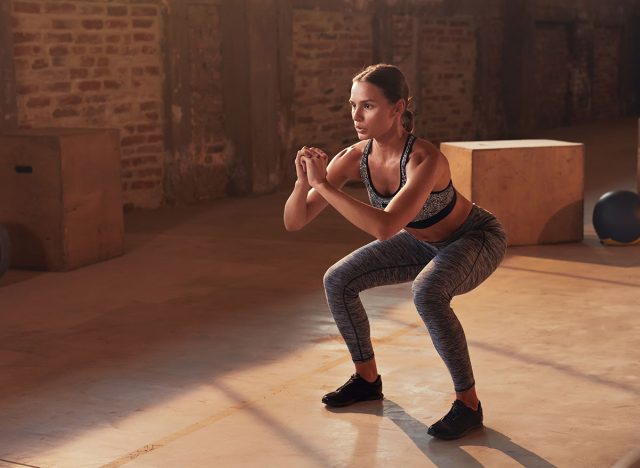
The bodyweight squat is arguably one of the most fundamental and universally applicable human movements, directly translating to actions like sitting, standing, and lifting objects from the floor. As a comprehensive lower body exercise, it assesses the strength and mobility of the hips, knees, and ankles, engaging large muscle groups critical for propulsion, support, and stability. For individuals over sixty, a proficient squat indicates robust lower body strength, which is vital for maintaining mobility, preventing falls, and preserving the ability to perform daily self-care tasks without assistance. The repetition of this familiar pattern provides a clear gauge of muscular endurance and joint integrity.
Muscles Primarily Engaged: Quadriceps, gluteus maximus, hamstrings, and erector spinae (for core stability).
Execution Guidelines:
- Stand with your feet approximately shoulder-width apart, toes pointing slightly outward (comfortable for your hip anatomy). Maintain an upright posture with your chest lifted and shoulders relaxed.
- Initiate the movement by hinging at your hips as if you are about to sit down in a chair, simultaneously bending your knees.
- Descend slowly and with control, ensuring your knees track in the same direction as your toes and do not collapse inward. Keep your heels firmly planted on the ground throughout the movement.
- Aim to lower your hips until your thighs are parallel to the floor, or as deep as your mobility comfortably allows without compromising form (e.g., rounding your lower back or lifting your heels).
- Drive through your entire foot, particularly your heels, to powerfully return to the standing position, fully extending your hips and knees at the top without locking them out excessively.
- Maintain a neutral spine and engaged core throughout, keeping your gaze straight ahead.
Challenge Standard: Complete 15 repetitions with consistent depth, reaching at least parallel thighs, and achieving full hip and knee extension at the top of each repetition.

Adaptations for Progression or Regression:
- To Simplify: Perform box squats by lowering yourself onto a sturdy chair or bench, ensuring controlled contact before standing back up. The height of the box can be adjusted.
- To Intensify: Introduce a slower eccentric (lowering) phase, pause briefly at the bottom of the squat, or incorporate isometric holds at various depths to increase time under tension.
Key Form Cue: Imagine pushing your knees outwards as you descend, actively engaging your glutes. Keep your chest proud and avoid letting your back round, particularly at the bottom of the movement.
The Alternating Reverse Lunge: Single-Leg Stability and Balance
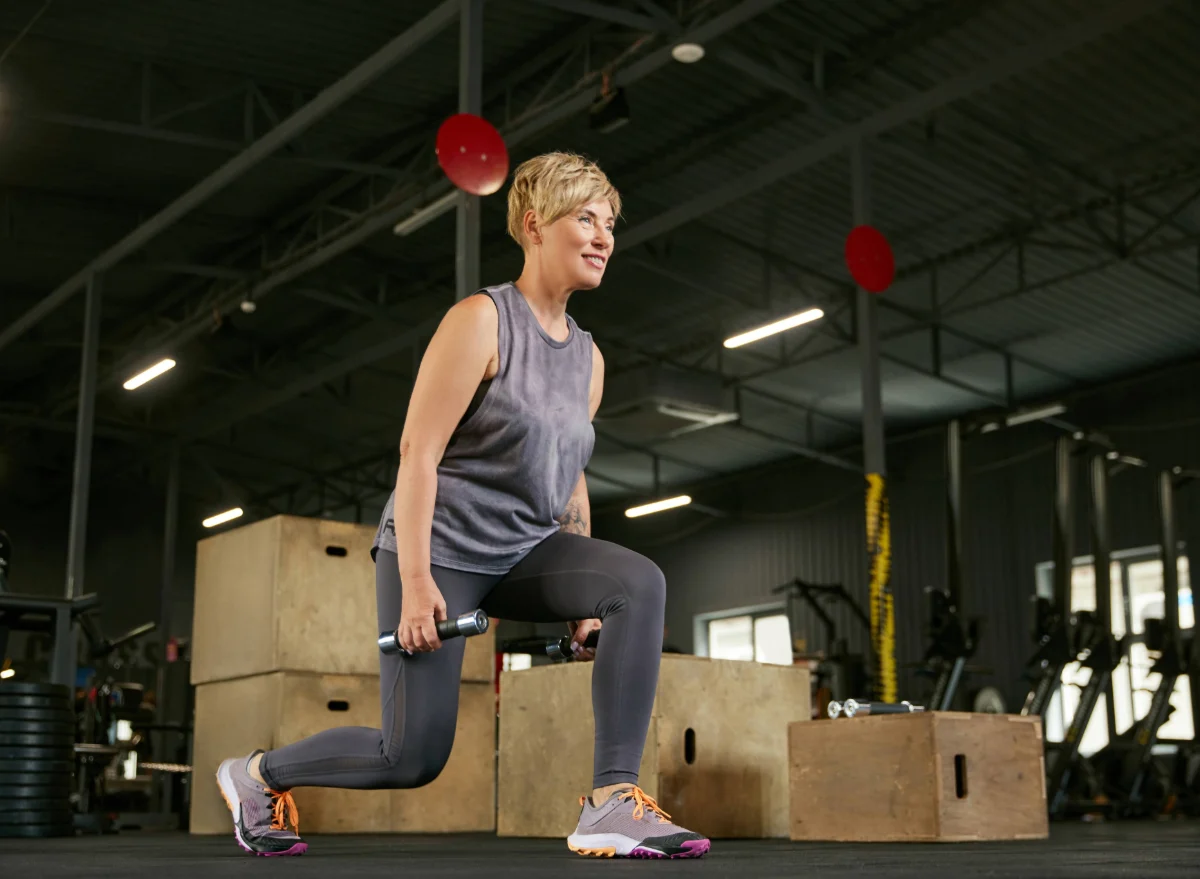
The alternating reverse lunge is a dynamic exercise that uniquely assesses single-leg strength, balance, and coordination – components that are critically important for gait, navigating uneven terrain, and preventing falls. Unlike bilateral movements, lunges challenge each leg independently, revealing potential asymmetries in strength and stability. The stepping-back motion of the reverse lunge places less stress on the knee compared to a forward lunge and allows for greater control, making it an excellent choice for a functional assessment in older adults. It simulates the demands of walking and climbing stairs, requiring both strength and proprioceptive awareness.
Muscles Primarily Engaged: Gluteus maximus, quadriceps, hamstrings, and calves, with significant involvement of core stabilizers.
Execution Guidelines:
- Begin in a standing position, feet hip-width apart, with your chest upright and shoulders relaxed.
- Take a controlled step backward with one leg, allowing both knees to bend.
- Lower your hips until your front thigh is parallel to the floor and your back knee hovers just above the ground (or as far as comfortable without pain). Ensure your front knee remains stacked over your ankle and does not extend past your toes.
- The weight should be primarily in the heel of your front foot and the ball of your back foot. Maintain an upright torso throughout the movement, avoiding leaning too far forward.
- Drive through the heel of your front foot to powerfully push back to the starting standing position, bringing your back foot forward to meet the front.
- Alternate legs with each repetition, maintaining balance and control.
Challenge Standard: Successfully complete 8 repetitions per side (16 total alternating reps) with fluid movement, without pushing off the back leg for momentum, losing balance significantly, or shortening the range of motion as fatigue sets in.
Adaptations for Progression or Regression:
- To Simplify: Hold onto a sturdy support (e.g., a wall, railing, or chair) for balance assistance. Reduce the depth of the lunge if full range is challenging.
- To Intensify: Incorporate light dumbbells held at your sides, increase the duration of the eccentric phase, or pause briefly at the bottom of each lunge.
Key Form Cue: Ensure your step back is sufficient to allow both knees to form approximately 90-degree angles at the bottom. Keep your hips level and avoid twisting your torso.
Interpreting Your Assessment Results
Successfully completing all three of these strength standards after the age of 60 is a strong indicator of robust functional fitness and demonstrates a level of physical capability that is often considered above average for this demographic. This achievement signifies more than just isolated muscle strength; it suggests a well-rounded ability to perform fundamental human movements with control, stability, and endurance across various planes of motion. Passing these benchmarks implies that your body possesses the necessary physical reserves to comfortably manage typical daily demands, effectively reducing the risk of falls and supporting a higher degree of self-sufficiency.
It is particularly noteworthy if you can execute all three exercises without significant degradation in form or noticeable struggle as the repetitions accumulate. This suggests a comprehensive strength profile, indicating that your upper body, lower body, and core work synergistically. Many individuals might excel in one movement pattern but exhibit weaknesses in others. Meeting all three standards points to a balanced foundation of strength and motor control, which is crucial for overall physical resilience. If, however, you find one specific exercise challenging, this serves as valuable, actionable feedback. It precisely identifies areas that require more focused attention and dedicated training, allowing you to personalize your fitness regimen for targeted improvement.
Strategies for Continuous Improvement
Regardless of your initial performance, this three-exercise protocol is designed to be a starting point for ongoing physical development. If you did not meet the standards for one or more exercises, do not view this as a failure, but rather as a clear directive for your future training efforts. Begin by incorporating the modified, easier versions of the challenging movements into your routine, focusing intently on mastering proper form before increasing intensity or range of motion. Consistency is paramount; regular engagement with these exercises, even in their regressed forms, will yield progressive improvements.
The principle of progressive overload is key: gradually increase the demand on your muscles as they adapt. This could mean attempting more repetitions, moving to a harder variation (e.g., a lower incline for push-ups), or reducing reliance on support for lunges. Listen carefully to your body, prioritizing pain-free movement over arbitrary performance goals. Incorporating these movements two to three times per week, with adequate rest between sessions, can lead to significant gains in strength, balance, and confidence. For personalized guidance and to ensure safe and effective progression, consulting with a qualified fitness professional or physical therapist is highly recommended, especially when beginning a new exercise regimen or addressing specific physical limitations.
Broader Implications for Lifelong Wellness
The pursuit of functional strength extends far beyond merely completing a set of exercises; it is an investment in a higher quality of life, greater autonomy, and enhanced resilience throughout the aging process. Maintaining robust strength contributes significantly to metabolic health by improving insulin sensitivity and aiding in weight management. It plays a critical role in bone density preservation, which is vital in preventing osteoporosis and fractures. Moreover, regular physical activity, particularly strength training, has been linked to improved cognitive function, better mood, and reduced risk of chronic diseases. By embracing a proactive approach to physical fitness, individuals over sixty can not only meet but exceed the demands of daily living, continuing to enjoy hobbies, travel, and social engagements with vigor and confidence. This ongoing commitment to movement and strength truly underpins the capacity to live a full, active, and independent life well into the senior years.
About the Author










