
Maintaining robust posture as individuals advance in age transcends mere aesthetic considerations, evolving into a critical determinant of overall physiological well-being and functional independence. A well-aligned spine ensures that the body’s mass is distributed effectively over the feet, which is fundamental for preserving balance, minimizing the risk of falls, and supporting safe, effective movement during physical activities. This proper alignment is not only crucial for daily tasks but also underpins performance in various leisure pursuits, from engaging in sports like pickleball and golf to practicing yoga, dancing, or gardening. As reported by Harvard Health Publishing, correct bodily form during exercise is pivotal for injury prevention and achieving fitness objectives. Therefore, integrating targeted physical activity, particularly balance training, can profoundly enhance an individual’s capacity to participate in and enjoy these beloved hobbies.
The natural aging process often brings about physiological changes that can compromise spinal integrity and muscular support, leading to a gradual decline in postural alignment. Factors such as sarcopenia, the age-related loss of muscle mass and strength, coupled with decreased bone density, intervertebral disc degeneration, and prolonged sedentary habits, contribute significantly to the development of conditions like kyphosis, commonly known as a rounded upper back. This forward head and shoulder posture can lead to a cascade of negative health consequences, including chronic back and neck pain, reduced lung capacity due to compressed thoracic cavity, impaired digestion, diminished balance, and a general decrease in mobility and quality of life. Addressing these postural shifts proactively, rather than reactively, is paramount for healthy aging.
While the immediate instinct for some experiencing postural discomfort might be to seek external support through devices like back braces, expert opinion frequently cautions against long-term reliance on such aids. Jessi Heinsohn, a Doctor of Physical Therapy (DPT) affiliated with ATI Physical Therapy, underscores a critical distinction between temporary support and sustainable correction. Dr. Heinsohn posits that habitually depending on a back brace can inadvertently hinder the body’s intrinsic ability to maintain proper alignment. She draws an analogy to using a calculator for every arithmetic problem: while it provides the correct answer, it prevents the user from developing their own mathematical proficiency. Similarly, external bracing can cause the brain to disengage the very muscles responsible for postural support.
The human body is remarkably efficient, programmed to conserve energy whenever possible. When an external "crutch" like a back brace is introduced, the body’s natural tendency is to rely on it, thereby allowing the internal support musculature to become dormant. This continuous disengagement leads to muscular atrophy, where muscles weaken and shrink from lack of use. Consequently, the individual’s inherent resting posture may deteriorate further over time, creating a dependency cycle. Braces, while sometimes necessary in specific clinical scenarios such as acute injury recovery, post-surgical stabilization, or for severe spinal conditions, are generally not advocated as a primary solution for chronic postural improvement, particularly for older adults seeking to enhance their general spinal health and mobility. Instead, a more active, strengthening-based approach is recommended to foster lasting change.
Empowering individuals to cultivate their own internal support system for optimal posture is the cornerstone of effective, long-term intervention. This involves engaging in specific exercises designed to strengthen the core musculature, improve spinal mobility, and re-educate the body’s proprioceptive awareness. Dr. Heinsohn advocates for a series of accessible, at-home exercises that can yield more profound and enduring benefits than passive bracing for individuals over sixty. These movements focus on fortifying the deep stabilizing muscles of the spine and trunk, which are essential for maintaining an upright, balanced posture throughout daily activities.
One highly effective exercise is Scapular Retractions, which specifically targets the muscles of the central thoracic region. This movement is crucial for promoting optimal shoulder blade positioning and enhancing upper-trunk posture. The muscles primarily engaged include the rhomboids and trapezius, which are vital for drawing the shoulder blades together and down, counteracting the common tendency for shoulders to round forward. When performing scapular retractions, individuals should focus on gently squeezing their shoulder blades together as if trying to hold a pencil between them, without shrugging their shoulders towards their ears. This action should initiate a feeling of activation between the shoulder blades, rather than significant tension in the neck or anterior chest. It is important to avoid overextending the movement, which could cause the chest to thrust forward or the lower back to arch, indicating that the spinal stabilizers are not adequately engaged. Consistent practice of this exercise helps to reinforce the neurological pathways for proper scapular control, leading to improved alignment of the upper back and shoulders and mitigating the "slouched" appearance often associated with poor posture. For progression, individuals can add light resistance bands around their forearms or hold small weights while performing the retraction.
Another fundamental exercise is the Seated Good Morning, which primarily strengthens the posterior chain. This extensive group of interconnected muscles spans the entire backside of the body, from the erector spinae along the spine, through the glutes, hamstrings, and even down to the calves. These muscles are instrumental in supporting the spine, extending the hips, and maintaining an upright torso. To perform a seated good morning, an individual sits upright on a chair with feet flat on the floor, then gently hinges forward at the hips, keeping the back straight and chest open. The movement should originate from the hips, not the waist, ensuring that the spine remains neutral. The depth of the forward hinge will be influenced by hip mobility, and participants should only go as far as comfortably possible while maintaining impeccable form. As flexibility and strength improve with regular practice, the range of motion will naturally increase. Dr. Heinsohn advises executing this movement slowly and deliberately, incorporating a brief pause at the lowest point to maximize muscle engagement throughout the posterior chain. This deliberate pace encourages greater control and activation of the deep spinal stabilizers. Progression can involve holding a light weight (e.g., a dumbbell or medicine ball) against the chest, or eventually progressing to a standing good morning with a broomstick or light barbell once strength and form are well-established.
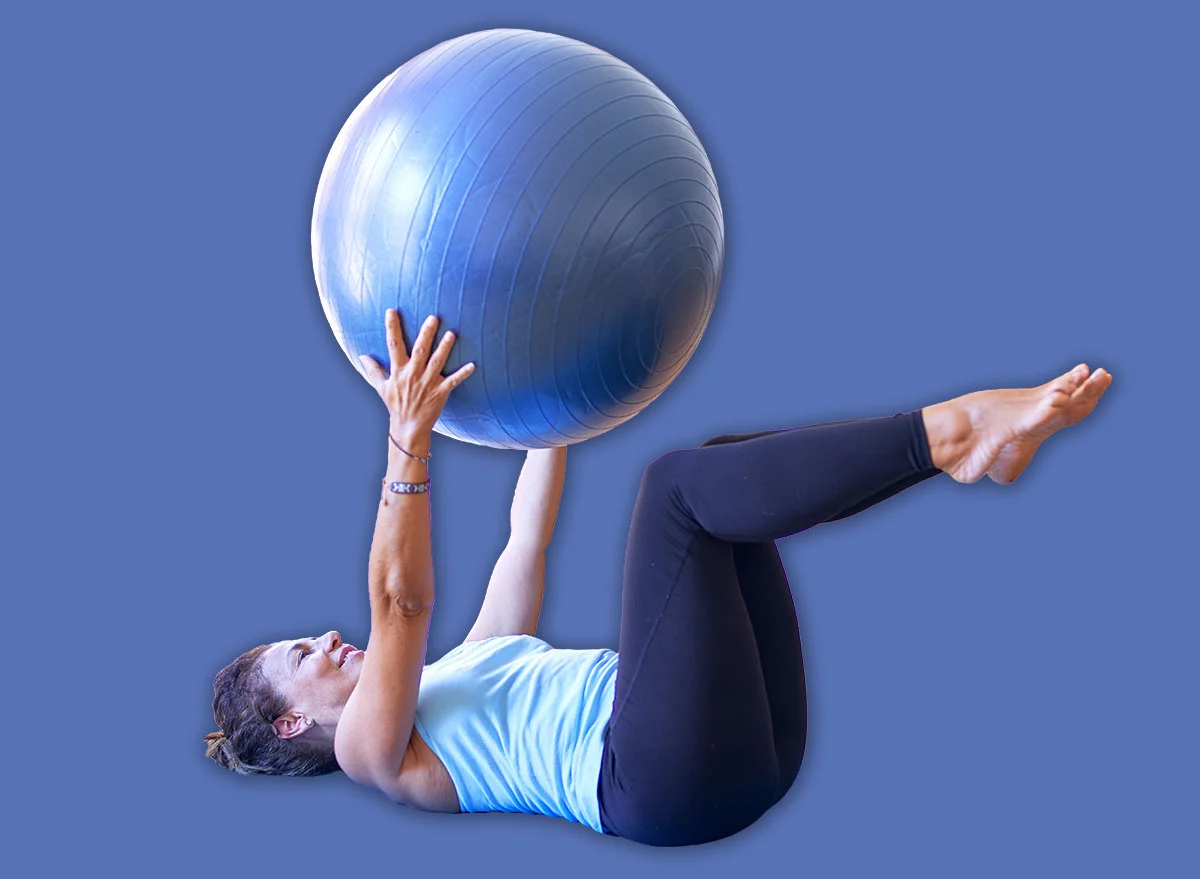
To fortify the deep core muscles, the 90/90 Dead Bug Isometric With Swiss Ball offers an excellent starting point that is adaptable for various fitness levels. This exercise specifically targets the transverse abdominis, a crucial deep abdominal muscle that acts like a natural corset, providing essential support and stability to the lumbar spine. It also engages the multifidus, small muscles running along the spine that contribute to segmental stability. To perform this, lie on your back with knees bent at 90 degrees and feet flat. Place a Swiss ball between your knees and hands, pressing gently into the ball. The key is to maintain constant pressure on the ball while keeping the lower back pressed into the mat, preventing any arching. Proper breathing throughout the hold is paramount; exhaling deeply as you press into the ball helps activate the transverse abdominis more effectively, preventing reliance on breath-holding (Valsalva maneuver) for spinal stability. For beginners, simply holding this position is beneficial. To increase the challenge, individuals can lift their feet off the mat, maintaining the 90-degree knee bend, and apply greater pressure into the Swiss ball. Further progression might involve extending one leg or arm slowly while maintaining core engagement, or performing the traditional dead bug without the ball, focusing on controlled limb movements.
Finally, Wall Angels are an invaluable exercise for enhancing upper back strength, improving shoulder and scapular stability, and addressing common postural deviations like forward head posture and rounded shoulders. This movement dynamically stretches the pectoralis muscles (chest) while strengthening the scapular stabilizers (muscles surrounding the shoulder blades) and improving thoracic spine mobility. To execute a wall angel, stand with your back against a wall, ensuring your head, shoulders, and hips are in contact with the surface. If your head doesn’t comfortably touch the wall with a tucked chin, a small rolled towel behind the head can provide support. Position your arms with elbows bent at 90 degrees, forearms flat against the wall, resembling a goalpost. Slowly slide your arms upwards along the wall, keeping your wrists and elbows in contact, until your arms are fully extended overhead. Then, reverse the movement, sliding them back down to the starting position. The objective is to maintain continuous contact of the entire arm (from wrist to elbow) with the wall throughout the motion. This exercise effectively opens the chest, strengthens the muscles that retract and depress the scapulae, and encourages better alignment of the upper spine and neck. Progression can involve using a resistance band around the wrists or forearms to increase the effort needed to maintain contact with the wall.
Beyond these targeted exercises, adopting a holistic approach to postural health is essential. This encompasses being mindful of ergonomic principles in daily life, such as optimizing workstation setup, practicing correct lifting techniques, and being aware of habitual standing and sitting postures. Regular stretching, adequate hydration, balanced nutrition, and sufficient sleep also play supportive roles in maintaining muscle health and overall physical resilience. For individuals experiencing persistent pain or significant postural concerns, consulting with a physical therapist or other healthcare professional is always advisable. A personalized assessment can help identify specific imbalances and create a tailored exercise program, ensuring that interventions are safe, effective, and aligned with individual needs and capabilities. By actively engaging in strengthening and mobility exercises, older adults can reclaim control over their spinal alignment, enhance their functional capacity, and significantly improve their long-term quality of life, far surpassing the temporary relief offered by passive external supports.
About the Author










