
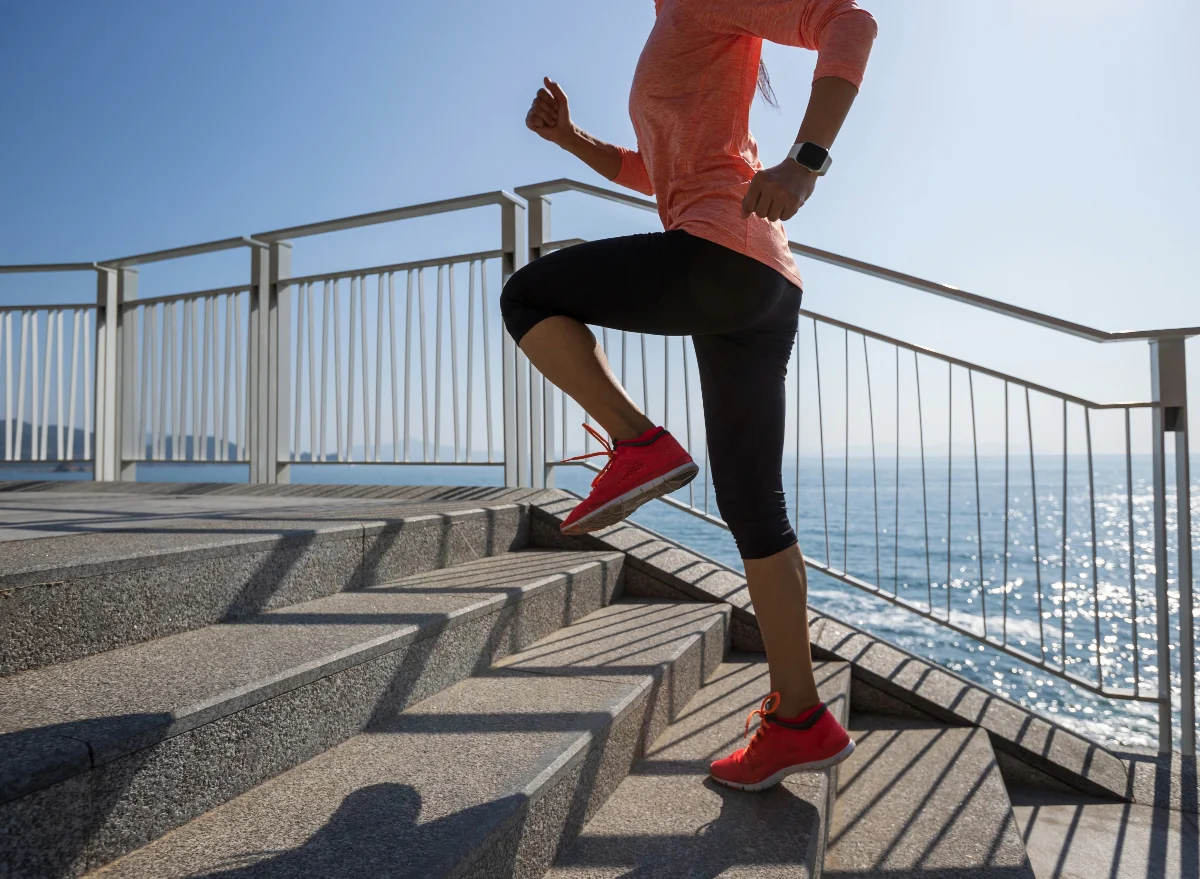
As individuals progress through their sixth decade and beyond, maintaining functional independence becomes a paramount concern, profoundly influencing quality of life. Among the many daily activities that test physical capacity, ascending and descending stairs stands out as a critical benchmark for lower body strength, balance, and overall mobility. The ability to navigate staircases effortlessly is not merely a convenience; it is a key indicator of robust musculoskeletal health, significantly impacting confidence and the capacity to engage fully with one’s environment. This comprehensive guide explores how targeted, standing-based exercises can effectively enhance the leg and hip strength essential for older adults to conquer stairs with renewed vigor and stability, offering a distinct advantage over traditional methods for some individuals.
The act of climbing stairs is a complex biomechanical task that places substantial demands on the lower kinetic chain. Each step requires a powerful concentric contraction from the leading leg to lift the body upwards, followed by controlled eccentric strength in the trailing leg to manage the descent. Simultaneously, the hips and core must provide dynamic stabilization to prevent undue sway and maintain equilibrium, while the knees track correctly under load. For many individuals over the age of 60, age-related physiological changes, such as sarcopenia—the gradual loss of muscle mass and strength—and declines in balance and proprioception, can transform a simple flight of stairs into a formidable challenge. This often leads to increased fatigue, a sense of instability, and a natural tendency to avoid situations requiring stair use, which can further accelerate physical decline.
While exercises like lunges are undeniably effective for developing lower body strength and muscular endurance, they may not always be the most accessible starting point for everyone, particularly those with balance concerns or knee discomfort. The unique benefit of "no-floor" or standing exercises lies in their direct transference to real-world movements. Since stair climbing occurs entirely on one’s feet, training the body in an upright position mirrors the functional demands of the activity, thereby maximizing the practical benefits of the workout. This approach prioritizes stability, controlled movement, and the ability to bear and shift weight while standing, offering a highly specific and often more comfortable pathway to regaining stair-climbing prowess. These methods focus on enhancing the integral strength of the thighs, glutes, hips, and core, without necessitating intricate or overly strenuous maneuvers.
Here are four foundational standing exercises, meticulously selected for their effectiveness in restoring lower body function and promoting stair-climbing confidence in older adults. Each movement targets distinct aspects of strength and stability crucial for navigating vertical transitions.
1. Mini-Band Lateral Walk: Cultivating Hip Stability
Before addressing the challenge of vertical elevation, it is crucial to establish a stable base, particularly within the hips. The Mini-Band Lateral Walk is an outstanding exercise for strengthening the gluteus medius and minimus, muscles located on the outer sides of the hips. These often-overlooked muscles are paramount for pelvic stability, especially during single-leg stance, which is precisely the position your body adopts with every step taken on a staircase. When these muscles are strong, they prevent the pelvis from dropping on the unsupported side, leading to better knee tracking and a more controlled, stable ascent or descent. Weakness in these areas can manifest as a noticeable waddle or instability when walking, which is exacerbated on stairs.
To perform this exercise, place a resistance mini-band around your ankles or just above your knees. Stand with feet hip-width apart, knees slightly bent, and maintain a tall posture. Taking small, deliberate steps, move sideways, ensuring constant tension on the band. Focus on initiating the movement from the hip, rather than just dragging your foot. The goal is to feel the engagement in your outer glutes throughout the movement. Keeping the steps small prevents the band from losing tension, ensuring continuous activation of the target muscles. Perform 2 to 3 sets, taking 5 to 8 steps in each direction, resting for 30 to 45 seconds between sets. For variations, consider placing the band higher (above knees for less resistance) or performing supported lateral walks using a wall or railing for balance. The key form tip is to maintain consistent tension on the resistance band throughout the entire movement.
Muscles Targeted: Glutes (especially medius and minimus), outer hips, quadriceps, hamstrings, core.
2. Box Step-Up: Direct Stair Simulation
The Box Step-Up is arguably the most direct and functionally relevant exercise for improving stair-climbing ability, as it closely mimics the biomechanics of ascending a step. This movement directly trains the concentric strength required to lift your body weight upwards and the eccentric control needed to lower it back down safely. It builds confidence by allowing individuals to practice the exact motor pattern of stair use in a controlled environment.
Begin by selecting a box or step of a manageable height. For many older adults, starting with a very low platform (e.g., 4-6 inches) is advisable to ensure proper form and safety. Stand facing the box, then place one entire foot firmly on the center of the surface. Crucially, drive through the heel and midfoot of the elevated leg to push your body upward, bringing the trailing leg to meet it on the box. Control the descent by slowly lowering the original trailing leg back to the floor, allowing the working leg to absorb the impact. The emphasis should be on the leg already on the box doing the majority of the work, rather than pushing off the ground with the back foot. Utilize a wall, chair, or railing for support if balance is a concern. Execute 2 to 3 sets of 6 to 10 repetitions per leg, allowing 45 to 60 seconds of rest between sets. Progression can involve increasing the box height, decreasing support, or slowing down the tempo for enhanced eccentric control. A critical form cue is to ensure your entire foot is placed securely on the box before initiating the upward movement.
Muscles Targeted: Quadriceps, glutes, hamstrings, calves, core.

3. Split Squat Isometric Hold: Enhancing Single-Leg Endurance and Stability
Many individuals experience a sensation of instability or "shakiness" when holding a single-leg position, a common occurrence during stair climbing as one foot transitions between steps. The Split Squat Isometric Hold specifically addresses this by building static strength and endurance in a unilateral stance. Unlike dynamic lunges, which involve continuous movement, this isometric hold allows for focused engagement of stabilizing muscles, improving balance and control without the added complexity of repetitive motion.
Start in a staggered stance, one foot forward and the other back, as if preparing for a lunge. Distribute your weight primarily over the front leg. Slowly lower your hips until your front thigh is roughly parallel to the floor, or to a depth where you feel stable and can maintain good form. Hold this position for a prescribed duration. During the hold, your front quadriceps should be actively engaged, your glute supporting the position, and your core braced to keep your torso upright and steady. This static contraction builds resilience in the muscles responsible for maintaining equilibrium during single-leg support. Again, a chair or counter can be used for balance assistance. Aim for 2 to 3 holds of 15 to 30 seconds per side, resting for 45 to 60 seconds between holds. Modifications include holding at a shallower depth or for shorter durations. The most important form tip is to keep the entire front foot firmly planted on the ground, distributing weight evenly.
Muscles Targeted: Quadriceps, glutes, hamstrings, calves, core.
4. Goblet Box Squat: Foundation for Powerful Standing
The Goblet Box Squat is an excellent functional movement that strengthens the primary muscles responsible for both standing up and climbing, namely the quadriceps and glutes. The addition of a box provides a clear target, ensuring consistent depth and offering a sense of security, which is particularly beneficial for individuals concerned about losing balance or squatting too low. Holding a weight (like a dumbbell or kettlebell) at chest level in a "goblet" position helps to counterbalance the body, promoting an upright torso and engaging the core and upper back muscles for improved posture.
Stand with your feet shoulder-width apart, toes pointed slightly outwards, holding a dumbbell or kettlebell vertically against your chest. Position yourself in front of a sturdy box or chair. Initiate the movement by pushing your hips back and bending your knees, as if sitting down, until your glutes lightly touch the box. The box serves as a tactile cue for depth and a momentary rest point, allowing you to reset and focus on the upward drive. From the seated position, drive through your heels and midfoot to return to a standing position, squeezing your glutes at the top. Choose a box height that allows you to reach a comfortable depth without rocking forward to stand up. Perform 2 to 3 sets of 8 to 12 repetitions, with 45 to 60 seconds of rest between sets. For progression, consider increasing the weight, using a lower box, or slowing down the movement. The key is to lightly touch the box, avoiding a full sit-down and relaxation, to maintain muscle tension.
Muscles Targeted: Quadriceps, glutes, hamstrings, core, upper back.
Integrating These Exercises into a Routine for Lasting Mobility
To effectively build and maintain stair-climbing strength, these exercises should be incorporated into a regular fitness regimen. A frequency of two to four days per week, allowing for adequate rest and recovery, is generally recommended. On days when these strength exercises are performed, ensure a thorough warm-up, including light cardio and dynamic stretches, and conclude with a cool-down involving static stretches.
Beyond the specific movements, consistency is paramount. Listen to your body, adjusting the intensity, volume, or choice of variations as needed. For beginners, prioritizing perfect form over heavy weights or high repetitions is crucial. As strength and confidence improve, gradual progression can involve increasing resistance (e.g., heavier mini-bands, holding heavier weights), increasing the height of the step-up box, extending hold durations, or reducing reliance on external support. On days when your legs feel fresh and strong, actively practice navigating stairs at a comfortable, controlled pace to directly apply the strength gained.
The benefits of engaging in this type of functional strength training extend far beyond merely improving stair navigation. Enhanced lower body strength and stability are fundamental components of overall physical independence. These exercises contribute significantly to improved balance, reducing the risk of falls—a major concern for older adults. They foster greater confidence in performing daily tasks, from standing up from a chair to carrying groceries, thereby empowering individuals to maintain an active and autonomous lifestyle. By proactively addressing muscle strength and functional movement patterns, older adults can not only reclaim the ease of stair climbing but also unlock a broader spectrum of physical capabilities, ensuring a more vibrant and independent future.
About the Author










