
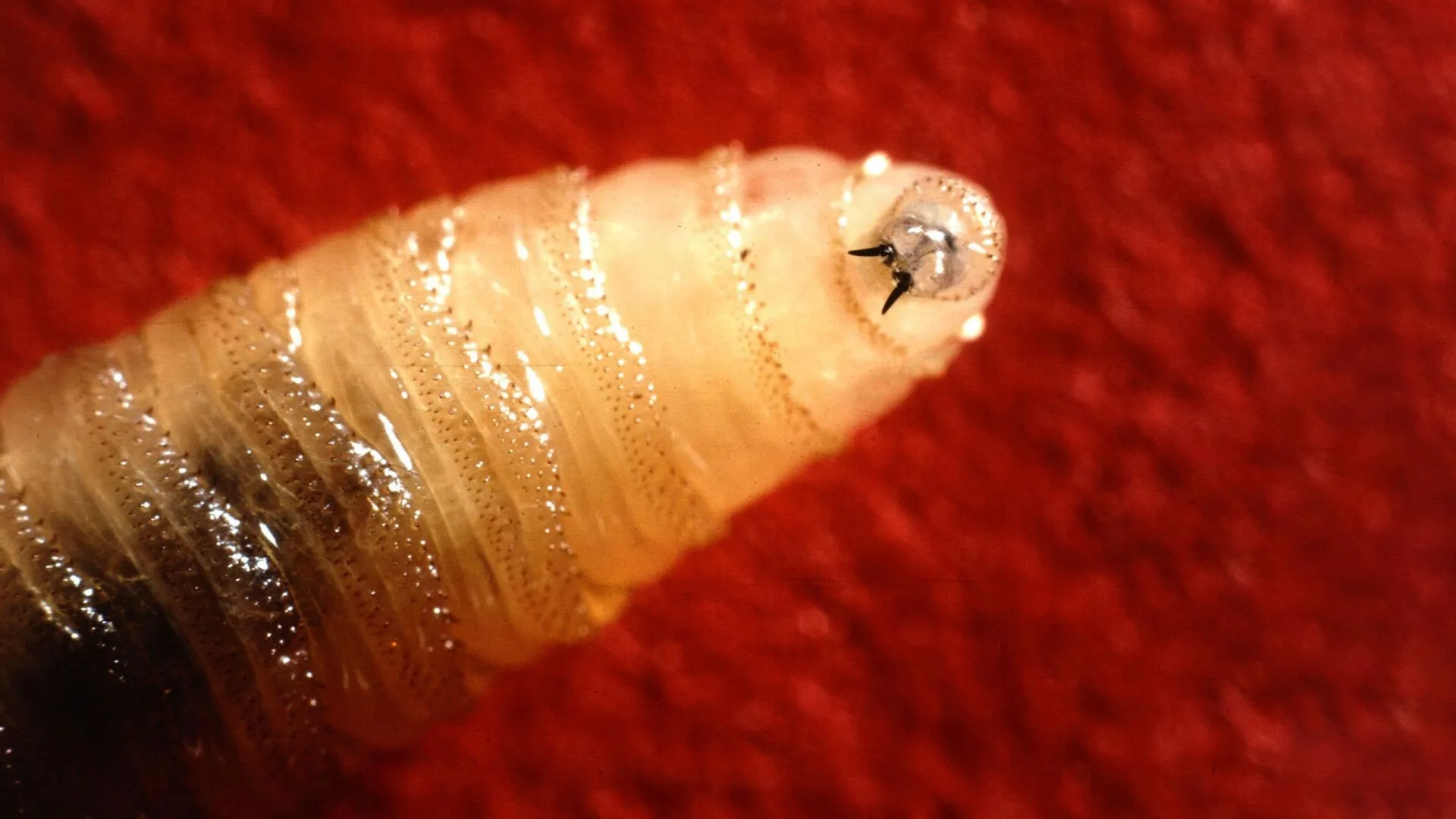
A highly destructive insect parasite, long considered vanquished from the continental United States, has made a concerning return, igniting a concerted effort to prevent its widespread re-establishment. The New World screwworm, Cochliomyia hominivorax, whose larvae notoriously feed on the living flesh of warm-blooded animals, has been identified in parts of Texas and New Mexico. This re-emergence poses a substantial threat to the nation’s livestock industry, indigenous wildlife populations, companion animals, and, in rare instances, human health, necessitating rapid deployment of advanced tracking tools and proven eradication methodologies.
The current detection marks a critical juncture in the ongoing battle against a pest that once devastated American agriculture. During the mid-20th century, screwworm infestations inflicted staggering financial losses, with estimates suggesting annual damages ranging from $50 million to $100 million in the southwestern U.S. alone. This economic pressure spurred an unprecedented biological control initiative that successfully extirpated the parasite from the United States and pushed its range southward, establishing a permanent barrier zone in Panama. The re-appearance north of this historical boundary represents a significant challenge to decades of successful containment.
Understanding the unique biology of the New World screwworm is crucial to appreciating its danger. Unlike many fly species whose larvae (maggots) consume decaying organic matter, C. hominivorax is an obligate parasite, meaning its entire larval stage must develop within the living tissue of a host. Adult female screwworm flies are attracted to open wounds, cuts, or natural body orifices on animals. They deposit hundreds of eggs around the wound site. Upon hatching, the tiny larvae immediately burrow into the surrounding flesh, forming a characteristic "screw-like" pattern as they feed. This feeding activity rapidly enlarges the wound, causing excruciating pain, tissue necrosis, and making the host highly susceptible to secondary bacterial infections. Without prompt treatment, severe myiasis (parasitic infestation of living tissue) can lead to debilitating injury, profound weight loss, and ultimately, death for infected animals. Its indiscriminate nature means any warm-blooded creature – cattle, sheep, goats, horses, deer, birds, and even household pets – can become a victim.
The historical success in eradicating the screwworm from the U.S. serves as a powerful precedent for the current response. In the 1950s, scientists pioneered and implemented one of the most remarkable biological control programs in history: the Sterile Insect Technique (SIT). This method involves mass-rearing male screwworm flies, sterilizing them using controlled doses of radiation, and then releasing them in vast numbers into infested areas. When wild female flies mate with these sterile males, the eggs they lay are infertile, producing no viable offspring. Over successive generations, this dramatically reduces the reproductive potential of the wild population, eventually leading to its collapse. This strategy proved exceptionally effective, leading to the complete eradication of the pest from the U.S. mainland by 1966 and subsequent extension of the eradication zone through Mexico and Central America.
Today, federal and state agencies, led by the U.S. Department of Agriculture (USDA), are reactivating elements of this proven strategy. The current eradication campaign combines the release of sterile flies with other essential measures, including targeted pesticide applications, strict animal movement quarantines, and enhanced surveillance. Researchers are also exploring cutting-edge genetic technologies to bolster these efforts. The U.S. Environmental Protection Agency (EPA) is reviewing an application for a genetically modified, all-male strain of screwworm, which could offer an even more efficient and environmentally precise method of control. Furthermore, academic institutions, such as the University of California San Diego (UC San Diego), are actively developing next-generation genetic tools designed to strengthen future prevention and eradication capabilities.
The rapid northward progression of the screwworm, exceeding initial projections, underscores the urgency of the situation. While the precise origin of the current U.S. infestations remains under investigation, the unequivocal presence of the parasite in regions where it once thrived suggests a potential for rapid establishment. This heightened threat environment has spurred the development of innovative public health tools designed to provide real-time situational awareness and predict future risk.
A pivotal advancement in this regard is a new digital tracking dashboard, collaboratively developed by researchers at UC San Diego and the County of San Diego Health and Human Services Agency (HHSA) Public Health Services. This sophisticated platform is engineered to generate dynamic regional risk profiles for screwworm infestations across the nation. Dr. Eliah Aronoff-Spencer, a professor of medicine at UC San Diego School of Medicine and an affiliate of the UC San Diego Design Lab and Qualcomm Institute, highlighted that the initiative arose directly from a critical need identified by public health partners for improved situational intelligence regarding the parasite’s spread.
The dashboard integrates diverse data streams to create a comprehensive risk picture. It incorporates confirmed detection reports from veterinary and agricultural surveillance systems, models environmental conditions known to favor the fly’s lifecycle and larval development (such as temperature, humidity, and vegetation indices), and, notably, includes an analysis of news media reports. This innovative inclusion of media coverage provides a crucial early warning mechanism. As Dr. Seema Shah, Medical Director of the Epidemiology and Immunization Services Branch for the County of San Diego’s Public Health Services Department, explained, traditional public health reporting mechanisms, often reliant on laboratory confirmations, can experience significant delays, sometimes spanning days or weeks. By contrast, incorporating media reports allows for the identification of potential threats much sooner, enabling public health officials to anticipate and prepare more effectively. Dr. Mark Beatty, Assistant Medical Director for the same branch, emphasized that this predictive capacity is invaluable for resource allocation and strategic planning, helping officials determine whether a threat is immediate or allows for a longer preparatory window.
The development of this screwworm dashboard is emblematic of a broader, more responsive paradigm in public health problem-solving, spearheaded by the UC San Diego-led Resilient Shield initiative. Funded by the U.S. Centers for Disease Control and Prevention (CDC), Resilient Shield operates as one of 13 core facilities within the CDC’s new Insight Net—a national network dedicated to modeling outbreaks and emerging disease threats. The core philosophy of Resilient Shield revolves around direct collaboration: public health agencies articulate their most pressing real-world challenges, and researchers then rapidly engineer bespoke solutions to address these specific priorities.
This model stands in stark contrast to traditional academic research, where projects might be driven by researcher interest without direct, immediate application to agency needs. Dr. Shah underscored this distinction, noting that while critical threats like the screwworm often exist, public health agencies frequently lack the immediate technical resources or in-house expertise to develop solutions. The Resilient Shield partnership bridges this gap, providing tangible tools while simultaneously fostering open, shareable reference designs that demonstrate effective collaboration between public health, academia, and industry. Partners, including the California Department of Public Health, the Navajo Nation, and other Insight Net members, submit direct requests, ensuring that research outputs are directly relevant and immediately actionable.
The underlying infrastructure of Resilient Shield is a modular and scalable resource hub, designed for adaptability across a spectrum of public health challenges. Working with technology partners like Google and MITRE, the center aggregates and integrates a vast array of data sources, encompassing human disease statistics, livestock health records, intricate environmental parameters, real-time weather data, national health registries, and even "social listening" intelligence derived from public discourse. This comprehensive data ecosystem enables researchers to rapidly assemble customized tools in response to new requests. Depending on the specific problem, these tools might include publicly accessible websites, secure computing environments for sensitive data, advanced simulation engines for predictive modeling, or sophisticated AI agent builders for scenario planning.
Dr. Aronoff-Spencer emphasized that the central innovation of Resilient Shield lies in the genuine convergence of partner priorities with scalable engineering solutions. He stated, "We do not build in a vacuum. Our infrastructure is built directly on the priorities dictated by our partners." This open, modular architecture means that every solution developed not only addresses an immediate problem but also strengthens the overall system, enhancing its adaptability for future public health challenges, from tracking influenza, an initial project co-led by Resilient Shield co-PI Ruy Ribeiro at Los Alamos National Laboratory, to the current screwworm crisis, where Dr. Aronoff-Spencer collaborated with mathematical epidemiologist Dr. Natasha Martin at UC San Diego.
The fight against the re-emerging New World screwworm embodies the critical importance of a "One Health" approach, recognizing the interconnectedness of human, animal, and environmental health. Dr. Emily Trumbull, a veterinarian and lead for the Epidemiology Unit’s One Health Program, highlighted the essential collaboration with veterinarians serving livestock, pets, and wildlife across California. This network is crucial for early detection, surveillance, and preventing potential human cases. The dashboard’s ability to factor in environmental variables allows for proactive risk assessment, providing crucial lead time before the parasite physically arrives in a new region.
As the United States mobilizes to confront this familiar yet potent biological threat, the blend of historical eradication successes, cutting-edge surveillance technology, and an innovative, collaborative public health framework offers a robust defense. The screwworm’s return serves as a stark reminder of the continuous need for vigilance, adaptive strategies, and interdisciplinary partnerships in safeguarding public health and agricultural prosperity against persistent and evolving biological challenges.
About the Author









