

As individuals navigate the journey of aging, maintaining functional strength becomes increasingly paramount for preserving autonomy and overall quality of life. Among the various assessments designed to gauge physical capabilities, the 30-second sit-to-stand test, also known as the chair rise test, has emerged as a particularly insightful and accessible benchmark for evaluating lower body strength and endurance, especially for those over the age of 60. This simple yet profound exercise provides a rapid, practical snapshot of an individual’s ability to perform one of life’s most fundamental movements, offering valuable insights into their current physical condition and potential areas for improvement.
The essence of the chair rise movement lies in its direct correlation to daily activities. From getting out of bed in the morning to rising from a dining table or exiting a vehicle, the act of transitioning from a seated to a standing position is a ubiquitous and essential component of independent living. While many might instinctively associate robust leg strength with demanding exercises like heavy squats, the humble chair squat effectively engages the primary muscle groups critical for this functional movement. This includes the quadriceps, responsible for extending the knees; the gluteal muscles, crucial for hip extension; and the core musculature, which provides vital stabilization for the torso throughout the motion. Furthermore, the dynamic nature of the test subtly challenges an individual’s balance and proprioception, involving the intricate coordination of ankles and feet.

Administering the 30-second chair rise test is straightforward, requiring minimal equipment and space. To perform the assessment, an individual should select a sturdy, armless chair positioned against a wall to prevent it from sliding. The participant begins by sitting on the front edge of the chair, ensuring both feet are flat on the floor with knees bent at approximately a 90-degree angle. Arms are then crossed over the chest, preventing their use for assistance, which is a critical aspect of accurately measuring leg and core strength. Upon the signal to begin, a timer is started for 30 seconds. The individual then pushes through their feet to stand up completely, straightening their hips and knees. Following the ascent, they must lower themselves back to the seated position with control, lightly touching the chair before immediately beginning the next repetition. The objective is to complete as many full, controlled repetitions as possible within the half-minute timeframe. It is imperative that each repetition involves a full stand and a controlled descent, avoiding any collapsing onto the chair or using momentum to cheat the movement.
The significance of the 30-second time limit cannot be overstated. While completing a certain number of sit-to-stands over an extended period might indicate a baseline level of strength, executing them rapidly and repeatedly within 30 seconds introduces an element of muscular endurance and power that is vital for functional mobility. This time constraint reveals not just the capacity to lift one’s body weight, but also the ability to sustain that effort, maintain proper form under fatigue, and generate power at a rate of approximately one repetition every two and a half seconds to achieve optimal scores. This pace requirement distinguishes a higher level of functional fitness, indicating a more resilient and adaptable musculoskeletal system.
For individuals over the age of 60, achieving a benchmark of 12 unassisted sit-to-stands within this 30-second window is often considered an excellent indicator of lower body strength and endurance. This performance level suggests an ideal degree of functional capacity, signifying robust quadriceps and gluteal strength, effective core stabilization, and good balance. Such a score is indicative of a person who likely possesses the physical resilience to navigate daily tasks with ease and respond effectively to unexpected challenges, such as recovering from a stumble.
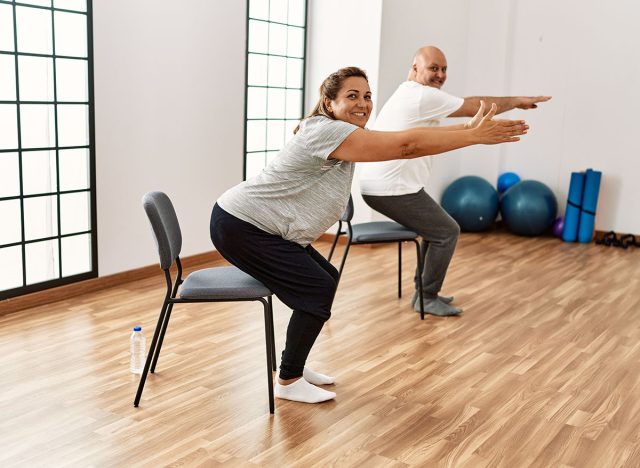
Beyond simply measuring strength, this test serves as a valuable diagnostic tool, offering insights into an individual’s physical strengths and weaknesses. As participants push themselves through the 30-second duration, fatigue often highlights deviations in form or areas where strength falters. For instance, if the initial repetitions are fluid but subsequent ones become increasingly difficult or slow, it suggests a need to focus on muscular endurance. Conversely, if even the first few repetitions are challenging, it points to a foundational deficit in leg strength. Observing imbalances, such as shifting weight predominantly to one side, can reveal underlying muscular asymmetry or postural issues that warrant attention. This immediate feedback empowers individuals to identify specific areas for targeted improvement, moving beyond a generic strength goal to a more personalized approach to fitness.
The importance of maintaining robust sit-to-stand strength intensifies with age due to the physiological changes that occur in the human body. A phenomenon known as sarcopenia, or age-related muscle loss, typically begins after the age of 40 and accelerates in later decades. This gradual decline in muscle mass and strength can significantly impair mobility, reduce metabolic rate, and increase the risk of various health complications. Stronger legs are not merely about lifting heavy objects; they are about dynamic stability. They enable quicker reactions to unexpected environmental hazards, such as uneven surfaces or sudden loss of balance, thereby significantly reducing the risk of falls. Falls among older adults are a major public health concern, often leading to serious injuries, prolonged recovery periods, loss of independence, and a diminished quality of life. By fostering the strength and coordination required for effective sit-to-stand movements, individuals build a protective buffer against these risks.
Moreover, the ability to perform sit-to-stands efficiently is intrinsically linked to maintaining independence. The cumulative effort required for everyday tasks, from using the toilet to getting up from a low couch, places demands on lower body strength. When this strength wanes, these simple actions can become arduous, necessitating assistance and potentially leading to a reliance on others. Regular assessment and improvement of sit-to-stand capability directly contribute to preserving the ability to live independently, allowing older adults to engage fully in their communities and daily routines without undue physical limitation.

For those who do not yet meet the benchmark of 12 repetitions within 30 seconds, improving one’s score is an achievable goal through consistent effort. The most direct approach involves regular practice of the sit-to-stand exercise itself. Beginning with a manageable number of repetitions and gradually increasing them over time can yield significant gains in strength and endurance. A crucial aspect of effective training is emphasizing controlled movement, particularly during the eccentric (lowering) phase. Aiming for a 2-3 second descent, rather than simply collapsing onto the chair, maximizes muscle engagement and minimizes stress on joints, thereby enhancing the benefits of each repetition.
As strength progresses, the exercise can be made more challenging. Introducing external resistance by holding a light dumbbell or kettlebell against the chest adds an extra load, forcing the muscles to work harder. When incorporating weights, it is vital to maintain an upright posture and prevent the weight from pulling the torso forward, which could compromise form and spinal alignment. Eventually, once proficiency with a chair is established, individuals can transition to performing free-standing squats, initially holding onto a wall or stable object for support, before attempting unassisted bodyweight squats. Complementary exercises like hip bridges and hip hinges can also be incorporated to specifically target and strengthen the gluteal muscles, which are key contributors to the sit-to-stand movement.
Conversely, for those finding the standard sit-to-stand too difficult, modifications can be implemented to make the exercise more accessible. Using a taller chair or stool reduces the range of motion required, making the ascent and descent less demanding. It is paramount, however, to ensure that any chosen object is stable and secure to prevent accidents. Regardless of the starting point, consistency is the bedrock of improvement. Integrating this functional movement into a weekly exercise routine, even for just a few minutes a day, can lead to remarkable improvements in leg strength, endurance, and overall functional capacity, ultimately contributing to a more robust and independent life.
About the Author










