
Amman, Jordan – The Hashemite Kingdom of Jordan recently hosted a pivotal two-day State visit by Dr. Tedros Adhanom Ghebreyesus, Director-General of the World Health Organization (WHO), a visit that unequivocally underscored the nation’s indispensable role in global public health. This high-profile engagement served to solidify the enduring partnership between the WHO and Jordan, reaffirming collaborative efforts across critical domains: the pursuit of universal health coverage (UHC), the advancement of mental health services, and robust humanitarian health action within a region frequently beset by crises. The discussions and site visits during Dr. Tedros’s itinerary painted a comprehensive picture of Jordan’s commitment and strategic importance, positioning it as a cornerstone for health resilience in the Middle East.
A cornerstone of the Director-General’s itinerary was his esteemed audience with His Majesty King Abdullah II. This high-level dialogue was not merely a ceremonial gesture but a profound acknowledgment of Jordan’s consistent leadership in prioritizing health, both domestically and as a significant contributor to regional and international well-being. The royal meeting delved into strategies for fortifying national health infrastructure, broadening access to essential medical services for all inhabitants, and sustaining vital support for emergency humanitarian responses throughout the area. Particular emphasis was placed on the dire health needs of the Palestinian population, especially those patients who have been medically evacuated from Gaza to Jordan for specialized treatment, alongside the millions of refugees currently finding sanctuary within the Kingdom’s borders. Dr. Tedros conveyed his profound appreciation for King Abdullah II’s steadfast dedication to the principles of universal health coverage and lauded the generosity of the Jordanian people in extending healthcare services to over three million refugees, primarily originating from Gaza and Syria, who have sought refuge within the country.
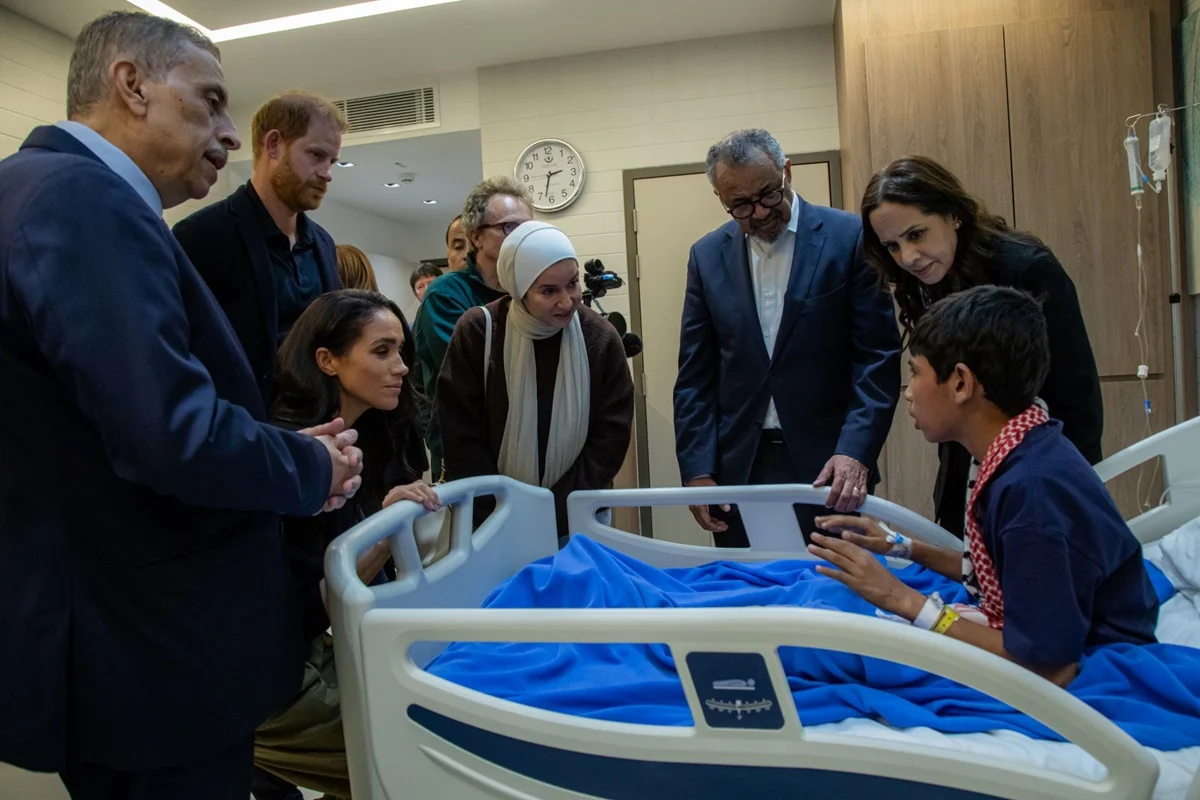
Jordan’s humanitarian ethos was a recurring theme throughout the visit, particularly highlighted by the nation’s compassionate response to the unfolding crisis in Gaza. Dr. Tedros specifically acknowledged His Majesty’s Medical Corridor initiative, a critical lifeline that facilitates the transfer of critically ill and injured children from Gaza to Jordan for urgent medical intervention. During his visit, the Director-General personally witnessed the profound impact of this initiative by touring a WHO-supported medical facility dedicated to providing specialized care for these young patients. He spent time interacting with the children and their families, offering words of solace and hope, and met with the tireless frontline healthcare professionals who deliver life-saving treatments for severe injuries, oncological conditions, and other serious ailments. This poignant experience underscored the indispensable nature of the medical evacuation pathway through Jordan and reinforced the urgent need for sustained international backing to ensure that children and other vulnerable individuals can continue to access this crucial, often life-saving, care. Jordan’s unwavering commitment to humanitarian principles, as Dr. Tedros articulated, sets a global standard for prioritizing health and human dignity above all else, showcasing a nation’s capacity for profound empathy in the face of regional adversity.
Beyond emergency responses, the visit meticulously explored Jordan’s strides towards achieving Universal Health Coverage. Bilateral discussions between Dr. Tedros and the Jordanian Minister of Health centered on pragmatic strategies for reinforcing the national health system. Jordan has emerged as a global exemplar in adopting a primary healthcare-centric approach to achieve UHC, notably through the pioneering integration of mental health services into routine care pathways. This ensures that mental health support is not a specialized, inaccessible service but an integral component of comprehensive healthcare. The WHO, through its Director-General’s Special Initiative for Mental Health, continues to provide robust support for these innovative efforts, recognizing Jordan’s progressive vision in addressing holistic well-being.
The crucial domain of mental health received significant attention, particularly its importance in communities affected by conflict and displacement. Dr. Tedros convened a high-level meeting with a diverse consortium of health partners, donor nations, United Nations agencies, and philanthropic organizations. This gathering focused on critical financing priorities required for both the strengthening of Jordan’s overall health system and the continuation of humanitarian health operations, with a specific emphasis on scaling up mental health services and supporting countries that bear the significant burden of hosting large refugee populations. The Director-General commended the strong collaborative spirit and the unwavering commitment of these partners to invest in health initiatives not only in Jordan but across the wider region, acknowledging the long-term impact of such investments on stability and recovery.
A distinctive element of this State visit was the accompanying presence of Prince Harry, the Duke of Sussex, and Meghan, the Duchess of Sussex. In their capacities as founders of Archewell Philanthropies, and as long-standing advocates for the WHO’s mission, their involvement added significant global visibility to the discussions. Archewell Philanthropies has a history of supporting various WHO initiatives, spanning from equitable access to COVID-19 vaccines to facilitating medical evacuations and funding mental health programs. Prince Harry, a vocal champion for mental health awareness, actively participated in discussions, underscoring the vital importance of investing in mental health services across diverse communities and in emergency contexts, with a particular focus on the needs of men, young people, and children. Dr. Tedros publicly extended his gratitude to the Duke and Duchess, acknowledging their commitment to mental health and humanitarian action, which he noted has been instrumental in amplifying visibility, mobilizing resources, and instilling hope in some of the world’s most vulnerable populations. Their collaboration, he emphasized, plays a crucial role in advancing the WHO’s overarching mission of ensuring health for all. Prince Harry, reflecting on the visit, praised Jordan as a beacon of compassion, resilience, and innovation. He shared that through Archewell’s work, he and the Duchess have gained firsthand insight into the transformative power of WHO’s efforts in supporting mental health and delivering life-saving emergency care. He reiterated their deep commitment to raising awareness, diminishing the stigma associated with mental illness, and expanding access to mental health support for all those impacted by conflict and crisis, asserting that mental health is foundational to recovery, dignity, and enduring peace.
The second day of Dr. Tedros’s visit further illustrated Jordan’s comprehensive approach to public health. He visited Jordan’s National Center for Rehabilitation of Addicts, a facility that receives vital support from the WHO and provides integrated medical, psychological, and social services, highlighting the nation’s commitment to addressing complex health challenges. His engagements also extended to community leaders and women’s groups, including the esteemed Jordanian Hashemite Fund for Human Development, acknowledging the grassroots efforts and the critical role of community-based organizations in health promotion. A visit to the renowned King Hussein Cancer Center provided an opportunity to discuss advanced cancer care strategies and explore avenues for enhanced regional collaboration in oncology, showcasing Jordan’s leadership in specialized medical fields.
The conclusion of the State visit reinforced Jordan’s undeniable strategic importance as a crucial logistical and operational hub for humanitarian endeavors, medical evacuations, emergency response, and the cultivation of health system resilience throughout the Middle East. The strengthened partnership between the WHO and Jordan, solidified by this high-level engagement, is poised to yield lasting benefits, not just for the Kingdom itself, but for the millions across the region who depend on robust, accessible, and compassionate healthcare. Jordan’s steadfast dedication to health and humanity continues to serve as a powerful testament to its enduring commitment to global public health.
About the Author












