Unlocking Snake’s Own Resilience: Novel Protein Combinations Promise Revolution in Venom Neutralization.
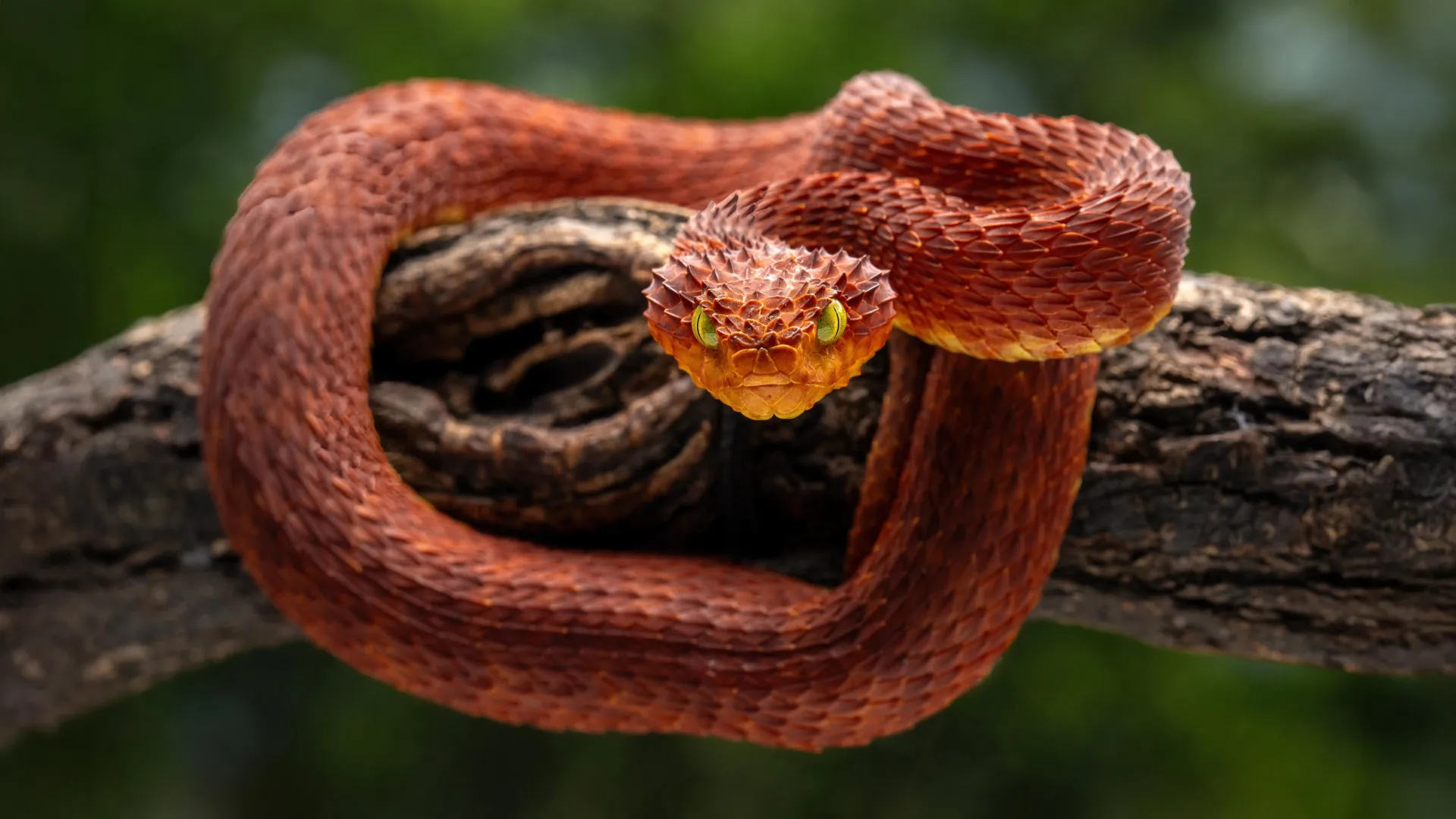
Researchers at the University of Maryland have unveiled a groundbreaking approach to combating the severe health crisis posed by venomous snakebites, drawing inspiration directly from the evolutionary adaptations of snakes themselves. This innovative strategy leverages specialized protein complexes, naturally occurring within the blood of certain snake species, to neutralize the potent toxins found in venom. The findings, detailed in a recent publication in the esteemed journal Proceedings of the National Academy of Sciences, represent a significant leap forward in the quest for more effective and accessible antivenom therapies.
The global burden of snakebite envenomation remains a critical yet often overlooked public health challenge, particularly in tropical and subtropical regions. The World Health Organization estimates that tens of thousands of lives are lost annually due to snakebites, with hundreds of thousands more individuals suffering debilitating permanent injuries. Access to timely and effective medical intervention is frequently hampered by geographical isolation and the prohibitive cost and logistical difficulties associated with current antivenom production and distribution. This precarious situation underscores the urgent need for alternative and improved therapeutic solutions.
Traditional antivenoms, while life-saving, are manufactured through an intricate and often resource-intensive process. This typically involves injecting animals, such as horses or sheep, with gradually increasing doses of venom to stimulate an immune response. The resulting antibodies are then harvested from the animal’s serum. However, this method is fraught with limitations. The variability in venom composition across different snake species means that a single antivenom may not offer broad-spectrum protection, necessitating the development of numerous specific treatments. Furthermore, the production process is costly, and the final product can sometimes elicit severe, even life-threatening, adverse reactions in patients due to non-specific immune responses. These drawbacks have long spurred scientific inquiry into more targeted and potentially safer alternatives.
In a pivotal departure from conventional methods, the University of Maryland team, spearheaded by Distinguished University Professor of Biology Sean B. Carroll, turned their attention to the remarkable resilience observed in snakes themselves. For decades, anecdotal evidence and scientific observation have suggested that many venomous snakes possess an inherent resistance to their own venom. This natural defense mechanism, long a source of curiosity, has now yielded a tangible scientific breakthrough. Professor Carroll aptly described this discovery as a testament to nature’s capacity to provide elegant solutions to complex problems that have eluded human scientific endeavors for an extended period.
The investigation into these intrinsic protective mechanisms gained significant momentum with the laboratory’s prior identification of a protein known as FETUA-3 in the western diamondback rattlesnake. This protein demonstrated a notable ability to inhibit the activity of metalloproteinase toxins, a prominent class of toxins found in rattlesnake venom. Crucially, FETUA-3 also exhibited cross-reactivity, capable of binding to and neutralizing toxins from the venom of several other rattlesnake species. This discovery sparked a fundamental question: if snakes possess such effective internal antidotes, why continue to rely solely on external, animal-derived antibodies for treatment?
The current research expanded upon these earlier findings by meticulously examining the individual contributions of various FETUA proteins to the snake’s venom resistance. Collaborators, including Elda Sánchez, Director of the National Natural Toxins Research Center at Texas A&M University-Kingsville, played a vital role in this detailed analysis. The study revealed that while individual FETUA proteins could offer partial protection against specific venom effects – for instance, one might mitigate bleeding while another interfered with enzymatic activity – none of them, in isolation, could fully prevent a lethal outcome from a venomous encounter.
The transformative aspect of this research emerged when the scientists began to explore synergistic effects by combining multiple FETUA proteins. These carefully curated mixtures demonstrated a dramatically amplified capacity to counteract venom’s deleterious impacts, far surpassing the protective capabilities of any single protein. The complexity of snake venom, which can comprise up to a hundred distinct protein families and varies significantly between species, presents a formidable challenge in identifying optimal therapeutic combinations. Professor Carroll likened this process to assembling a sophisticated biochemical puzzle, emphasizing the ongoing need for systematic testing of diverse protein pairings.
In rigorous laboratory evaluations, meticulously optimized combinations of these snake-derived proteins proved to be exceptionally potent. These experimental mixtures exhibited neutralizing efficacy approximately ten times greater than that of commercially available sheep-derived antivenom for rattlesnake venom. More impressively, these combinations not only completely neutralized the lethal effects of rattlesnake venom but also provided robust, broad-spectrum protection against venoms from a range of viper species. This protection extended even to species that diverged evolutionarily over 50 million years ago, highlighting the conserved nature of these vital defense mechanisms. Professor Carroll posited that the remarkable evolutionary persistence of these inhibitor proteins underscores the significant and constant threat of self-envenomation that these animals face, though the precise mechanisms of accidental envenomation, whether through oral tissues during a strike, ingestion of poisoned prey, or cannibalism, remain subjects of ongoing scientific inquiry.
This pioneering research initially focused on metalloproteinases, a significant class of venom toxins, but the researchers are actively applying their successful strategy to target other major toxin families. Professor Carroll expressed considerable optimism, stating that they are nearing effective therapeutic solutions for the three primary toxin groups prevalent in viper venoms. The insights gleaned from this study, coupled with their current research endeavors, provide a strong foundation for the development of nature-inspired, recombinant (laboratory-produced) antivenoms that are within practical reach.
Looking ahead, Professor Carroll anticipates that the initial commercial applications of this "natural antivenom" technology may emerge in the field of veterinary medicine, with potential treatments for human snakebites to follow. The vision is to create next-generation antivenoms that offer enhanced protection against a wider array of venoms, while simultaneously being safer, more cost-effective, and amenable to large-scale manufacturing compared to many existing treatments. He concluded with an inspiring outlook, envisioning the potential to produce these novel antivenoms in vast quantities, capable of addressing a substantial global health crisis. The history of medicine is replete with vital discoveries originating from the natural world, and it is immensely gratifying, he remarked, to find that the essential components for a superior antivenom were present all along within these remarkable creatures.
The research team also included Fiona Ukken and Yetunde Ayinuola, visiting faculty specialists in the Department of Biology at UMD. The groundbreaking work was supported by grants from the Howard Hughes Medical Institute and the Viper Resource Center.

Related News