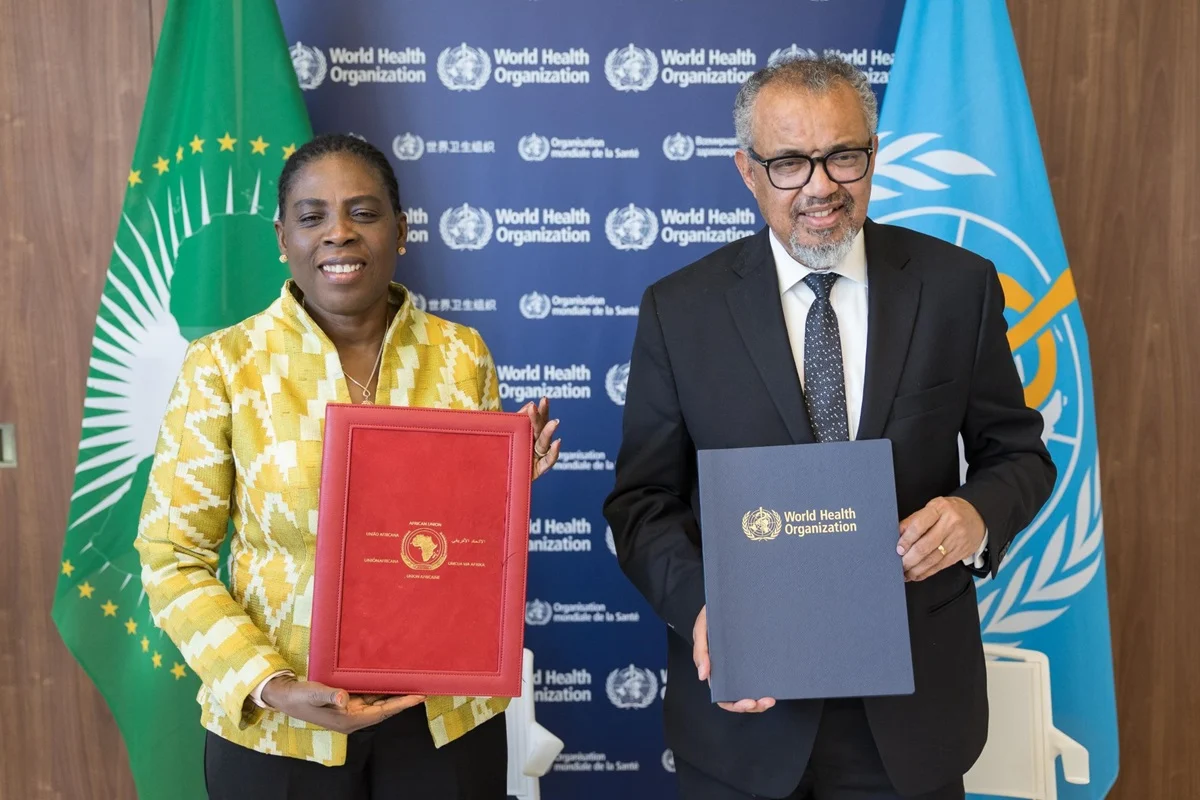
A pivotal moment in global health diplomacy unfolded recently as the World Health Organization (WHO) and the African Union (AU) Commission solidified their enduring collaboration, signing an updated Memorandum of Understanding (MoU). This significant agreement, executed on the margins of the 78th World Health Assembly in Geneva, marks a rededication to advancing health security, achieving universal health coverage, and fostering sustainable development across the African continent. The timing is particularly salient, occurring amidst profound financial vulnerabilities within the international health architecture.
The renewed pact underscores the African Union’s ascending influence and leadership in orchestrating collective action, cultivating inclusive partnerships, and building regional resilience against health crises. It strategically positions the AU Commission’s Department of Health, Humanitarian Affairs, and Social Development as a central pillar in the continent’s health policy formulation and implementation efforts. This department is tasked with translating continental health aspirations into tangible outcomes for African populations.
The formalization of this commitment was ceremonially conducted by two prominent figures: Her Excellency Ambassador Amma Adomaa Twum-Amoah, Commissioner for Health, Humanitarian Affairs and Social Development, acting on behalf of His Excellency Mahmoud Ali Youssouf, Chairperson of the African Union Commission, and Dr. Tedros Adhanom Ghebreyesus, the Director-General of the WHO. This ceremonial signing is widely regarded as a defining juncture, particularly for the trajectory of primary health care initiatives and the broader pursuit of universal health coverage across Africa.
Ambassador Twum-Amoah articulated the profound strategic value of the agreement, emphasizing the AU’s proactive role in shaping the health landscape of Africa. She remarked on the commencement of a new chapter in the collaborative history between the AU and WHO, highlighting that closer cooperation would enable a more effective response to the diverse health needs of African populations, striving to ensure that no individual is marginalized in the pursuit of well-being. The Commissioner reiterated the African Union’s profound appreciation for the WHO’s indispensable and leading role in global health governance, expressing an eagerness to deepen this strategic partnership to collectively realize shared objectives. Her statement resonated with a powerful call for a paradigm shift, advocating for a transition from merely "budgeting for survival" to a more proactive and empowering approach of "planning for health sovereignty." This vision encapsulates a desire for African nations to gain greater control over their health destinies, reducing reliance on external aid and fostering self-sufficiency.
Building upon the foundational framework established by the previous MoU in 2019, the updated agreement introduces crucial enhancements designed to streamline and fortify collaborative mechanisms across all pertinent AU entities. This revision aims to meticulously align joint endeavors with Africa’s overarching health priorities, thereby setting the stage for an era of intensified cooperation between the WHO and the African Union. Concurrently, the agreement unequivocally reaffirms the WHO’s pivotal technical and normative leadership role within both global and regional health spheres. It also reasserts the organization’s unwavering commitment to providing comprehensive support to the AU and its diverse institutions in their collective pursuit of health-related Sustainable Development Goals (SDGs).
Dr. Tedros Adhanom Ghebreyesus underscored the critical timing of this renewed agreement, particularly in light of recent reductions in bilateral aid that pose significant threats to the health and well-being of millions across Africa. He emphasized that the agreement serves as a tangible manifestation of the organizations’ shared resolve to translate their partnership into concrete, impactful results for the people of Africa. Furthermore, he articulated a strategic objective: to assist African nations in transcending the long-standing era of aid dependency, facilitating a transition towards a more robust and sustainable self-reliance in health matters. Dr. Tedros affirmed the WHO’s pride in standing shoulder-to-shoulder with the African Union, collectively driving forward the health priorities pertinent to the continent.
The Memorandum of Understanding outlines a comprehensive framework encompassing several key areas of collaboration. While the original document did not specify all five, the spirit of the agreement clearly points to domains such as strengthening health systems and infrastructure, enhancing disease surveillance and outbreak response capabilities, promoting equitable access to essential medicines and health technologies, fostering health workforce development and retention, and harmonizing health policies and regulatory frameworks across the continent. These areas are critical for addressing the multifaceted health challenges facing Africa, from persistent infectious diseases like HIV/AIDS, tuberculosis, and malaria, to the growing burden of non-communicable diseases and the ever-present threat of emergent pathogens.
The strategic timing of this renewed agreement carries profound implications. It reflects the African Union’s increasingly assertive and influential voice within the intricate landscape of global health governance. This heightened stature has been notably bolstered by its recent elevation to permanent membership within the G20, a forum comprising the world’s major economies. This G20 inclusion provides the AU with an unprecedented platform to advocate for African health priorities on a global scale, ensuring that the continent’s perspectives are integral to international health policy discussions and resource allocation. The agreement further highlights the WHO’s sustained and indispensable role as a trusted technical and operational partner, providing evidence-based guidance and practical support to member states and regional bodies.
The African continent has historically grappled with a complex array of health challenges, exacerbated by socio-economic factors, climate change impacts, and often fragile health infrastructure. The vision of universal health coverage, where all individuals and communities receive the health services they need without suffering financial hardship, remains a formidable yet achievable goal. Achieving this requires not only political will but also robust health systems capable of delivering comprehensive primary care, emergency services, and specialized treatments. Health security, another cornerstone of this partnership, involves protecting populations from threats posed by epidemics, pandemics, and other health emergencies. This necessitates strong surveillance, rapid response mechanisms, and resilient health workforces trained to act effectively in crises.
The concept of "health sovereignty" championed by Commissioner Twum-Amoah is more than just a slogan; it represents a strategic imperative for Africa. It calls for African nations to take greater ownership of their health agendas, develop sustainable domestic financing mechanisms for health, strengthen local research and manufacturing capabilities for medicines and vaccines, and cultivate a robust, well-trained health workforce that is responsive to local needs. This shift from aid dependency to self-reliance is crucial for long-term health resilience and sustainable development. It implies a move away from externally dictated health priorities towards an agenda that is genuinely responsive to the specific epidemiological and socio-economic contexts of African countries.
The renewed MoU is therefore not merely a bureaucratic formality; it injects fresh momentum into regional and multilateral cooperation efforts specifically tailored to confront Africa’s most pressing health challenges. It serves as a clear declaration of intent to translate strategic alignment into meaningful, enduring results for the continent’s diverse populations. By synergizing their strengths – the WHO’s technical expertise and normative leadership, and the AU’s political convening power and continental mandate – both organizations aim to build a future where health is not a privilege, but a fundamental right, universally accessible and sustainably supported across Africa. This alliance is poised to be a cornerstone in Africa’s journey towards health equity, resilience, and self-determination.
About the Author