Neural Oscillations as the Brain’s Generative Engine for Sensory Interpretation and Prediction.
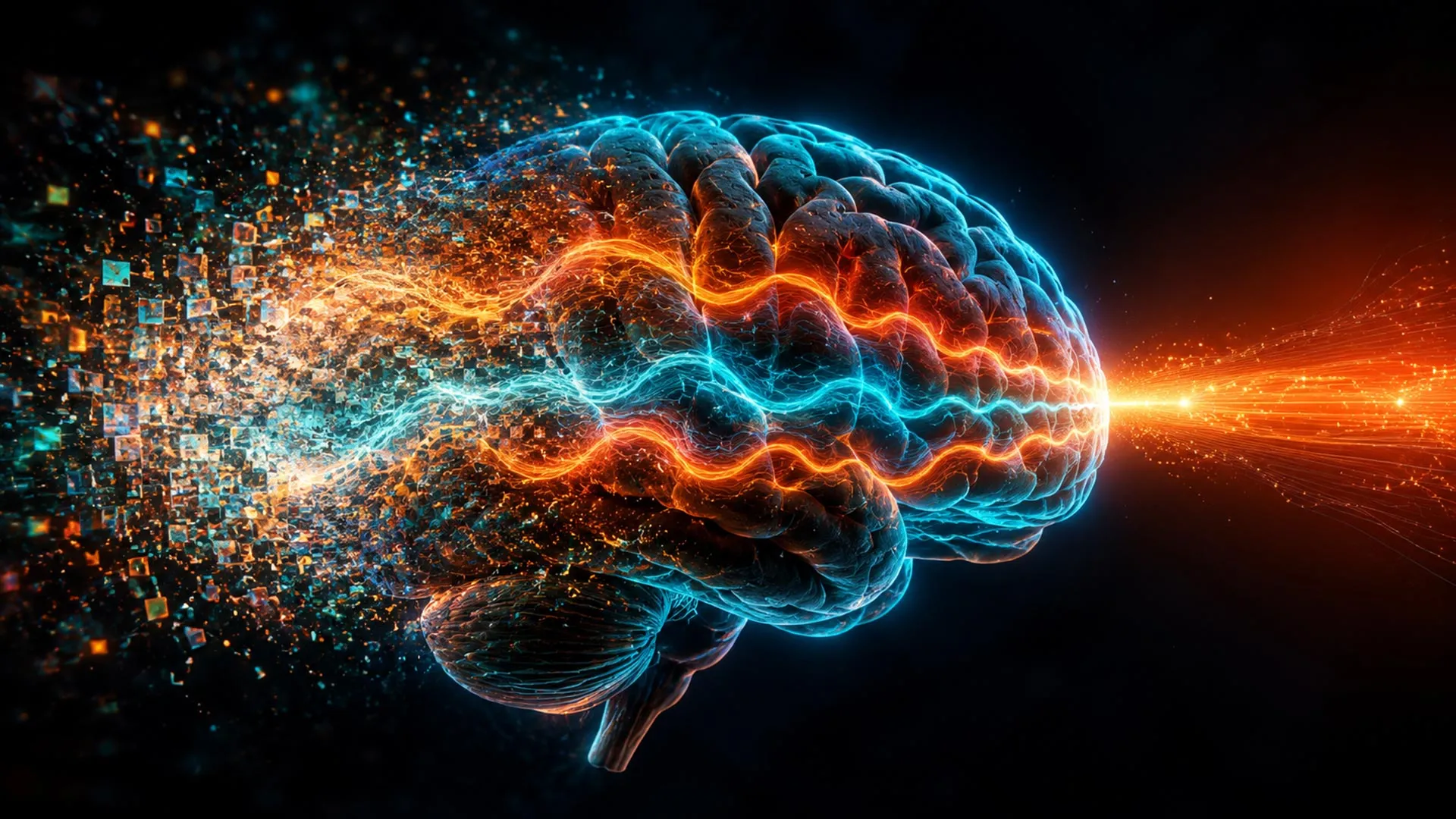
The intricate landscape of the human brain, a realm of electrochemical communication, harbors a remarkable phenomenon that mirrors the dynamic patterns observed in oceanic waves: traveling neural waves. These electrical surges, propagating across the cerebral cortex, are not merely epiphenomenal flickers of activity but are increasingly understood to play a pivotal role in how we process the deluge of sensory information from our environment. Pioneering research from neuroscientists at the Salk Institute has coalesced physiological and computational perspectives, proposing a compelling new hypothesis: that these neural traveling waves function as a sophisticated computational engine, particularly within the visual cortex, enabling the brain to construct internal representations of the external world. This groundbreaking framework suggests that these waves are instrumental in shaping our moment-to-moment perception, reconstructing fleeting sensory experiences, and even anticipating future events.
The genesis of this inquiry can be traced back to 2020, when neuroscientist John Reynolds, PhD, and his team at the Salk Institute first documented the presence of traveling brain waves in the visual systems of alert, behaving animals. Crucially, their investigations revealed a direct correlation between the occurrence and characteristics of these waves and an animal’s ability to successfully detect a presented object. This observation offered a potential neurobiological explanation for a common human experience: the frustrating phenomenon of repeatedly searching for an item, like misplaced keys, only to discover it was in plain sight all along. The object was physically present, yet the brain, at that specific temporal juncture, failed to encode its presence into conscious awareness, a failure that traveling waves may help illuminate.
Following the initial confirmation of traveling waves in awake subjects and their demonstrable impact on visual perception, a fundamental question arose: what is the underlying purpose of the brain’s generation of these dynamic patterns? The Salk Institute’s comprehensive review, published in the esteemed journal Neuron on July 21, 2026, endeavors to answer this by integrating diverse lines of evidence into a cohesive theoretical structure. Reynolds, a senior and co-corresponding author on the paper, articulates that this framework provides, for the first time, a unified understanding of the computational repertoire afforded by the brain’s intrinsic wave-generating circuitry.
The researchers focused their analysis primarily on the visual cortex, a region of the brain dedicated to processing visual information, and delineated four principal functions attributed to neural traveling waves. These proposed roles encompass the dynamic modulation of perception on a second-by-second basis, the transformation of immediate sensory input into a stable, internal representation, the generation of short-term probabilistic predictions about the surrounding environment, and the preservation and subsequent replay of neural patterns associated with temporally unfolding events or memories. Taken collectively, these proposed functionalities position neural traveling waves not as mere background electrical noise, but as active participants in the brain’s interpretive processes.
Challenging the traditional view of brain waves as passive byproducts of neural activity, the new framework posits that these traveling waves are far more than indiscriminate electrical discharges. The intricate network of neuronal connections responsible for generating these waves possesses a sophisticated capacity that extends beyond simple signal transmission. These connections are capable of dynamically altering their physiological properties, often referred to as "synaptic weights," in a manner that reflects and encodes information acquired through interactions with the external world. This plasticity allows the brain to learn and adapt, shaping the very circuits that underpin our perception.
The cumulative impact of every sensory experience – every sight, sound, smell, and motor action – contributes to modifying these wave-generating neural pathways. Over time, these learned adaptations sculpt the neural architecture that the brain relies upon to construct a rich and accurate internal model of its surroundings. Reynolds draws a compelling analogy to the functioning of modern artificial intelligence, specifically large language models like ChatGPT. He explains that these AI systems learn the statistical regularities and structural patterns inherent in language, subsequently using this learned knowledge to generate coherent and contextually appropriate text. Similarly, the brain, through continuous experience, appears to be constructing a biologically grounded generative model, a process of internal representation formation that is functionally akin to these advanced AI algorithms.
At its core, the brain faces a perpetual challenge: to decipher the most probable interpretation of the continuous stream of sensory data it receives. The external environment, while seemingly chaotic, is governed by underlying principles and predictable regularities. Objects exist within a three-dimensional space, and the retinal images projected by these objects are in constant flux due to the movement of our eyes and bodies. These dynamic visual signals, moreover, are constrained by the fundamental laws of physics and the physiological limitations of our sensory organs.
The proposed framework suggests that the brain diligently learns these recurring environmental patterns and encodes them within its vast network of synaptic connections. These learned patterns, in turn, serve as the substrate for generating traveling waves. These waves then facilitate the brain’s ability to infer the most likely causes of incoming sensory information, thereby assembling a coherent and functional internal model of the world. In this paradigm, neural traveling waves offer a compelling explanation for how the brain transforms a relentless influx of complex sensory signals into unified perceptions, accurate predictions, adaptive behaviors, and subjective experiences. Unraveling this intricate process represents a significant step towards understanding how the brain navigates and makes sense of our dynamic and often ambiguous reality.
The research contributing to this comprehensive framework was a collaborative effort involving Lyle Muller from UT Dallas and the Fields Institute, Alexandra Busch from the Fields Institute and Western University, and Zachary Davis from the University of Utah. This significant undertaking received vital financial support from several prominent funding bodies, including the National Institutes of Health, with grants R01 EY028723, U01 NS131914, and U01 NS139877, as well as EY014800. Additional contributions were provided by Research to Prevent Blindness, the Natural Sciences and Engineering Research Council of Canada, Western University, Compute Ontario, and Digital Research Alliance of Canada, underscoring the broad scientific and institutional interest in advancing our understanding of neural computation.
Related posts:

Related News