Maintaining robust balance and stability becomes an increasingly critical aspect of health and independence as individuals progress beyond the age of 55. This fundamental physical attribute, often taken for granted in younger years, underpins a person’s ability to navigate daily life with confidence, reducing the pervasive risk of falls and subsequent injuries. A decline in equilibrium capabilities can significantly impact quality of life, leading to a loss of autonomy and an increased need for assistance. Therefore, understanding the intricate mechanisms behind balance and actively engaging in targeted training are paramount for healthy aging.
The human body’s capacity for maintaining an upright posture and controlled movement relies on a sophisticated interplay of multiple physiological systems, all coordinated by the central nervous system. This complex network includes the vestibular system, located in the inner ear, which detects head movements and orientation in space; the visual system, providing spatial awareness and environmental cues; and the somatosensory system, encompassing proprioception and touch receptors in muscles, joints, and skin, which relay information about body position and contact with surfaces. The brain acts as the central processing unit, integrating these diverse sensory inputs to orchestrate appropriate muscular responses, thereby allowing for continuous postural adjustments. With advancing age, each of these systems can experience natural degradation. Visual acuity may diminish, the sensitivity of proprioceptors can decrease, and the vestibular system might become less efficient at detecting subtle changes in motion. Compounded by potential neurological changes and muscle atrophy, these age-related alterations collectively contribute to a compromised ability to maintain equilibrium, underscoring why proactive balance training is not merely beneficial but essential.
It is important to differentiate between "balance" and "stability," concepts often used interchangeably but possessing distinct meanings within the realm of physical fitness. Rosalind Frydberg, a respected Group Fitness Instructor and ARORA Class Lead at Life Time, provides clarity on this distinction. According to Frydberg, balance represents the overarching capacity to control one’s body position and sustain a state of equilibrium, whether stationary or in motion. It is the dynamic process of adjusting to internal shifts and external forces. Stability, conversely, refers to the more specific ability to maintain a steady position when confronted with disruptive external forces or environmental challenges. Think of balance as the general ability to stay upright, while stability is the specific resistance to being knocked over. Both facets are indispensable for seamless execution of routine activities, from walking across uneven terrain to safely recovering from an unexpected bump, and are crucial for minimizing the risk of accidental falls, thereby contributing significantly to long-term physical well-being and sustained independence.
For individuals over the age of 55, certain physical benchmarks can serve as excellent indicators of current balance and stability levels. Frydberg highlights specific functional tasks that, when performed with confidence and control, signal healthy aging and a reduced susceptibility to falls. These key indicators include the ability to stand unsupported on one leg for a duration of 30 seconds, maintaining a tandem stance (where one foot is placed directly in front of the other, heel to toe), and executing controlled transitions from a seated position in a chair or from the floor to a standing position. The capacity to hold a single-leg stance for 30 seconds, for instance, is a widely recognized predictor of lower fall risk and robust neuromuscular control. This exercise challenges both static and dynamic balance, requiring significant engagement from the core, hips, and ankle stabilizers. A tandem stance further narrows the base of support, demanding heightened proprioceptive feedback and fine motor adjustments to prevent swaying. Successfully rising from a chair or the floor without assistance not only demonstrates adequate lower body strength but also assesses coordination, flexibility, and the ability to manage one’s center of gravity during complex multi-joint movements. These functional assessments collectively offer a holistic view of an individual’s physical readiness for independent living and their resilience against everyday balance challenges.
Recognizing the profound importance of these abilities, Frydberg advocates for a series of targeted exercises designed to both assess current capabilities and progressively enhance balance and stability. These movements engage core muscle groups, improve proprioception, and challenge the body’s various balance systems.
One such exercise is the Sit-To-Stand with a Circle Resistance Band. This movement actively engages the gluteal muscles and core musculature while simultaneously demanding precise balance control. To perform this, position a resistance band around your thighs, just above the knees. Begin seated in a chair, feet flat on the floor, hip-width apart. Engage your core and glutes, then slowly push through your heels to stand up, maintaining tension in the band to prevent your knees from caving inward. Once standing fully upright, control your descent back to the chair, ensuring a slow and deliberate movement without simply dropping. This exercise strengthens the major muscles responsible for standing and walking, while the resistance band adds an external force that challenges hip stability and encourages proper knee alignment, both crucial for maintaining balance during transitions.
Next, Side Stepping with a Circle Resistance Band specifically targets lateral stability and hip abductor strength, which are vital for preventing falls when moving sideways or reacting to unexpected shifts. Place the resistance band around your ankles or just above your knees. Start with feet hip-width apart, knees slightly bent, and core engaged. Take a controlled step to the side with one foot, then follow with the other, ensuring the band maintains tension throughout the movement. Continue stepping in one direction for several repetitions before switching directions. This exercise builds strength in the muscles that stabilize the pelvis and hips, improving the body’s ability to resist lateral perturbations and maintain a stable gait.
The integration of Pilates with a Soft Ball and Calf Raises offers a multi-faceted approach to enhancing core strength, ankle stability, and proprioception. While the specific Pilates movements with a soft ball can vary, generally, the ball is used to create instability, requiring deeper core engagement. For example, lying on your back with feet on the soft ball, performing pelvic tilts or leg slides, challenges the abdominal muscles and lumbar stabilizers. Incorporating calf raises, either standing or while holding the soft ball between your ankles or knees, further strengthens the gastrocnemius and soleus muscles, which are critical for ankle stability and push-off during walking. The soft ball introduces an element of controlled instability, forcing the smaller stabilizing muscles around the joints to work harder, thereby refining neuromuscular control.
The Broomstick with Heel Lifts focuses on improving postural alignment and developing robust ankle and calf strength, essential for maintaining static balance. Stand tall, holding a broomstick or similar light pole vertically in front of you for light support, if needed. Keep your feet hip-width apart. Slowly lift your heels off the ground, rising onto the balls of your feet, holding briefly at the peak of the movement. Control your descent back down. The broomstick serves as a tactile cue for maintaining an upright posture and can provide minimal support to focus on the movement itself. This exercise directly strengthens the muscles that elevate the body and stabilize the ankle joint, improving the ability to stand tall and steady.
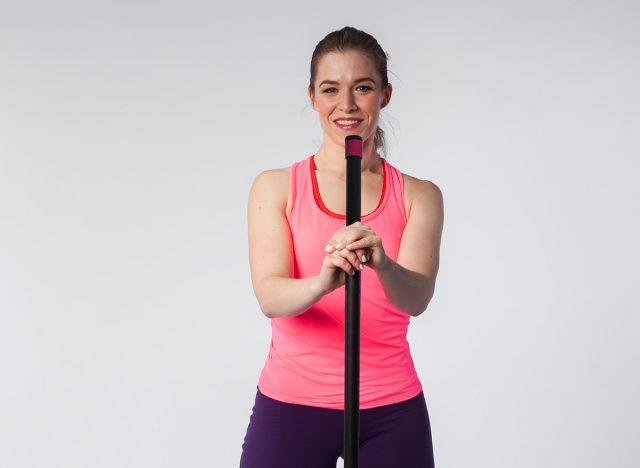
Finally, the Broomstick with Leg Push-Backs and Calf Raises combines elements of dynamic balance, posterior chain strength, and continued ankle development. Again, use the broomstick for light support. From a standing position, slowly push one leg straight back behind you, engaging the glute and hamstring of the extended leg, while maintaining a stable standing leg. As you bring the leg back to the starting position, perform a calf raise on the standing leg. Alternate legs or complete repetitions on one side before switching. This exercise challenges the body’s ability to maintain balance while shifting weight and extending a limb, directly enhancing the coordination and strength required for complex movements like walking and climbing stairs.
Beyond targeted exercises, a holistic approach to maintaining and improving balance involves several other considerations. Regular vision checks are crucial, as impaired sight directly affects spatial awareness. A review of medications with a healthcare provider can identify any drugs that might cause dizziness or affect coordination. Ensuring a safe home environment, free of tripping hazards like loose rugs or poor lighting, also plays a significant role in fall prevention. Consistency in physical activity and a willingness to seek professional guidance from physical therapists or certified fitness instructors are key components of a comprehensive strategy.
In conclusion, prioritizing balance and stability training is a proactive investment in a future of sustained independence and a higher quality of life for individuals over 55. By understanding the intricate systems that govern equilibrium, regularly assessing functional capabilities through key benchmarks, and diligently practicing expert-recommended exercises, older adults can significantly enhance their postural control. This commitment not only mitigates the pervasive risk of falls but also empowers individuals to continue engaging fully with the world around them, ensuring that the golden years are truly lived with confidence and vitality.
About the Author