The global health landscape, continually reshaped by emerging threats and evolving challenges, recently witnessed a pivotal gathering in Seoul. From August 28 to 29, 2024, the Republic of Korea played host to the second Strategic Dialogue with the World Health Organization (WHO), an event meticulously designed to fortify a collaborative relationship that has spanned an impressive three-quarters of a century. This high-level convening served as a crucial platform for both entities to align their strategic priorities, address pressing global health issues, and chart a more integrated course for future action, underscoring Korea’s profound transformation from a post-war aid recipient to a formidable leader and significant benefactor in the international health arena.
The Republic of Korea’s journey within the global health framework is a remarkable narrative of progress and strategic evolution. For over 75 years, the nation has maintained a dynamic partnership with the WHO, a relationship that began in the immediate aftermath of the Korean War when the country was grappling with severe public health crises and depended heavily on international assistance for basic healthcare infrastructure and disease control. During this formative period, WHO played an instrumental role, providing technical expertise, humanitarian aid, and support for establishing essential health services. As South Korea embarked on its miraculous economic development, known as the "Miracle on the Han River," its health indicators steadily improved, and its domestic healthcare system matured into one of the most advanced globally. This rapid socio-economic ascent fundamentally reshaped its engagement with the WHO. By the late 20th century, the Republic of Korea had transitioned from a beneficiary to a contributor, gradually increasing its financial and technical support for global health initiatives. Today, it stands as a pivotal donor nation and a thought leader, leveraging its unique experience of overcoming adversity and building a robust health infrastructure from scratch to inform global strategies and assist developing countries. This trajectory imbues Korea with a distinct perspective, allowing it to bridge the divide between the experiences of developing and developed nations in health development.
The recent Strategic Dialogue, the second of its kind, symbolized the deepening commitment of both the WHO and the Republic of Korea to a more structured and impactful collaboration. Held against the backdrop of an increasingly interconnected world, still reeling from the profound lessons of the COVID-19 pandemic, the dialogue’s objectives were multifaceted: to review past achievements, identify emerging health priorities, and devise innovative strategies to tackle complex global challenges. The composition of the delegations reflected the high strategic importance placed on these discussions. Leading the WHO contingent was Dr. Catharina Boehme, the Assistant Director-General for External Relations and Governance. Her presence underscored the organizational priority of fostering robust partnerships and securing vital resources for global health programs. Dr. Boehme was accompanied by a diverse team, comprising both in-person attendees and virtual participants from various levels of the WHO—headquarters, regional offices, and country offices. This comprehensive representation ensured that perspectives from policy formulation to on-the-ground implementation were incorporated into the discussions, fostering a holistic approach to partnership development.

On the Korean side, the delegation was led by Dr. Hye-Jin Kim, Deputy Minister for Planning and Coordination within the Ministry of Health and Welfare. Her leadership signaled the Republic of Korea’s whole-of-government approach to global health engagement, integrating health policy with broader national development and international cooperation agendas. Dr. Kim was joined by an array of senior officials whose expertise is critical to both domestic and international health policy. Notably present was Dr. Young-Mee Jee, the Commissioner of the Korea Disease Control and Prevention Agency (KDCA). Dr. Jee’s participation highlighted Korea’s strong emphasis on infectious disease control, pandemic preparedness, and public health surveillance—areas where the nation has demonstrated exemplary capabilities, particularly during recent global health crises. The delegation also included high-ranking representatives from the Ministry of Foreign Affairs, indicating the diplomatic and international aid dimensions of Korea’s global health strategy, and officials from the Ministry of Food and Drug Safety, whose involvement is crucial for discussions on pharmaceutical regulation, vaccine development, and equitable access to essential medical products. This broad spectrum of representation from the Korean government underscored a unified national commitment to advancing global health.
Beyond the executive-level discussions, a significant facet of the Seoul dialogue involved engagement between the WHO delegation and various Members of the National Assembly of the Republic of Korea. This interaction is particularly noteworthy as it reflects WHO’s broader strategy to cultivate stronger ties with legislative bodies worldwide. Engaging parliamentarians is paramount because they play a critical role in shaping national policy, allocating financial resources, and ensuring the legislative backing necessary for the effective implementation of health programs, both domestically and internationally. For the Republic of Korea, securing parliamentary support is essential for sustaining its commitments to global health initiatives, translating executive decisions into tangible legal and budgetary frameworks, and fostering long-term political will. Such engagement helps to embed global health priorities within the national legislative agenda, ensuring that international health commitments are not merely executive mandates but are also deeply rooted in the democratic process and public consensus.
The two-day strategic meeting culminated in a substantive alignment of priorities between the WHO and the Government of Korea, laying a robust foundation for intensified collaboration. While the original brief did not detail the specific points of alignment, informed inferences can be drawn based on current global health imperatives and Korea’s demonstrated strengths. It is highly probable that discussions centered on enhancing global health security, particularly in the wake of the COVID-19 pandemic, focusing on improved surveillance systems, rapid response mechanisms, and equitable access to medical countermeasures. Strengthening primary healthcare systems and achieving universal health coverage, core tenets of WHO’s mission, would undoubtedly have been key agenda items, with Korea potentially offering its expertise in developing efficient and accessible health services. Furthermore, given Korea’s advanced biotechnological sector and pharmaceutical industry, discussions likely included fostering innovation in health technologies, promoting research and development for neglected diseases, and ensuring robust supply chains for essential medicines and vaccines. Other potential areas of focus could have included addressing the health impacts of climate change, tackling the rising burden of non-communicable diseases, and improving mental health services globally.
The significance of this partnership extends beyond financial contributions. The Republic of Korea brings to the table not only substantial funding but also invaluable technical expertise, particularly in areas like digital health, vaccine development, and pandemic preparedness. Its highly advanced healthcare system, coupled with its experience in rapid industrialization and health system development, offers a unique model and practical lessons for other nations. By sharing its knowledge and best practices, Korea helps to build capacity in developing countries, fostering self-reliance and sustainable health outcomes. This strategic collaboration also bolsters WHO’s capacity to fulfill its mandate as the leading global health authority, ensuring that it has the necessary resources and political backing to address complex challenges effectively.

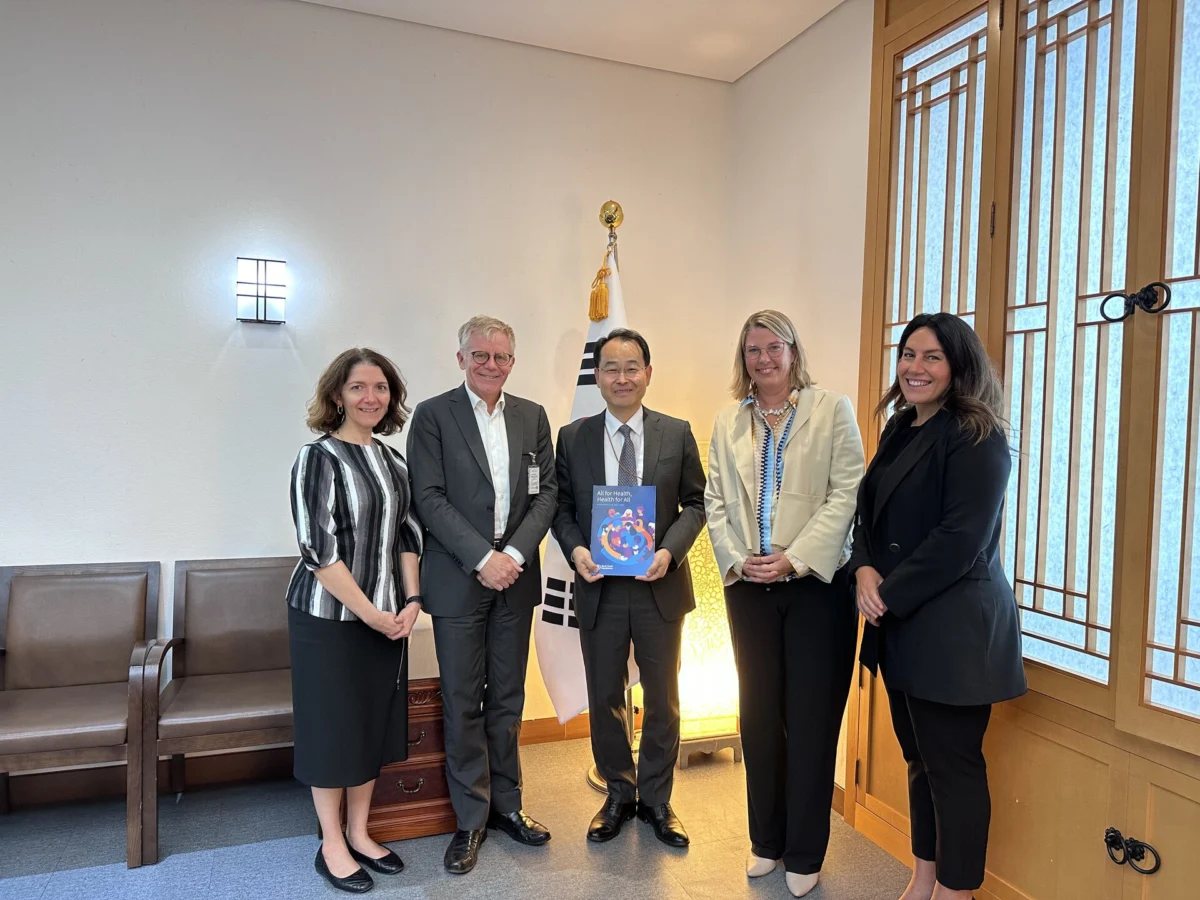
A poignant moment captured during the dialogue, illustrating the depth of Korea’s commitment, depicted the WHO delegation alongside Mr. Jonghan Park, Director-General for Development Cooperation at the Ministry of Foreign Affairs, who was seen holding up the "WHO Investment Case report." This report, a crucial document for the organization, outlines the strategic rationale and expected returns on investment in WHO’s core functions and programs. Korea’s prominent display of this report symbolizes its strong endorsement of WHO’s mission and its recognition of the vital need for sustainable financing to achieve global health objectives. It serves as a powerful visual testament to the nation’s role not just as a financial contributor, but as a strategic partner deeply invested in the efficacy and future direction of global health governance.
Looking ahead, the enhanced partnership between the Republic of Korea and the WHO promises to yield substantial dividends for global health. By aligning their strategic visions and leveraging Korea’s growing influence and resources, the two entities are poised to make significant strides in addressing some of humanity’s most pressing health concerns. This collaboration reinforces the notion that global health is a shared responsibility, one that necessitates robust international cooperation, innovative solutions, and unwavering political commitment. The Seoul Strategic Dialogue stands as a testament to Korea’s unwavering dedication to a healthier, more equitable world, cementing its position as an indispensable force in shaping the future of global health.
About the Author