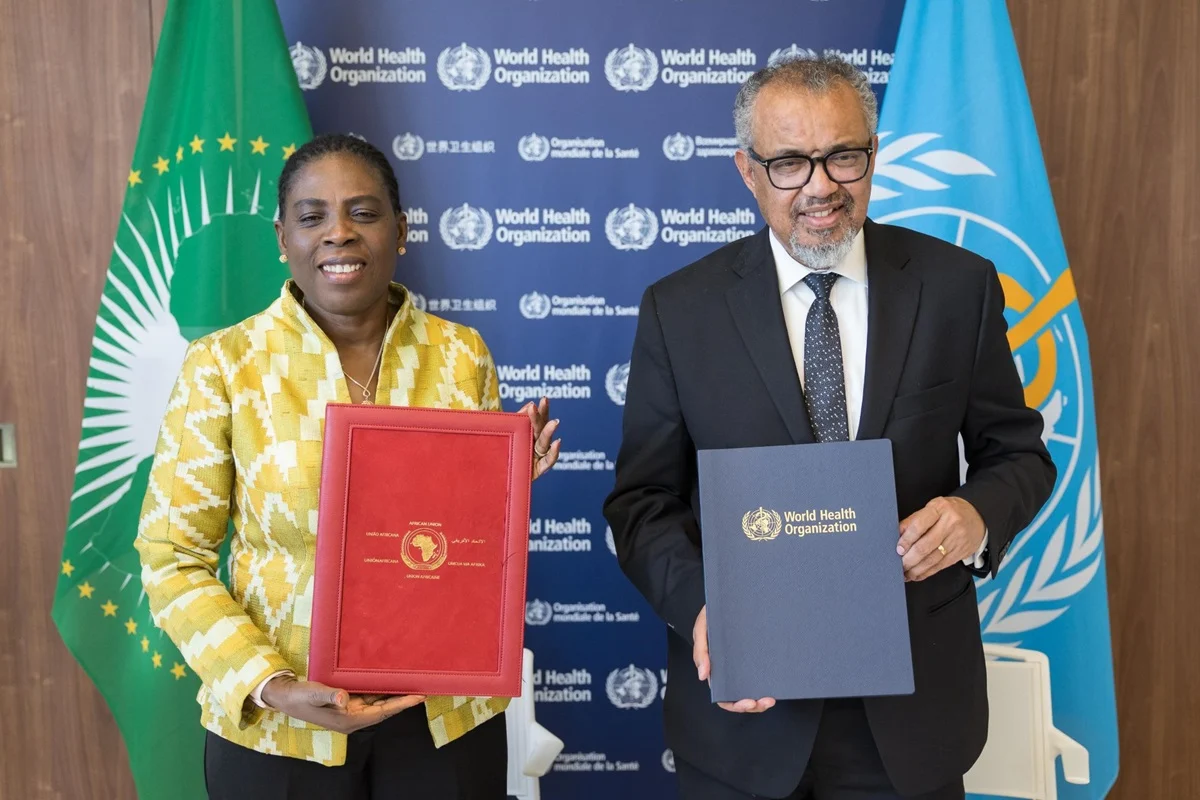
A pivotal moment for public health on the African continent unfolded recently as the World Health Organization (WHO) and the African Union (AU) Commission formalized an enhanced framework for their long-standing collaboration. This significant development occurred through the signing of an updated Memorandum of Understanding (MoU) on the periphery of the 78th World Health Assembly in Geneva. The reinvigorated agreement signifies a resolute commitment from both international bodies to accelerate progress in critical areas such as health security, comprehensive health coverage for all citizens, and the broader agenda of sustainable development across Africa. This renewed focus comes at a juncture marked by unprecedented global financial pressures impacting the health sector worldwide.
The updated accord not only streamlines but also fortifies the collaborative mechanisms between WHO and various AU entities, building upon the foundational principles established in a preceding MoU from 2019. This strategic alignment is specifically designed to bolster the continent’s health priorities, establishing a clearer pathway for intensified cooperation. Within this restructured partnership, the AU Commission’s Department of Health, Humanitarian Affairs, and Social Development is positioned centrally, tasked with spearheading the implementation of health policies across the continent. This move underscores the African Union’s proactive stance in fostering collective action, cultivating inclusive partnerships, and building regional resilience against health crises.
The official signing ceremony brought together high-level representatives from both organizations. Her Excellency Ambassador Amma Adomaa Twum-Amoah, who serves as the Commissioner for Health, Humanitarian Affairs, and Social Development, affixed her signature on behalf of His Excellency Mahmoud Ali Youssouf, the Chairperson of the African Union Commission. Dr. Tedros Adhanom Ghebreyesus, the Director-General of the World Health Organization, signed for the WHO. This ceremonial act was widely recognized as a definitive stride forward, particularly for initiatives aimed at strengthening primary health care infrastructure and achieving universal access to health services throughout Africa.
Ambassador Twum-Amoah articulated the profound strategic importance of this agreement and highlighted the African Union’s increasing leadership in shaping the continent’s health trajectory. She conveyed that this renewed commitment inaugurates a fresh chapter in the collaborative efforts between the AU and WHO. By working in closer concert, both organizations are better equipped to address the diverse health requirements of African populations, striving to ensure that no individual is overlooked in the pursuit of well-being. The Commissioner reiterated the African Union’s profound appreciation for WHO’s pivotal and leading global role in health governance and expressed anticipation for a deeper strategic engagement to advance shared objectives. A key sentiment she conveyed was the imperative for a paradigm shift: moving beyond merely "budgeting for survival" towards a more ambitious strategy of "planning for health sovereignty," signaling a desire for greater self-determination in health matters.
Dr. Tedros Adhanom Ghebreyesus echoed the urgency and significance of the renewed understanding, noting its timing amidst a global environment where reductions in bilateral aid threaten the health and welfare of millions across Africa. He emphasized that the agreement reflects a shared resolve to translate the partnership into concrete, measurable results for the people of Africa, assisting nations in transitioning away from historical reliance on external aid towards a future grounded in sustainable self-reliance. Dr. Tedros affirmed WHO’s steadfast solidarity with the African Union in propelling forward the health agenda for the entire continent.
The foundational pillars of this enhanced collaboration are structured around five critical areas, designed to address the multifaceted challenges confronting health systems in Africa:
- Strengthening Health Security and Emergency Preparedness: This involves bolstering national and regional capacities to prevent, detect, and respond effectively to public health emergencies, including infectious disease outbreaks and humanitarian crises. The focus is on robust surveillance systems, rapid response teams, and resilient supply chains for essential medical resources.
- Advancing Universal Health Coverage (UHC) and Primary Health Care: Efforts will concentrate on expanding equitable access to quality, affordable health services for all Africans, with a particular emphasis on strengthening primary health care as the bedrock of health systems. This includes promoting health education, preventive care, and essential curative services at the community level.
- Enhancing Health Systems Strengthening: This pillar encompasses a broad range of initiatives aimed at improving the overall functionality and resilience of health systems. It includes investing in human resources for health, developing robust health information systems, improving governance and leadership, and modernizing health infrastructure.
- Promoting Sustainable Health Financing and Investment: A core objective is to reduce Africa’s dependence on external aid by mobilizing greater domestic resources for health. This involves exploring innovative financing mechanisms, improving the efficiency of health spending, and advocating for increased national budget allocations to the health sector. The goal is to cultivate financial autonomy and predictability for health programs.
- Fostering Research, Innovation, and Digital Health: This area focuses on leveraging scientific research, technological advancements, and digital solutions to improve health outcomes. It includes promoting local research capacity, facilitating the adoption of innovative health technologies, and expanding the use of digital tools for health service delivery, data management, and public health communication.
The context surrounding this renewed agreement further amplifies its significance. The African Union’s influence in global health governance has demonstrably grown, a trajectory significantly bolstered by its recent inclusion as a permanent member of the G20. This elevated status provides the AU with an unprecedented platform to advocate for African health priorities on the world stage, directly influencing international policy discussions and resource allocation decisions among the world’s major economies. Concurrently, the WHO reaffirms its indispensable role as a trusted technical authority and operational partner, providing critical guidance and support to the AU and its member states.
The challenges facing African health systems are multifaceted and profound. Historically, many African nations have grappled with a dual burden of communicable and non-communicable diseases, compounded by fragile health infrastructures, chronic underfunding, and critical shortages of skilled health professionals. The COVID-19 pandemic starkly exposed and exacerbated these vulnerabilities, highlighting the urgent need for robust, self-reliant health systems capable of withstanding future shocks. Furthermore, the global landscape of development aid is shifting, with some traditional donors re-evaluating their commitments, necessitating a strategic pivot towards greater domestic ownership and sustainable financing models. The concept of "health sovereignty," as articulated by the AU, therefore resonates deeply within this evolving global context, advocating for African nations to take greater control over their health destinies, including vaccine production, pharmaceutical manufacturing, and health research.
This revitalized MoU represents a potent catalyst for enhanced regional and multilateral cooperation, specifically targeting Africa’s most pressing health challenges. It is envisioned as a mechanism to deliver tangible, enduring improvements in health outcomes across the continent. By pooling expertise, resources, and strategic vision, the AU and WHO are setting a course towards a future where African populations can access comprehensive health services, are protected from health emergencies, and contribute to the continent’s broader socio-economic development through improved well-being. This collaboration is not merely an administrative update; it is a strategic declaration of intent to empower African nations in their pursuit of resilient, equitable, and self-sufficient health systems for generations to come.
About the Author