The intricate network of muscles that compose the human lower body forms the foundation for virtually all daily physical activity, from the simplest act of walking to more complex movements like climbing stairs or maintaining balance on uneven terrain. Within this crucial system, the musculature of the outer thigh and hip region, often referred to as the hip abductors, plays an exceptionally vital, yet frequently overlooked, role. These muscle groups are not merely contributors to aesthetic contouring; they are fundamental to hip stability, knee support, and the crucial maintenance of a level pelvis, all of which are indispensable for fluid, pain-free movement and overall physical independence, particularly as individuals progress through different life stages. Neglecting these areas can lead to a cascade of biomechanical inefficiencies, increasing the propensity for injuries and diminishing an individual’s capacity to perform routine tasks with ease and confidence.
Expert insight underscores the profound importance of targeted strength training for these muscle groups. Domenic Angelino, MS, MPH, CSCS, CPT, a distinguished Chief Exercise Scientist at FitCraft, emphasizes that a strategic approach to strengthening the outer thighs can yield substantial improvements in functional fitness. His recommendations often pivot towards exercises that mimic real-world movements, highlighting the efficacy of standing routines over more isolated, machine-based alternatives for comprehensive strength development. This perspective is particularly relevant for those seeking to enhance their functional capacity and reduce injury risk, focusing on dynamic stability rather than just raw power in a single plane of motion.
Understanding the anatomy involved provides valuable context. The "outer thigh" broadly refers to several key muscles, primarily the gluteus medius and gluteus minimus, which originate from the outer surface of the pelvis and insert into the greater trochanter of the femur (thigh bone). These are the primary hip abductors, responsible for moving the leg away from the body’s midline. Also critical is the tensor fasciae latae (TFL), a muscle located on the lateral aspect of the hip that connects to the iliotibial band (IT band), a thick fibrous band of connective tissue running down the outside of the thigh. While the vastus lateralis, one of the four quadriceps muscles, also contributes to the bulk of the outer thigh, its primary role is knee extension, though it works synergistically in many lateral movements. A strong gluteus medius, in particular, is paramount for stabilizing the pelvis during single-leg stance, preventing the opposite hip from dropping – a common compensatory pattern known as a Trendelenburg gait, which can lead to knee and lower back pain.
The benefits of cultivating robust outer thigh and hip abductor strength extend far beyond mere muscle definition. Enhanced strength in this region directly translates into improved balance, a critical factor in fall prevention, especially for older adults. Strong hip abductors provide stability during gait, allowing for confident navigation of uneven surfaces, stepping off curbs, or reacting to unexpected shifts in weight. Furthermore, they play a pivotal role in preventing a spectrum of musculoskeletal injuries. Weakness in these muscles is frequently implicated in conditions such as patellofemoral pain syndrome (runner’s knee), IT band syndrome, and even certain types of lower back pain, as inadequate hip stability can force other structures to compensate, leading to overuse and strain. By fortifying these muscles, individuals can create a more resilient and functional kinetic chain, protecting vulnerable joints and soft tissues.
When considering exercise modalities, standing movements offer distinct advantages over seated, machine-based options like the traditional leg press. While leg presses effectively target the quadriceps and gluteus maximus in a fixed, sagittal plane, they often neglect the crucial stabilizing role of the hip abductors and core muscles in a functional, upright position. Standing exercises, conversely, engage a broader array of synergistic muscles, including core stabilizers, and demand greater proprioception – the body’s awareness of its position in space. This holistic engagement better mimics the demands of daily life, where movements rarely occur in isolation and almost always involve maintaining balance against gravity. For individuals seeking truly functional strength that translates into improved real-world performance and reduced injury risk, integrating standing, multi-planar exercises is an invaluable strategy.
Domenic Angelino advocates for a selection of standing exercises that specifically target and strengthen these vital outer thigh and hip muscles. These movements are adaptable, allowing for progression or regression based on individual fitness levels and equipment availability, making them suitable for a wide range of practitioners.
One foundational exercise is Standing Hip Abductions. This movement directly isolates the primary hip abductor muscles, including the gluteus medius and tensor fasciae latae. To perform this exercise effectively, one should stand tall with a rigid and straight torso, maintaining a neutral spine. Gently shift weight to one leg while lifting the other leg laterally away from the body, keeping the knee relatively straight but not locked. The movement should be controlled, focusing on the contraction of the outer hip muscles, rather than relying on momentum or excessive leaning of the torso. A common error is to lean significantly away from the working leg, which reduces the load on the target muscles. For added safety and stability, especially for those new to the exercise or with balance concerns, performing this movement next to a wall or sturdy support is highly recommended. The adaptability of standing hip abductions is a key advantage; they can be performed with just bodyweight, augmented with resistance bands looped around the ankles or knees, or utilizing cable machines for consistent tension throughout the range of motion. This versatility allows individuals to progressively challenge their muscles, fostering continuous strength gains.
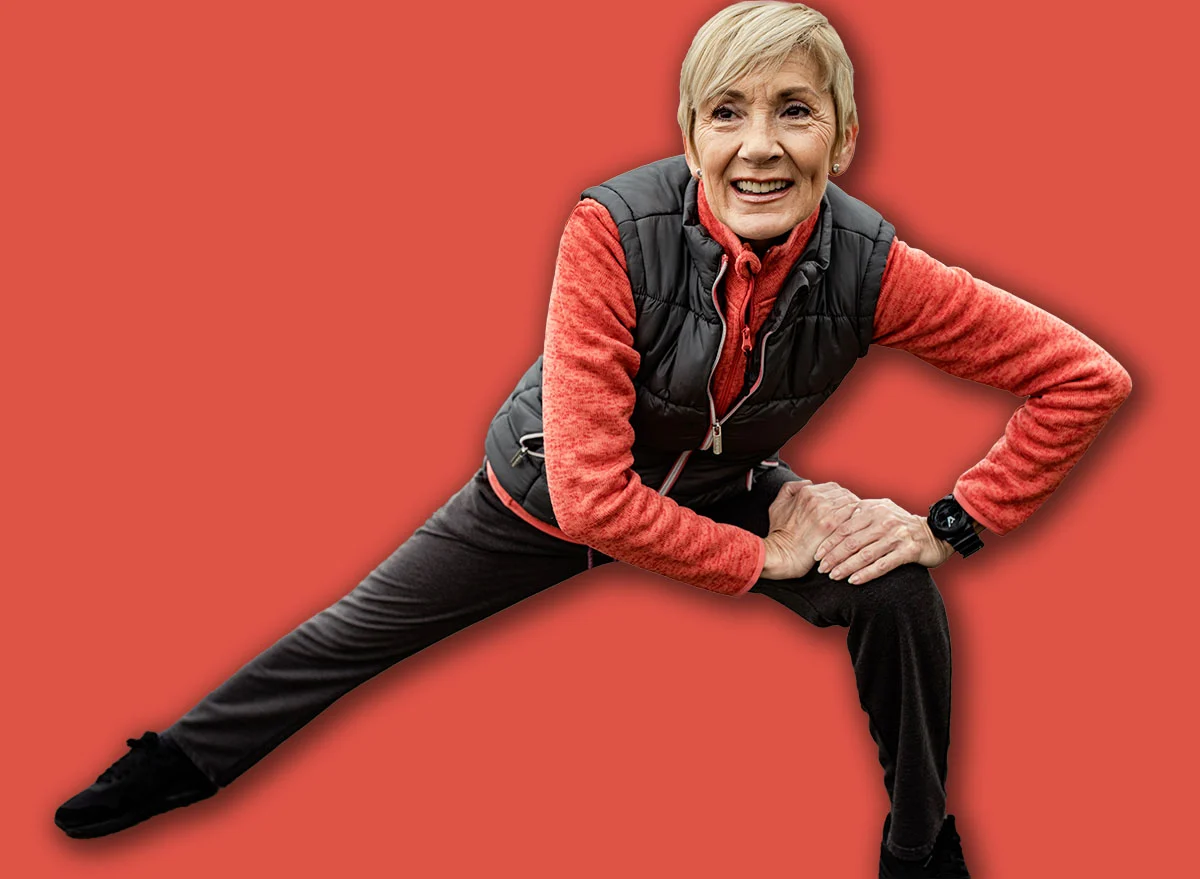
Next, Lateral Lunges introduce a dynamic, multi-planar challenge. This exercise not only engages the gluteus medius but also significantly activates the vastus lateralis, the outer portion of the quadriceps, and the gluteus maximus, while also engaging the adductor (inner thigh) muscles for stabilization. To execute a lateral lunge, begin by standing with feet hip-width apart. Step directly out to the side with one leg, keeping the other leg straight. As you step, send your hips back and bend the knee of the stepping leg, ensuring the knee tracks in line with the toes and does not collapse inward. Your chest should remain upright, and your weight should be primarily in the heel and midfoot of the lunging leg. Push off forcefully from the foot of the lunging leg to return to the starting position. Angelino highlights that this movement is exceptionally beneficial due to the deep range of motion it facilitates, allowing individuals to work the outer thigh muscles at both the hip and knee joints. The pushing action to return to standing particularly emphasizes the powerful engagement of the outer glutes and thigh muscles, crucial for dynamic stability and power in the frontal plane. Lateral lunges can be performed with bodyweight, or progressed by holding dumbbells or a kettlebell in a goblet position.
Side Step-Ups offer another excellent unilateral exercise that builds strength and enhances stability. This movement effectively targets similar hip abductor muscles as the lateral lunge, while also providing unique benefits for the iliotibial band (IT band). While the IT band itself is a connective tissue and cannot be directly strengthened like a muscle, its functional integrity and ability to stabilize the knee and hip are significantly improved when forced to engage during specific movements. Performing side step-ups involves placing one foot laterally onto a sturdy box or raised platform, ensuring the entire foot is supported. Drive through the heel of the elevated foot to lift the body onto the platform, keeping the trailing leg from pushing off the ground. Control the descent back to the starting position. This exercise demands considerable balance and proprioception. Angelino explains that the lateral stepping motion significantly increases the IT band’s activation and its role in stabilizing the leg compared to other exercises, thereby contributing to its resilience and function. The height of the box can be adjusted to vary the intensity, and weights can be held to further challenge the muscles.
Finally, the Sumo Squat provides a powerful compound movement that targets a broader spectrum of lower body muscles while placing a distinct emphasis on the outer thighs and hip abductors due to its unique stance. Unlike a traditional squat, the sumo squat involves a much wider stance with the toes pointed outwards, typically at a 45-degree angle. As you descend into the squat, maintain an upright torso, push your hips back, and allow your knees to track outwards over your toes. The wide stance inherently increases the activation of the adductor (inner thigh) muscles, but critically, it also alters the leverage to more effectively engage the gluteus medius and other outer thigh muscles, especially as you drive back up to standing. Angelino points out that this wider base allows for the generation of greater force and the utilization of heavier weights compared to a standard squat, which translates into a stronger stimulus for muscle growth and enhanced strength. The ability to load the sumo squat more heavily means a greater challenge for the musculature, accelerating improvements in overall lower body power and firmness. This exercise can be performed with bodyweight, a goblet hold, or with a barbell across the upper back, making it highly scalable for various strength levels.
Incorporating these standing exercises into a regular fitness regimen can be a game-changer for maintaining and improving functional strength. For optimal results, these movements should be performed with correct form, focusing on controlled repetitions rather than speed. A general recommendation is to include such exercises two to three times per week, allowing for adequate rest and recovery. It is always advisable to start with lighter loads or bodyweight to master the technique before progressing to heavier resistance. Listening to one’s body, incorporating a thorough warm-up and cool-down, and consulting with a qualified fitness professional or healthcare provider are essential steps to ensure safety and maximize the benefits of any exercise program. By prioritizing the development of dynamic hip and thigh strength through these targeted standing movements, individuals can significantly enhance their mobility, fortify their bodies against injury, and preserve their independence and quality of life for years to come.
About the Author