As individuals progress through their seventh decade and beyond, the pursuit of maintaining physical strength and agility becomes not merely an aspiration but a critical component of sustaining an active and independent lifestyle. Age-related physiological changes, notably sarcopenia—the gradual loss of muscle mass and strength—can significantly impact an individual’s capacity to perform everyday tasks, increasing the risk of falls and diminishing overall quality of life. However, strategic and consistent engagement in physical activity, particularly strength training, offers a powerful counter-narrative to this natural decline, often yielding results that surprise even younger observers. A well-designed regimen can quickly restore a sense of physical capability, translating into greater confidence in movement, improved balance, and a reduced perception of physical limitations.
The emphasis on standing exercises within a fitness protocol for older adults is deliberate and highly beneficial. Unlike many traditional strength training routines that might necessitate getting down onto the floor, which can pose challenges related to mobility, balance, or comfort for some seniors, standing movements inherently mimic the postures and actions of daily life. This functional approach ensures that the strength gained is directly transferable to real-world scenarios, whether it’s navigating stairs, carrying groceries, rising from a chair, or maintaining stability during unexpected shifts in balance. By engaging the musculature in upright positions, these exercises simultaneously fortify the legs, hips, core, grip, and postural muscles, fostering a holistic improvement in functional capacity and reducing the intimidation factor often associated with more complex exercises.
A significant psychological dimension underpins the physical benefits. Witnessing tangible improvements in movement quality—a previously unsteady step becoming firm, a wobbly lift transforming into a controlled carry—can profoundly boost an individual’s self-assurance. This enhanced confidence is not just about physical prowess; it’s about reclaiming agency over one’s body and movements, fostering a proactive mindset towards healthy aging. The goal of such training is to cultivate a level of strength that is immediately perceptible and reliably improves over time, empowering seniors to embrace their daily routines with greater ease and security.
To safely and effectively incorporate these exercises into a weekly routine, individuals should aim for two to four sessions. It is paramount to prioritize safety by keeping a stable support—such as a wall, countertop, or sturdy chair—within reach, especially when balance feels compromised. Starting with minimal or no added resistance and gradually increasing the challenge only when each repetition feels stable and controlled is crucial. Consulting a healthcare professional before embarking on any new exercise program is always recommended, ensuring the chosen activities align with individual health conditions and capabilities.
The Suitcase Carry March: Mastering Unilateral Load and Stability
The Suitcase Carry March is an deceptively simple yet remarkably effective exercise that targets a broad spectrum of muscles essential for functional movement and fall prevention. Its primary utility lies in developing unilateral strength and anti-rotational core stability—skills critical for managing uneven loads, maintaining equilibrium while walking, and navigating dynamic environments. When executed correctly, holding a weight on one side forces the body’s entire kinetic chain to engage synergistically: the grip muscles secure the weight, the core (particularly the obliques) activates intensely to prevent the torso from leaning or twisting towards the loaded side, the glutes and hip flexors work to stabilize the pelvis during the marching motion, and the upper back muscles contribute to maintaining upright posture.
This exercise directly translates to real-life scenarios such as carrying a shopping bag in one hand, managing a brief case, or maintaining balance when one side of the body is momentarily heavier than the other. It strengthens the intricate network of muscles responsible for dynamic balance and postural integrity, crucial for preventing stumbles and falls.
Muscles Trained: Deep core stabilizers, obliques, glutes, hip flexors, forearm flexors (grip), and upper back postural muscles.
How to Do It: Begin by standing tall with a light dumbbell, kettlebell, or even a sturdy bag filled with a small amount of weight in one hand, held at your side. Ensure your shoulders remain level and avoid leaning away from or towards the weighted side. Your posture should be upright, with your gaze forward. Slowly lift one knee towards your chest, as if marching, maintaining control and stability through your core and standing leg. Gently lower the foot and repeat with the opposite leg. The movement should be deliberate and controlled, not rushed. If balance is a concern, position yourself near a wall or counter for immediate support.
Recommended Sets and Reps: Perform 3 sets, aiming for 20 to 30 seconds of marching on each side. Allow 30 to 45 seconds of rest between sets to ensure adequate recovery.
Best Variations: For beginners, start with bodyweight marching without any external load to focus purely on balance and coordination. As strength improves, progress to supported suitcase marches (holding onto a wall with the free hand) or dynamic suitcase carry walks, moving across a short distance.
Form Tip: The key is to resist the urge to lean. Imagine a string pulling the crown of your head upwards, keeping your torso rigid and perpendicular to the floor throughout the movement.
Counter-Supported Split Squat: Building Leg Strength with Balanced Assistance
The Counter-Supported Split Squat is an excellent exercise for cultivating unilateral leg strength without overwhelming the individual with balance demands. By utilizing a stable support like a counter or chair, participants can focus intensely on the muscular engagement of each leg, isolating and strengthening the quadriceps, glutes, and hamstrings without the added complexity of maintaining perfect equilibrium. This makes it an ideal preparatory movement for activities that heavily rely on single-leg strength, such as ascending and descending stairs, rising from low-seated positions, or stepping confidently over thresholds.
This exercise is particularly beneficial because it allows for a deeper range of motion and greater muscular activation than a traditional squat for those who struggle with balance, as the support provides external stability. It helps to address muscular asymmetries that can develop over time, ensuring both legs contribute equally to functional movements.
Muscles Trained: Quadriceps, glutes, hamstrings, calves, and core stabilizers.
How to Do It: Stand facing a sturdy counter or the back of a chair, placing your hands lightly on it for support. Step one foot forward, creating a staggered stance, with your feet about hip-width apart and your back heel slightly lifted. Keeping your torso upright, slowly lower your hips towards the floor by bending both knees. The front knee should track over the ankle, and the back knee should point towards the floor. Only descend as far as feels comfortable and controlled, maintaining a solid, stable bottom position. Push through the heel of your front foot to return to the starting position.
Recommended Sets and Reps: Complete 3 sets of 6 to 10 repetitions on each leg. Rest for 45 to 60 seconds between sets to allow for muscle recovery.
Best Variations: Begin with a short-range split squat, limiting the depth of the movement. As strength and confidence grow, explore supported reverse lunges for a slightly different muscle emphasis, or incorporate slow-tempo split squats, focusing on eccentric control during the lowering phase.
Form Tip: Allow the hands to provide necessary balance assistance, but ensure the legs are performing the majority of the work. The movement should feel driven by the muscles of the front leg.
Standing Band Pallof Press: Fortifying Core Resilience Against Rotational Forces
The Standing Band Pallof Press is a deceptively challenging core exercise that often feels subtle until one truly focuses on its execution. Unlike traditional abdominal exercises that involve flexion (like crunches), the Pallof press specifically trains the core musculature, particularly the deep core and obliques, to resist rotation and lateral flexion. This anti-rotational strength is paramount for everyday stability, enabling the body to remain upright and controlled when subjected to twisting forces—such as reaching across the body, turning to look behind, carrying objects unevenly, or bracing against an unexpected bump or stumble.
By resisting the pull of the band, the exercise teaches the core to act as a robust stabilizer for the spine and pelvis, which is a fundamental component of healthy movement patterns and injury prevention in older adults. It enhances dynamic balance by improving the body’s ability to remain aligned during movement.
Muscles Trained: Deep core (transversus abdominis), obliques, glutes, shoulders, and upper back.
How to Do It: Secure a resistance band to a sturdy anchor point at chest height. Stand perpendicular to the anchor, grasping the band with both hands at your sternum, feet shoulder-width apart. Take a few steps away from the anchor to create tension in the band. The band will naturally try to pull your torso towards the anchor point. Your objective is to resist this pull, keeping your ribs and hips squarely facing forward. From this stable position, slowly press the band straight out in front of your chest until your arms are fully extended. Hold briefly, then slowly return the band to your sternum. Throughout the movement, prevent your body from rotating or leaning. Start with a light resistance band to master the control.
Recommended Sets and Reps: Perform 3 sets of 8 to 10 repetitions on each side (facing away from the anchor). Rest for 30 to 45 seconds between sets.
Best Variations: To increase the challenge, hold the extended position for a longer duration (short-hold Pallof presses) or widen your stance for increased base of support (wider-stance Pallof presses). For those needing more stability, a supported Pallof press can be done with one hand on a wall.
Form Tip: The core engagement is central. Actively brace your abdominal muscles as if preparing for a gentle punch, ensuring your torso remains rigid and unmoving as your arms extend and retract.
Goblet Squat to Calf Raise: Integrating Lower Body Power and Propulsive Strength
The Goblet Squat to Calf Raise is a compound movement that seamlessly integrates strength development throughout the entire lower body, culminating in a powerful contraction of the calves. This combination is exceptionally effective for building the explosive power required for standing up from a seated position, initiating a strong stride during walking, and pushing off the ground with greater force. Holding a dumbbell or kettlebell in the goblet position—held vertically against the chest—provides a clear central point of balance, which can paradoxically make the squat portion feel more stable and easier to coordinate for many individuals.
This exercise not only strengthens the major muscle groups of the legs but also enhances ankle stability and the elasticity of the calf muscles, which are crucial for maintaining gait efficiency and reacting quickly to uneven surfaces.
Muscles Trained: Quadriceps, glutes, hamstrings, calves, core, and upper back.
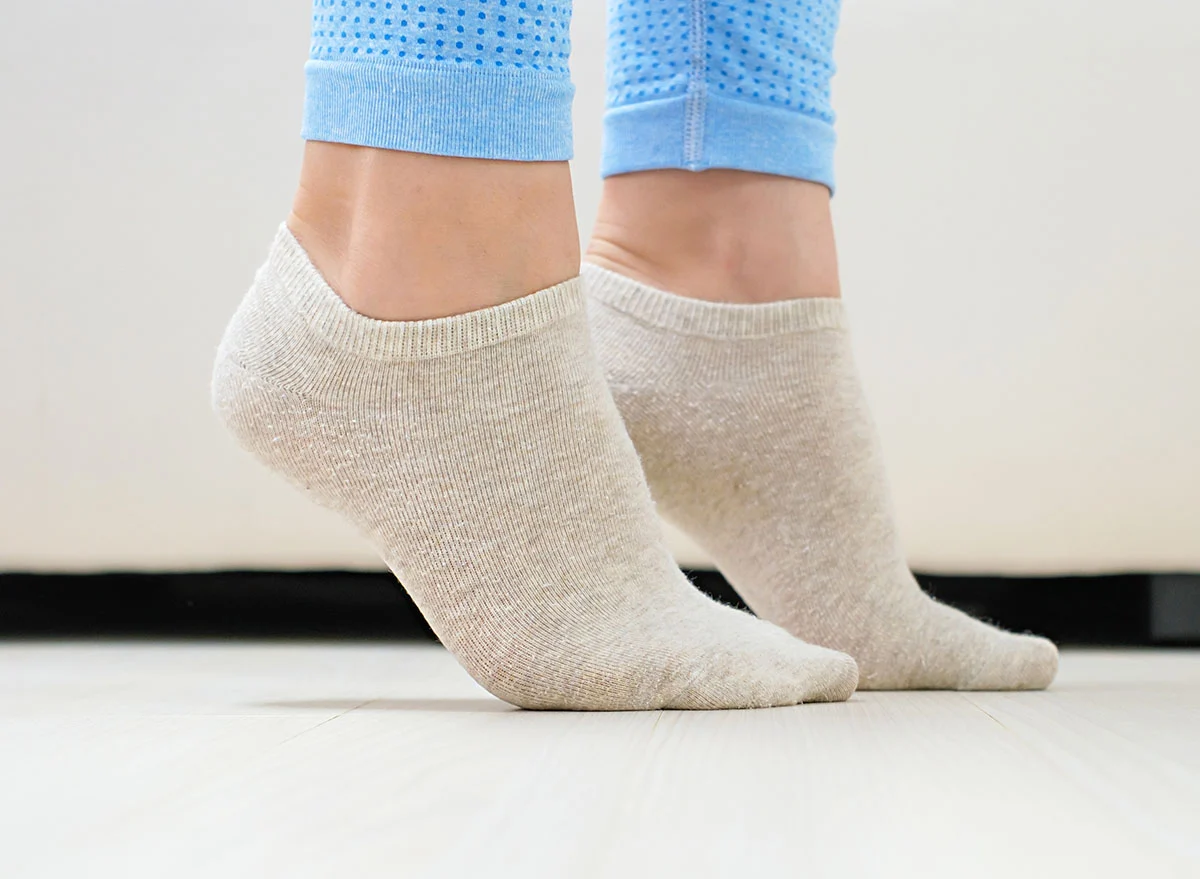
How to Do It: Stand with your feet slightly wider than shoulder-width apart, toes pointed slightly outward. Hold a light dumbbell or kettlebell vertically against your chest, cupping the top end with both hands. Keeping your chest lifted and back straight, slowly lower your hips as if sitting into a chair, pushing your knees outwards. Descend until your thighs are parallel to the floor or as deep as comfortably possible while maintaining good form. Push through your heels to return to a standing position. As you reach full extension, immediately transition into a calf raise: push up onto the balls of your feet, lifting your heels as high as possible. Pause briefly at the top, then slowly lower your heels back to the ground.
Recommended Sets and Reps: Complete 3 sets of 8 to 10 repetitions. Rest for 45 to 60 seconds between sets.
Best Variations: For those new to the movement, performing a bodyweight squat to calf raise or a chair squat (where you tap a chair before standing) can be excellent starting points. If the calf raise is too challenging initially, focus solely on the goblet squat.
Form Tip: Ensure a smooth, controlled transition from the squat to the calf raise. During the calf raise, focus on lifting onto your toes as high as possible with control, then lowering your heels slowly to maximize muscle engagement.
Integrating These Standing Exercises for Optimal Results
To maximize the benefits of these standing exercises, incorporate them into a circuit training format. After a brief warm-up (e.g., light walking, arm circles), perform one set of each exercise consecutively with minimal rest between movements. Once all four exercises have been completed, take a longer rest period of 60 to 90 seconds. Repeat this entire sequence for a total of two to three rounds. This approach keeps the heart rate gently elevated while effectively working multiple muscle groups.
The journey of building strength after 70 is not about demonstrating prowess to others; it is fundamentally about cultivating a resilient and capable body that feels prepared for the demands and joys of each new day. These four carefully selected standing exercises provide a practical, safe, and highly effective pathway to achieve that strength, empowering individuals to move with greater confidence, maintain their independence, and significantly enrich their quality of life. Consistent, purposeful movement remains one of the most potent tools for healthy aging.
About the Author