As individuals navigate the landscape of aging, maintaining robust physical capabilities becomes increasingly vital for preserving autonomy and quality of life. Among the myriad components contributing to overall well-being, core strength and endurance stand out as critical pillars, influencing everything from posture and balance to the ease with which daily activities are performed. For those over the age of 55, a particular benchmark in core stability, assessed through the seemingly simple plank exercise, offers profound insights into one’s capacity for functional longevity and resilience against age-related physical decline.
The conventional understanding of "core strength" often conjures images of visible abdominal muscles. However, the true essence of a strong core lies in its ability to provide comprehensive stability to the trunk, acting as a dynamic nexus between the upper and lower body. This intricate system involves not just the superficial rectus abdominis but also deeper muscles such as the transverse abdominis, multifidus, and the oblique group, alongside supporting structures like the glutes, hip flexors, and even the diaphragm. These muscles work in concert to stabilize the spine, facilitate efficient movement patterns, and protect against injury. As individuals mature, declines in muscle mass, a phenomenon known as sarcopenia, can compromise this vital system, leading to reduced mobility, increased fall risk, and chronic pain, particularly in the lower back.
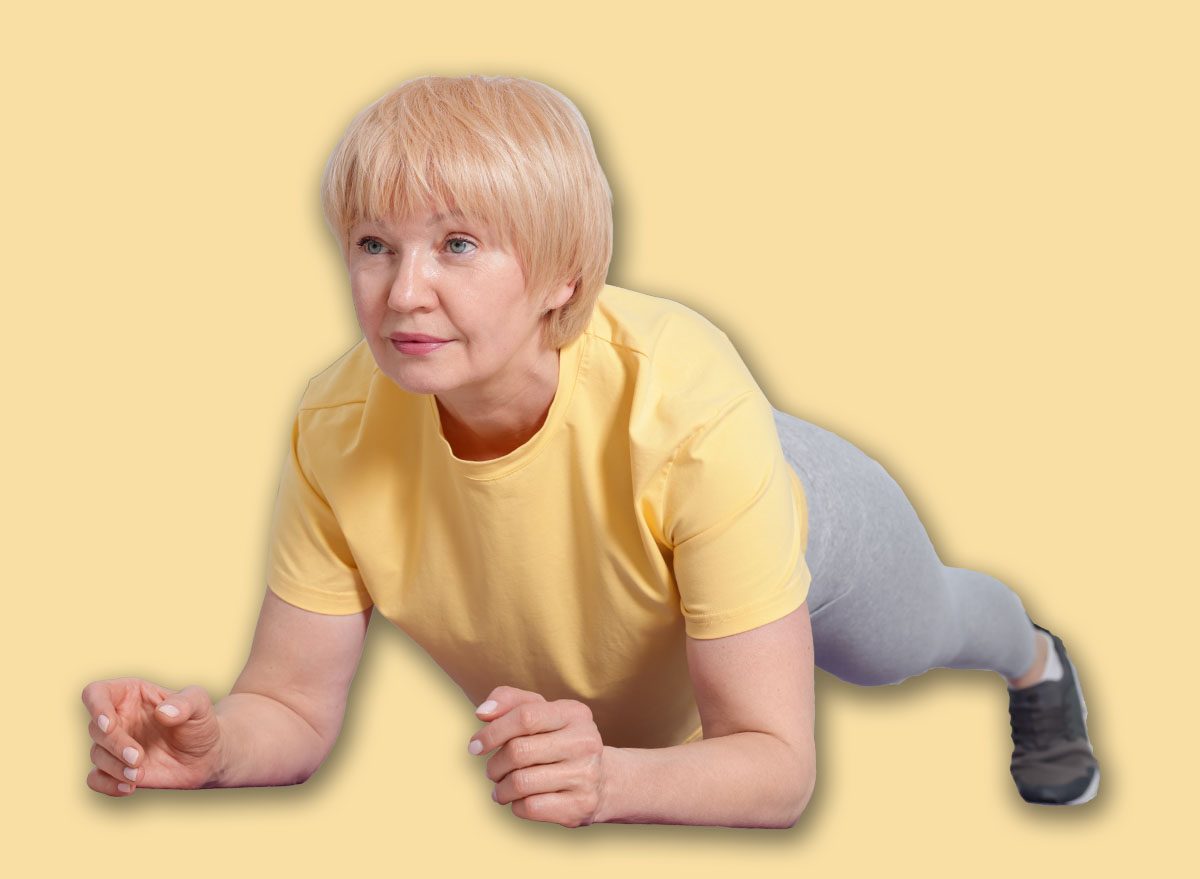
Enter the plank, a fundamental isometric exercise that, despite its apparent simplicity, serves as a remarkably comprehensive diagnostic tool for assessing core integrity. Unlike dynamic movements that involve contraction and relaxation, the plank demands sustained muscular engagement to resist gravity and maintain a rigid, neutral spinal alignment. This makes it an exceptional indicator of core endurance – the capacity of these stabilizing muscles to perform over time without succumbing to fatigue. While raw strength allows one to assume a correct position, it is endurance that enables one to maintain it, particularly under prolonged physical demands or when navigating challenging environments. This distinction is paramount for older adults, whose daily lives often require sustained postural control rather than explosive power.
For individuals past their mid-fifties, achieving and sustaining a meticulously executed plank for a duration exceeding two minutes signifies an exceptional level of core endurance and overall bodily control. This specific timeframe places an individual within a top percentile of their age demographic, suggesting a physiological advantage that extends far beyond the gym. Such a performance indicates that the body’s central stabilizing mechanism possesses the staying power to support the spine, maintain balance, and facilitate coordinated movements even as fatigue begins to set in. It implies a reduced susceptibility to common age-related complaints, such as lower back discomfort, and a heightened capacity for independent living.
The implications of such robust core endurance are extensive. Functionally, it translates into improved gait mechanics, enabling a more stable and efficient walking pattern. It enhances the ability to lift and carry objects, whether it’s groceries, grandchildren, or gardening tools, by providing a solid foundation from which the limbs can exert force without unduly stressing the spine. Furthermore, strong core endurance aids in transitions – moving from sitting to standing, getting in and out of a car, or even safely recovering from a stumble. These seemingly mundane actions become increasingly challenging with diminished core stability, highlighting the profound impact of this foundational strength on daily independence.

To properly gauge this benchmark, the plank test must be executed with meticulous attention to form, as quality far outweighs mere duration. The objective is not simply to hold a position, but to maintain a rigid, straight line from the crown of the head to the heels, ensuring the hips remain level and the lower back stays neutral throughout the entire hold. The initial setup is crucial: position the forearms on the floor, elbows directly beneath the shoulders, with hands either clasped or parallel. Extend the legs straight back, engaging the glutes and quadriceps to prevent the hips from sagging or rising excessively. Crucially, the abdominal muscles should be actively braced, as if preparing for a gentle impact, while breathing remains steady and controlled. Any compromise in this alignment – a dipping of the hips, an arching of the lower back, or a collapsing of the shoulders – should signal the end of the test, regardless of elapsed time. This strict adherence to form ensures that the assessment accurately reflects genuine core endurance, rather than compensatory straining from other muscle groups.
Interpreting the duration of a correctly held plank provides a valuable snapshot of one’s current core fitness:
- Below 30 seconds: This indicates a foundational level where initial bracing capacity is present, but endurance is still developing. Focus should be on mastering correct form with shorter, high-quality holds, perhaps through multiple sets of 15-20 seconds. This stage is about building awareness and engagement of the core muscles.
- 30-60 seconds: Individuals in this range demonstrate a solid capacity to initiate and maintain core tension for a moderate duration. This level often supports routine daily movements without significant discomfort. Continued practice with a focus on maintaining perfect alignment is recommended to build further resilience.
- 60-120 seconds (1-2 minutes): Achieving a plank in this timeframe reflects impressive core endurance and control. The body’s ability to sustain proper alignment under increasing fatigue suggests a robust system capable of supporting most functional activities and resisting postural compromise. This level points towards a strong base for continued physical activity and a lower risk of spine-related issues.
- Over 120 seconds (2 minutes): For those over 55, a clean plank hold surpassing the two-minute mark is a remarkable achievement. It signifies superior core strength, endurance, and full-body neuromuscular control. This individual likely possesses exceptional postural integrity, enhanced balance, and a significantly reduced risk of musculoskeletal issues often associated with aging. Such a performance is indicative of an active lifestyle and a proactive approach to maintaining physical prowess.
For those aspiring to build a longer, stronger plank after 55, a systematic and progressive approach is essential. The journey to enhanced core endurance involves more than simply attempting to hold the plank for increasingly longer periods. It requires a holistic strategy that addresses strength, stability, and proper body mechanics.
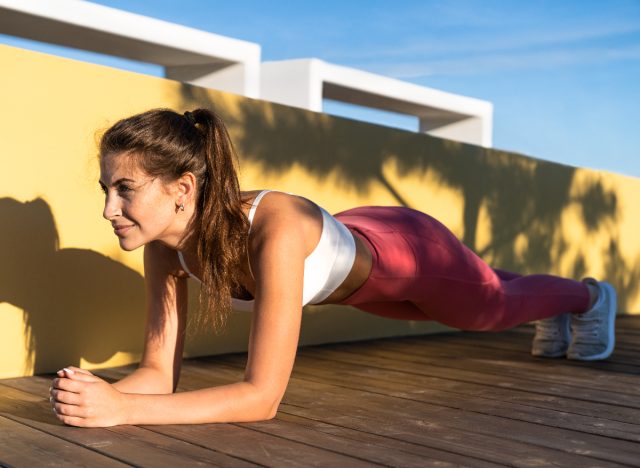
- Prioritize Form Over Duration: Always begin with impeccable form. If a full plank is too challenging initially, start with modifications such as an incline plank (hands on a raised surface) or a knee plank, ensuring a straight line from head to knees. Gradually lower the incline or transition to a full plank as strength improves.
- Focus on "Bracing": Consciously engage the abdominal muscles as if preparing for a punch. This isn’t about sucking in the stomach but rather creating a rigid cylinder around the spine. Practicing this bracing technique in other positions, such as lying on your back with knees bent, can help build awareness.
- Incorporate Core-Specific Exercises: Beyond the standard forearm plank, integrate variations and complementary exercises. Side planks target the obliques, crucial for lateral stability. Bird-dog exercises improve coordination and spinal stability. Glute bridges strengthen the posterior chain, which works synergistically with the core. Stability ball planks add an element of instability, challenging the deeper stabilizing muscles.
- Practice Progressive Overload: Once you can comfortably hold a clean plank for 60 seconds, consider increasing the challenge. This could involve adding small, controlled movements (e.g., small hip dips in a side plank), incorporating an unstable surface (like a balance disc under the forearms), or even carefully lifting one limb for a brief period (e.g., plank with alternating leg lifts).
- Master Breathing: Many individuals hold their breath during planks. Learning to breathe deeply and rhythmically through the diaphragm while maintaining core tension is crucial for endurance. This improves oxygen delivery to muscles and prevents unnecessary strain.
- Consistency is Key: Regular practice, even for short durations, yields better results than infrequent, exhaustive attempts. Aim for 3-4 sessions per week, incorporating planks and core work into your overall fitness routine.
- Listen to Your Body: Respect the signals your body sends. If you experience pain, particularly in the lower back, immediately cease the exercise and reassess your form. Consulting with a qualified fitness professional can provide personalized guidance and ensure safe progression.
In conclusion, the ability to maintain a pristine plank for two minutes or more after the age of 55 is not merely a physical feat; it is a powerful indicator of exceptional core endurance and overall functional capacity. This benchmark signifies a robust physiological foundation that supports greater independence, reduces the risk of common age-related physical ailments, and ultimately contributes to a higher quality of life. By understanding the significance of core stability and committing to its cultivation, individuals can actively shape their trajectory towards a more vibrant and functionally independent future.
About the Author