
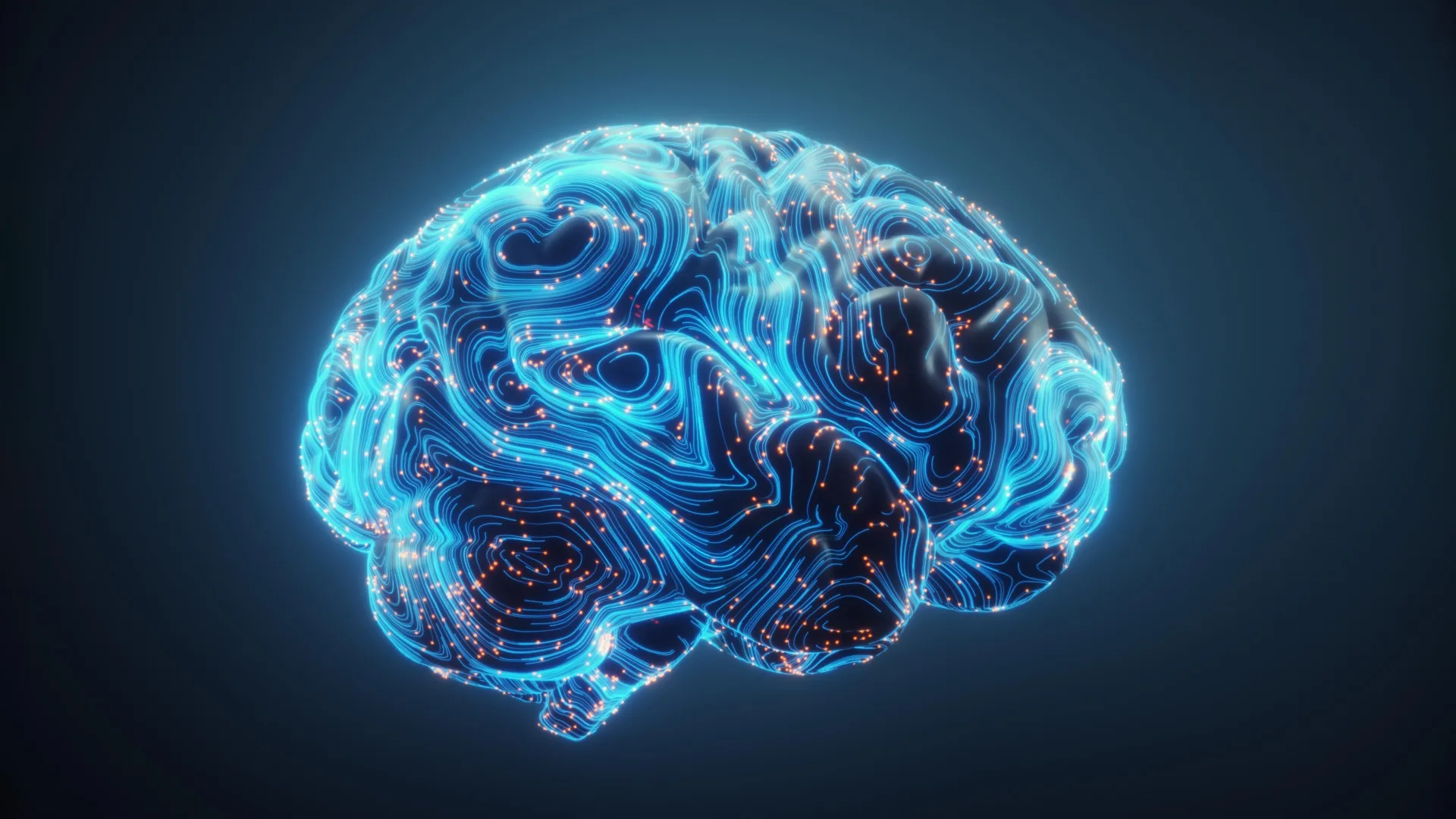
A groundbreaking study from Georgetown University offers compelling evidence that the human brain undergoes significant physical reorganization as individuals acquire new proficiencies, enabling highly practiced activities to become virtually automatic and, crucially, executable alongside other tasks. This discovery directly challenges the prevailing notion that genuine multitasking is an impossibility for humans, suggesting instead that sufficient experience can fundamentally alter neural pathways to permit simultaneous operation of certain functions rather than mere rapid task-switching. The implications of this research extend far beyond personal efficiency, potentially illuminating the intricate mechanisms of habit formation, the persistence of ingrained behaviors, and offering a blueprint for future artificial intelligence systems to achieve more sophisticated and integrated skill acquisition.
Senior author Maximilian Riesenhuber, PhD, a distinguished professor of neuroscience at Georgetown University School of Medicine and co-director of the Center for Neuroengineering, articulated the significance of the findings, stating, "We have achieved another crucial step in comprehending the intricate processes of brain learning." He further emphasized the optimistic outlook for individuals, noting, "The encouraging aspect is that the capacity to multitask is indeed attainable. There exists a tangible pathway to reshape our brain’s architecture and leverage different neural regions."
Delving deeper into the mechanisms of skill automation, this research builds upon decades of prior scientific inquiry into how the brain develops new capabilities. While considerable progress has been made in understanding the initial phases of learning, the precise neural transformations that occur after extensive practice, leading to seemingly effortless execution, have remained largely elusive. Riesenhuber offered the analogy of driving: the initial stages demand unwavering focus and cognitive load, but with years of consistent practice, individuals can simultaneously engage in conversations, appreciate music, or contemplate complex issues while maintaining safe control of the vehicle. The central question then becomes: how does the brain orchestrate this remarkable feat?
To address this complex query, the research team meticulously designed an experiment involving volunteers who were tasked with categorizing morphed images of vehicles into two distinct groups by identifying subtle visual discrepancies. This rigorous training regimen involved participants completing over 30,000 sorting trials via a gamified smartphone application over a period spanning five to ten weeks. The neural activity of these participants was meticulously monitored using functional magnetic resonance imaging (fMRI) and electroencephalography (EEG) both before the training commenced and again upon its conclusion.
In the early stages of learning, the demanding visual categorization task primarily engaged the prefrontal cortex, a brain region intrinsically responsible for executive functions such as strategic planning, logical reasoning, and conscious decision-making. Given that this area is generally understood to manage one high-demand task at a time, it has historically been considered a primary constraint on an individual’s ability to truly multitask. However, after weeks of dedicated practice, a striking shift in neural activity was observed. The identical categorization task was now predominantly processed by the temporal cortex, a brain area recognized for its roles in memory consolidation and the recognition of complex objects.
First author Patrick Cox, PhD, who initiated this study as a graduate student within Riesenhuber’s laboratory and has since become an assistant professor of psychology at Lehigh University, highlighted the unique contribution of their work: "Previous investigations have demonstrated that specific sectors of the temporal cortex can be activated by particular object categories in seasoned observers, encompassing birds, cars, and even fictional characters like Pokémon. However, a critical limitation across these prior studies was their exclusive focus on individuals post-expertise. The distinctive strength of this current research lies in its longitudinal design; our ability to measure neural activity both before and after training allows us to definitively observe how extensive practice effectively instantiates a category-selective area within the temporal lobe that was demonstrably absent prior to the intervention."
Cox further elaborated on the real-world implications, stating, "This has significant ramifications for critical scenarios encountered in professional settings, such as the ability of a radiologist to accurately and almost automatically classify masses on an X-ray as benign or malignant, often without requiring extensive deliberation, a proficiency honed through years of dedicated training."
The study’s findings revealed a pivotal mechanism enabling true multitasking: information originating from the newly established car-selective area within the temporal cortex was observed to bypass the prefrontal cortex entirely, flowing directly to brain regions responsible for initiating and executing responses. Riesenhuber explained this phenomenon, stating, "Experience fundamentally reshapes the brain’s circuitry to circumvent that frontal bottleneck. Consequently, the prefrontal cortex is liberated, becoming available for any other cognitive demands, thereby augmenting an individual’s overall capacity."
Furthermore, the research team observed a direct correlation between the degree to which the car sorting task was "offloaded" from the prefrontal cortex and the participants’ enhanced performance on a secondary task performed concurrently. This observation directly contradicts the long-held belief that true multitasking is unattainable, a belief that posited the brain merely rapidly alternates its attention between tasks, creating an illusion of simultaneous execution. "Our findings definitively demonstrate that the underlying neural circuitry actually undergoes transformation, enabling the brain to effectively manage two distinct operations at once," Riesenhuber asserted. "This represents genuine, concurrent task execution."
The ramifications of these discoveries extend to a deeper understanding of habitual behaviors. Because well-established actions are progressively relocated to neural circuits that are less reliant on conscious oversight, simply attempting to consciously suppress an unwanted habit may prove insufficient for its eradication. "The initial step in unlearning a behavior necessitates understanding precisely where it is being processed within the brain," Riesenhuber explained. "This research underscores why strategies that advocate for simply thinking of something else are often ineffective, as they fail to bring the behavior under conscious volitional control."
The researchers also posit that these findings may offer valuable insights into the persistent challenges faced by current artificial intelligence systems in achieving continuous learning without compromising previously acquired knowledge, a feat that humans accomplish throughout their lives. According to Riesenhuber, the ability to transfer a highly practiced skill to the temporal cortex frees the prefrontal cortex to engage with new challenges, thereby allowing existing knowledge to serve as a robust foundation for subsequent learning. Modern AI architectures, in contrast, generally lack this degree of adaptive and flexible organization.
Future research endeavors by the team are slated to investigate the specific neural signals that facilitate the migration of learning processes between different brain regions and to precisely delineate the types of tasks that can ultimately be performed in parallel. Cox expressed enthusiasm for these upcoming investigations, stating, "An equally compelling line of inquiry revolves around identifying precisely which types of tasks can be mastered to a sufficient degree to be performed concurrently. While humans can undoubtedly walk and chew gum simultaneously, engaging with a mobile phone while driving remains inherently unsafe because it necessitates diverting visual attention away from the roadway. The fundamental requirement for true parallel processing is the capacity to train entirely distinct neural circuits for two tasks in a manner that renders them compatible."
The comprehensive findings of this study, titled "Extensive Experience Remodels Neural Task Circuitry to Escape the Frontal Bottleneck and Increase Automaticity of Categorization," were formally published on June 4th in the esteemed Journal of Cognitive Neuroscience. The research team comprised not only Riesenhuber and Cox but also Clara A. Scholl, Marissa L. Laws, Nelson E. Jaimes, and Xiong Jiang, all affiliated with Georgetown University. This significant research was generously supported by grants from the National Science Foundation (BCS-1232530), the ARCS Foundation, and the Army Research Laboratory (W911NF-24-1-0097). The authors have affirmed that they hold no personal financial interests directly related to the outcomes of this study.
About the Author












