
A groundbreaking investigation by researchers at the University of Illinois Urbana Champaign has unveiled compelling evidence that fundamentally challenges long-held assumptions about how the human brain formulates decisions, suggesting a more distributed and earlier initiation of cognitive choices than previously understood. This paradigm shift not only offers a profound new perspective on biological intelligence but also holds significant implications for the future trajectory of artificial intelligence development, potentially paving the way for systems that are both more sophisticated and remarkably more energy-efficient.
The study, meticulously conducted under the leadership of Professor Yurii Vlasov from the Department of Electrical and Computer Engineering at The Grainger College of Engineering, was prominently featured in the esteemed scientific journal Proceedings of the National Academy of Science (PNAS). Its central revelation points towards an unexpected and crucial role played by the brain’s nascent sensory processing regions in the complex tapestry of decision-making. This discovery directly contradicts the entrenched scientific narrative that posited decisions as emergent properties arising solely after information had traversed a rigidly hierarchical pathway of specialized brain areas.
For many decades, the prevailing model for understanding brain function, particularly in the context of information processing, has heavily influenced the design of contemporary artificial intelligence systems, including the widely adopted convolutional neural networks. This traditional viewpoint conceptualizes a unidirectional flow of data, where sensory input ascends through progressively more intricate neural layers, culminating in the frontal cortex, the presumed locus of all executive decision-making. This sequential processing paradigm, while foundational to early AI, has increasingly come under scrutiny by a growing cohort of neuroscientists, including Professor Vlasov and his colleagues, who question its completeness in capturing the full spectrum of biological cognition.
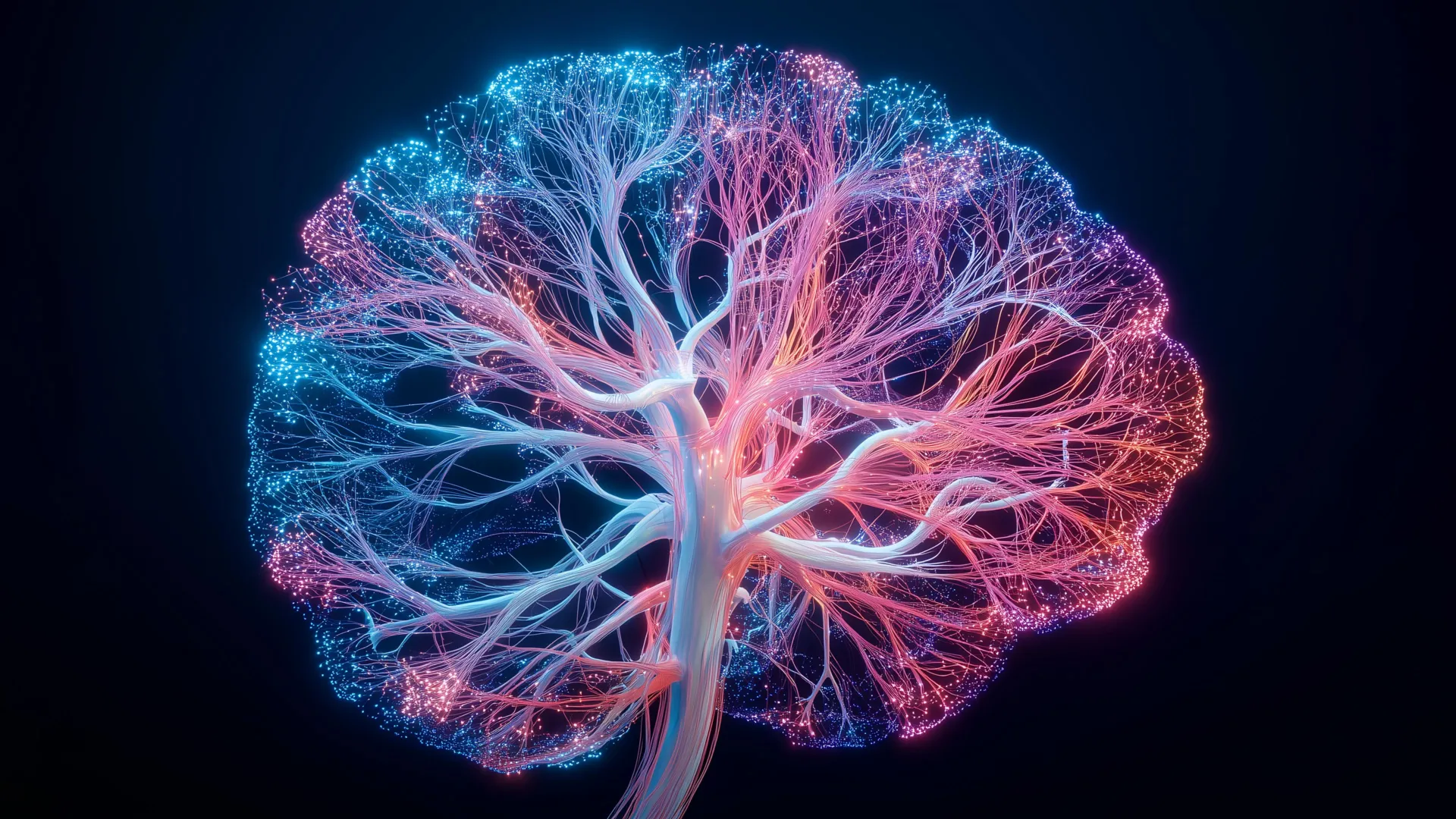
The research team has instead pivoted towards an alternative framework, one that draws inspiration from the principles of natural intelligence, a cognitive architecture honed and perfected over hundreds of millions of years of evolutionary refinement. Within this evolutionary perspective, the brain does not operate as a mere linear pipeline for information. Instead, it is characterized by a dynamic interplay of interconnected feedback loops, enabling bidirectional communication and information exchange between various neural regions. This sophisticated network architecture allows for continuous refinement and modulation of cognitive processes, moving beyond a simple step-by-step computation.
The allure of understanding biological intelligence lies in its extraordinary efficiency. Despite performing an astonishing array of complex tasks, the human brain consumes a fraction of the energy required by even the most advanced current artificial intelligence systems. This stark disparity underscores the potential of reverse-engineering the brain’s organizational principles to guide the creation of next-generation AI. As Professor Vlasov eloquently articulated, "We want to learn from a billion years of evolution. How is that biological intelligence organized architecturally? Can we learn from the architectural side of the brain and emulate that to make AI more effective, less power hungry, and more intelligent than it currently is? In the level of decision-making, that’s where current AI is lacking." This pursuit aims to bridge the gap between artificial and natural cognitive capabilities by learning from nature’s most sophisticated computational system.
To empirically validate these hypotheses, the research team meticulously examined the brain’s initial stages of sensory perception and processing. Their experimental design involved monitoring the neural activity of laboratory mice as they engaged with a simulated virtual reality environment, requiring them to make perceptual judgments. The findings were unequivocal: the primary somatosensory cortex (S1), a region traditionally viewed as a fundamental sensory relay station, exhibited activity directly correlated with decision-making processes. This observation strongly suggests that S1 is not merely a passive conduit for raw sensory data but actively participates in the cognitive act of choosing.
Crucially, the study revealed that S1’s activity was not solely driven by ascending sensory signals. Instead, it appeared to be significantly modulated by feedback from higher-order brain regions. This top-down regulation implies that decision-making is not a singular event confined to a specific brain area but rather a continuous, collaborative process involving intricate communication and reciprocal influence across multiple neural networks. This challenges the simplistic notion of information flowing in a single direction, highlighting the brain’s remarkable ability to integrate information from various levels of processing simultaneously.
Professor Vlasov further elaborated on the profound implications of these findings, stating, "The neural code of the brain is still mostly an unknown language. But this systems-level understanding can be viewed as a potential impact on how more efficient artificial neural networks can be built — how the next generation of AI can be thought through. Maybe with these analogies that we learn from real brains, we can improve AI further." This sentiment underscores the idea that by deciphering the brain’s operational principles, we can unlock new architectural paradigms for AI, leading to systems that are not only more powerful but also more aligned with the efficiency and adaptability of biological cognition.
While the researchers are careful to emphasize that their study does not provide a ready-made blueprint for constructing superior artificial intelligence, it undoubtedly offers invaluable new insights into the brain’s sophisticated decision-making architecture. These discoveries are expected to serve as a potent source of inspiration for the development of future AI systems, guiding the conceptualization of novel computational structures that better emulate the brain’s efficiency and intelligence.
The next phase of Professor Vlasov’s research is focused on a more granular investigation into the temporal dynamics of these neural signals. The team intends to refine existing technologies and potentially develop new ones for measuring neural activity with unprecedented precision. This will allow them to gain a deeper understanding of how feedback loops are established, maintained, and coordinated across different hierarchical levels of brain processing.
"By looking at the fast temporal dynamics of neural activity, maybe we can understand better how these feedback loops are engaged in making decisions," Vlasov explained. "Maybe that’s the approach that potentially uncovers these currently unknown mechanisms — how these feedback loops are organized dynamically and how they form and shape different levels of processing. Maybe that can be implemented in new architectures for AI." This forward-looking perspective highlights the commitment to unraveling the intricate mechanisms of biological intelligence to inform and advance the field of artificial intelligence, promising a future where AI systems are not only more capable but also more fundamentally understood through the lens of natural cognitive design.
About the Author












