The pursuit of robust physical health in later life increasingly emphasizes foundational strength, particularly concerning the body’s core. For individuals navigating the physiological shifts that accompany aging past 60, a strong core transcends mere aesthetics, becoming a critical determinant of functional independence, injury prevention, and overall quality of life. This central pillar of strength, encompassing the muscles of the abdomen, lower back, hips, and pelvis, orchestrates movement, maintains posture, and safeguards the spine during daily activities. Despite this understanding, a persistent misconception often steers fitness enthusiasts towards outdated methods, such as endless repetitions of sit-ups, in their quest for core resilience. However, contemporary exercise science and practical experience from seasoned trainers reveal a more effective, and safer, pathway to achieving profound core stability.
The conventional sit-up, long hailed as the quintessential abdominal exercise, often falls short for an older demographic, and can even be counterproductive. Its primary mechanism involves repetitive spinal flexion, which can place undue compressive stress on the intervertebral discs and strain the delicate structures of the neck and lower back, especially when performed with suboptimal form. For older adults, whose bone density may be reduced and spinal integrity potentially compromised, repetitive spinal flexion may exacerbate pre-existing conditions or contribute to new ones. Furthermore, sit-ups predominantly engage superficial abdominal muscles, such as the rectus abdominis, while neglecting the deeper, intrinsic stabilizing muscles—like the transversus abdominis and multifidus—that are crucial for spinal support and maintaining neutral alignment. These deeper muscles are responsible for "bracing" the spine, acting as a natural corset to protect against injury during movement.
Instead of focusing on creating spinal motion, a more enlightened approach to core training for seniors centers on cultivating the core’s capacity to resist movement. This paradigm shift emphasizes exercises that challenge the body’s ability to prevent rotation, lateral flexion, extension, and flexion of the spine while the limbs are in motion or under load. This method directly mirrors the core’s functional role in everyday life: bracing for a lift, maintaining balance while walking on uneven terrain, or simply standing tall. The core’s primary job is not to move the trunk, but to stabilize it so that the arms and legs can move powerfully and safely. By training the core as the body’s intrinsic support system—a stable anchor from which the limbs can operate effectively—individuals can develop practical strength that translates directly into enhanced mobility, improved posture, reduced risk of falls, and greater confidence in performing daily tasks.
Experienced fitness professionals, working extensively with the senior population, consistently observe that the most resilient and functional cores are not forged through high volumes of isolated abdominal contractions. Rather, they are developed through consistent engagement with multi-dimensional, functional movements that integrate the entire midsection. These exercises are designed to enhance proprioception (the body’s sense of its position in space), refine motor control, and build strength across various planes of motion, leading to comprehensive improvements in balance, coordination, and spinal health. The following six home-based movements exemplify this philosophy, offering a robust and safe alternative to traditional abdominal work for fostering enduring core strength and vitality in individuals over 60.
Bird Dog
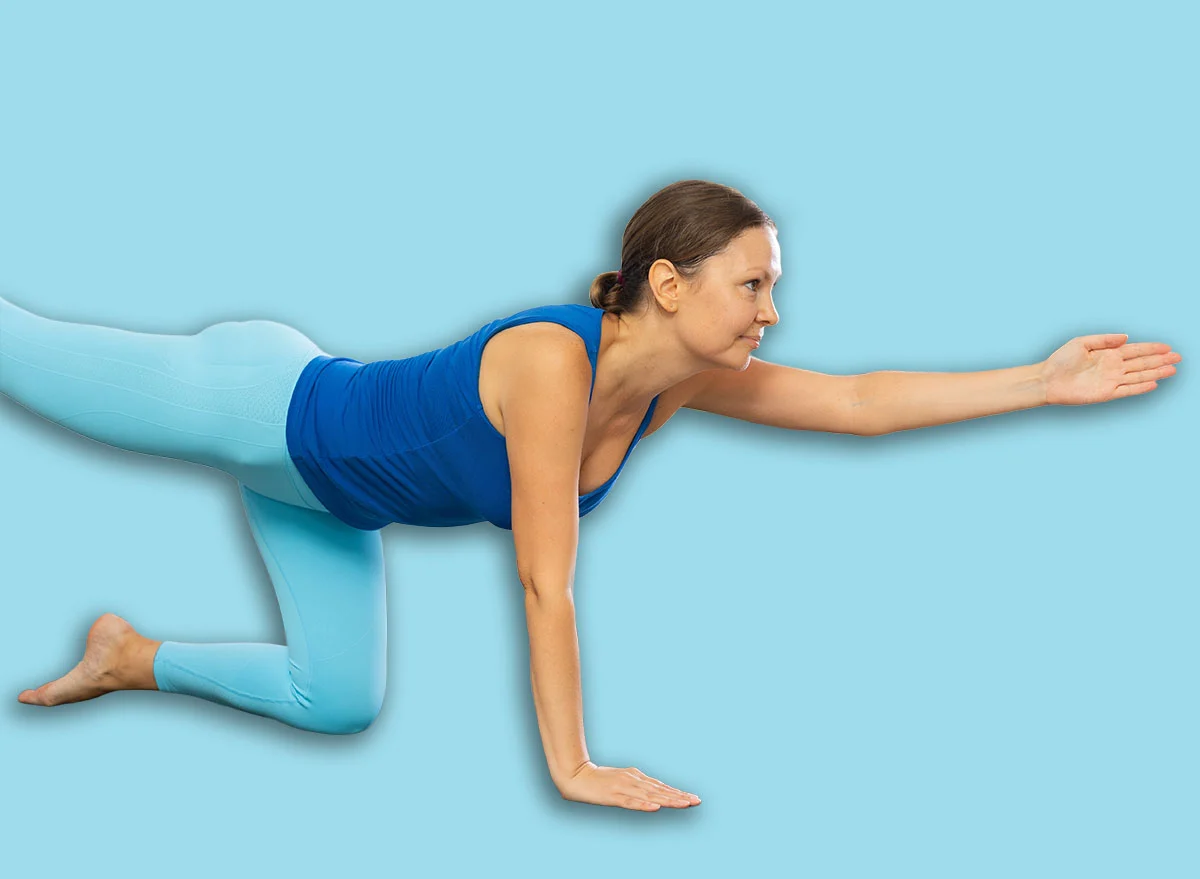
The Bird Dog is a foundational exercise revered for its ability to enhance spinal stability without inducing flexion or extension, making it ideal for back care. It effectively engages the deep stabilizing muscles of the core, including the multifidus and transversus abdominis, alongside the glutes, shoulders, and hips. By extending opposing limbs, the exercise challenges the body to maintain a neutral spine and pelvis, thereby improving neuromuscular coordination and control. This "anti-rotation" and "anti-extension" quality makes it an excellent choice for cultivating the kind of stability needed for everyday movements, often leading to noticeable improvements in posture and a reduction in lower back discomfort by teaching the body to move limbs while keeping the trunk still.
- How to Do It: Begin on all fours, hands directly under shoulders, knees under hips, with a neutral spine. Engage your core gently, as if bracing for a light punch, ensuring your back is flat. Slowly extend your right arm straight forward and your left leg straight backward, keeping them parallel to the floor and aligned with your torso. Focus on minimizing any shift or rotation in your torso, keeping your hips level. Hold briefly for a count of one to two seconds, then return to the starting position with control. Alternate sides, performing the movement slowly and deliberately to maximize stability engagement.
Dead Bug
Despite its seemingly gentle nature, the Dead Bug is a powerhouse for cultivating deep abdominal strength and spinal stability. This supine exercise demands precise control, challenging the core to maintain a stable lumbar spine while the arms and legs move independently. It skillfully mimics the contralateral limb coordination required during walking and other dynamic activities, making it highly functional. The "anti-extension" component is particularly potent, as it requires the deep core muscles to prevent the lower back from arching off the floor as the limbs extend. Mastering this movement fosters a heightened sense of body control that significantly improves movement efficiency in various contexts, from walking to reaching for objects.
- How to Do It: Lie on your back with knees bent at 90 degrees directly over your hips and arms extended straight up towards the ceiling. Flatten your lower back against the floor by gently engaging your core, pressing your navel towards your spine. Slowly lower your right arm overhead towards the floor while simultaneously extending your left leg straight out, hovering just above the ground. Maintain constant contact between your lower back and the floor throughout the movement, preventing any arching. Return to the starting position with control and repeat on the opposite side, moving with precision rather than speed.
Glute Bridge
Often underestimated in its contribution to core health, the Glute Bridge is a crucial exercise that strengthens the posterior chain—the muscles along the back of your body—while simultaneously training the core to stabilize the pelvis. The synergistic relationship between strong gluteal muscles and a resilient core is undeniable; they work in tandem during nearly every movement involving the lower body and trunk. By improving hip extension strength, the Glute Bridge helps counteract the effects of prolonged sitting, promotes better posture by reducing anterior pelvic tilt, and reduces strain on the lower back. It enhances the ease with which one can perform actions like standing up from a chair, climbing stairs, or lifting objects from the ground, all while indirectly supporting spinal health.
- How to Do It: Lie on your back with knees bent, feet flat on the floor hip-width apart, and heels positioned a few inches from your glutes. Arms can rest by your sides with palms down. Engage your glutes and core, then lift your hips off the floor until your body forms a straight line from your shoulders to your knees. Avoid arching your lower back excessively; the movement should come primarily from the hips. Hold the peak contraction briefly, focusing on squeezing the glutes, then slowly lower your hips back down to the starting position with control.
Bear Plank Hold
The Bear Plank Hold represents a highly effective isometric challenge that simultaneously activates numerous muscle groups throughout the entire core, shoulders, hips, and legs. Unlike a traditional plank, the subtle elevation of the knees just one or two inches off the ground significantly increases the demand on the deep stabilizing muscles of the trunk, promoting superior spinal alignment and full-body tension. This exercise efficiently builds endurance and strength in the body’s central musculature without the need for prolonged hold times, making it an excellent choice for individuals seeking comprehensive core engagement. It teaches the body to brace and stabilize under tension, a skill vital for injury prevention and efficient movement in dynamic scenarios.
- How to Do It: Start on all fours as if preparing for a Bird Dog, with hands under shoulders and knees under hips. Tuck your toes and gently lift your knees just one or two inches off the ground, maintaining a flat back and an engaged core. Your shins should be roughly parallel to the floor. Hold this position, focusing intently on keeping your hips level and preventing any sagging or arching of the spine. Maintain steady, controlled breathing throughout the duration of the hold.
Standing Pallof Press
Beyond simply bending and extending, one of the core’s most critical functions is to resist unwanted rotation, particularly during dynamic movements. The Standing Pallof Press is specifically designed to train these "anti-rotation" muscles, primarily the obliques and transverse abdominis, in a functional, upright position. Performed with a resistance band or cable, it forces the core to brace against a rotational force, thereby improving posture, enhancing balance, and building real-world strength that directly supports tasks like lifting, carrying, and maintaining stability while walking or reacting to unexpected pushes. This exercise offers a direct and safe way to engage the deep abdominal muscles without placing stress on the spine.
- How to Do It: Secure a resistance band or cable at chest height to a sturdy anchor point. Stand perpendicular to the anchor, grasping the handle with both hands pressed against your chest. Step away from the anchor until there’s tension on the band. Adopt a wide, stable stance with a slight bend in your knees. Keeping your core tightly braced and resisting the rotational pull of the band, slowly press your hands straight out in front of your chest. Hold for a moment, then slowly return your hands to your chest, continuing to resist the rotational force. Complete repetitions on one side before turning around and repeating on the other.
Farmer’s Carry
The Farmer’s Carry is deceptively simple yet profoundly effective, engaging nearly every muscle in the body while providing an unparalleled challenge to core stability. By holding substantial weight in one or both hands and walking, the core is continuously forced to stabilize the spine and pelvis, preventing lateral flexion (side bending) and rotation. This exercise significantly strengthens the shoulders, upper back, and grip—a key indicator of overall health and longevity—while demanding a high level of abdominal and hip engagement to maintain an upright, aligned posture. It is arguably one of the most practical core exercises, directly mimicking everyday tasks such as carrying groceries, luggage, or tools, thereby building robust, real-world strength and endurance.
- How to Do It: Select a challenging but manageable weight (dumbbells, kettlebells, or even heavy bags) for each hand. Stand tall with your shoulders back and down, chest open, and core braced. Begin walking with a controlled, steady gait, focusing on maintaining excellent posture and preventing any leaning or swaying. Avoid shrugging your shoulders towards your ears; keep them packed down. Walk for a set distance or time, then rest and repeat, aiming to keep your body as rigid and stable as possible throughout the movement.
Embracing these functional core exercises represents a strategic investment in long-term health and independence for individuals over 60. By shifting focus from superficial muscle contraction to comprehensive stability and anti-movement principles, seniors can build a core that truly serves as their body’s central support system. Consistent practice, prioritizing proper form over speed or heavy loads, and gradually increasing intensity will not only foster remarkable strength but also cultivate a profound sense of confidence and ease in navigating the demands of daily life for many years to come. This holistic approach to core fitness ensures that the foundation for an active and vibrant later life remains steadfast.
About the Author