As individuals advance into their sixties and beyond, a common companion emerges: persistent physical stiffness. This pervasive sensation, often dismissed as an inevitable consequence of aging, frequently begins at the day’s conclusion and unfortunately persists into the subsequent morning. While therapeutic interventions like massage offer transient respite, an accumulating body of expert opinion and practical experience suggests that a deliberate, consistent regimen of targeted stretching can yield more profound and enduring improvements in physical suppleness and overall well-being. This perspective is championed by seasoned professionals in the fitness industry, including a personal trainer with nearly four decades of experience, who advocates for a concise sequence of four evening stretches as a superior strategy for cultivating lasting flexibility compared to sporadic massage appointments.
The physiological underpinnings of age-related stiffness are multifaceted. Over time, changes occur in the body’s connective tissues; collagen, a primary structural protein, undergoes increased cross-linking, reducing tissue elasticity. Elastin fibers, responsible for resilience, diminish, and the viscosity of synovial fluid within joints can decrease, leading to greater friction and restricted movement. Furthermore, a natural decline in physical activity levels, coupled with habitual postures adopted over decades, contributes significantly to muscle shortening and reduced range of motion. These factors combine to create a cyclical pattern where decreased movement leads to increased stiffness, which in turn discourages movement, exacerbating the problem.
Insights from extensive practice reveal specific anatomical regions that are particularly susceptible to chronic tension in older adults. The lower back, a frequent site of discomfort, often manifests tightness that originates not primarily from the lumbar muscles themselves, but from constricted hip flexors. These muscles, situated at the front of the hip, can exert a pulling force on the pelvis, leading to secondary tension and pain in the lower spinal region. Paradoxically, directly stretching the lower back can sometimes worsen this imbalance, making the correct identification of the root cause paramount.
Another significant reservoir of deep-seated tension lies within the hip and gluteal complex, particularly around the piriformis muscle. Prolonged periods of sitting, a hallmark of many modern lifestyles, compress these muscles against chairs, gradually diminishing their capacity to fully lengthen and relax. This chronic compression contributes to a persistent, grumpy tightness that can manifest as discomfort during walking and other daily activities.
The upper body also presents its unique challenges. Decades spent in forward-flexed postures—whether from desk work, driving, or interacting with handheld devices—lead to a shortening of the pectoral muscles in the chest. Concurrently, the muscles of the upper back become elongated and weakened. This muscular imbalance pulls the shoulders forward, creating a rounded posture and fostering chronic tension in the neck and upper trapezius region. Many individuals carry this subtle, yet significant, background tension throughout their day without conscious awareness, only recognizing its profound weight once it is alleviated.
The distinction between the effects of a professional massage and a regular stretching routine lies in their fundamental mechanisms and long-term objectives. A massage therapist skillfully manipulates soft tissues, addressing adhesions and promoting temporary relaxation and increased blood flow. Clients typically experience immediate relief, a sensation of lightness and freedom of movement upon leaving the session. However, this liberation is often ephemeral. Within hours or a day, the muscles tend to revert to their ingrained, habitually shortened states. A single session, no matter how effective, does not fundamentally alter the daily patterns and physiological adaptations that led to the tightness in the first place.
Conversely, a consistent stretching regimen operates on the principle of gradual, sustained adaptation. Muscles are living, dynamic tissues capable of remodeling and adjusting their resting length in response to repeated stimuli. By applying gentle, consistent lengthening forces each night, individuals systematically "re-educate" their muscles to adopt and maintain a more extended, relaxed posture over time. This process is akin to shaping clay; repeated, gentle pressure yields lasting structural change.

Beyond the purely mechanical aspect, nightly stretching offers significant neurological advantages. Engaging in a calm, deliberate stretching routine before sleep actively shifts the nervous system into a parasympathetic state. This "rest and digest" mode counteracts the sympathetic "fight or flight" response, reducing overall physiological arousal. The outcome is often improved sleep quality, facilitating enhanced overnight recovery and significantly diminishing the residual tension typically experienced upon waking. Thus, while a massage primarily targets muscle tissue, regular stretching additionally influences the nervous system’s regulation of muscle tone and overall bodily recovery during sleep. Furthermore, the practical benefits are undeniable: a dedicated evening stretching routine is entirely free, requires only a few minutes, and can be performed conveniently within the comfort of one’s own bed, contrasting sharply with the financial cost, time commitment, and travel often associated with regular massage therapy. The cumulative effect of these small, consistent efforts over a year is substantial.
The following four stretches, recommended by the seasoned personal trainer and director at TRAINFITNESS, target the most common areas of stiffness in older adults, offering a powerful pathway to sustained flexibility and comfort.
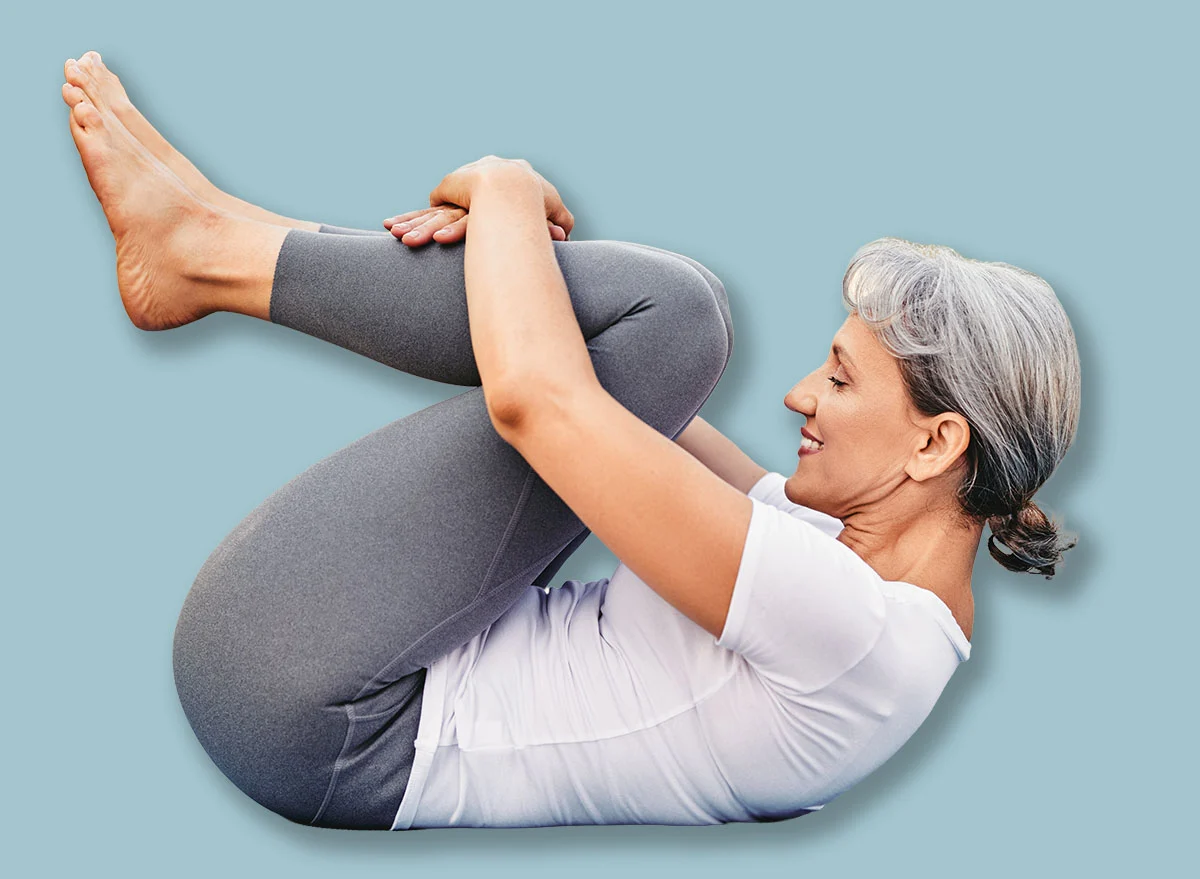
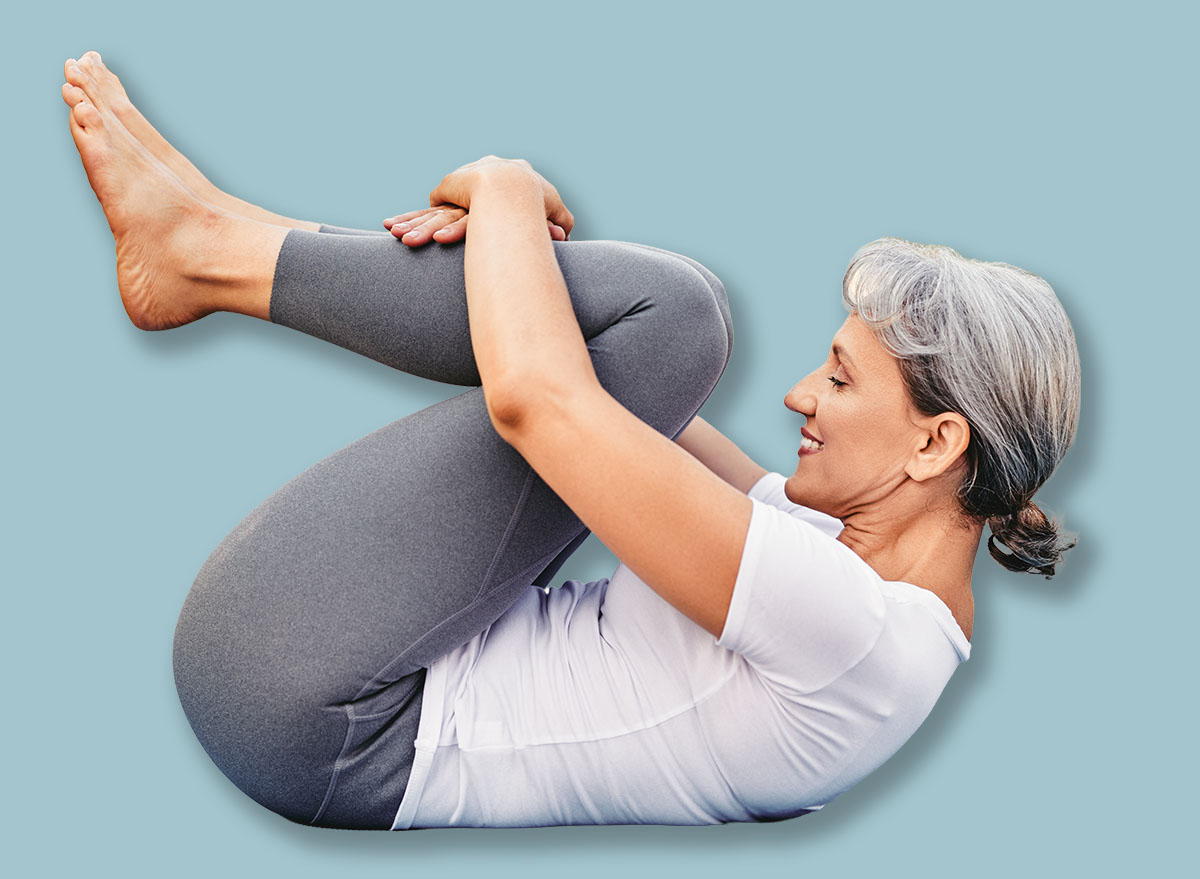
1. Knees-to-Chest Hug:
This foundational stretch is expertly designed to alleviate tension in the lower back and target the deep muscles of the buttocks, two critical areas where older adults frequently accumulate significant stiffness. Performing this movement in a supine position allows gravity to assist, encouraging the body to fully relax into the stretch rather than resisting it.
- Execution Guidance: Lie comfortably on your back on a firm surface, such as your bed or a yoga mat. Gently draw both knees towards your chest, clasping your hands around your shins or behind your thighs. Allow your lower back to naturally round and press into the surface beneath you. Hold this gentle embrace for 30-60 seconds, focusing on deep, even breaths.
- Common Pitfalls and Modifications: Avoid pulling your knees too aggressively, which can strain the lower back. The goal is a gentle lengthening, not intense discomfort. If reaching your shins is difficult, hold behind your thighs. For a deeper, isolated stretch, you can hug one knee at a time, allowing the other leg to extend straight or remain bent with the foot flat.
2. Reclining Figure-4 Stretch:
This potent stretch specifically targets the piriformis muscle and other deep external rotators of the hip, which are frequently a hidden source of considerable tension in the over-60 demographic. It is particularly effective in mitigating the ache often felt along the outer aspect of the hip after prolonged periods of activity or sitting.

- Execution Guidance: Begin by lying on your back with both knees bent and feet flat on the floor, hip-width apart. Cross your right ankle over your left knee, creating a "figure-4" shape with your legs. Gently reach your hands through the opening created by your legs and interlace your fingers behind your left thigh. Carefully draw your left knee towards your chest, feeling the stretch deepen in your right glute and outer hip. Maintain this position for 30-60 seconds, then switch sides.
- Common Pitfalls and Modifications: Ensure your head and shoulders remain relaxed on the surface. Avoid lifting your lower back excessively. If the stretch is too intense, place your left foot on a low stool or block instead of pulling the leg towards you. Conversely, for a deeper stretch, gently press your right knee away from your body with your elbow while pulling your left knee in.
3. Supine Spinal Twist:
This therapeutic twist offers a comprehensive release throughout the entire length of the spine, from the cervical region down to the sacrum. It introduces a beneficial rotational movement that is often lacking in daily activities, which tend to be linear. The gentle compression and subsequent release of the paraspinal muscles during the twist can provide an incredibly satisfying sensation at the end of a long day.
- Execution Guidance: Lie on your back with both knees bent and feet flat on the floor, arms extended out to the sides in a ‘T’ shape, palms facing up. Gently allow both knees to fall to one side (e.g., to the right), keeping your shoulders anchored to the bed or floor. If comfortable, turn your head to gaze in the opposite direction of your knees (e.g., to the left). Hold for 30-60 seconds, allowing gravity to deepen the stretch. Slowly return to center and repeat on the other side.
- Common Pitfalls and Modifications: Avoid forcing your knees to the floor if your opposite shoulder lifts significantly. The priority is to keep both shoulders grounded. Place a pillow between your knees or under the top knee for support if needed. This reduces strain and allows for deeper relaxation.
4. Towel Chest Opener:
Decades of forward-leaning postures invariably lead to shortening of the chest muscles and a rounding of the shoulders. This stretch directly addresses these imbalances by gently opening the chest and the anterior aspect of the shoulders. By releasing this tension before sleep, individuals can experience improved sleep depth and wake feeling more refreshed and less constrained in the upper body.
- Execution Guidance: Lie on your back with a rolled towel placed lengthwise along your spine, from the base of your skull to your lower back. Your head should be supported by the towel. Extend your arms out to the sides at shoulder height, palms facing up, allowing your shoulders to gently drop towards the floor. Alternatively, you can bend your elbows to 90 degrees, forming a ‘cactus’ or ‘goalpost’ shape with your arms. Breathe deeply, allowing your chest to open and your shoulders to relax. Hold this position for 2-3 minutes.
- Common Pitfalls and Modifications: Ensure the towel is not too thick or uncomfortable, as this can strain the neck or back. Adjust its position to find the most comfortable and effective opening. If the stretch feels too intense on the shoulders, bring your arms slightly closer to your body or reduce the thickness of the towel.
For optimal and lasting results, consistency is paramount. The recommended protocol involves performing this sequence once nightly, ideally after settling into bed and just before turning out the lights. The entire routine can be completed within 8 to 10 minutes. Unlike vigorous exercise that necessitates recovery days, this gentle stretching is more akin to a daily hygiene practice for the muscular system. Aim for seven nights a week; while missing an occasional session will not derail progress, extended breaks can begin to undo the cumulative benefits. A reliable indicator of progress is a gradual decrease in the intensity of the stretch sensation over time. When a stretch that once felt deeply challenging begins to feel mild, it signifies that the targeted muscles are indeed lengthening. Continue the practice, and consider incrementally increasing the range of motion or holding time every couple of weeks.
The benefits of this consistent evening routine unfold progressively. Within the first week, many individuals report an improvement in sleep quality, largely attributable to the stretches’ ability to activate the parasympathetic nervous system, fostering a state of relaxation conducive to rest. This initial improvement often precedes any significant change in muscle length. By the second to third week, the persistent morning stiffness that frequently characterizes older age typically begins to diminish. The act of rising from bed becomes less of a laborious maneuver, and the initial steps of the day feel notably smoother and more fluid, a stark contrast to the previous sensation of stiff, protesting joints.

As the routine continues into the four to six-week mark, genuine physiological changes in muscle length become apparent. The lower back feels more supported and comfortable during prolonged walks. Shoulders naturally settle into a more aligned, open position rather than slumping forward. The hips experience less cramping after extended periods of sitting, such as during a car journey. Family members or close acquaintances may even comment on a more relaxed demeanor. By three months, the transformation is often substantial enough that periodic massages transition from a perceived necessity to an optional indulgence. The body has successfully learned to sustain a more relaxed and supple resting state, effectively achieving the long-term objective that a single massage can only temporarily impart. Consistent nightly stretching, therefore, represents a powerful, accessible, and highly effective strategy for older adults to reclaim and maintain physical ease and mobility, significantly enhancing their quality of life.
About the Author