The escalating global challenge of plastic pollution extends far beyond visible litter, permeating aquatic and terrestrial environments in the form of microplastics and, even more concerningly, nanoplastics. These imperceptibly small fragments, born from the breakdown of larger plastic items, have become ubiquitous, raising alarms over their potential impact on ecosystems and human well-being. While direct ingestion of these minuscule particles has been a focal point of health investigations, recent groundbreaking research unveils a more complex and indirect peril: nanoplastics may significantly enhance the resilience of dangerous microorganisms, complicating the vital task of ensuring safe drinking water.
A comprehensive study, published in the esteemed journal Water Research, spearheaded by Virginia Tech’s Assistant Professor of Civil and Environmental Engineering, Dr. Jingqiu Liao, in collaboration with an international research collective, illuminates how these ultrafine plastic contaminants interact with environmental microbial communities. Their findings suggest a profound and concerning mechanism through which nanoplastics could exacerbate existing public health risks, particularly within critical drinking water infrastructure. Dr. Liao articulated the urgency of their discoveries, stating, "It is paramount to deepen our comprehension of the adverse ramifications of nanoplastics on human health, and crucially, on the broader environment, which invariably influences human health. Our research indicates that these nanoparticles can bolster the survival capabilities of antimicrobial-resistant pathogens, presenting serious implications for both ecological balance and public health safety."
Nanoplastics represent the smallest category within the broader spectrum of plastic debris, typically ranging in size from one to 1,000 nanometers. To put this into perspective, they are invisible to the naked eye, thousands of times smaller than a human hair, and possess unique physical and chemical properties due to their high surface area-to-volume ratio. Their minute size allows them to traverse biological barriers and interact at cellular and molecular levels, making their environmental and biological effects particularly challenging to predict and mitigate. The Virginia Tech-led team specifically investigated how these pervasive particles influence the formation and characteristics of bacterial biofilms within drinking water supply networks.
Water treatment facilities worldwide are tasked with an monumental responsibility: delivering potable water free from harmful contaminants. A cornerstone of this mission involves rigorous disinfection processes designed to eradicate pathogenic bacteria. However, the efficacy of these processes can be profoundly challenged by the presence of bacterial biofilms. Biofilms are intricate communities of microorganisms that adhere to surfaces, encasing themselves in a self-produced protective matrix of extracellular polymeric substances (EPS). This slimy, glue-like layer acts as a physical shield, safeguarding the enclosed bacterial cells from environmental stressors, including disinfectants, antibiotics, and immune system attacks.
In natural settings, biofilms are common and can even be beneficial, playing roles in nutrient cycling or wastewater treatment. Yet, within the confined and carefully controlled environment of drinking water distribution systems – specifically, the interior surfaces of pipes, tanks, and fixtures – they pose a substantial public health threat. Pathogenic bacteria can thrive within these protected communities, detaching periodically to contaminate the flowing water and potentially cause waterborne illnesses. The difficulty in eradicating established biofilms is a perennial concern for water utilities, often requiring intensive physical or chemical interventions. The new research now suggests that nanoplastics introduce an entirely new layer of complexity to this already formidable challenge.
The study revealed a critical and alarming interaction: bacteria exposed to nanoplastics exhibited enhanced resistance to disinfectants commonly employed in water purification. This discovery signals a potentially severe operational hurdle for water treatment plants and the vast networks responsible for distributing potable water. Dr. Liao elaborated on this phenomenon, explaining, "When nanoplastics interact with the biofilm and the bacteria residing within it, they can significantly strengthen the biofilm’s structural integrity, rendering it more resistant to the various measures we implement to maintain water purity." This increased resilience implies that current disinfection protocols, meticulously designed to ensure water safety, may become less effective in environments contaminated with nanoplastics.
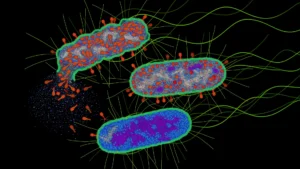
The research delved into the complex interplay between specific bacterial strains – E. coli and Pseudomonas aeruginosa, both common inhabitants of water systems and potential opportunistic pathogens – and bacteriophages (viruses that infect bacteria), under the influence of nanoplastics. Prior to this investigation, the precise impact of nanoplastics on these intricate microbial dynamics remained largely unexplored. Dr. Liao highlighted the team’s particular interest in understanding, "the primary process of how bacteria and their viral counterparts, bacteriophages, interact during the overall influence of nanoplastics on the biofilm structure."
The presence of nanoplastics triggered a multi-faceted and sophisticated response from the bacterial communities within the biofilm:
-
Enhanced Biofilm Matrix Production: The bacteria engaged in intricate intercellular communication, signaling the production and release of additional protective substances. This led to the formation of a physically thicker, denser, and more robust biofilm matrix. This augmented protective layer acts as an even more formidable barrier against external threats, including chemical disinfectants. The nanoplastics appear to act as a catalyst or a physical scaffold, facilitating the construction of a more impregnable microbial fortress.
-
Prophage Activation and Altered Viral Dynamics: The study observed the activation of prophages – dormant bacteriophages whose genetic material has integrated into the bacterial host’s genome. Under the stress induced by nanoplastics, these prophages became active, initiating a lytic cycle. This process involves the destruction of the bacterial cells they inhabit, leading to the proliferation and release of numerous new viral particles. While the lysis of some bacterial cells might initially seem counterproductive for the biofilm’s survival, this phenomenon can drive evolutionary selection for more resistant bacterial strains and facilitate horizontal gene transfer, potentially spreading resistance genes within the community.
-
CRISPR-Cas System Activation: In response to the increased viral activity, the bacteria exhibited an activation of their clustered regularly interspaced short palindromic repeats (CRISPR) defense system. CRISPR-Cas is a bacterial "immune system" that allows bacteria to recognize and target foreign genetic elements, such as those from invading phages, providing a form of acquired immunity. The activation of this sophisticated antiviral defense mechanism underscores the significant stress imposed by nanoplastics and the adaptive strategies bacteria employ to survive and thrive in contaminated environments.
Collectively, these intricate bacterial responses, orchestrated under the influence of nanoplastics, culminate in a microbial community that is not only structurally more resilient but also genetically more adaptable and resistant to eradication. The authors of the study concluded with a stark warning: "The observed increase in the biofilm’s mechanical integrity and its enhanced resistance to disinfectants underscores a significant prospective challenge for water treatment and distribution systems. Nanoplastics could accelerate the formation of biofilms that are exceptionally difficult to remove from the surfaces of critical water infrastructure."
These findings carry profound implications for public health and environmental management. The potential for nanoplastics to foster the development of "super-biofilms" that are largely impervious to conventional disinfection methods could lead to an increased prevalence of waterborne diseases. For water utilities, this translates into elevated operational costs, the need for more aggressive and potentially environmentally harmful treatment protocols, and a continuous battle against persistent microbial contamination. Furthermore, Dr. Liao’s broader research expertise in microbial ecology and metagenomic analysis, including her previous work on how soil environments contribute to the spread of antibiotic resistance, highlights a critical connection: the enhanced survival of pathogens in water systems could contribute to the global crisis of antimicrobial resistance (AMR), making infections harder to treat in clinical settings.
The complexity of these interactions necessitates further, in-depth investigations. Dr. Liao emphasized the importance of unraveling the precise molecular mechanisms that drive these responses in complex biofilms, which typically comprise multiple microbial species. She also noted that the physical dimensions of plastic particles likely play a crucial role; microplastics, being larger than nanoplastics, might elicit different types of interactions with bacteria and phages, warranting separate and detailed study.
In conclusion, the research provides novel and critical insights into the previously uncharted territory of nanoplastics’ influence on bacterium-phage dynamics. The heightened microbial risks associated with waterborne nanoplastics underscore an urgent need for comprehensive strategies to mitigate plastic pollution at its source and to re-evaluate existing water treatment paradigms in light of this emerging contaminant. As nanoplastics continue to proliferate in our environment, understanding and addressing their indirect impacts on microbial ecosystems will be paramount to safeguarding both public health and the integrity of our planet’s vital water resources.
About the Author