
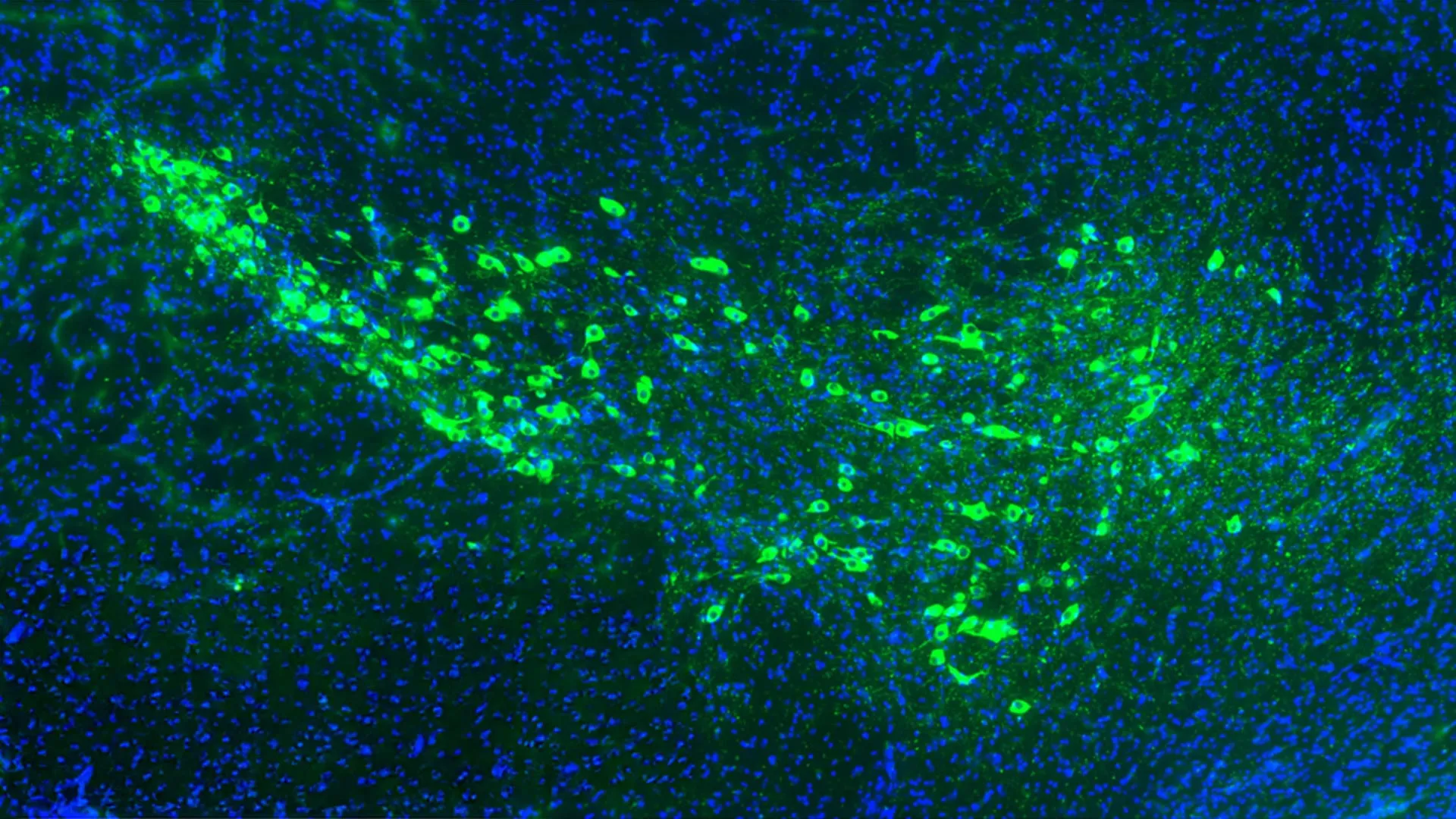
Groundbreaking investigations emerging from Yale School of Medicine (YSM) have illuminated a critical mechanism by which Parkinson’s disease might advance through the intricate neural architecture of the brain. This significant discovery centers on the identification of two specific proteins residing on the external membranes of motor neurons, which appear to play a pivotal role in facilitating the spread of the disease’s characteristic pathological markers. The implications of this research are far-reaching, potentially paving the way for therapeutic interventions aimed not merely at alleviating the debilitating symptoms of Parkinson’s, but at fundamentally interrupting its relentless progression.
Parkinson’s disease is characterized by a progressive and irreversible degeneration of brain cells, particularly those responsible for motor control. A defining hallmark of this neurodegenerative condition is the aberrant accumulation of a misfolded protein known as alpha-synuclein. As this misfolded protein aggregates and malfunctions, it exerts toxic effects, and crucially, appears capable of migrating from affected neurons to healthy ones, thereby exacerbating neuronal damage and accelerating the decline in motor function over time. For decades, the precise molecular choreography governing this intercellular transmission of alpha-synuclein has remained a subject of intense scientific inquiry.
The latest research, detailed in a recent publication in the esteemed journal Nature Communications, offers a compelling explanation for this enigmatic process. The YSM team has pinpointed two transmembrane proteins, metabotropic glutamate receptor 4 (mGluR4) and neural precursor cell expressed developmentally regulated protein 1 (NPDC1), as key molecular intermediaries. These proteins, found on the surface of motor neurons, have been identified as critical facilitators, acting as cellular entry points that enable the toxic, misfolded alpha-synuclein to breach the defenses of healthy brain cells.
This revelation offers a crucial new clue in understanding the relentless march of Parkinson’s disease. Senior author Dr. Stephen Strittmatter, a distinguished figure in neurology and chair of the Department of Neuroscience at YSM, expressed optimism that these findings could revolutionize the therapeutic landscape for Parkinson’s. He underscored the central role of misfolded alpha-synuclein, referring to it as "the pathologic hallmark of Parkinson’s disease." The prevailing scientific consensus has long posited that understanding the mechanisms of its spread is paramount to developing effective countermeasures. "If we understood how it gets into neurons, we could perhaps block or slow down the progression of the disease," Dr. Strittmatter elaborated, emphasizing that unlocking this molecular pathway is essential to achieving such an outcome.
The research endeavor involved a systematic and comprehensive approach to unraveling the intricacies of alpha-synuclein’s cellular uptake. Neurodegenerative disorders, including Parkinson’s and Alzheimer’s, represent a growing and significant public health challenge, particularly in developed nations. In the United States alone, the Parkinson’s Foundation reports that approximately 1.1 million individuals are currently living with Parkinson’s disease, with nearly 90,000 new diagnoses occurring annually. The disease typically manifests with motor-related symptoms such as tremors, significant impairment in balance, and a general slowing of voluntary movements. These motor deficits arise as misfolded alpha-synuclein aggregates within motor neurons, leading to their dysfunction and eventual demise. As the pathology propagates to neighboring neurons, the disease’s severity escalates.
Prior to this study, a prevailing hypothesis suggested that alpha-synuclein might gain access to healthy neurons by binding to specific protein receptors present on the neuronal surface. To rigorously test this hypothesis, Dr. Strittmatter and his dedicated research group embarked on an ambitious experimental design. They meticulously engineered and cultivated approximately 4,400 distinct cell cultures, with each group specifically designed to express a unique type of surface protein. The subsequent step involved exposing these engineered cells to misfolded alpha-synuclein, allowing researchers to meticulously observe and quantify any binding interactions.
The overwhelming majority of these cell cultures exhibited no discernible affinity for the misfolded protein, a finding that underscored the specificity of the interaction. However, a select group of 16 different surface proteins demonstrated a clear and significant binding capability with the toxic alpha-synuclein. Among these identified binding partners were mGluR4 and NPDC1. Notably, these two proteins are predominantly found on dopaminergic neurons within the substantia nigra, a critical brain region that bears the brunt of Parkinson’s disease pathology. The research team’s subsequent investigations confirmed that these identified proteins indeed acted as conduits, actively transporting the misfolded alpha-synuclein into the cells.
Building upon this crucial identification of entry points, the researchers delved deeper into the functional role of mGluR4 and NPDC1 in the propagation of Parkinson’s pathology. They designed experiments to ascertain whether these proteins were instrumental in the inter-neuronal transfer of alpha-synuclein. To this end, they employed genetically modified mouse models. In one set of experiments, mice were engineered to lack the functional expression of either mGluR4 or NPDC1. These genetically altered mice were then deliberately exposed to exogenous misfolded alpha-synuclein.
The results were striking and highly informative. In control groups of normal mice, exposure to misfolded alpha-synuclein led to the development of significant protein accumulations within their brains, mirroring the pathological hallmarks of Parkinson’s disease. These mice subsequently exhibited the emergence of Parkinson’s-like symptoms. In stark contrast, the mice that were genetically deficient in functional mGluR4 or NPDC1 demonstrated a remarkable resistance to the pathological effects of alpha-synuclein exposure. They did not develop the characteristic protein aggregates, nor did they manifest the motor impairments associated with the disease. Further validation was obtained from a separate mouse model that spontaneously developed Parkinson’s disease. In this model, genetically removing the genes responsible for mGluR4 or NPDC1 expression significantly mitigated the progression of disease symptoms and demonstrably reduced the risk of mortality.
Collectively, these experimental findings provide compelling evidence that mGluR4 and NPDC1 function synergistically, acting as critical partners in the transport of misfolded alpha-synuclein into neurons, at least within the context of these murine models. This established mechanism represents a highly promising avenue for the development of novel therapeutic strategies. Current pharmacological interventions for Parkinson’s disease are largely palliative, focused on managing the motor symptoms and improving quality of life, but they do not effectively address the underlying disease process or significantly slow neuronal degeneration. The identification of mGluR4 and NPDC1 as key mediators of alpha-synuclein spread offers a potential target for therapies designed to inhibit this intercellular transmission, thereby providing a means to slow or potentially halt the inexorable progression of Parkinson’s disease.
The urgency for therapies that can slow or halt neurodegenerative diseases like Parkinson’s is projected to intensify in the coming years. Parkinson’s disease and other neurodegenerative conditions disproportionately affect older adults, and demographic projections indicate a substantial increase in the population aged 65 and over in the coming decades. This demographic shift will inevitably lead to a greater number of individuals at risk for developing these debilitating disorders. "We are facing an aging global population. The challenge of how we can prevent neurons from degenerating or slow their demise is an enormous and critical problem," Dr. Strittmatter stated, highlighting the profound societal and scientific imperative. "This is precisely the time when we must make significant inroads in understanding and developing strategies to slow down the progression of these diseases."
About the Author












