For many individuals navigating the journey past their sixth decade, concerns about changes in abdominal contour, often described as a "belly overhang" or a more pronounced midsection, become increasingly prevalent. This common physiological shift is frequently misunderstood as merely a consequence of excess fat, leading many to incorrectly focus on traditional exercises like crunches. However, insights from board-certified wellness specialists reveal a more nuanced reality, emphasizing that achieving improved abdominal appearance and function in later life necessitates a holistic, integrated approach to core strengthening that extends far beyond superficial muscle engagement.
The phenomenon of a protruding abdomen in older adults stems from a confluence of age-related physiological alterations, rather than a single causative factor. Understanding these underlying mechanisms is crucial for adopting effective strategies. One primary contributor is sarcopenia, the progressive loss of muscle mass and strength that naturally occurs with aging. As the deep stabilizing muscles of the core, including the transverse abdominis and multifidus, weaken, they provide less structural support for the abdominal organs and tissues. This diminished internal scaffolding can cause the abdomen to protrude outwards, irrespective of subcutaneous fat levels.
Furthermore, hormonal fluctuations play a significant role in body composition changes. In women, declining estrogen levels post-menopause often lead to a redistribution of fat from the hips and thighs towards the abdominal region, specifically increasing visceral fat (fat surrounding internal organs) and subcutaneous fat in the lower abdomen. Similarly, a reduction in testosterone levels in men can contribute to increased central adiposity. These hormonal shifts fundamentally alter where the body stores fat, making the midsection a more prominent storage site.
Another critical factor is the age-related decrease in skin elasticity. Collagen and elastin, the proteins responsible for maintaining skin’s firmness and resilience, diminish with age. This reduction results in looser, less taut skin, which can visually accentuate any underlying abdominal protrusion, creating a softer, more pronounced overhang. The structural integrity of the skin itself becomes compromised, offering less containment.
Finally, long-term postural deviations and sedentary lifestyles exacerbate these issues. Conditions such as an anterior pelvic tilt, where the pelvis rotates forward, can cause the lower back to arch excessively and the abdomen to push forward. This postural imbalance visually amplifies the appearance of a larger belly, even in individuals with relatively low body fat. Coupled with prolonged periods of inactivity, which further weaken core musculature and promote fat accumulation, these habits collectively contribute to the challenging abdominal presentation seen in many older adults. Addressing these multiple facets requires a comprehensive strategy that targets muscle support, posture, and overall body composition.
Traditional abdominal exercises, such as crunches, primarily target the rectus abdominis—the superficial "six-pack" muscle. While these movements can strengthen this outer layer, they often fail to engage the deeper, intrinsic core muscles that are vital for spinal stability, pelvic alignment, and genuine abdominal support. Moreover, the long-held belief in "spot reduction"—the idea that exercising a specific body part will burn fat exclusively from that area—is a physiological myth. Fat loss occurs systemically across the entire body in response to a calorie deficit and consistent physical activity, not through isolated muscle contractions. Therefore, relying solely on crunches for abdominal redefinition, especially in the context of the complex age-related factors at play, is largely ineffective and can even lead to muscular imbalances if performed in isolation.
According to Karen Ann Canham, CEO and founder of Karen Ann Wellness, a Board-Certified Wellness Coach, and Nervous System Specialist with nearly two decades of experience, a more enlightened approach focuses on deep core strengthening, full-body muscle engagement, and the restoration of optimal pelvic alignment. This strategy is designed not only to improve the aesthetic appearance of the abdominal region but, more importantly, to enhance its functional capabilities, offering superior long-term benefits for older adults. Canham advocates for a daily regimen incorporating five specific movements that address the multifaceted nature of abdominal changes after 60. These exercises emphasize stability, posture, and the activation of core muscles often neglected by conventional workouts.
1. Supine Deep Core Breathing:
This foundational exercise is less about intense muscular contraction and more about re-establishing the crucial connection between the breath and the deep core. Performed lying on one’s back, often with hands placed on the abdomen, the individual focuses on diaphragmatic breathing—inhaling deeply to expand the belly gently, and exhaling fully to draw the navel towards the spine, activating the transverse abdominis. This movement directly engages the deepest abdominal muscle, which acts like a natural corset, providing essential internal support. Unlike crunches, which shorten the rectus abdominis, deep core breathing lengthens and strengthens the transverse abdominis, improving intra-abdominal pressure regulation and promoting a flatter, more supported midsection. It also serves as a powerful tool for nervous system regulation, reducing stress which can indirectly impact fat storage.
2. Glute Bridges:
Often overlooked in abdominal routines, glute bridges are critical for improving core stability and correcting postural imbalances, particularly an anterior pelvic tilt. Lying on the back with knees bent and feet flat, the exercise involves lifting the hips off the floor by squeezing the glutes. This movement strengthens the gluteal muscles and hamstrings, which are often weak in sedentary individuals. Strong glutes help counteract the forward tilt of the pelvis, bringing it into a more neutral alignment. A neutral pelvis directly influences the positioning of the lumbar spine and the tension in the abdominal wall, reducing the appearance of protrusion caused by poor posture. By improving the strength and function of the muscles surrounding the pelvis, glute bridges provide indirect but profound support to the entire core system, something crunches simply cannot achieve.
3. Dead Bugs:
The Dead Bug exercise is a superb anti-extension and anti-rotation movement that systematically strengthens the deep core stabilizers, including the transverse abdominis and obliques, without placing undue strain on the lower back. Lying face up with knees bent at 90 degrees and arms extended upwards, the individual slowly lowers one arm and the opposite leg towards the floor, maintaining a stable spine and preventing the lower back from arching. This controlled, deliberate motion demands constant engagement of the deep core to resist movement, mimicking the functional stability required in everyday activities. Unlike crunches, which involve spinal flexion, Dead Bugs train the core to resist movement, building functional strength that translates directly into better posture and a more contained abdomen.
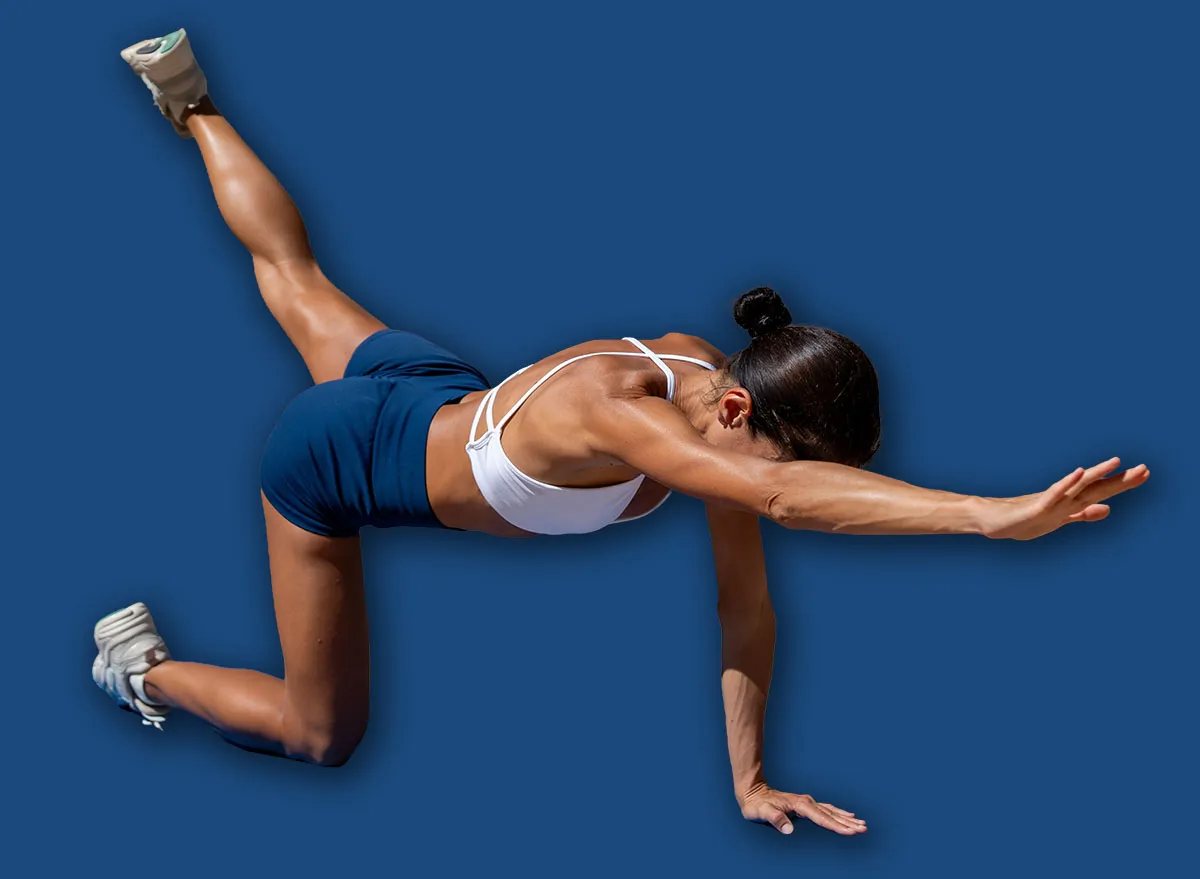
4. Bird-Dog:
Another excellent exercise for cultivating spinal stability and improving balance, the Bird-Dog is performed on all fours. From this quadruped position, the individual simultaneously extends one arm forward and the opposite leg backward, maintaining a level torso and engaged core. This reciprocal limb movement challenges core stability by forcing the deep abdominal muscles and multifidus to work synergistically to prevent rotation and maintain a neutral spine. The Bird-Dog is particularly beneficial for improving proprioception (body awareness) and coordination, which are crucial for maintaining functional independence and preventing falls in older adults. Its emphasis on a stable, elongated spine directly contributes to better posture and a reduction in the visual impact of abdominal protrusion, an outcome not addressed by isolated crunch movements.
5. Standing March:
Bringing core training into an upright, functional context, the Standing March is a simple yet powerful exercise that integrates core strength with balance and functional movement patterns. Standing tall, the individual alternately lifts one knee towards the chest, engaging the lower abdominal muscles and hip flexors, while maintaining an upright posture and stable core. This dynamic movement enhances dynamic core stability—the ability to maintain balance and control the trunk during movement—which is essential for activities of daily living. It also strengthens the hip flexors and deep lower abdominal muscles, contributing to improved pelvic stability and a stronger, more functional core in a weight-bearing position. Unlike crunches, which are performed horizontally, the Standing March trains the core to support the body against gravity, offering real-world applicability and reinforcing good posture throughout the day.
While these five exercises form a robust foundation for enhancing abdominal support and definition, it is imperative to remember that they are components of a broader wellness ecosystem. Sustainable improvements in body composition and overall health also hinge on other lifestyle factors, including a balanced, nutrient-dense diet, effective stress management techniques, adequate sleep, and consistent hydration. Adopting a holistic perspective that integrates mindful movement with comprehensive self-care practices offers the most effective pathway for individuals over 60 to cultivate a stronger, more functional core and achieve their wellness goals. Through consistent application of these expert-recommended strategies, a noticeable improvement in both the appearance and intrinsic strength of the abdominal region is attainable, contributing significantly to overall vitality and quality of life.
About the Author