
Maintaining robust central body strength becomes an increasingly critical aspect of overall health and independent living as individuals advance in age. The core musculature, encompassing the deep abdominal, back, pelvic floor, and gluteal regions, serves as the anatomical foundation for nearly every movement the body performs. Its integrity directly influences posture, balance, mobility, and the capacity to execute daily tasks without assistance. For those aged 65 and above, a strong and functionally adaptive core is not merely about physical aesthetics; it is a vital determinant of quality of life, significantly mitigating the risk of falls and reducing the incidence of age-related discomforts, particularly lower back pain.
The physiological processes associated with aging often lead to a gradual decline in muscle mass, a condition known as sarcopenia, alongside decreased bone density and diminished proprioception – the body’s sense of its position in space. These changes collectively elevate the vulnerability to injuries and limit the scope of physical activity. Consequently, integrating a targeted core strengthening program into one’s daily routine is paramount for sustaining vitality and functional independence throughout the later stages of life. While many fitness enthusiasts, including seniors, often turn to isometric exercises such as planks for core development, a growing consensus among fitness professionals suggests that a more dynamic and multi-faceted approach may yield superior benefits, especially for an aging population.
Traditional static holding exercises, like the plank, are undoubtedly valuable components of a comprehensive fitness strategy. They effectively engage multiple muscle groups, contributing to improved endurance, spinal protection, and enhanced postural alignment. Furthermore, the mental focus required to maintain a plank can offer psychological benefits, fostering discipline and body awareness. However, their primary limitation lies in their stationary nature. A truly resilient core, particularly for older adults, necessitates the capacity for dynamic stability, rotational control, and the ability to resist external forces while moving upright. Functional strength, in this context, refers to the power and control that directly translate into real-world movements—lifting groceries, navigating uneven terrain, or simply rising from a chair—rather than merely holding a fixed position.
Steve Stonehouse, a distinguished expert and Vice President of Programming and Education at Body Fit Training (BFT), underscores this crucial distinction. He advocates for an evolution beyond static isometric exercises when cultivating core strength for seniors. According to Stonehouse, a genuinely potent core for individuals over 65 must embody a blend of sustained stability, the capacity for controlled rotation, and an inherent resistance to gravitational pull during upright activities. This philosophy emphasizes exercises that challenge the core in ways that mimic the demands of everyday life, thereby developing a "functional" core that supports practical movements and safeguards the spine. The beauty of this advanced approach is its accessibility, requiring only a brief, dedicated commitment of approximately eight minutes each day to achieve significant enhancements in central body resilience.
The regimen proposed by Stonehouse centers on a circuit of four distinct exercises, each designed to engage the core musculature in dynamic and stabilizing ways. These movements collectively target various aspects of core function—anti-flexion, anti-extension, anti-lateral flexion, and anti-rotation—which are all fundamental for maintaining stability and preventing injury. The routine is structured for efficiency and impact, with each exercise performed for a set duration before transitioning to the next, completing the circuit twice.
The first cornerstone exercise in this functional core regimen is the Farmer’s Carry. This seemingly simple yet profoundly effective movement involves walking a short distance while holding a weight (such as a dumbbell, kettlebell, or even a heavy bag of groceries) in one hand, or equally in both hands. Its primary benefit for seniors lies in its robust engagement of the core muscles, particularly those responsible for anti-lateral flexion—preventing the body from leaning to one side. As Stonehouse explains, this exercise compels the individual to "build tension" within the deep core musculature, creating an internal "brace" that actively stabilizes the spine and protects it from undue stress. Beyond core activation, the Farmer’s Carry simultaneously strengthens grip, improves shoulder stability, and enhances overall posture and gait mechanics, directly translating to increased confidence and capability in carrying objects during daily activities. It mimics the natural human movement of transporting items, making it highly relevant for functional independence. When performing, focus on maintaining an upright posture, keeping the shoulders back and down, and engaging the core throughout the walk, ensuring the spine remains neutral.
Next in the sequence are Wall Pushups, an excellent modification of the traditional pushup that renders upper body and core strengthening accessible to a broader range of fitness levels, especially for older adults. By performing pushups against a wall, the intensity is significantly reduced compared to floor pushups, allowing individuals to control the load by adjusting their distance from the wall. While primarily targeting the chest, shoulders, and triceps, wall pushups also demand considerable core engagement. The core muscles must stabilize the torso and maintain a rigid body line as the arms push away from the wall, preventing the hips from sagging or arching the back. This cultivates crucial static core stability during dynamic upper body movement, which is essential for tasks like pushing open heavy doors or supporting oneself. The emphasis should be on maintaining a straight line from head to heels, engaging the abdominal muscles, and performing the movement slowly and with control.
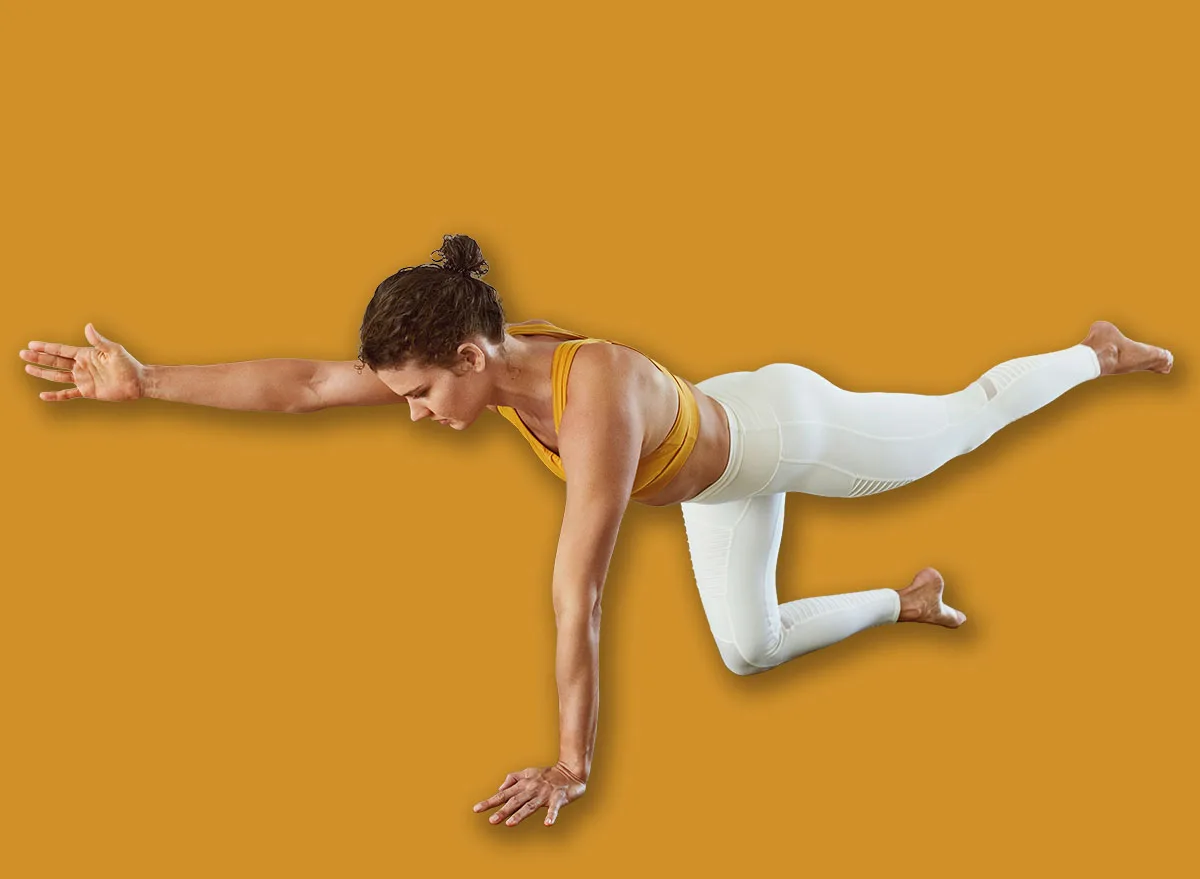
The Bird Dog exercise follows, a classic movement renowned for its effectiveness in promoting lumbar spinal stability, enhancing balance, and improving coordination. Performed on all fours, it involves simultaneously extending one arm forward and the opposite leg backward, creating a challenging balance act. This exercise is exceptional for engaging the deep intrinsic core muscles, such as the transversus abdominis and multifidus, which are crucial for spinal support. It specifically trains anti-rotation and anti-extension capabilities, meaning the core must resist the tendency of the torso to twist or arch as the limbs extend. For older adults, this translates directly to improved balance and reduced risk of falls, as it strengthens the ability to control the body’s center of gravity during limb movements. The key to the Bird Dog is slow, controlled movement, focusing on maintaining a flat back and a stable pelvis, avoiding any rocking or twisting of the hips.
Concluding the circuit is the Dead Bug exercise. While the original article referred to "Seated Dead Bugs," the accompanying visual content typically depicts the standard Dead Bug, performed lying supine (on the back). This exercise is a powerhouse for developing core control, spinal stability, and the coordinated movement of limbs while maintaining a stable torso. Lying on your back with knees bent at 90 degrees and arms extended towards the ceiling, you slowly lower one arm and the opposite leg towards the floor without allowing the lower back to arch off the mat. This movement challenges the core’s ability to resist extension and rotation, ensuring the spine remains neutral throughout the movement. For seniors, the Dead Bug is invaluable for strengthening the abdominal wall and lower back in a safe, supine position, which minimizes gravitational stress and allows for precise muscle engagement. It helps in developing the fundamental core control required for more complex movements and everyday actions. The focus should be on slow, deliberate movements, maintaining constant abdominal engagement to keep the lower back pressed against the floor.
To implement this functional core regimen, one should allocate approximately two minutes per exercise, performing each for 60 seconds, followed by a brief 30-second transition or rest period. After completing all four exercises, the entire circuit should be repeated once more, culminating in an efficient yet potent eight-minute workout. Consistency is the cornerstone of success; integrating this routine daily or several times a week will yield cumulative benefits far exceeding those of sporadic, intense sessions.
Before embarking on any new fitness program, especially for individuals over 65, it is always advisable to consult with a healthcare professional or a certified physical therapist. They can provide personalized guidance, assess individual health conditions, and recommend any necessary modifications to ensure the routine is safe and effective. Listening to one’s body, prioritizing proper form over speed or intensity, and progressively increasing duration or resistance as strength improves are fundamental principles for safe and sustainable fitness in older age.
Ultimately, investing a mere eight minutes daily into this dynamic core strengthening regimen offers a profound return: enhanced physical capability, reduced risk of injury, improved balance, and a significant boost to overall confidence and independence. By moving beyond static holds and embracing exercises that foster functional strength, older adults can truly fortify their core, paving the way for a more active, vibrant, and fulfilling life.
About the Author










