As individuals navigate the landscape of later life, maintaining robust physical capabilities becomes an increasingly critical factor for overall well-being and autonomy. The natural physiological processes associated with aging, particularly the phenomenon known as sarcopenia, present a significant challenge to preserving muscle mass and strength. Sarcopenia, characterized by the progressive and generalized loss of skeletal muscle mass and strength, typically commences around the age of 30, with a more pronounced acceleration after 60. This decline is not merely an aesthetic concern; it profoundly impacts metabolic health, bone density, mobility, balance, and the capacity to perform routine daily tasks, ultimately increasing the risk of falls and diminishing quality of life. Understanding and proactively addressing this age-related muscle deterioration is paramount for fostering a vibrant and independent senior lifestyle.
The etiology of sarcopenia is multifaceted, involving a complex interplay of hormonal shifts, reduced physical activity, and the body’s diminished efficiency in synthesizing and utilizing dietary protein for muscle repair and growth. For instance, a decrease in anabolic hormones like testosterone and growth hormone, coupled with increased inflammatory markers, contributes to a catabolic environment where muscle breakdown outpaces synthesis. Sedentary lifestyles further exacerbate this condition, as muscles, like all tissues, adapt to the demands placed upon them; without regular stimulation, they atrophy. Moreover, inadequate protein intake or impaired protein absorption can deprive the body of the essential building blocks needed to counteract muscle loss. Consequently, the progressive weakening of the musculoskeletal system manifests as reduced grip strength, slower walking speed, difficulty rising from a chair, and an overall decrease in functional capacity.
The implications of diminished muscle mass extend far beyond mere physical strength. Muscle tissue is metabolically active, playing a crucial role in glucose regulation and energy expenditure. A reduction in muscle mass can lead to a slower metabolism, contributing to weight gain and an increased risk of type 2 diabetes. Furthermore, muscles act as dynamic stabilizers for joints and contribute significantly to bone density through the mechanical stress they impart during movement. Therefore, sarcopenia often coexists with osteoporosis, amplifying the risk of debilitating fractures. Perhaps most critically, the erosion of muscle strength directly correlates with impaired balance and reaction time, rendering older adults more susceptible to falls, which are a leading cause of injury, disability, and even mortality in this demographic. Maintaining the ability to carry groceries, ascend stairs, or engage in active play with grandchildren are not trivial pursuits; they are cornerstones of independent living and a fulfilling social life.
While conventional gym environments offer a wide array of equipment and training methodologies, many older adults face practical barriers to consistent attendance. These obstacles can include transportation difficulties, the financial cost of memberships, feelings of intimidation or discomfort in a public setting, or pre-existing health conditions that make certain gym exercises challenging. This highlights the immense value of accessible, home-based exercise regimens that can be seamlessly integrated into daily routines. The consistency afforded by at-home workouts, tailored to individual abilities and comfort levels, can often yield faster and more sustainable functional improvements for seniors compared to intermittent or less appropriate gym sessions. The focus shifts from heavy lifting to mastering fundamental movement patterns that directly translate to enhanced daily function, thereby maximizing practical strength gains and adherence.
Drawing upon expert recommendations, a targeted selection of five foundational exercises can significantly contribute to restoring full-body strength and improving functional independence for individuals over sixty. These movements require minimal to no equipment, making them ideal for consistent daily practice within the comfort of one’s home.
1. Chair Squats: Building Lower Body Power and Stability
The chair squat is a fundamental movement that mimics the essential action of sitting down and standing up, a cornerstone of daily mobility. This exercise primarily targets the quadriceps, hamstrings, and glutes, while also engaging the core for stability. Strong lower body muscles are vital for walking, climbing stairs, maintaining balance, and preventing falls.
- Execution: Begin by standing directly in front of a sturdy chair, with feet shoulder-width apart and toes pointing slightly outward. Engage your core and imagine you are about to sit down. Slowly lower your hips backward and downward as if reaching for the chair with your glutes. Keep your chest lifted and back straight. Control the descent until your glutes lightly tap or hover just above the chair seat, then push through your heels to return to the standing position, squeezing your glutes at the top.
- Benefits: Enhances leg strength, improves balance and coordination, supports knee joint health, and directly translates to increased ease in everyday tasks like rising from a sofa or getting in and out of a car.
- Modifications: For beginners, use a higher chair or place a cushion on the seat to reduce the range of motion. For increased challenge, slow down the tempo, hold for a few seconds at the bottom, or use a lighter chair that requires more core engagement to prevent it from sliding. Aim for 2-3 sets of 10-15 repetitions.
2. Wall Pushups: Strengthening Upper Body and Core
Wall pushups offer a scalable way to build upper body pushing strength, targeting the chest, shoulders, and triceps, while also engaging the core muscles for stability. This exercise is crucial for functional movements like pushing open heavy doors, getting up from a prone position, or maintaining good posture.
- Execution: Stand facing a sturdy wall, about an arm’s length away, with your feet hip-width apart. Place your palms flat on the wall at shoulder height and width. Lean forward, bending your elbows and keeping your body in a straight line from head to heels, until your chest is close to the wall. Ensure your elbows point slightly backward, not directly out to the sides. Push actively through your palms to return to the starting position, maintaining a strong core throughout.
- Benefits: Develops chest and shoulder strength, improves arm and tricep definition, enhances postural control, and builds foundational strength for more challenging push-up variations.
- Modifications: To make it easier, stand closer to the wall. To increase the challenge, step further away from the wall, increasing the angle and thus the amount of body weight you are pushing. Perform 2-3 sets of 10-15 repetitions.
3. Standing Lunges: Improving Leg Strength and Balance Unilaterally
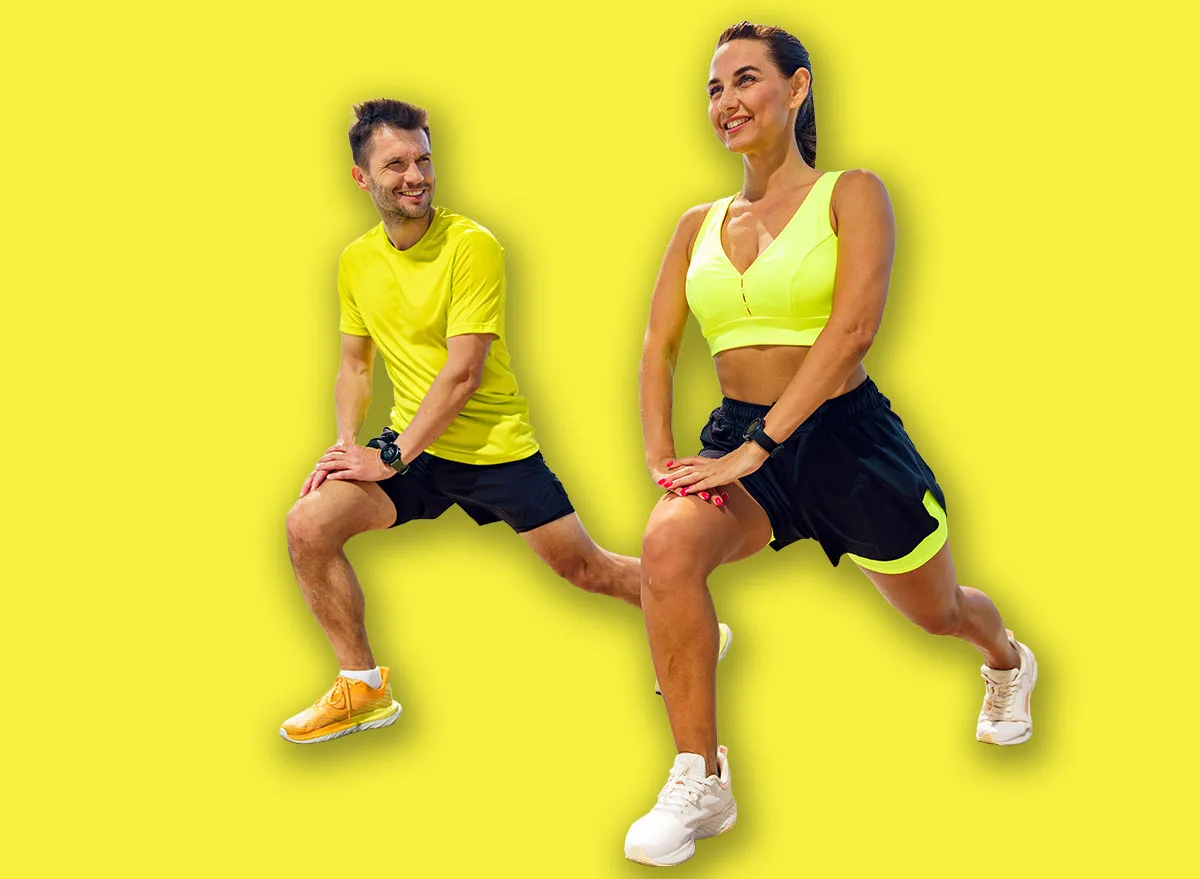
Standing lunges are excellent for building lower body strength and improving balance, as they work one leg at a time (unilaterally). This mimics walking and stair climbing, movements that require independent leg strength and stability. Lunges engage the quadriceps, hamstrings, glutes, and hip flexors.
- Execution: Begin standing tall with your feet hip-width apart. Take a controlled step forward with one leg, keeping your torso upright. Lower your hips until both knees are bent at approximately a 90-degree angle. Ensure your front knee is directly over your ankle and your back knee hovers just above the floor. Push off your front foot to return to the starting position. Alternate legs with each repetition. If balance is a concern, hold onto a sturdy piece of furniture or a wall for support.
- Benefits: Strengthens individual leg muscles, enhances hip mobility and flexibility, significantly improves balance and coordination, and contributes to a more stable gait.
- Modifications: For less challenge, take a smaller step forward or use a hand for support. To increase intensity, deepen the lunge or perform more repetitions. Aim for 2-3 sets of 8-12 repetitions per leg.
4. Seated Torso Rotations: Enhancing Core Stability and Spinal Mobility
Seated torso rotations specifically target the oblique muscles of the core, promoting spinal mobility and rotational strength. This movement is crucial for everyday actions that involve twisting, such as reaching for objects behind you, looking over your shoulder, or performing household chores. A strong and mobile core also supports good posture and reduces back pain.
- Execution: Sit upright in a sturdy chair with your feet flat on the floor, hip-width apart. Keep your spine elongated and shoulders relaxed. Place your hands lightly behind your head or cross them over your chest. Gently twist your torso to one side, leading with your rib cage and keeping your hips relatively stable. Avoid jerking movements. Return to the center and then rotate to the opposite side.
- Benefits: Strengthens the oblique muscles, improves spinal flexibility and range of motion, aids in maintaining good posture, and facilitates rotational movements required for daily tasks.
- Modifications: To reduce intensity, perform smaller rotations. For increased challenge, hold the rotation briefly at the end range of motion, or add a light weight (like a small book) held to the chest. Complete 2-3 sets of 10-15 rotations per side.
5. Standing High Knee March: Building Hip Flexor Strength and Dynamic Balance
The standing high knee march is a dynamic exercise that improves hip flexor strength, balance, and coordination, all vital components of a healthy walking gait and stair climbing. It also engages the core for stability and can offer a gentle cardiovascular benefit.
- Execution: Stand tall with your feet hip-width apart. Engage your core. Slowly lift one knee towards your chest, aiming to bring your thigh parallel to the floor (or as high as comfortably possible). Maintain an upright posture and controlled movement. Lower the leg with control and immediately lift the opposite knee. Continue alternating legs in a marching motion. If balance is an issue, perform this exercise while holding onto a wall or chair.
- Benefits: Strengthens hip flexors, improves dynamic balance and coordination, enhances walking efficiency, and can contribute to fall prevention by improving leg lift during ambulation.
- Modifications: To make it easier, lift the knee to a lower height or use external support. To increase the challenge, increase the speed of the march (while maintaining control), or pause briefly at the top of each lift. Aim for 2-3 sets of 10-15 repetitions per leg.
Incorporating these five foundational exercises into a consistent daily or near-daily routine can profoundly impact an individual’s strength, balance, and overall functional capacity after the age of sixty. While these movements are highly effective, it is crucial to approach any new exercise regimen with mindfulness. Listen to your body, prioritize proper form over speed or intensity, and consider consulting with a healthcare professional or a certified fitness expert, especially if you have pre-existing health conditions or concerns. Strength training, when combined with a balanced diet rich in protein, adequate hydration, and sufficient sleep, forms a powerful synergy that not only mitigates the effects of sarcopenia but also empowers older adults to embrace their later years with greater vitality, independence, and an enhanced quality of life.
About the Author