
The innate human capacity for empathy and cooperation is a cornerstone of societal cohesion, fostering environments where mutual support and collective well-being can flourish. Yet, the spectrum of selflessness among individuals is remarkably diverse; some exhibit an almost instinctive inclination to prioritize the needs of others, while a significant portion of the population may lean more towards personal advantage. This intrinsic variability has long captivated the scientific community, prompting extensive inquiry into the underlying biological and psychological mechanisms that dictate such differences in social decision-making. Understanding these determinants is crucial not only for advancing our comprehension of human nature but also for developing strategies to foster greater cooperation and mutual understanding within communities.
To empirically explore these complex dynamics, the research team enlisted the participation of 44 individuals who were then presented with a series of 540 economic choices within the framework of a modified Dictator Game. This well-established experimental paradigm involves participants deciding how to allocate a sum of money between themselves and an anonymous recipient. In this iteration, the monetary allocations were varied across trials, creating scenarios where participants could either maximize their own gain or opt for a more equitable distribution, thereby impacting both their own and their partner’s financial outcome. This design allowed for the precise measurement of participants’ propensity to share and their willingness to forgo personal profit for the benefit of another.
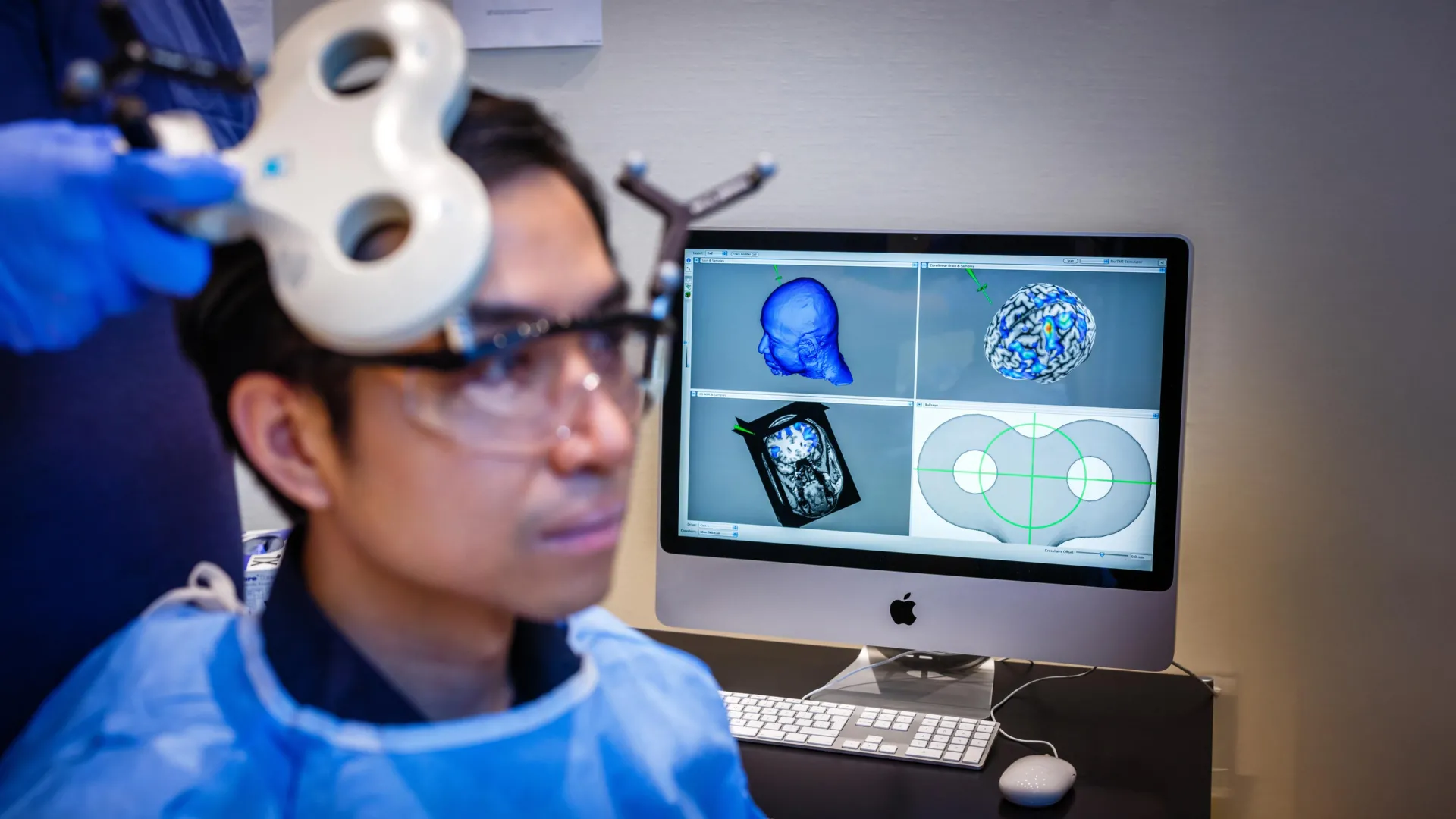
Crucially, during the course of their decision-making process, participants underwent non-invasive brain stimulation using transcranial alternating current stimulation (tACS). This technique involves applying weak electrical currents to the scalp, carefully calibrated to entrain and synchronize the firing patterns of neurons in targeted brain regions. The researchers focused their intervention on the frontal and parietal lobes, two critical areas known to be involved in higher-order cognitive functions, including social cognition, decision-making, and self-control. The tACS was precisely modulated to encourage neural ensembles within these interconnected regions to oscillate in unison, specifically targeting gamma or alpha frequency bands, which are associated with different cognitive states and processing mechanisms.
The results of this intricate experimental design yielded compelling evidence. When the tACS protocol successfully amplified the synchronized oscillatory activity, particularly in the gamma frequency band, between the frontal and parietal regions, a discernible and statistically significant augmentation in altruistic choices was observed. Participants, under the influence of this enhanced neural synchrony, demonstrated a heightened inclination to allocate larger portions of the available money to their anonymous counterpart. This increased generosity was evident even in situations where such a decision directly resulted in a reduced personal financial gain compared to the recipient. This finding strongly suggests a direct causal relationship between the coordination of neural activity in these specific brain areas and the manifestation of prosocial behavior.
Further analysis, employing sophisticated computational modeling, provided deeper insights into the cognitive shifts induced by the brain stimulation. The models indicated that the synchronized neural activity altered how participants evaluated the various financial offers presented to them. Post-stimulation, individuals appeared to assign greater consideration to the potential outcome for the other person when making their division decisions. This suggests that the intervention subtly recalibrated the internal weighting system used in their decision-making calculus, shifting the balance from a purely self-interested perspective towards a more other-regarding stance. While the study did not directly measure neural activity in real-time during the core task, the authors propose that future research integrating brain stimulation with electroencephalography (EEG) could provide more granular data on the specific neural signatures of these induced changes, thereby confirming the proposed mechanisms. Nevertheless, the current findings compellingly indicate that the synchronized communication between the frontal and parietal lobes plays a pivotal role in supporting altruistic decision-making processes.
The research team underscored the significance of establishing a clear cause-and-effect relationship. Coauthor Christian Ruff emphasized that their work has pinpointed a specific pattern of neural communication that is demonstrably linked to altruistic choices. He articulated that this discovery significantly advances our fundamental understanding of the neural architecture that underpins social decision-making and lays crucial groundwork for future investigations into the intricacies of human cooperation, particularly in contexts where collective success is contingent upon synchronized and coordinated efforts among individuals.
Echoing this sentiment, coauthor Jie Hu highlighted the novelty of their findings, stating that the study provides robust evidence for causality. He explained that by deliberately manipulating communication within a defined brain network through precise, non-invasive stimulation, they observed a consistent and predictable alteration in individuals’ sharing behaviors, directly correlating with a modified balance between self-interest and consideration for others. This direct intervention and observed behavioral change is a key contribution of the study.
Concluding on the profound implications of their work, coauthor Marius Moisa expressed their astonishment at the direct correlation between enhancing inter-regional coordination and the emergence of more altruistic choices. He reiterated that by boosting the synchrony between the frontal and parietal regions of the brain, participants displayed a marked increase in their willingness to assist others, even when such assistance entailed a personal cost. This finding not only deepens our scientific understanding of the biological basis of generosity but also opens new avenues for exploring how to foster prosocial behaviors in a variety of settings, from educational environments to organizational cultures.
About the Author












