For many, the concept of core training immediately conjures images of challenging floor exercises like planks, crunches, and elaborate abdominal workouts. While these traditional movements undoubtedly contribute to a strong midsection, they often present significant accessibility barriers, particularly for older adults or those navigating physical limitations. The demand for getting down onto and back up from the floor, along with the balance and joint stress involved, can deter individuals over the age of sixty from pursuing vital core strengthening routines. However, a robust core is not merely about achieving a sculpted physique; it is fundamental to maintaining balance, supporting spinal health, enabling fluid movement, and preserving overall functional independence as we age. Fortunately, highly effective and accessible alternatives exist that leverage the simple stability of a chair to cultivate profound core strength without the typical physical demands.
The human core musculature is a complex network extending far beyond the superficial "six-pack" muscles. It encompasses deep stabilizing muscles like the transverse abdominis, multifidus, and pelvic floor, alongside the more visible rectus abdominis and obliques. Together, these muscles form a natural corset that stabilizes the spine, supports internal organs, and facilitates nearly every movement we undertake throughout the day, from standing and walking to reaching and bending. As individuals enter their sixth decade and beyond, the natural process of sarcopenia (age-related muscle loss) can diminish this vital support system, increasing the risk of falls, back pain, and reduced mobility. Therefore, engaging in consistent, appropriate core strengthening becomes an imperative aspect of healthy aging, directly impacting quality of life and autonomy.
This is where chair-based exercises emerge as a game-changer. By providing a stable, seated foundation, these movements eliminate concerns about maintaining balance or navigating floor transitions, allowing exercisers to focus intensely on activating and strengthening the target muscles. This inherent support fosters confidence, encourages proper form, and facilitates a deeper connection with the core, leading to more effective and safer workouts. A certified fitness professional often observes that the most successful exercise programs are those that meet individuals precisely where they are, adapting to their current capabilities rather than imposing unrealistic demands. Chair exercises excel in this regard, transforming an ordinary piece of furniture into a versatile tool for comprehensive core development.
Understanding the Core’s Multifaceted Role
To fully appreciate the efficacy of seated core exercises, it’s beneficial to grasp the four primary functions of the core:
- Anti-Extension: Resisting the tendency of the lower back to arch excessively. This is crucial for maintaining good posture and preventing spinal compression.
- Anti-Flexion: Resisting the tendency of the lower back to round forward. Important for lifting objects safely and maintaining an upright stance.
- Anti-Lateral Flexion: Resisting the tendency of the torso to bend sideways. Essential for stability during single-leg movements or carrying uneven loads.
- Anti-Rotation: Resisting the tendency of the torso to twist. This function is paramount for preventing injuries during dynamic movements and maintaining balance.
The following five chair exercises are meticulously designed to target these core functions, offering a comprehensive approach to building strength, stability, and resilience, all from a comfortable seated position.
1. Seated Knee Tucks: Engaging the Lower Abdominals and Hip Flexors
Seated knee tucks are an excellent starting point for cultivating awareness and strength in the lower abdominal region and hip flexors. This exercise promotes coordinated movement between the hips and trunk, a skill vital for walking, climbing stairs, and rising from a seated position. Many participants are surprised by the immediate engagement felt in their core, making it an effective warm-up or foundational movement.
- Muscles Engaged: Primarily the rectus abdominis (especially lower fibers), hip flexors (iliopsoas), and deep core stabilizers.
- Execution Protocol:
- Begin by sitting upright in a sturdy chair, with your feet flat on the floor and hands resting lightly on the sides of the chair for balance.
- Engage your abdominal muscles, drawing your navel gently towards your spine. Maintain a tall posture, avoiding any rounding of your back.
- Slowly lift one knee towards your chest, bringing it as high as comfortably possible without compromising your posture.
- Hold this contracted position briefly, feeling the engagement in your lower abdomen.
- With controlled movement, slowly lower your foot back to the floor.
- Alternate legs, performing the movement on the opposite side, or complete all repetitions on one side before switching.
- Recommendations: Aim for 3 sets of 12 to 15 repetitions per leg, allowing for a 30-second recovery period between sets.
- Refinement Tips: Focus on initiating the movement from your core rather than relying solely on hip flexor strength. Keep your chest elevated throughout the exercise.
- Variations for Progression: To increase the challenge, try lifting both knees simultaneously (if comfortable and stable), or introduce a slower tempo for each repetition.
2. Seated Russian Twists: Cultivating Rotational Stability and Oblique Strength
Rotational movements are integral to daily life, from turning to grab an object to shifting position. Seated Russian twists specifically target the oblique muscles, which are crucial for stabilizing the torso during such actions. This exercise not only strengthens the muscles along the sides of your waist but also refines coordination between the upper and lower body.
- Muscles Engaged: Primarily the internal and external obliques, with secondary involvement from the rectus abdominis and transverse abdominis.
- Execution Protocol:
- Sit towards the front edge of your chair, keeping your feet flat on the floor and knees bent.
- Lean back slightly, maintaining a straight spine and engaged core. You can clasp your hands together in front of your chest or hold a light weight for added resistance.
- From this central position, slowly rotate your torso to one side, leading with your rib cage and shoulders, not just your arms. Keep your hips relatively stable.
- Pause momentarily at the peak of the rotation, feeling the stretch and contraction in your obliques.
- Return smoothly to the starting central position.
- Immediately rotate to the opposite side, ensuring a continuous and controlled motion.
- Recommendations: Complete 3 sets of 16 to 20 alternating repetitions (8-10 per side), resting for 30 seconds between sets.
- Refinement Tips: Avoid excessive swinging of your arms; the power should originate from your torso. Maintain a consistent, controlled pace.
- Variations for Progression: Introduce a light dumbbell or medicine ball held at chest level for increased resistance. Slowing down the tempo or incorporating a brief hold at each rotational peak can also intensify the exercise.
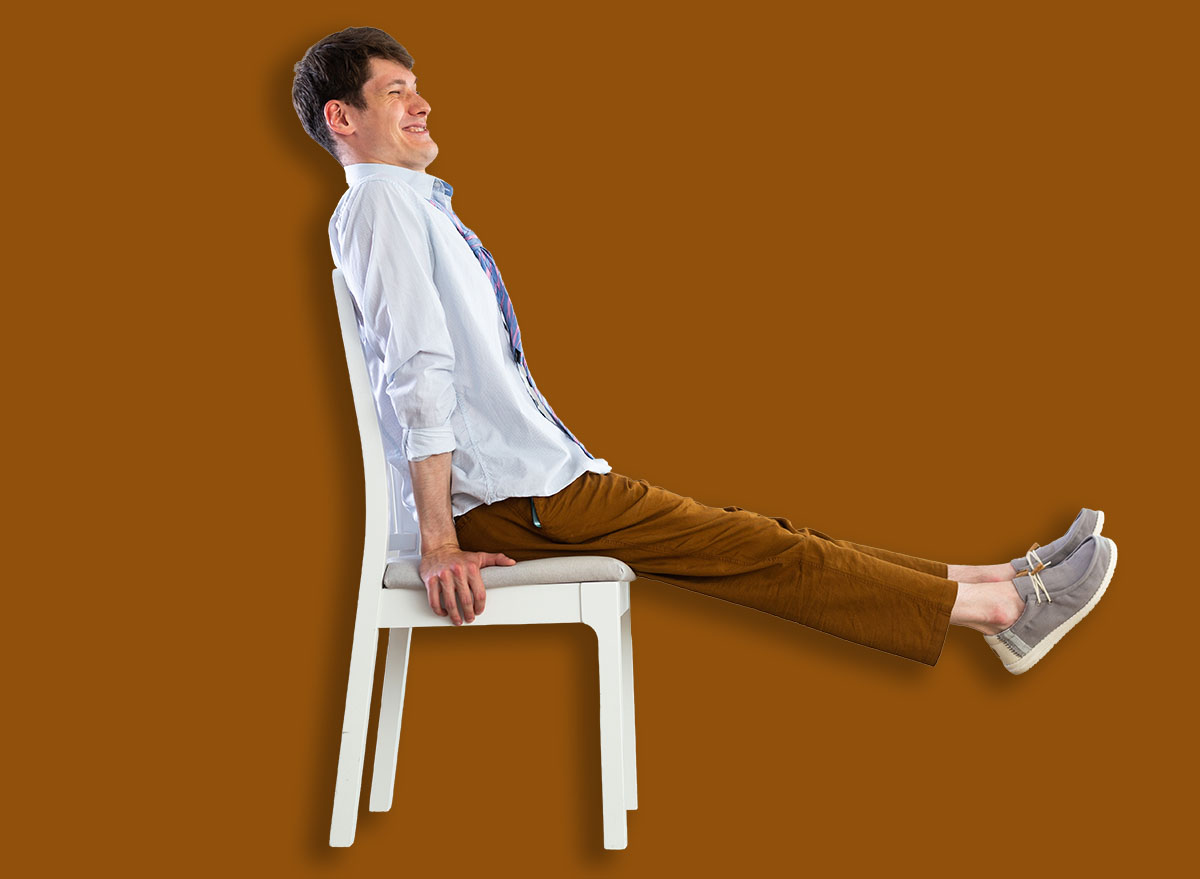
3. Seated Leg Lifts: Strengthening the Deep Lower Abdominals
Seated leg lifts are a powerful exercise for engaging the lower abdominal muscles and hip flexors, simultaneously challenging the core’s ability to stabilize the torso while the lower limbs are in motion. This movement directly contributes to improved pelvic control and stronger support for fundamental activities like walking and navigating stairs.
- Muscles Engaged: Primarily the lower fibers of the rectus abdominis, hip flexors, and the deep transverse abdominis.
- Execution Protocol:
- Sit tall and straight in your chair, with your feet flat on the floor and hands gripping the sides of the chair for support.
- Engage your core, pressing your lower back gently into the chair back (if applicable) to prevent arching.
- Slowly extend one leg straight out in front of you, lifting your heel just off the floor. Keep your knee as straight as possible without locking it.
- Hold this extended position for a count of one to two seconds, focusing on the contraction in your lower abdomen.
- With deliberate control, slowly lower your foot back to the starting position.
- Perform all repetitions on one leg before switching, or alternate legs if preferred.
- Recommendations: Execute 3 sets of 10 to 12 repetitions per leg, with a 30-second rest interval between sets.
- Refinement Tips: Emphasize a slow, controlled lift and descent. Avoid rushing the movement, which can diminish core engagement. Ensure your torso remains still and upright.
- Variations for Progression: Perform single-leg lifts with a slightly longer hold at the top. For an advanced challenge, attempt to lift both legs simultaneously, if core strength and stability permit.
4. Seated Marches: Enhancing Core Stability During Dynamic Movement
Seated marches are a deceptively simple yet highly effective exercise for training the core to stabilize the trunk while the legs move independently. This dynamic stability is crucial for balance, coordination, and maintaining an upright posture during gait. The alternating leg movement also promotes improved hip mobility and rhythmic coordination, mirroring the mechanics of walking.
- Muscles Engaged: Hip flexors, lower abdominals, and the various core stabilizing muscles (e.g., transverse abdominis, multifidus).
- Execution Protocol:
- Sit tall in your chair, ensuring your feet are flat on the floor and your hands are placed on the chair’s sides for gentle support.
- Engage your core, maintaining a neutral spine without leaning backward or rounding your shoulders.
- Slowly lift one knee towards your chest, lifting your foot completely off the floor as if marching in place.
- Lower the lifted foot back to the floor with control.
- Immediately repeat the motion with the opposite leg, maintaining a steady, rhythmic pace.
- Recommendations: Perform 3 sets of 20 alternating repetitions (10 per leg), taking a 30-second break between sets.
- Refinement Tips: Resist the urge to lean back as you lift each knee. The goal is to keep your torso as still and upright as possible, allowing your core to do the stabilization work.
- Variations for Progression: Increase the challenge by slowing down the tempo of each march, or by holding the knee at its peak for a few seconds before lowering. Removing hand support (if safe) can also increase core activation.
5. Seated Pallof Hold: Mastering Anti-Rotational Strength
The Pallof hold is a cornerstone exercise for developing anti-rotational core strength, a critical function often overlooked in traditional abdominal routines. Instead of creating movement, this exercise trains the core to resist movement, specifically rotation, which is vital for protecting the spine and maintaining stability during everyday activities that involve asymmetrical forces, such as carrying groceries or reaching across your body.
- Muscles Engaged: Primarily the transverse abdominis, obliques, and multifidus, with significant engagement of the shoulders and glutes for overall stability.
- Execution Protocol:
- Secure a resistance band to a sturdy anchor point (e.g., a door frame, heavy furniture) at chest height.
- Sit sideways to the anchor point, approximately an arm’s length away. Hold the resistance band handle with both hands pressed together at the center of your chest. Your body should be square to the front, directly resisting the pull of the band from the side.
- Engage your core muscles intensely, bracing your torso as if preparing for a gentle punch to the stomach.
- Slowly press your hands straight out in front of your chest, extending your arms fully. The band will attempt to pull your torso towards the anchor point; actively resist this rotation.
- Hold this extended position for the prescribed duration, maintaining a stable, upright posture and preventing any rotation of your torso.
- With control, slowly bring your hands back to your chest.
- Complete all repetitions or hold time on one side before carefully turning around to perform the exercise on the opposite side.
- Recommendations: Execute 3 sets of 20 to 30-second holds per side, with a 30-second rest between sets.
- Refinement Tips: Maintain level shoulders and prevent the band from dictating your torso’s movement. The resistance should be challenging but allow you to maintain perfect form.
- Variations for Progression: Increase the resistance of the band, extend the hold time, or transition to a kneeling or standing Pallof hold as core strength improves.
Beyond the Exercises: A Holistic Approach to Core Health After 60
While these chair-based exercises form a robust foundation for core strength, integrating broader lifestyle practices can further enhance their benefits and promote overall well-being:
- Prioritize Posture: Consciously maintain good posture throughout your day, whether sitting, standing, or walking. Imagine a string pulling you upwards from the crown of your head. This seemingly simple awareness continually engages core muscles.
- Practice Diaphragmatic Breathing: Deep belly breathing, or diaphragmatic breathing, directly engages the deep core muscles, including the transverse abdominis and pelvic floor. Integrating a few minutes of mindful diaphragmatic breathing daily can significantly improve core function and stability.
- Stay Hydrated and Nourished: Proper hydration and a balanced diet rich in protein, fruits, and vegetables support muscle health, recovery, and overall energy levels, enabling more effective workouts.
- Consistency is Key: Regular, consistent practice yields superior results compared to infrequent, intense sessions. Aim for two to three core workouts per week, integrating these chair exercises into your routine.
- Listen to Your Body: Always perform exercises within a pain-free range of motion. If you experience discomfort, modify the movement or consult with a healthcare professional or physical therapist.
- Consult with Professionals: Before starting any new exercise program, especially after 60, it is advisable to consult with your doctor or a qualified physical therapist to ensure the exercises are appropriate for your individual health status.
By embracing these accessible chair-based strategies, individuals over sixty can effectively build a stronger, more stable core. This commitment to functional fitness translates into improved balance, reduced risk of falls, alleviation of back discomfort, and enhanced confidence in navigating the demands of daily life, ultimately empowering a more active and independent future. The journey to a resilient core doesn’t require complex gymnastics; sometimes, the most profound strength is found in the simplest, most supportive positions.
About the Author