The accumulation of adipose tissue around the midsection, particularly visceral fat that envelops internal organs, presents a significant health concern that intensifies with advancing age. While often perceived as a mere aesthetic challenge, this specific type of fat is metabolically active and has been strongly linked to an elevated risk of various chronic conditions, including cardiovascular disease, type 2 diabetes, certain cancers, and systemic inflammation. For individuals navigating their sixties and beyond, addressing this abdominal adiposity becomes a crucial component of maintaining overall well-being and mitigating long-term health complications. The physiological changes associated with aging, such as a natural decline in metabolic rate, shifts in hormonal balance (like reduced estrogen in women and testosterone in men), and a gradual loss of muscle mass (sarcopenia), contribute to the increased propensity for fat storage in the abdominal region. This makes effective and accessible strategies for core strengthening and fat reduction particularly vital for this demographic.
Traditional high-intensity abdominal workouts, while effective for some, often pose challenges for older adults due to increased risk of joint strain, particularly in the neck and lower back, or may simply be too strenuous for those with pre-existing conditions or lower fitness levels. Recognizing these limitations, wellness experts are increasingly advocating for more supportive, low-impact exercise modalities that can be performed safely and effectively. Among these, exercises conducted on a bed or other cushioned surface have emerged as a highly practical and beneficial approach. These routines capitalize on the inherent support provided by a mattress, which can significantly reduce pressure on sensitive joints while still enabling targeted muscle engagement in the core and hips. This unique environment fosters muscle activation without inducing the common tensions often experienced in unsupported positions.
Karen Ann Canham, a Board-Certified Wellness Coach and Nervous System Specialist with extensive experience in the wellness sector and the founder of Karen Ann Wellness, highlights the efficacy of these bed-based exercises. She emphasizes that the cushioned support of a mattress allows for consistent engagement of critical muscle groups, including the core and hips, without the compensatory tension often seen in the lower back or neck. This protective environment is particularly advantageous for individuals seeking to strengthen their core and reduce abdominal circumference without compromising joint health. The focus shifts from high-impact, explosive movements to controlled, deliberate actions that build foundational strength and stability.
Here are four foundational exercises, adaptable for performance on a supportive surface, that contribute to strengthening the core, enhancing hip stability, and, when combined with a comprehensive lifestyle approach, can aid in the reduction of abdominal fat more effectively than isolated, high-impact abdominal routines alone for older adults:
1. Clamshell:
The Clamshell exercise is an excellent movement for targeting the gluteus medius and minimus, muscles crucial for hip stability and pelvic alignment, which indirectly supports core strength. To perform this, begin by lying on your side on the bed with your knees bent at approximately a 90-degree angle and stacked one on top of the other. Your head can rest comfortably on your arm or a pillow. Ensure your hips are stacked vertically, avoiding any tilting backward. Keeping your feet together, slowly lift your top knee towards the ceiling, resembling an opening clam shell. The movement should originate from your hip, not your lower back. Control the motion as you lower your knee back to the starting position. It is vital to maintain a stable pelvis throughout the exercise. This movement strengthens the often-underutilized outer hip muscles, improving gait, reducing knee pain, and contributing to a more stable core by enhancing pelvic girdle support. Aim for 10-15 repetitions on each side, focusing on controlled movement rather than speed.
2. Side-Lying Leg Lifts:
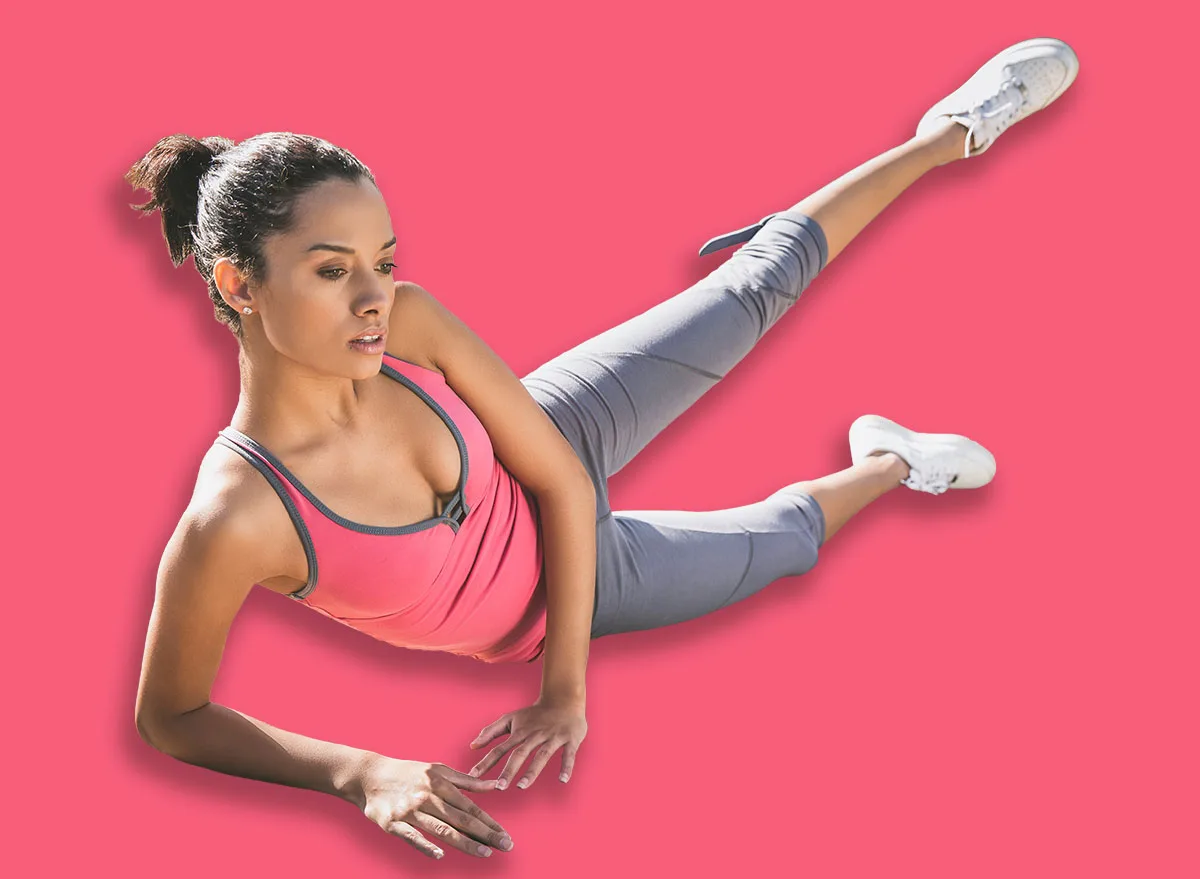
This exercise focuses on strengthening the abductor muscles of the outer thigh and hips, which play a significant role in pelvic stability and contribute to a toned appearance of the lower body. Start by lying on your side on the bed, similar to the clamshell position, but with your legs extended straight. Your body should form a straight line from head to heels. Support your head with your arm or a pillow. Engage your core muscles to stabilize your torso and prevent rocking. Slowly lift your top leg straight up towards the ceiling, maintaining a neutral hip position (avoiding rolling forward or backward). The movement should be slow and controlled, originating from the hip joint, not the lower back. Lower the leg back down with equal control. It’s important not to swing the leg or use momentum. This exercise not only sculpts the outer thighs but also enhances the strength of the gluteal muscles, which are key for supporting the spine and pelvis, thereby indirectly aiding core stability and contributing to a flatter midsection. Perform 10-15 repetitions on each side.
3. Heel Slides:
Heel slides are a gentle yet effective exercise for engaging the deep abdominal muscles, particularly the transversus abdominis, which acts like a natural corset to support the spine and flatten the abdomen. Lie on your back on the bed with your knees bent and feet flat on the mattress, hip-width apart. Ensure your lower back is in a neutral position, not overly arched or pressed flat into the bed. Take a deep breath, and as you exhale, gently draw your belly button towards your spine, engaging your core without holding your breath or tilting your pelvis. While maintaining this core engagement, slowly slide one heel away from your body, extending your leg straight along the bed. The key is to keep your lower back stable and prevent it from arching. Once the leg is fully extended or as far as comfortable without back discomfort, slowly slide it back to the starting position, maintaining core control. Alternate legs, performing 8-12 repetitions on each side. This exercise is excellent for improving lumbar stability, activating core muscles without excessive strain, and promoting better posture.
4. Glute Bridges:
The Glute Bridge is a compound exercise that effectively strengthens the glutes, hamstrings, and the entire core musculature, providing a powerful foundation for overall body stability and contributing to a lifted posterior and a stronger back. Lie on your back on the bed with your knees bent and feet flat on the mattress, hip-width apart, positioned relatively close to your buttocks. Keep your arms relaxed by your sides with palms down. Engage your core and gluteal muscles, then slowly lift your hips off the bed until your body forms a straight line from your shoulders to your knees. Avoid over-arching your lower back; the movement should primarily come from your hips and glutes. Squeeze your glutes at the top of the movement. Hold this position briefly, then slowly lower your hips back down to the bed with control. This exercise is highly beneficial for strengthening the posterior chain, which often weakens with age and sedentary lifestyles, improving posture, alleviating lower back pain, and enhancing functional movement. Aim for 10-15 repetitions, focusing on the quality of movement.
While these exercises provide an excellent starting point for enhancing core strength and supporting abdominal fat reduction, it is crucial to understand that no single exercise regimen operates in isolation. A holistic approach encompassing balanced nutrition, adequate hydration, sufficient sleep, and effective stress management techniques forms the bedrock of sustainable health and body composition changes. Prioritizing whole, unprocessed foods, limiting sugar and refined carbohydrates, and ensuring consistent protein intake can significantly impact fat loss and muscle preservation. Furthermore, consistency is paramount; integrating these exercises into a daily or near-daily routine, even for short durations, will yield greater benefits over sporadic, intense sessions. Before embarking on any new exercise program, particularly for individuals over 60 or those with underlying health conditions, consulting with a healthcare professional or a certified physical therapist is highly recommended to ensure the chosen activities are appropriate and safe for individual needs. By adopting a comprehensive strategy that combines these accessible, supportive exercises with other healthy lifestyle choices, older adults can effectively work towards reducing abdominal fat, enhancing core stability, and significantly improving their overall health and quality of life.
About the Author