As individuals navigate the journey into their sixth decade and beyond, maintaining robust lower body strength becomes an increasingly critical component of overall health, functional independence, and quality of life. The natural physiological process of aging often brings with it a gradual yet significant decline in muscle mass and strength, a phenomenon scientifically termed sarcopenia. While traditional exercises like squats are widely lauded for their efficacy in developing powerful leg musculature, certain standing movements can offer a particularly advantageous and potentially more rapid pathway to revitalizing femoral strength for older adults, often with reduced impact or increased functional relevance.
The pervasive nature of sarcopenia means that, typically, adults may experience a reduction of approximately 3% to 8% in muscle mass each decade after the age of 30, with this rate frequently escalating once a person reaches their sixties. This age-related muscular deterioration is not merely a cosmetic concern; it fundamentally impacts an individual’s capacity to perform daily activities. Karen Ann Canham, a Board-Certified Wellness Coach, Nervous System Specialist, and CEO of Karen Ann Wellness, with nearly two decades of expertise in wellness and corporate leadership, elaborates on the multifaceted origins of this decline. She points to the interplay of shifting hormonal balances, diminished engagement in physical activity, and alterations in the intricate signaling pathways between nerves and muscles as primary contributors. Furthermore, she highlights the specific vulnerability of fast-twitch muscle fibers—those integral for explosive power and swift reactive movements—which tend to diminish more rapidly with advancing age.
The thigh muscles, encompassing the quadriceps at the front and hamstrings at the rear, represent some of the human body’s largest and most vital muscle groups. Their collective strength is indispensable for almost every lower body movement. A weakening in this region can profoundly compromise mobility, transforming routine tasks into arduous challenges. Canham emphasizes that reduced thigh strength can render commonplace actions such as ascending or descending stairs, rising from a seated position, walking extended distances, or effectively recovering from a momentary loss of balance considerably more difficult. Consequently, preserving robust thigh musculature is intrinsically linked to mitigating the risk of falls, enhancing ambulatory speed, and sustaining autonomy throughout later years.
While the bilateral deep knee bend, or squat, undeniably offers comprehensive benefits for strengthening the gluteal muscles, hamstrings, and quadriceps, simultaneously boosting metabolic rate and joint flexibility, it may not always be the most accessible or preferred option for everyone, particularly older adults. For some, the mechanics of a full squat might present challenges related to knee or hip joint discomfort, balance, or spinal loading. Fortunately, several standing exercises offer compelling alternatives, capable of restoring and even accelerating the development of thigh strength in a manner that can be gentler on the joints, more focused on specific muscle groups, or more directly applicable to real-world movements. These exercises are often adaptable for various fitness levels, making them excellent choices for a broad spectrum of older adults seeking to enhance their physical capabilities.
Here, we delve into four highly effective standing exercises recommended for rebuilding thigh strength, often demonstrating quicker functional gains for individuals over 60 compared to traditional squats. Each movement is designed to target key muscle groups while promoting stability and functional mobility.
1. Elevated Step Ascents (Stair Step-Ups)
The Elevated Step Ascent, commonly known as a stair step-up, is an exceptionally functional exercise that directly mimics one of the most common daily activities: climbing stairs. This movement is a powerhouse for developing quadriceps and gluteal strength, while also significantly improving balance and proprioception—the body’s awareness of its position in space.
- Execution: Begin by standing facing a sturdy step or low platform, ensuring it is stable and non-slip. Place your entire right foot firmly onto the step. With control, push through your right heel, engaging your quadriceps and glutes, to lift your body upwards until you are standing fully upright on the step. Your left leg should follow, either lightly tapping the step or hovering. Slowly and deliberately lower your left foot back to the starting position on the ground, followed by your right foot. Perform the desired number of repetitions on one side before switching to the other leg.
- Form Cues: Maintain an upright torso throughout the movement. Avoid leaning excessively forward or using momentum to push yourself up. Focus on driving through the heel of the lead foot.
- Progression/Regression: To increase difficulty, use a higher step or hold light dumbbells. To decrease difficulty, use a lower step or place hands on a railing for support.
- Why it’s effective: This exercise strengthens the muscles used in gait and ascending stairs, making it highly functional. It places less direct compressive load on the spine than squats, and the unilateral nature enhances balance and stability in each leg independently.
2. Posterior Lunges (Reverse Lunges)
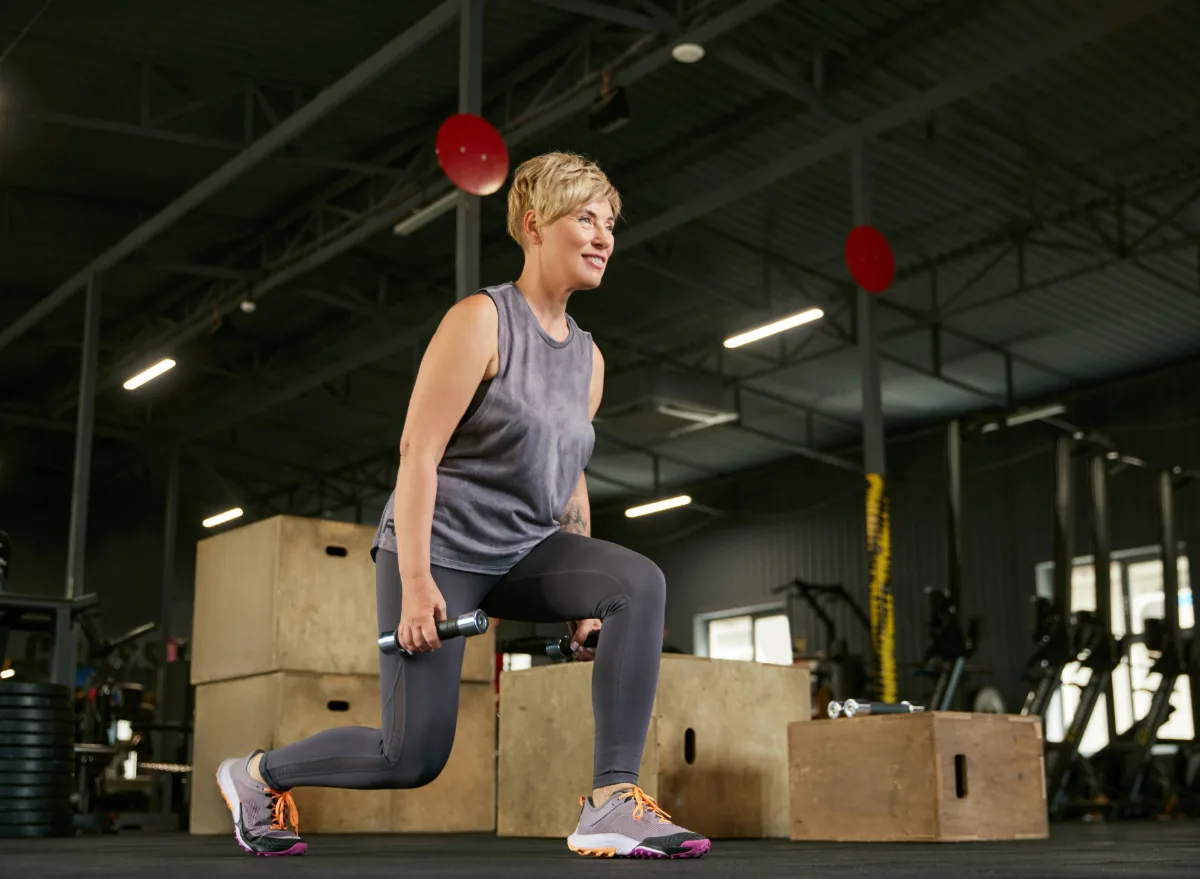
Posterior lunges, or reverse lunges, are a fantastic alternative to forward lunges or squats, particularly for those with knee sensitivities. By stepping backward, the stress on the knee joint is often reduced, while still effectively targeting the glutes, hamstrings, and quadriceps, alongside improving balance and hip mobility.
- Execution: Start in a standing position with feet hip-width apart. Take a controlled step backward with your right foot, planting the ball of your foot on the ground. As you step back, bend both knees, lowering your hips until your front thigh is roughly parallel to the floor and your front knee is directly above your ankle. Your rear knee should hover just above the ground. Ensure your torso remains upright and your core engaged. Push off your back foot to return to the starting position, bringing your right foot forward to meet your left. Alternate legs for each repetition or complete a set on one side before switching.
- Form Cues: Keep your chest lifted and shoulders back. Avoid letting your front knee collapse inward or extend past your toes. The movement should be controlled, not rushed.
- Progression/Regression: For added challenge, hold weights (dumbbells or kettlebells) in each hand. For easier execution, reduce the depth of the lunge or use a wall or chair for light balance support.
- Why it’s effective: The backward motion naturally shifts more emphasis to the glutes and hamstrings, and it is often more comfortable for individuals with anterior knee pain. It significantly challenges and improves unilateral leg strength and balance.
3. Resistance Band Lateral Shuffles (Lateral Band Walks)
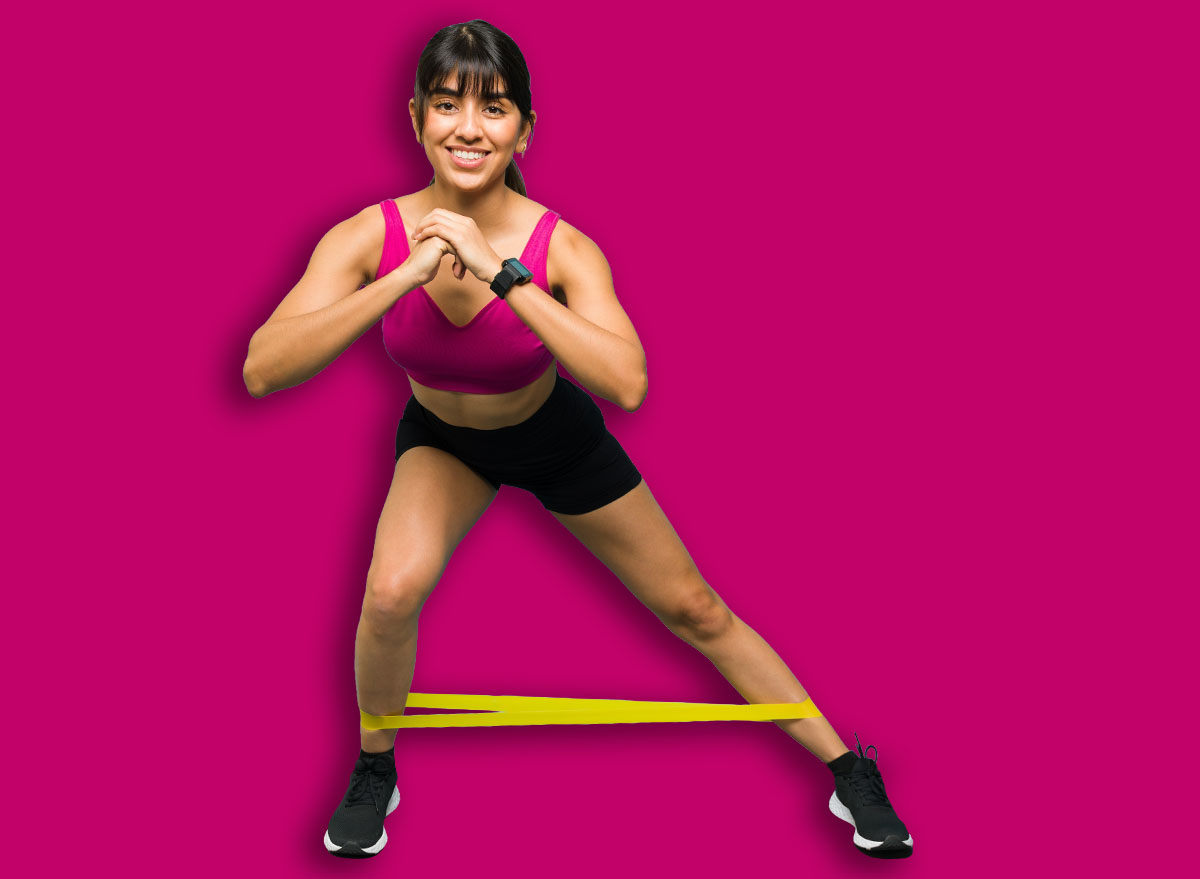
The Resistance Band Lateral Shuffle is a highly effective exercise for strengthening the hip abductors, particularly the gluteus medius, which is crucial for lateral stability, gait, and preventing falls. This exercise addresses a plane of motion often neglected in conventional strength training routines.
- Execution: Place a resistance band around your ankles, just above your knees, or around your feet, depending on the resistance level desired. Begin in a slightly athletic stance, with feet hip-width apart, knees slightly bent, and hips pushed slightly back. Maintain tension in the band by keeping your feet apart. Take a controlled step to the side with your right foot, then follow with your left foot, moving it just enough to maintain tension in the band without allowing your feet to come too close together. Continue shuffling sideways for a set number of steps or distance, then reverse direction.
- Form Cues: Keep your core engaged and maintain the slight squat position throughout the movement. Avoid rocking your torso excessively from side to side. The movement should be driven by the hips and outer thighs, not by swinging the legs.
- Progression/Regression: Use a band with higher resistance for increased challenge. For less intensity, use a lighter band or perform without a band to practice the movement pattern.
- Why it’s effective: This exercise directly targets the muscles responsible for stabilizing the pelvis during walking and standing, making it invaluable for improving balance and reducing the risk of lateral falls. These muscles are often underdeveloped, and their strengthening can significantly enhance overall lower body function.
4. Assisted Unilateral Squats (Supported Split Squats)
The Assisted Unilateral Squat, or supported split squat, provides the benefits of unilateral leg training (each leg working independently) while offering the stability of support, making it ideal for individuals who might find unsupported lunges or squats challenging for balance. This exercise builds significant strength in the quadriceps and glutes of the working leg.
- Execution: Stand tall with your feet hip-width apart, and place one foot forward and the other foot back, as if setting up for a lunge. Position yourself near a sturdy support like a wall, chair back, or railing, which you can lightly hold onto for balance. Your front foot should be flat on the ground, and your back heel lifted. Keeping your torso upright and core engaged, slowly bend both knees, lowering your hips straight down towards the floor. Your front knee should track over your ankle, and your back knee should point towards the ground. Descend as far as comfortable, ensuring your front thigh approaches parallel to the floor. Push through your front heel to return to the starting position. Complete all repetitions on one leg before switching.
- Form Cues: Use the support only as much as needed for balance, not to pull yourself up. Maintain an even distribution of weight through your front foot. Avoid letting your front knee wobble inward or outward.
- Progression/Regression: Gradually reduce your reliance on the support as your strength and balance improve. For increased difficulty, try the exercise without support or hold a light weight in the hand opposite your front leg (to challenge anti-rotation).
- Why it’s effective: This movement allows for a deeper range of motion and greater muscle activation in the working leg compared to a bilateral squat for some individuals, while the support enhances safety and confidence. It directly addresses muscular imbalances between legs and significantly boosts balance and core stability.
A Holistic Approach to Active Aging
Incorporating these standing exercises into a regular fitness regimen can profoundly impact an older adult’s physical capacity and overall well-being. However, optimal results stem from a holistic approach to active aging. Consistency is paramount; regular engagement, even if sessions are shorter, yields greater benefits than sporadic intense workouts. Always prioritize proper form over the number of repetitions or the amount of weight lifted to prevent injuries.
Before embarking on any new exercise program, especially after the age of 60, it is highly advisable to consult with a healthcare professional or a certified fitness trainer. They can provide personalized recommendations based on individual health status, pre-existing conditions, and fitness goals. Furthermore, integrating a comprehensive warm-up to prepare muscles and joints, and a cool-down with gentle stretching to enhance flexibility, will optimize performance and aid recovery.
Beyond specific exercises, a balanced lifestyle encompassing adequate hydration, nutrient-rich nutrition, and sufficient rest plays a crucial role in muscle recovery and growth. Combining strength training with other forms of physical activity, such as cardiovascular exercise and flexibility work, creates a well-rounded fitness strategy that supports sustained independence and vitality throughout later life. By proactively engaging in targeted strength training, older adults can empower themselves to maintain an active, fulfilling, and autonomous existence.
About the Author