
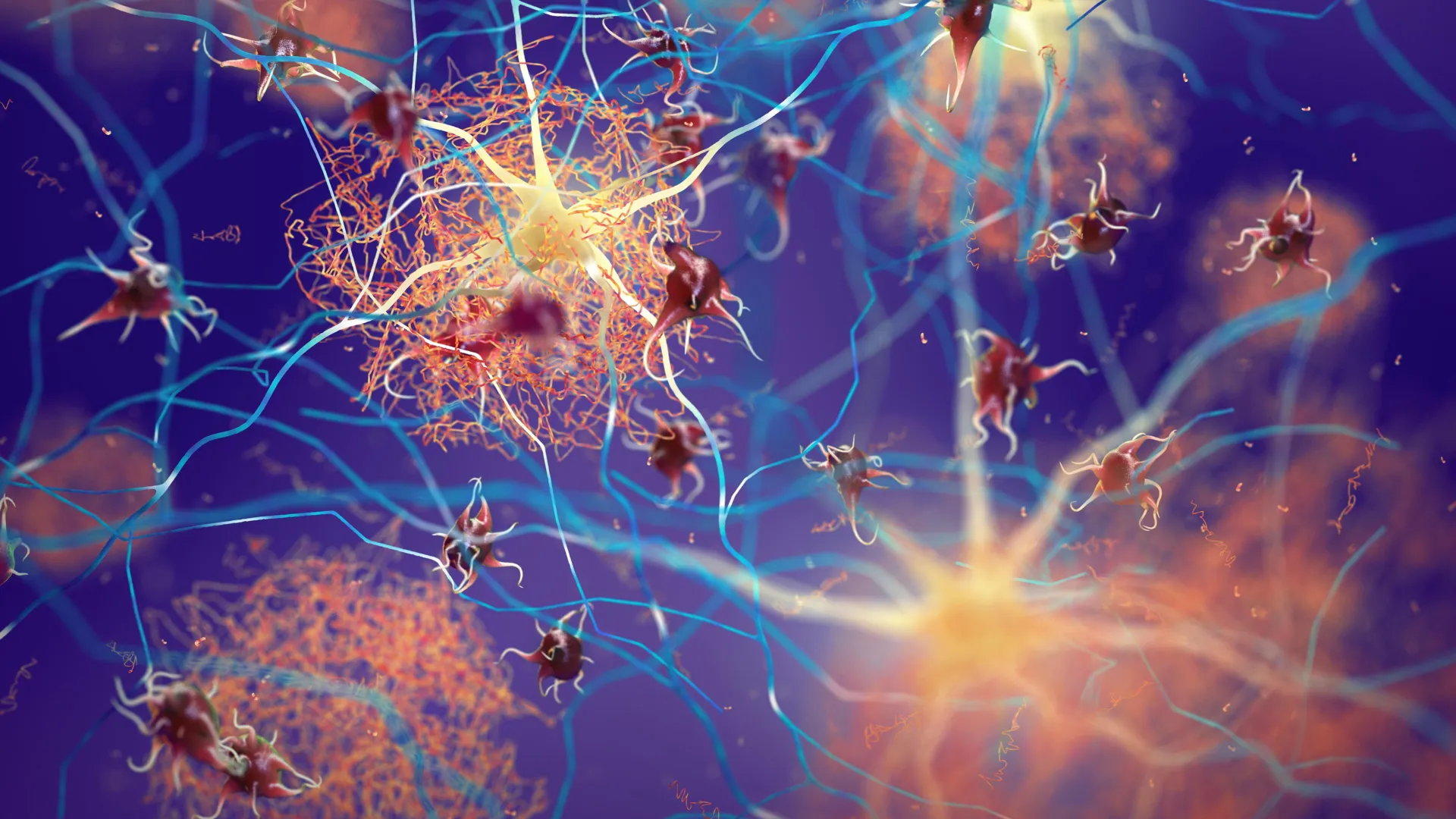
A groundbreaking collaborative effort between scientists at Sweden’s Karolinska Institutet and Japan’s RIKEN Center for Brain Science has illuminated a previously unrecognized pathway within the brain that governs the clearance of amyloid-beta protein, a key pathological hallmark of Alzheimer’s disease. This discovery holds significant promise for the future development of therapeutic interventions, potentially offering treatments that are not only more accessible and cost-effective but also possess a more favorable safety profile compared to current antibody-based strategies.
Alzheimer’s disease, the most prevalent form of dementia, is characterized by the insidious aggregation of amyloid-beta peptides into sticky plaques that disrupt normal neuronal function. In a healthy brain, an enzyme known as neprilysin plays a crucial role in the enzymatic breakdown and removal of these amyloid-beta fragments. However, the efficacy of neprilysin diminishes with advancing age and the progressive nature of the disease, leading to an unchecked accumulation of these harmful protein deposits. The recent research has pinpointed two specific somatostatin receptors, designated SST1 and SST4, which function in concert to modulate the activity and abundance of neprilysin, particularly within the hippocampus, a brain region critically involved in memory formation and retrieval. The comprehensive findings of this study have been formally published in the esteemed Journal of Alzheimer’s Disease, contributing valuable new knowledge to the global scientific community.
The research team meticulously designed and executed a series of experiments utilizing both genetically engineered mouse models and sophisticated in-vitro cell cultures to thoroughly investigate the role of these somatostatin receptors. Their investigations revealed a direct correlation: when the genetic expression of both SST1 and SST4 receptors was experimentally ablated, there was a corresponding precipitous decline in neprilysin levels. This deficit in neprilysin activity subsequently led to a significant buildup of amyloid-beta, and importantly, the mice exhibiting these molecular changes also demonstrated observable deficits in their memory capabilities, underscoring the functional importance of this receptor-neprilysin axis.
Further extending their research, the scientists explored the therapeutic potential of targeting these identified receptors. They synthesized and tested a novel compound specifically designed to activate both SST1 and SST4. In experiments involving mice exhibiting neurological and pathological features akin to human Alzheimer’s disease, the activation of these receptors by the compound resulted in a notable enhancement of neprilysin levels. This boost in enzymatic activity translated into a demonstrable reduction in amyloid-beta plaque accumulation within the brain. Crucially, the behavioral assessments of these treated mice indicated a significant improvement in cognitive functions, suggesting a restoration of memory processes. Moreover, a key aspect of this pre-clinical investigation was the careful monitoring for adverse effects; the treatment employing the SST1 and SST4 activating compound did not elicit any severe or concerning side effects in the animal models.
"Our findings definitively illustrate that the brain’s inherent defense mechanisms against the accumulation of amyloid-beta can be significantly bolstered through the targeted stimulation of these specific receptors," stated Per Nilsson, an associate professor within the Department of Neurobiology, Care Sciences and Society at Karolinska Institutet. This statement highlights the potential for leveraging endogenous biological processes for therapeutic benefit, a principle that often leads to more finely tuned and potentially safer interventions.
The landscape of current Alzheimer’s disease treatments, particularly those aimed at directly addressing amyloid-beta pathology, predominantly relies on sophisticated antibody-based therapies. While these advanced biological agents have demonstrated an ability to target and reduce amyloid plaques, they are often associated with exceptionally high manufacturing and administration costs, rendering them financially prohibitive for a substantial portion of the patient population. Furthermore, a significant concern with these antibody therapies is the potential for a range of serious side effects, which can necessitate careful patient selection and intensive monitoring, thereby adding complexity and cost to their application.
"Our strategic objective is to transition from complex biological agents to the development of small molecule therapeutics," explained Per Nilsson. "These smaller molecules possess the inherent advantage of being able to effectively traverse the blood-brain barrier, a critical hurdle for many neurological treatments. Our fundamental hope is that by developing such orally administrable and easily delivered medications, we can achieve a substantially reduced cost of treatment and simultaneously mitigate the risk of severe adverse events that have been observed with current antibody-based approaches." This vision represents a paradigm shift towards more accessible and patient-friendly therapeutic modalities.
The SST1 and SST4 receptors belong to a vast and evolutionarily conserved superfamily of proteins known as G protein-coupled receptors (GPCRs). This class of receptors is exceptionally well-studied and represents a highly fruitful area for drug discovery and development due to their critical roles in numerous physiological processes and their well-characterized interactions with pharmacological agents. Their prevalence as drug targets stems from the fact that medications designed to modulate GPCR activity can often be manufactured through established and cost-effective chemical synthesis processes, making them amenable to formulation as convenient oral medications, such as pills.
The ambitious research project that yielded these pivotal findings was a testament to international scientific collaboration, bringing together esteemed researchers from Karolinska Institutet in Sweden, the RIKEN Center for Brain Science in Japan, and a consortium of other leading academic institutions worldwide. The significant financial resources required to conduct such comprehensive research were generously provided by a variety of esteemed funding bodies, including the Swedish Research Council, the Hållsten Research Foundation, the Alzheimer’s Foundation, and the privately funded initiative "Innovative ways to fight Alzheimer’s disease — Leif Lundblad Family," alongside substantial support from RIKEN. The participating researchers have formally declared that they have no conflicts of interest that could potentially influence the interpretation or reporting of their findings, ensuring the integrity and impartiality of the published results. The ongoing research in this domain aims to translate these fundamental discoveries into tangible clinical benefits for individuals affected by Alzheimer’s disease.
About the Author












