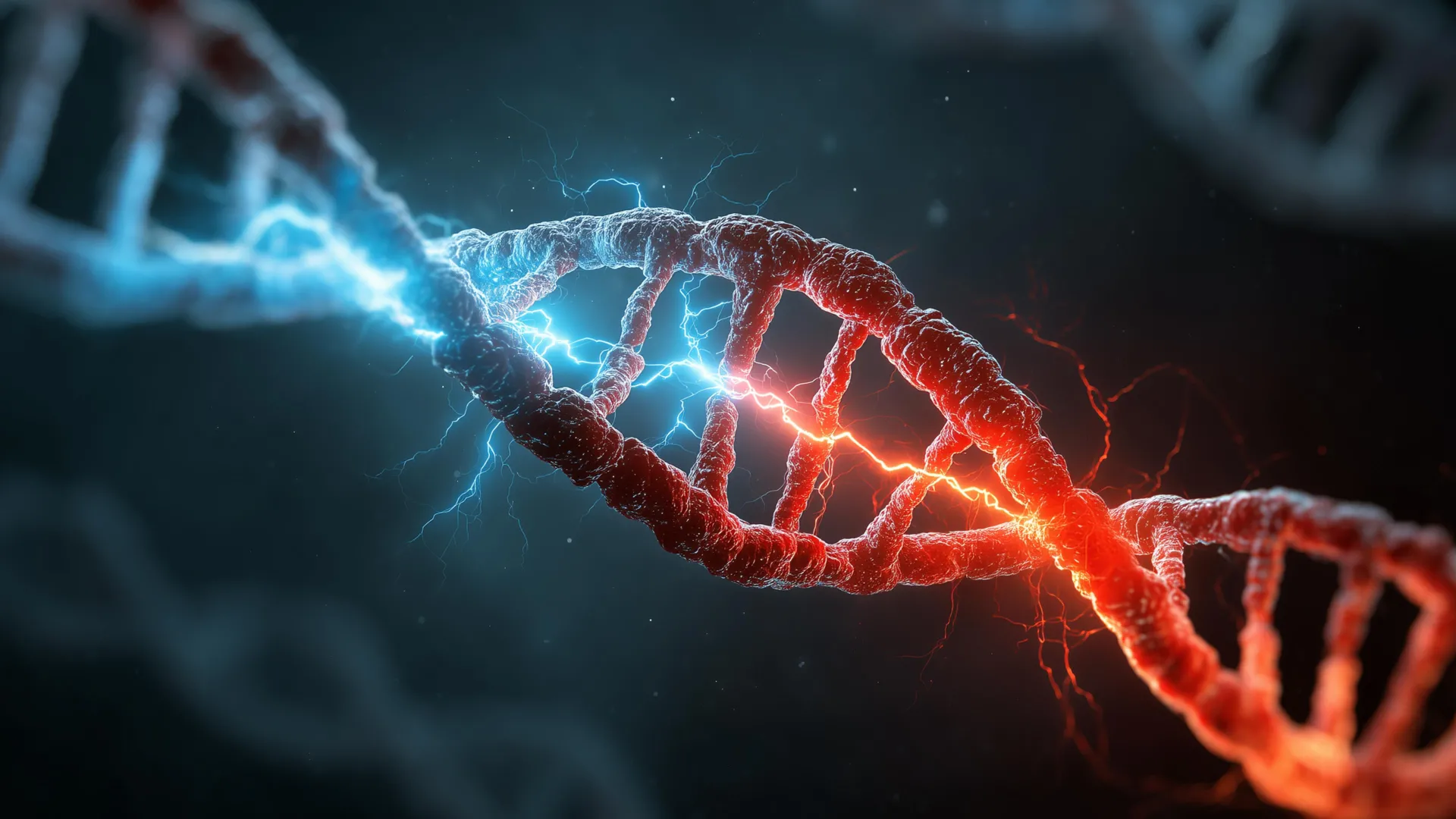
A groundbreaking investigation conducted by researchers at Houston Methodist has illuminated an unexpected functional overlap for a protein previously recognized primarily for its involvement in severe neurological conditions like amyotrophic lateral sclerosis (ALS) and certain forms of dementia. This protein, known as TDP43, has now been identified as a crucial orchestrator within the intricate cellular machinery responsible for maintaining the integrity of our genetic blueprint: the DNA mismatch repair (MMR) system. This discovery significantly broadens the understanding of TDP43’s biological impact, suggesting a profound influence not only on diseases affecting the brain but also on the genesis and progression of various cancers, thereby potentially reshaping prevailing scientific paradigms concerning these formidable health challenges.
The findings, meticulously detailed in the academic journal Nucleic Acids Research, unveil that TDP43 exerts regulatory control over specific genes integral to the proper functioning of the DNA mismatch repair pathway. This pathway is a fundamental guardian of genomic stability, diligently scanning and correcting errors that inevitably arise during the process of DNA replication when cells divide. Such errors, if left unaddressed, can lead to mutations that drive disease. The research revealed a delicate balance: deviations from optimal TDP43 levels, whether an abnormal reduction or an undue elevation, perturb this regulatory equilibrium. When TDP43 is either too scarce or excessively abundant, the genes responsible for DNA repair become hyperactive. Paradoxically, this heightened reparative zeal, rather than safeguarding cellular health, can inflict damage upon neuronal cells and introduce instability into the genome, thereby potentially elevating an individual’s susceptibility to oncological development.
TDP43, or TAR DNA-binding protein 43, has long been a focal point in neuroscientific research due to its pathological aggregation in the brains of patients suffering from ALS and frontotemporal dementia (FTD). In these debilitating conditions, TDP43 misfolds and accumulates in cytoplasmic inclusions, leading to neuronal dysfunction and death. Its established functions include binding to RNA, regulating gene expression, and participating in RNA splicing, transport, and stability. However, the revelation of its direct involvement in DNA mismatch repair unveils an entirely novel dimension to its cellular responsibilities, bridging its known role in RNA processing with the critical realm of DNA maintenance.
Dr. Muralidhar L. Hegde, the lead investigator and a distinguished professor of neurosurgery at the Houston Methodist Research Institute’s Center for Neuroregeneration, underscored the profound significance of this finding. "The mechanisms by which our cells mend their genetic material represent one of the most foundational biological processes," Dr. Hegde stated. "Our team’s discovery indicates that TDP43 is far more than just another RNA-binding protein engaged in splicing; it functions as a pivotal modulator of the mismatch repair machinery itself. This insight carries immense implications for conditions such as ALS and FTD, where this particular protein is known to malfunction." The dysregulation of such a fundamental process by a protein central to neurodegenerative disease presents a compelling new avenue for understanding disease pathogenesis.
The research team further solidified the link between TDP43 and malignant disease through comprehensive analysis of extensive cancer databases. Their investigations demonstrated a clear correlation: elevated concentrations of TDP43 were consistently observed in conjunction with a greater burden of mutations within cancerous tumors. This empirical evidence provides a robust indication that TDP43’s influence extends beyond the confines of neurodegeneration, placing it squarely at the nexus of two of the most pressing and devastating health challenges globally: the progressive deterioration of neurological function and the uncontrolled proliferation of aberrant cells.
"This observation profoundly expands our understanding of this protein’s biological scope beyond its previously recognized associations with ALS or FTD," Dr. Hegde elaborated. "Within cancerous contexts, this protein appears to be overexpressed and linked to an increased mutational load. This unique positioning places TDP43 at a critical juncture, connecting the biological underpinnings of neurodegeneration with those of cancer, thereby opening new avenues for integrated research." The concept of shared molecular pathways in seemingly disparate diseases offers hope for cross-disciplinary insights and potentially, shared therapeutic strategies. Genomic instability, characterized by an increased tendency of the genome to acquire mutations, is a well-established hallmark of cancer. If TDP43 dysregulation leads to genomic instability via compromised MMR, it provides a direct mechanistic link to oncogenesis.
The intricate mechanism through which abnormal TDP43 levels lead to detrimental outcomes is complex. When TDP43’s regulatory control over MMR genes is disrupted, the resulting hyperactive repair processes can exert undue stress on cells. In neurons, which are post-mitotic and have limited capacity for regeneration, this excessive repair activity can be particularly damaging, potentially contributing to the neurotoxicity observed in ALS and FTD. For proliferating cells, the genomic instability induced by faulty MMR can increase the rate of spontaneous mutations, some of which may confer growth advantages, ultimately driving tumor initiation and progression. This dual impact underscores the protein’s critical role in maintaining cellular homeostasis across diverse tissue types.
The implications of these findings extend significantly into the realm of therapeutic innovation. The researchers posited that the elucidation of this novel mechanism could pave the way for entirely new treatment modalities. In carefully controlled laboratory models, interventions aimed at tempering the excessive DNA repair activity instigated by aberrant TDP43 demonstrated promising results, leading to a partial reversal of cellular damage. This suggests that modulating the activity of the DNA mismatch repair pathway, or targeting the specific dysregulation introduced by TDP43, could represent a viable and novel therapeutic strategy for both neurodegenerative conditions and certain cancers. Such an approach would represent a significant departure from current treatment paradigms, which often focus on managing symptoms or targeting protein aggregation in neurodegeneration, or directly attacking cancer cells.
Beyond specific treatments, this research contributes to a broader understanding of disease etiology. It reinforces the growing recognition that fundamental cellular processes, such as DNA repair, are not isolated but are intricately interwoven with a multitude of cellular functions, including RNA metabolism, protein homeostasis, and stress responses. A disruption in one system can cascade, impacting others and contributing to complex, multifactorial diseases. The identification of TDP43 as a key nexus in this intricate web opens up possibilities for developing predictive biomarkers and for personalized medicine approaches that consider an individual’s specific TDP43 status and MMR integrity.
The collaborative spirit driving this significant scientific endeavor involved a consortium of dedicated researchers from various institutions. Key contributors included Vincent Provasek, Suganya Rangaswamy, Manohar Kodavati, Joy Mitra, Vikas Malojirao, Velmarini Vasquez, Gavin Britz, and Sankar Mitra from Houston Methodist. Further expertise was provided by Albino Bacolla and John Tainer from MD Anderson Cancer Center, Issa Yusuf and Zuoshang Xu from the University of Massachusetts, Guo-Min Li from UT Southwestern Medical Center, and Ralph Garruto from Binghamton University. The financial backbone for this extensive research was primarily furnished by generous grants from the National Institute of Neurological Disorders and Stroke (NINDS) and the National Institute on Aging of the National Institutes of Health (NIH). Additional vital support was secured through the Sherman Foundation Parkinson’s Disease Research Challenge Fund and internal funding initiatives from the Houston Methodist Research Institute, underscoring the broad commitment to advancing our understanding of complex diseases. This collaborative, multi-institutional effort highlights the power of interdisciplinary science in unraveling the most challenging biological mysteries.
About the Author