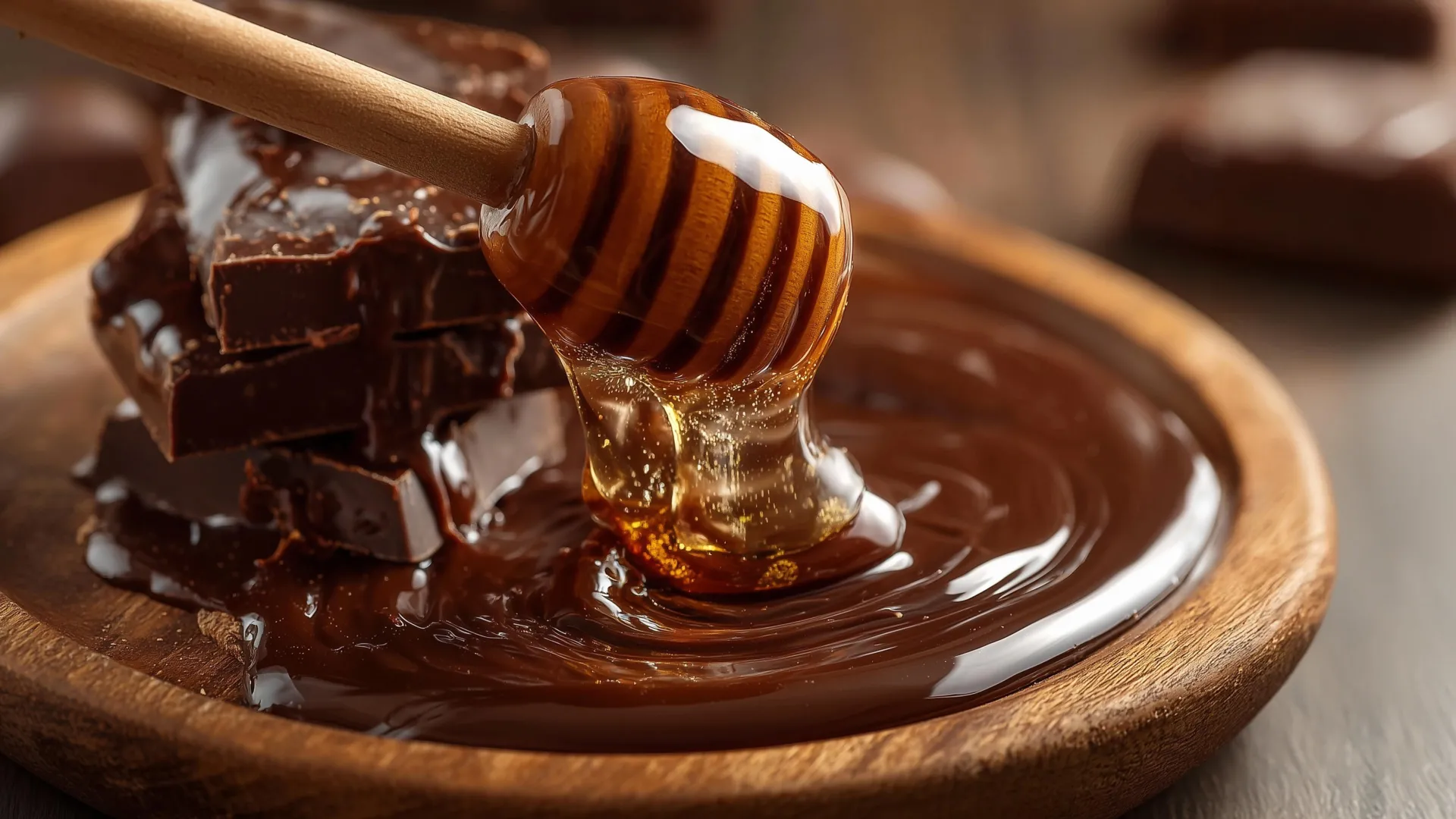
A groundbreaking innovation emerging from the State University of Campinas (UNICAMP) in São Paulo, Brazil, involves the sophisticated integration of native bee honey with the often-overlooked shells of cocoa beans, a byproduct of chocolate manufacturing. This newly developed concoction, lauded in a special cover feature of the journal ACS Sustainable Chemistry & Engineering, offers a versatile product that can be consumed directly, incorporated into culinary creations, or utilized in cosmetic formulations. The research team meticulously employed honey derived from indigenous Brazilian bee species, leveraging its natural properties as a solvent to efficiently extract valuable bioactive compounds from cocoa bean husks.
The scientific endeavor centered on utilizing ultrasound-assisted extraction, a method employing high-frequency sound waves to enhance the dissolution of beneficial substances from the cocoa shells into the honey. This advanced technique not only facilitated the capture of key compounds like theobromine and caffeine, substances recognized for their positive contributions to cardiovascular health, but also significantly amplified the concentration of phenolic compounds within the honey itself. These phenolics are well-documented for their potent antioxidant and anti-inflammatory capabilities, lending the final product a dual benefit for both internal consumption and external application.
Initial sensory evaluations by the research team revealed a distinct and appealing chocolate flavor profile in the infused honey, with the intensity and nuances of this taste varying based on the precise ratio of honey to cocoa shell material. Further rigorous testing is slated to comprehensively assess and refine these gustatory characteristics, alongside other sensory attributes, to optimize consumer appeal. Felipe Sanchez Bragagnolo, the lead author of the study and a postdoctoral researcher at UNICAMP’s Faculty of Applied Sciences (FCA), emphasized the dual appeal of the product. "The public’s primary attraction will undoubtedly be the flavor," Bragagnolo stated, "but our analyses have uncovered a wealth of bioactive compounds that render it exceptionally intriguing from both a nutritional and cosmetic standpoint." His doctoral research, supported by the São Paulo Research Foundation (FAPESP), formed the bedrock of this innovative project.
The innovation is currently being advanced through UNICAMP’s innovation agency, INOVA UNICAMP, with the objective of securing a commercial partner to license the patented extraction methodology and facilitate its introduction to the marketplace. This strategic move underscores the university’s commitment to translating scientific discovery into tangible products that benefit society.
A significant aspect of this research extends beyond the creation of a novel food product; it actively champions the sustainable utilization of local biodiversity and addresses the critical issue of food waste reduction. The deliberate selection of honey from native Brazilian bee species was a strategic decision, rooted in their biological characteristics. These native bees, in contrast to their European counterparts (Apis mellifera), typically produce honey with a higher water content and lower viscosity. This inherent composition makes their honey a more effective and efficient solvent for extracting the desired compounds from the cocoa shells, thereby enhancing the extraction process.
The research team conducted experiments utilizing honey from five distinct Brazilian native bee species: borá (Tetragona clavipes), jataí (Tetragonisca angustula), mandaçaia (Melipona quadrifasciata), mandaguari (Scaptotrigona postica), and moça-branca (Frieseomelitta varia). The cocoa shells utilized in the study were sourced from the Comprehensive Technical Assistance Coordination Office (CATI) of the São Paulo State Department of Agriculture and Supply, located in São José do Rio Preto, further emphasizing the local sourcing and collaborative nature of the project.
The mandaguari honey, exhibiting a balanced water content and viscosity, served as the initial substrate for refining the extraction protocol. Once the process was optimized using this specific honey, the established procedure was subsequently applied to the honey samples from the other native bee species. Bragagnolo highlighted the adaptability of the method, noting that honey’s composition is intrinsically linked to environmental factors such as climate, storage conditions, and ambient temperature. "Consequently," he explained, "the process can be readily adapted to utilize locally available honey, not necessarily restricted to mandaguari honey." This flexibility ensures that the technology can be implemented broadly, integrating seamlessly with regional apicultural practices.
The core of the extraction methodology hinges on the application of ultrasound technology. A specialized probe, resembling a metallic pen, is submerged into a mixture of honey and cocoa shells. The probe emits high-frequency sound waves, which propagate through the mixture, effectively agitating and breaking down the cocoa shell material. This mechanical action liberates the valuable compounds from the plant matrix, allowing them to disperse and dissolve into the honey. The underlying principle involves the formation and subsequent implosion of microscopic cavitation bubbles, which create localized pockets of intense heat and pressure, facilitating the release of the target compounds. From an industrial perspective, ultrasound-assisted extraction is increasingly recognized as a cornerstone of green chemistry, offering a more rapid, energy-efficient, and environmentally benign alternative to many traditional extraction techniques prevalent in the food industry.
The sustainability of this innovative process was rigorously evaluated using Path2Green software, a tool developed by a dedicated team under the supervision of Professor Mauricio Ariel Rostagno of FCA-UNICAMP, who also served as Bragagnolo’s postdoctoral research supervisor and project coordinator. This comprehensive analysis meticulously assessed the process against the twelve guiding principles of green chemistry, examining critical factors such as transportation, post-treatment requirements, purification steps, and the ultimate application of the final product. The use of a readily available, edible, and directly usable solvent—native bee honey—emerged as a significant advantage in this sustainability assessment. The process achieved a positive score of +0.118 on a scale ranging from -1 to +1, signifying its strong alignment with sustainable chemical practices. Professor Rostagno envisions broad applicability for this technology, suggesting, "We believe that with equipment like this, within a cooperative or a small enterprise already involved with both cocoa and native bee honey, it would be feasible to expand their product offerings with a value-added item, suitable even for the realm of haute cuisine."
Looking beyond the immediate application, the research team is embarking on further investigations into the impact of ultrasound on the microbiological profile of the honey. Just as ultrasound effectively disrupts plant cell structures, it possesses the capacity to compromise the cell walls of microorganisms, including bacteria that could potentially lead to product spoilage. "Honey from native bees often requires specific handling such as refrigeration, maturation, dehumidification, or pasteurization, unlike honey from European bees, which can typically be stored at room temperature," Bragagnolo elaborated. "We hypothesize that the mere exposure to ultrasound might effectively eliminate contaminating microorganisms present in the honey, thereby significantly enhancing the product’s stability and extending its shelf life." This potential for natural preservation could revolutionize the storage and distribution of native bee honey products.
In their future endeavors, the researchers plan to explore the broader utility of native bee honey as a versatile solvent for ultrasound-assisted extraction, aiming to process a wider array of plant-based residues. This forward-looking research trajectory positions native bee honey not merely as a foodstuff but as a sustainable platform for valorizing agricultural byproducts and developing novel, health-conscious products. The comprehensive research project received substantial financial backing through various scholarships and grants from FAPESP, including grants numbered 23/02064-8, 23/16744-0, 21/12264-9, 20/08421-9, 19/13496-0, and 18/14582-5, underscoring the significant investment in this pioneering work.
About the Author