
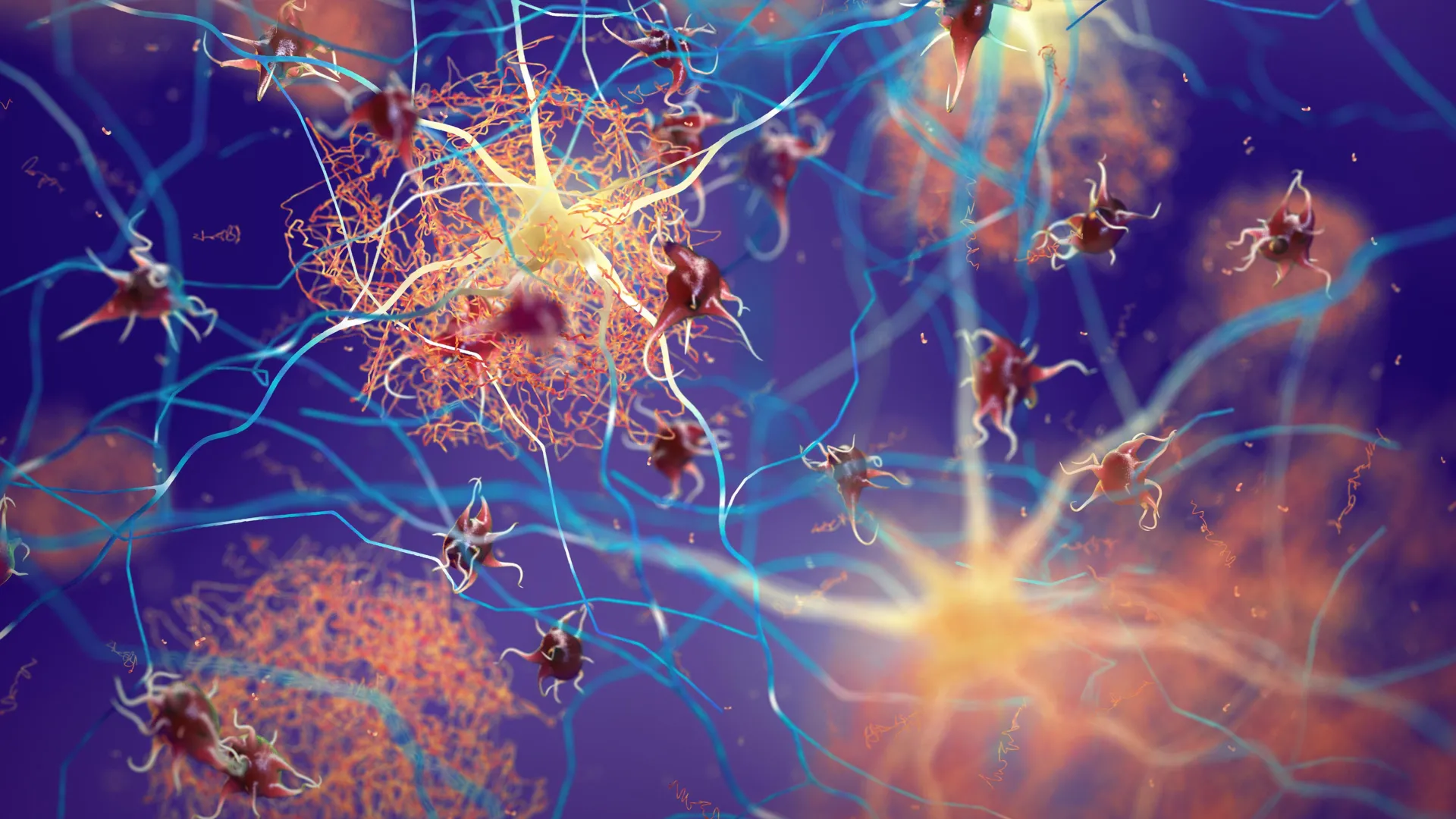
A groundbreaking scientific revelation from a collaborative effort involving researchers at Sweden’s Karolinska Institutet and Japan’s RIKEN Center for Brain Science has pinpointed two critical receptors within the brain that play a pivotal role in orchestrating the clearance of amyloid-beta, the aberrant protein accumulation fundamentally linked to the pathogenesis of Alzheimer’s disease. This discovery heralds a promising paradigm shift, suggesting the potential for the development of future therapeutic interventions that could offer enhanced safety profiles and greater economic accessibility compared to the current generation of antibody-centric treatments.
Alzheimer’s disease, a leading contributor to the global burden of dementia, is characterized by the insidious formation of sticky aggregates of amyloid-beta peptides, which coalesce into disruptive plaques within neural tissues. Under typical physiological conditions, a crucial enzyme known as neprilysin is responsible for the enzymatic degradation and subsequent removal of these amyloid-beta fragments. However, with the natural processes of aging and the inexorable progression of the disease itself, the efficacy and activity of neprilysin are observed to diminish significantly. The research team, through meticulous investigation, has elucidated the intricate interplay between two specific somatostatin receptors, designated SST1 and SST4, and their collective function in regulating the operational levels of neprilysin, particularly within the hippocampus—a brain region indispensable for the formation and retrieval of memories. The seminal findings stemming from this comprehensive study have been formally published in the esteemed Journal of Alzheimer’s Disease.
The investigation delved into the functional mechanisms of these receptors by employing a dual approach, utilizing both genetically engineered mouse models exhibiting Alzheimer’s-like neuropathology and meticulously cultivated cell cultures in laboratory settings. A key observation emerged from experiments where the genetic deletion of both SST1 and SST4 receptors resulted in a marked decline in endogenous neprilysin activity. This consequential reduction in neprilysin directly correlated with an observable escalation in amyloid-beta deposition within the brain. Furthermore, the mice subjected to this dual receptor deficiency demonstrated discernible deficits in their cognitive performance, specifically in tasks assessing memory function.
Further extending their research, the scientists explored the therapeutic potential of activating these identified receptors. They synthesized and tested a specific compound meticulously designed to engage and stimulate both SST1 and SST4. When administered to mice displaying established Alzheimer’s-related brain changes, the activation of these receptors led to a significant augmentation of neprilysin levels. This biochemical enhancement, in turn, facilitated a notable reduction in the burden of amyloid-beta accumulation and, crucially, translated into observable improvements in the mice’s behavioral responses, suggesting a restoration of cognitive function. A particularly encouraging aspect of this experimental treatment was its apparent lack of severe adverse effects, a critical consideration for any potential human therapeutic.
"Our findings compellingly illustrate that the brain possesses its own inherent defense mechanisms against the detrimental accumulation of amyloid-beta, and these natural defenses can be significantly bolstered through the targeted stimulation of these specific receptors," explained Per Nilsson, a docent at the Department of Neurobiology, Care Sciences and Society at Karolinska Institutet, who was a principal investigator in the study. This assertion underscores a fundamental shift in therapeutic strategy, moving from direct intervention against amyloid-beta to enhancing the brain’s intrinsic capacity for self-regulation and clearance.
The landscape of contemporary Alzheimer’s disease treatments is largely dominated by therapies that employ monoclonal antibodies. While these advanced treatments have demonstrated the capacity to target and reduce amyloid plaque burden, they are often associated with prohibitive costs and can elicit significant, sometimes debilitating, side effects in a subset of patients. The financial strain and potential for adverse reactions associated with antibody-based therapies present substantial barriers to widespread accessibility and long-term patient adherence.
"Our aspirational goal is to engineer the development of therapeutic agents that are small molecules, capable of effectively traversing the blood-brain barrier, thereby enabling us to address the disease with considerably reduced treatment costs and, critically, without the spectrum of serious side effects often encountered with existing treatments," stated Per Nilsson, articulating the profound implications of their discovery for future drug development. The ability of small molecules to penetrate the central nervous system is a significant advantage, potentially allowing for more systemic and less invasive administration routes.
SST1 and SST4 are members of a vast and evolutionarily conserved family of proteins known as G protein-coupled receptors (GPCRs). This class of receptors holds immense significance in pharmacology, serving as well-established and highly successful targets for a multitude of drug interventions. Their prominence stems from a deep understanding of their structural biology and signaling pathways, coupled with the fact that many GPCRs are responsive to orally administered medications that can be manufactured at considerably lower production costs, making them inherently more affordable and convenient for patient use. The development of small molecule drugs targeting GPCRs also often simplifies manufacturing processes, further contributing to cost-effectiveness.
The collaborative research endeavor that culminated in this pivotal discovery was a testament to international scientific cooperation, bringing together leading minds from Karolinska Institutet in Sweden, the RIKEN Center for Brain Science in Japan, and a consortium of other esteemed academic institutions worldwide. The ambitious scope of this project was made possible through the generous financial support provided by a variety of influential funding bodies, including the Swedish Research Council, the Hållsten Research Foundation, the Alzheimer’s Foundation, and the private philanthropic initiative "Innovative ways to fight Alzheimer’s disease — Leif Lundblad Family," alongside substantial contributions from RIKEN itself. The researchers involved have formally declared no conflicts of interest, ensuring the objectivity and integrity of their published work. This multifaceted support underscores the global commitment to unraveling the complexities of Alzheimer’s disease and forging new pathways toward effective treatments.
About the Author












