Maintaining robust physical capacity, particularly upper body strength, becomes increasingly vital as individuals advance through their fifth decade and beyond. Far from merely a cosmetic pursuit, functional strength directly correlates with quality of life, independence, and the ability to perform everyday activities with ease and safety. While gym equipment offers numerous avenues for strength development, the humble pushup stands as a timeless, accessible, and profoundly effective barometer of upper body power, endurance, and stability. However, viewing the pushup as a singular exercise overlooks its true potential; various modifications meticulously target distinct muscle groups and challenge different facets of physical control. For adults over fifty, mastering a diverse repertoire of pushup variations, as championed by experts like CSCS coach Jarrod Nobbe, serves as a comprehensive assessment of well-rounded upper body fitness, signifying a level of strength that is not just adequate, but genuinely exceptional.
The physiological changes associated with aging, notably sarcopenia—the gradual loss of muscle mass and strength—underscore the importance of consistent strength training. After the age of 30, individuals can experience a muscle mass decline of 3-8% per decade, a rate that accelerates after 60. This reduction impacts not only raw power but also metabolic rate, bone density, and balance. Engaging in bodyweight exercises like pushups offers a potent countermeasure, helping to preserve muscle tissue, enhance joint health, and improve overall functional mobility without the need for specialized equipment or gym memberships. The simplicity of the pushup belies its multifaceted benefits, recruiting major muscle groups in the chest, shoulders, and arms, while simultaneously engaging the core for spinal stabilization. Its utility extends beyond pure strength, offering a practical measure of how effectively an individual can move and control their own body weight—a critical skill for navigating daily life.
What often goes unappreciated is the significant biomechanical difference introduced by subtle changes in hand placement or body position during a pushup. Each variation imposes unique demands on the musculature and nervous system, effectively spotlighting different aspects of physical prowess. For instance, while a standard pushup provides a foundational test of general pressing strength, a close-grip execution heavily emphasizes triceps activation, and a single-leg variation introduces a profound challenge to core stability and unilateral strength. The capacity to execute these diverse forms with proper technique speaks volumes about an individual’s comprehensive upper body conditioning, signaling not just raw power, but also resilience, coordination, and proprioceptive control—qualities that become increasingly valuable with age.
Let us delve into four specific pushup configurations that collectively serve as a robust indicator of superior upper body strength and control for individuals navigating their post-fifty years:
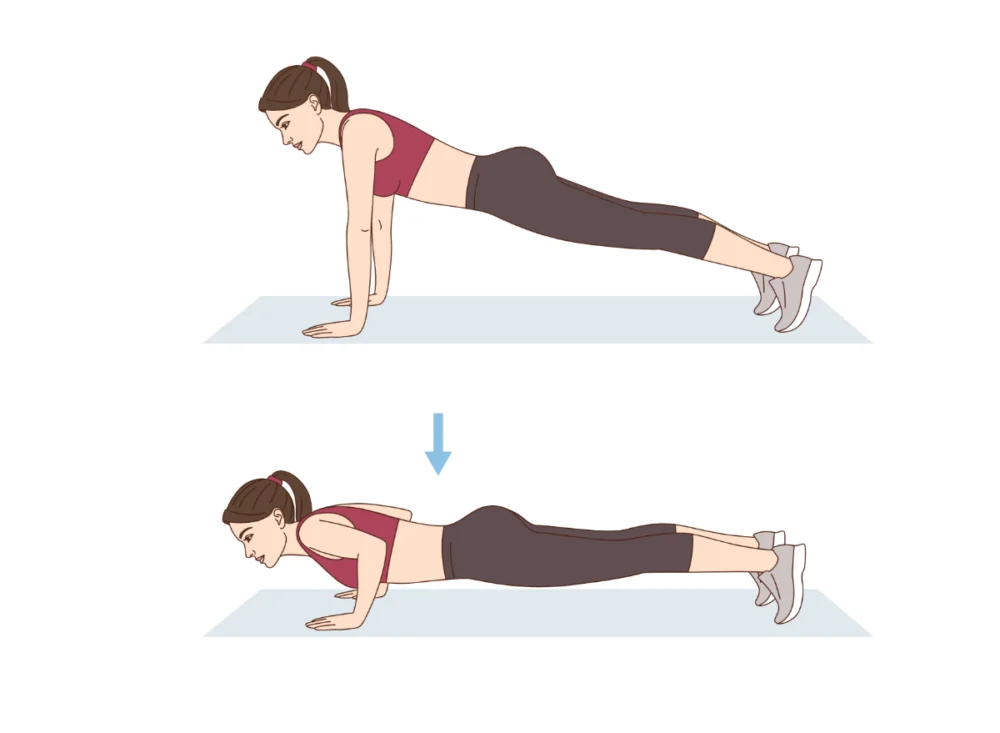
1. The Foundational Pushup (Traditional Stance)
The traditional pushup is the bedrock upon which all other variations are built. It serves as a fundamental assessment of balanced strength across the pectoral muscles, anterior deltoids, and triceps, all while requiring significant core engagement to maintain a rigid, plank-like body position. For older adults, proficiency in this exercise demonstrates not only pressing strength but also joint stability in the shoulders and elbows, crucial for preventing injury and supporting everyday movements like pushing open heavy doors or getting up from the floor. Its execution demands a fluid, controlled motion, emphasizing the importance of a neutral spine and proper scapular rhythm. Mastery of this foundational movement ensures that the underlying strength and movement patterns are solid before progressing to more complex challenges.
- Primary Muscle Groups Activated: Pectoralis major, triceps brachii, anterior deltoids, and the entire core musculature (rectus abdominis, obliques, transverse abdominis).
- Significance for Mature Adults: Reinforces fundamental pressing mechanics, promotes shoulder and elbow joint integrity, and builds a stable base for functional movements.
- Recommended Training Protocol: Aim for 3 sets of 8 to 12 repetitions, allowing 60 seconds of recovery between sets. This rep range targets a blend of strength and muscular endurance.
- Technique Focus: Maintain a straight line from head to heels throughout the movement. Gaze slightly forward of the hands to keep the neck neutral. Ensure the chest descends close to the floor, and the elbows track at approximately a 45-degree angle to the body.
- Progression/Regression Insights: For easier execution, perform incline pushups against a stable elevated surface. To increase difficulty, introduce tempo variations (slowing down the eccentric or concentric phase) or pause pushups at the bottom.
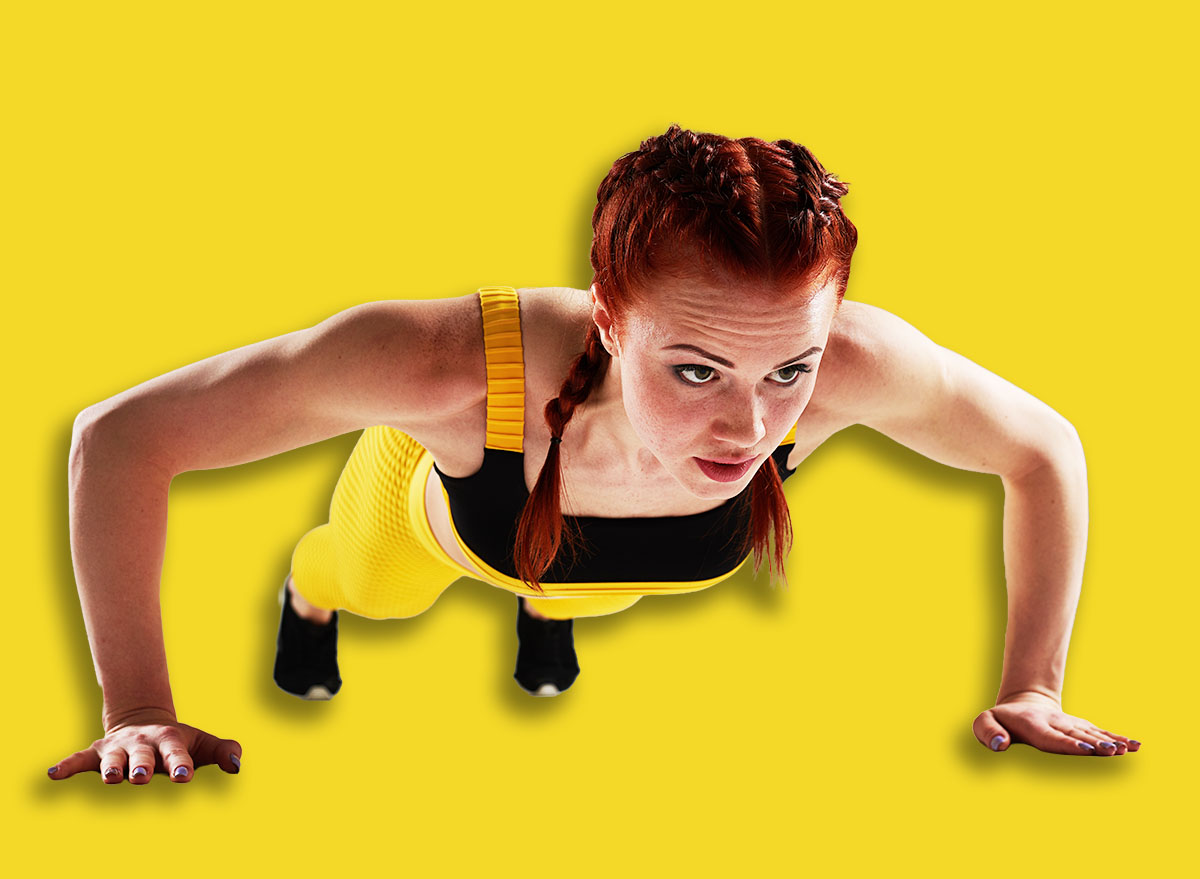
2. The Triceps-Focused Press (Close-Grip Pushup)
Shifting the hands closer together fundamentally alters the leverage and muscle activation patterns, placing a significantly greater emphasis on the triceps brachii. This variation serves as an uncompromising test of arm strength and elbow stability, often revealing limitations that a standard pushup might mask. As training volume or consistency may fluctuate with age, the close-grip pushup effectively highlights the resilience of the posterior arm muscles, which are critical for extension movements and maintaining arm integrity. Its successful execution demands meticulous control, where each repetition is performed with deliberate intent rather than momentum, showcasing true muscular command.
- Primary Muscle Groups Activated: Triceps brachii (heavily), pectoralis major (sternal head), anterior deltoids, and core stabilizers.
- Significance for Mature Adults: Directly targets the triceps, crucial for pushing strength and elbow joint stability. Helps counteract age-related weakness in arm extension movements.
- Recommended Training Protocol: Target 3 sets of 6 to 10 repetitions, with 60 to 75 seconds of rest between sets. The slightly lower rep range reflects the increased intensity.
- Technique Focus: Keep the elbows tucked close to the body, almost brushing the sides of the torso during descent and ascent. Actively press the palms into the floor, imagining driving the ground away and slightly backward.
- Progression/Regression Insights: Start with knee-supported close-grip pushups or incline close-grip variations if full bodyweight is too challenging. Integrate tempo training to enhance time under tension and control.
3. The Unilateral Stability Challenge (Three-Point Pushup / Single-Leg)
Elevating the challenge, the three-point pushup, specifically the single-leg variant, introduces a significant element of unilateral instability. By removing one point of contact with the floor, this exercise forces the remaining three points—the two hands and one foot—to manage an increased proportion of body weight. Simultaneously, the core musculature must work overtime to resist rotational forces and maintain a perfectly square hip position. This variation is a powerful diagnostic tool, quickly exposing asymmetries or deficiencies in triceps strength, shoulder girdle stability, and anti-rotational core power. Furthermore, it significantly enhances inter-limb coordination, a vital component of balance and fall prevention in older adults. Achieving controlled repetitions here indicates not just strength, but an impressive degree of integrated stability.
- Primary Muscle Groups Activated: Triceps, shoulders (especially stabilizers), pectorals, and an intense engagement of the entire core, particularly the obliques and quadratus lumborum, to resist rotation.
- Significance for Mature Adults: Develops unilateral strength and stability, crucial for gait, balance, and resisting falls. Enhances core integration and coordination, essential for dynamic functional movements.
- Recommended Training Protocol: Perform 2 to 3 sets of 6 to 8 repetitions per side, resting for approximately 60 seconds between sets. Focus on quality over quantity for this advanced movement.
- Technique Focus: As one leg lifts, actively engage the glute of the lifted leg to maintain a level pelvis. Ensure the hips remain parallel to the floor, avoiding any twisting or tilting. The pushup itself should be as controlled as the traditional version.
- Progression/Regression Insights: Begin with an elevated single-leg pushup or focus on the static hold in a three-point plank before adding the pushup movement. Alternating leg lifts between reps can also be a progressive step.
4. The Dynamic Stability and Coordination Test (Pushup + Shoulder Taps)
This compound exercise cleverly merges a traditional pushup with a dynamic single-arm support challenge. After completing a pushup, one hand lifts to tap the opposite shoulder, requiring the supporting arm and the entire core to stabilize the body against a significant shift in balance. This movement pattern mirrors real-world demands, where stability and strength must work in concert, such as when carrying an object with one hand or reaching while maintaining balance. The ability to execute smooth, controlled shoulder taps without excessive hip movement is a hallmark of elite arm control, demonstrating exceptional core engagement and robust shoulder girdle stability. It highlights the body’s capacity to maintain integrity under dynamic, asymmetric loads.
- Primary Muscle Groups Activated: Triceps, shoulders (especially rotator cuff and scapular stabilizers), pectorals, and an intense recruitment of the core musculature to prevent lateral hip sway and rotation.
- Significance for Mature Adults: Develops dynamic stability, inter-limb coordination, and anti-lateral flexion strength, all crucial for complex daily tasks and injury prevention.
- Recommended Training Protocol: Execute 2 to 3 sets of 6 to 10 total repetitions (one pushup followed by a tap on each side equals two reps), with 60 to 75 seconds of recovery between sets.
- Technique Focus: The primary goal during the shoulder tap is to minimize hip movement. Imagine a glass of water on your lower back that you don’t want to spill. Brace the core tightly and keep the supporting arm locked.
- Progression/Regression Insights: For a less demanding version, perform shoulder taps from a plank position without the pushup. Increase difficulty by widening the stance slightly for the pushup, or slowing down the tempo of the taps.
Cultivating Lasting Upper Body Strength: Beyond the Exercises
Achieving proficiency in these advanced pushup variations requires more than just brute force; it demands a strategic approach to training that prioritizes intention, consistency, and intelligent progression, especially for adults over fifty. The emphasis should always be on the quality of movement over the sheer quantity of repetitions. Perfecting form not only maximizes muscle activation but also safeguards joints, which become more vulnerable with age. Incorporating proper warm-up routines that mobilize the shoulders, wrists, and spine, followed by cool-downs that include gentle stretching, is essential for maintaining joint health and flexibility.
Progressive overload, a fundamental principle of strength training, can be applied to bodyweight exercises by gradually increasing repetitions, sets, decreasing rest times, or advancing to more challenging variations. Listening to one’s body and allowing for adequate recovery—including sufficient sleep and nutrient-rich diet—is paramount for muscle repair and growth. Consulting with a qualified fitness professional, such as a CSCS coach, can provide personalized guidance, ensure correct technique, and adapt training protocols to individual needs and physical limitations.
In conclusion, for individuals over fifty, the ability to confidently execute these four distinct pushup variations—the traditional, close-grip, three-point, and pushup with shoulder taps—serves as a compelling testament to superior upper body strength, stability, and functional control. It signifies a holistic level of physical conditioning that extends far beyond basic fitness, reflecting a commitment to maintaining vitality, independence, and an exceptional quality of life as the years progress. This diverse repertoire not only challenges the body but also empowers the individual, proving that robust strength and physical resilience are indeed attainable and sustainable well into maturity.
About the Author