Maintaining robust lower body strength is a cornerstone of healthy aging, directly influencing an individual’s autonomy and quality of life as they advance beyond the age of 55. As people age, a physiological process known as sarcopenia, characterized by the progressive and generalized loss of skeletal muscle mass and strength, naturally accelerates. This decline is not merely cosmetic; it profoundly impacts daily living, manifesting as reduced mobility, diminished balance, increased risk of falls, and greater difficulty performing fundamental activities such as standing from a chair, navigating stairs, or carrying groceries. Recognizing the critical importance of mitigating sarcopenia, experts advocate for consistent resistance training as a potent intervention to preserve muscle mass, enhance functional capacity, and sustain independence throughout later life. However, traditional gym environments or demanding workout regimens can present significant barriers, including concerns about joint stress, balance, coordination, or simply the time commitment required.
In response to these challenges, innovative and accessible exercise strategies are gaining prominence, particularly those that integrate support and simplicity without compromising efficacy. A chair-based training protocol, specifically designed for efficiency and safety, emerges as an ideal solution for individuals over 55 seeking to fortify their leg muscles. This approach leverages the inherent stability of a chair to facilitate controlled movements, allowing exercisers to concentrate on muscular engagement rather than complex coordination or balance. The provision of external support helps to define a clear range of motion, enabling a more intentional loading of the leg muscles while simultaneously minimizing the potential for strain on joints. This synergy creates a powerful stimulus for muscle development within a remarkably concise timeframe, fostering consistency—a paramount factor for achieving sustainable physiological adaptations.
The scientific rationale underpinning resistance training for older adults is well-established. Even in advanced years, muscle tissue retains its capacity for hypertrophy, or growth, in response to appropriate mechanical stress. When muscles are challenged, microscopic damage occurs, prompting the body to repair and rebuild them stronger and larger. This process, known as muscle protein synthesis, is crucial for counteracting age-related atrophy. Furthermore, strengthening the musculature surrounding major joints, such as the knees and hips, contributes to enhanced joint stability and can alleviate discomfort associated with conditions like osteoarthritis. By engaging specific muscle groups—quadriceps, glutes, and hip abductors—this targeted chair-based routine addresses key areas essential for lower body power, balance, and overall gait efficiency. The structured, repetitive nature of the exercises, performed with deliberate control, ensures that the muscles are effectively recruited and stimulated for growth.
This particular six-minute regimen, endorsed by certified fitness professionals, stands out for its straightforward yet highly effective design. It focuses on two fundamental movements, executed with precision and a steady rhythm, aiming to challenge the lower body without inducing excessive fatigue or joint discomfort. The compact duration and minimal equipment requirements—simply a sturdy, non-sliding chair and a flat surface—make it exceptionally convenient, removing common excuses for neglecting physical activity. The routine is crafted to awaken and strengthen the primary muscle groups of the thighs, buttocks, and hips, directly translating to improved functional capabilities in everyday life.
The Foundational Six-Minute Chair-Supported Lower Body Workout
Before commencing any new exercise program, particularly for individuals over 55, it is prudent to consult with a healthcare provider to ensure suitability. Once cleared, this routine can be seamlessly integrated into a daily schedule.
Essential Equipment:
A single, stable chair that does not slide on the floor is the primary requirement. Ensure the chair is robust enough to support your body weight during movements. No additional weights are necessary initially, though light dumbbells or resistance bands can be incorporated progressively as strength improves and movements become proficient. The training area should be clear of obstructions, allowing for unhindered movement.
Execution Protocol:
The workout involves alternating between the two exercises with minimal rest periods. The emphasis should be on smooth, controlled repetitions, maintaining deliberate tension throughout each movement phase. The goal is to feel the muscles working, not to rush through the reps.
Exercise 1: Chair Squats (Sit-to-Stands)
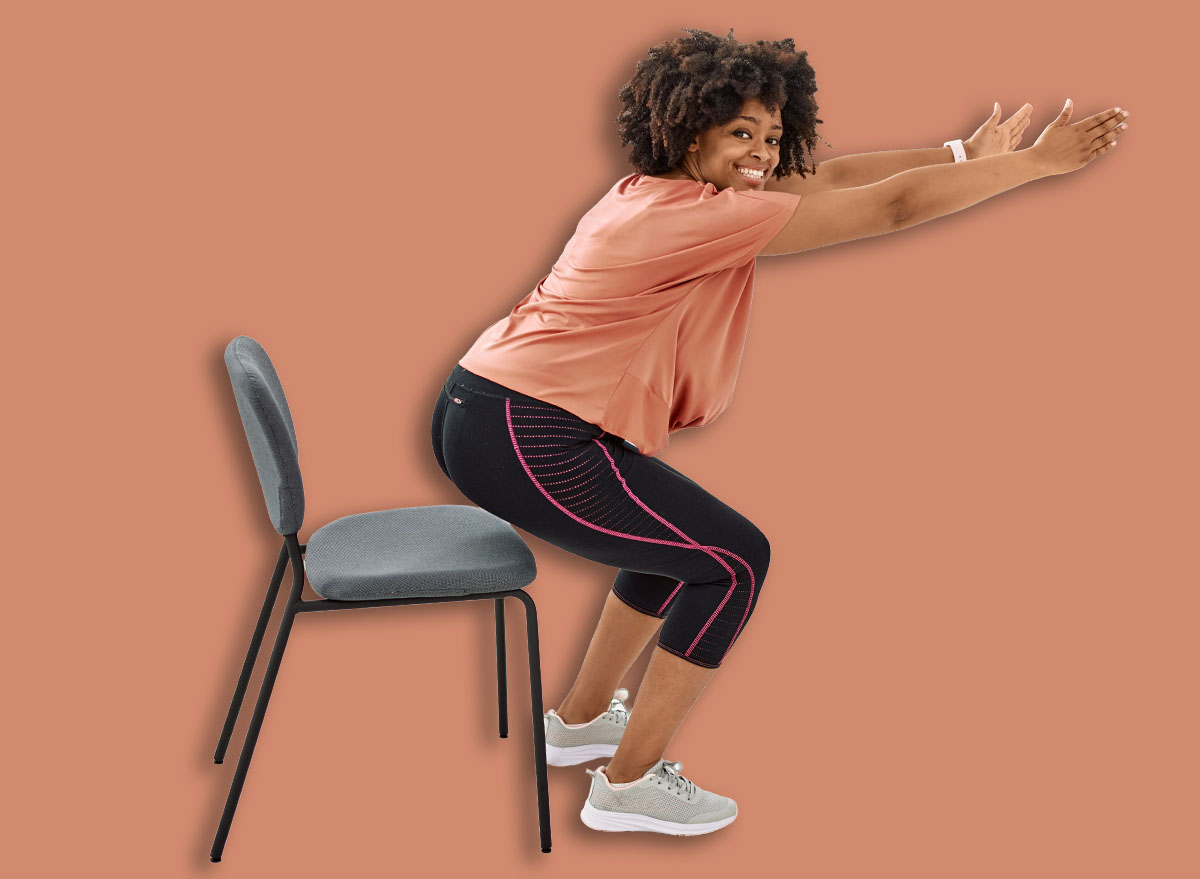
Chair squats, also frequently referred to as sit-to-stands, are a highly functional exercise that closely mimics the fundamental movement of rising from a seated position, a pervasive activity in daily life. This exercise is exceptional for loading the quadriceps (front of the thighs) and gluteal muscles (buttocks) through a controlled range of motion. The presence of the chair serves as an invaluable depth target, promoting consistent form and ensuring that each repetition achieves an appropriate level of challenge without risking overextension or undue stress on the knee joints. Driving upward from the seated position directly challenges the explosive power and sustained strength of the leg muscles, cultivating functional capacity that directly supports independent standing, walking, and climbing stairs.
Instructional Guide:
- Starting Position: Position yourself directly in front of a sturdy chair, standing with your feet approximately shoulder-width apart. Your toes should be pointing slightly outward, and your weight evenly distributed across both feet. Ensure the chair is stable and will not move.
- Descent Phase: Initiate the movement by slowly bending at your knees and hips, as if you are preparing to sit down. Maintain a straight back and engage your core muscles throughout the descent. Allow your hips to move backward as your knees track in line with your toes. Control the movement until your buttocks lightly touch the chair’s seat. Do not fully relax or collapse into the chair.
- Ascent Phase: Immediately, or after a brief pause for stability, press firmly through your heels and the balls of your feet to drive yourself back up to the standing position. Focus on engaging your glutes and quadriceps to power the upward movement. Extend your hips fully at the top, but avoid hyperextending your knees.
- Repetition and Control: Execute 10 to 15 repetitions with a deliberate, consistent tempo. Aim for a controlled descent and a powerful, yet smooth, ascent.
Progression and Variation:
To increase the challenge, consider reducing the reliance on the chair for support during the ascent, or holding a light dumbbell against your chest. Alternatively, slow down the eccentric (lowering) phase to three or four seconds to enhance time under tension.
Exercise 2: Seated Leg Abductions
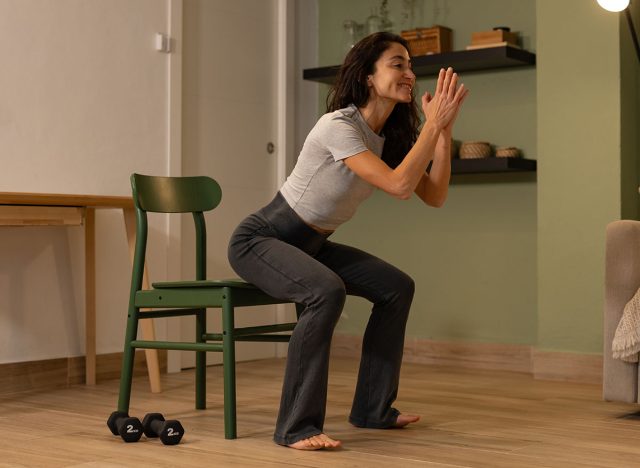
Seated leg abductions specifically target and strengthen the muscles on the outer aspect of the hips and glutes, primarily the gluteus medius and gluteus minimus. These muscles are crucial for maintaining pelvic stability, ensuring proper knee alignment during movement, and significantly contributing to overall balance, especially during walking and standing tasks. By performing this exercise in a seated position, the need for complex balance and coordination is minimized, allowing for greater isolation and focused activation of the hip abductor muscles. This targeted approach makes it easier to establish a strong mind-muscle connection, maximizing muscle tension and control without the extraneous challenge of maintaining an upright posture. Strengthening these muscles can markedly improve gait mechanics and reduce the risk of lateral instability, which is a common contributor to falls.
Instructional Guide:
- Starting Position: Sit upright on the edge of a sturdy chair, ensuring your back is straight and your core is gently engaged. Your feet should be flat on the floor, hip-width apart, with your knees bent at approximately a 90-degree angle. Place your hands on your lap or lightly on the sides of the chair for stability.
- Abduction Phase: Keeping your torso stable and your spine neutral, slowly move one leg outward to the side, away from your midline. Focus on using your outer hip and glute muscles to initiate and control this movement. The range of motion will depend on your individual flexibility and strength, but aim to move the leg as far as comfortably possible without tilting your torso or shifting your weight excessively.
- Return Phase: With controlled precision, slowly bring the leg back to the starting position, resisting the urge to let it snap back. Maintain tension in the hip abductor muscles throughout the return.
- Repetition and Alternation: Perform 10 to 15 repetitions on one leg before switching to the other leg. Alternatively, you can alternate legs with each repetition, ensuring consistent muscle activation.
Progression and Variation:
For an increased challenge, place a resistance band around your thighs, just above the knees, before performing the abductions. The band will provide continuous resistance throughout the movement. Alternatively, incorporate a brief hold at the peak of the abduction to intensify muscle engagement.
Optimizing Leg Strength Development Post-55: Advanced Strategies
To maximize the benefits of any leg training regimen after the age of 55, integrating several key principles into your fitness routine is paramount. Leg training is most effective when it complements and enhances your lifestyle, rather than creating an additional burden. The cumulative effect of small, consistent sessions often yields superior results compared to sporadic, lengthy workouts.
- Prioritize Consistency: The single most crucial factor for muscle adaptation is regularity. Committing to this six-minute routine daily or every other day will generate significantly better outcomes than infrequent, intense sessions. Make it a non-negotiable part of your daily schedule, perhaps integrating it into your morning or evening routine.
- Focus on Mind-Muscle Connection: Consciously think about the muscles you are targeting during each repetition. For chair squats, actively squeeze your glutes and quads as you stand. For leg abductions, feel the engagement in your outer hips. This mental focus enhances muscle recruitment and strengthens the neural pathways between your brain and muscles.
- Embrace Progressive Overload: As your strength increases, it’s vital to gradually increase the demands on your muscles to continue stimulating growth. This can be achieved in several ways:
- Increase Repetitions: Slowly add one or two more repetitions to each set over time.
- Slow Down Tempo: Perform movements more slowly, especially the eccentric (lowering) phase, to increase time under tension.
- Add Resistance: Introduce light ankle weights for leg abductions or hold a small dumbbell for chair squats, ensuring proper form is maintained.
- Listen to Your Body: Pay close attention to how your body responds to the exercises. While some muscle soreness (DOMS) is normal, sharp pain is a signal to stop. Adjust the intensity or range of motion if necessary. Adequate rest and recovery are just as important as the workout itself.
- Maintain Proper Form: Always prioritize correct technique over the number of repetitions or the speed of execution. Incorrect form can negate the benefits of the exercise and increase the risk of injury. If unsure, consider consulting a certified personal trainer for a form check.
- Integrate Balanced Nutrition: Muscle growth and repair are heavily dependent on adequate protein intake. Ensure your diet includes sufficient lean proteins, complex carbohydrates, and healthy fats to fuel your workouts and support recovery. Hydration also plays a vital role in muscle function and overall health.
- Complement with Other Activities: While this routine targets leg strength, a holistic approach to fitness includes cardiovascular exercise (e.g., walking, swimming) for heart health and flexibility/mobility work (e.g., stretching, yoga) to maintain joint range of motion.
Though a mere six minutes might seem like a modest investment of time, its consistent application can profoundly transform the strength, stability, and overall capability of your legs, significantly enhancing your experience of daily life and fostering sustained independence well into your later years. This accessible approach demonstrates that effective muscle building and functional improvement are achievable without extensive equipment or lengthy commitments, proving that small, deliberate efforts can yield monumental results.
About the Author