
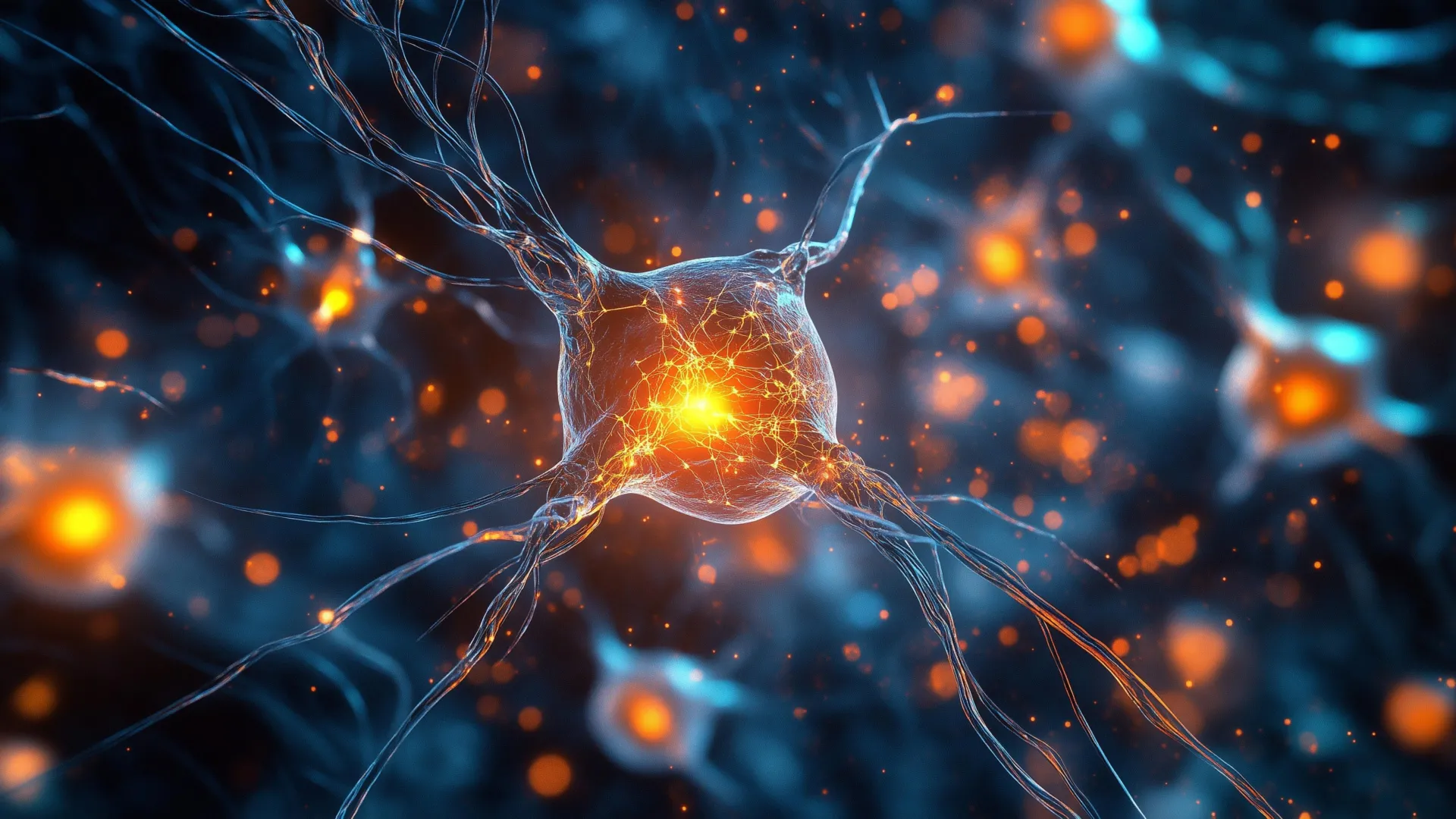
The intricate machinery of the human body relies on a vast network of specialized cells, among which neurons stand out for their unique inability to readily regenerate after injury. Unlike many other cell types that can efficiently replace themselves, nerve cells, once compromised by events such as traumatic brain injury, stroke, or the slow creep of neurodegenerative disorders, typically embark on a path of deterioration with limited capacity for recovery. This inherent fragility is particularly evident in the fate of axons, the critical, thread-like extensions that transmit electrochemical signals throughout the brain and nervous system; their degeneration is a principal driver of neurological decline.
However, recent groundbreaking investigations, spearheaded by researchers at the University of Michigan, are fundamentally reshaping our understanding of why neurons succumb to damage, offering novel avenues for therapeutic intervention. Their findings, detailed in the esteemed scientific journal Molecular Metabolism, reveal a profound connection between a neuron’s metabolic state, specifically its handling of sugar, and its resilience against degeneration. This research not only sheds light on the mechanisms of neuronal breakdown but also provides a potential explanation for those infrequent yet remarkable instances of brain recovery following injury, suggesting that the brain possesses intrinsic protective mechanisms that could be harnessed.
The study employed the widely utilized fruit fly model, a powerful tool for dissecting fundamental biological processes, to meticulously examine the factors governing neuronal integrity. Through their experiments, the scientists discovered that a neuron’s ability to withstand damage is intimately linked to its capacity to process glucose. This implies that the fundamental biochemical pathways that convert sugars into energy are not merely ancillary functions but are central determinants of whether a neuron weakens and falters or maintains its structural and functional integrity.
At the heart of this discovery lie two key proteins: dual leucine zipper kinase (DLK) and SARM1 (Sterile Alpha and TIR Motif-containing 1). DLK, identified by lead author TJ Waller, a postdoctoral research fellow, acts as a sophisticated sensor for cellular distress within neurons. It becomes activated in response to disruptions in the cell’s metabolic equilibrium. SARM1, on the other hand, has long been implicated in the degenerative process of axons. The current research elucidates a critical interplay between these two proteins, demonstrating that SARM1’s destructive activity is closely modulated by the activation state of DLK.
The research team observed a fascinating paradox in the function of DLK and its relationship with cellular conditions. When neurons are healthy and their metabolic processes are functioning optimally, DLK activity is typically suppressed, and SARM1’s degenerative pathways are held in check, preserving axonal health. However, the study revealed that this protective equilibrium is dynamic and context-dependent. In the initial stages following neuronal injury, an increase in DLK activity, coupled with a restraint on SARM1, appears to initiate a short-term protective response, aiming to shore up the compromised axon.
This initial protective phase, however, does not represent a permanent solution. The researchers found that if DLK remains persistently active over extended periods, its role can insidiously shift from protective to detrimental. Prolonged activation of DLK can, paradoxically, trigger a cascade of events leading to progressive neurodegeneration, effectively undoing any initial benefits and accelerating the breakdown of neuronal structures. This duality of DLK’s function presents a significant challenge for therapeutic development.
Monica Dus, the senior author of the study and an associate professor at the University of Michigan, highlighted the complexity of the findings, stating, "Metabolism is often changed in brain injury and diseases like Alzheimer’s, but we do not know whether this is a cause or consequence of the disease." She further elaborated, "Here we found that dialing down sugar metabolism breaks down neural integrity, but if the neurons are already injured, the same manipulation can preemptively activate a protective program. Instead of breaking down, axons hold on longer." This observation underscores that the metabolic state of the neuron dictates how it responds to injury, with the same pathway having opposing outcomes depending on the cellular context.
The implications of this discovery are far-reaching. Understanding how metabolic signals influence the balance between neuronal protection and degeneration opens up entirely new therapeutic strategies. Instead of solely focusing on blocking the damaging processes, future treatments could aim to bolster the neuron’s intrinsic protective mechanisms by modulating its metabolic state. "What surprised us is that the neuroprotective response changes depending on the cell’s internal conditions," Dus remarked. "Metabolic signals shape whether neurons hold the line or begin to break down." This suggests a more nuanced approach to neurological health, one that works in concert with the cell’s own restorative capabilities.
The challenge in translating these findings into clinical applications lies in precisely controlling DLK’s activity. As TJ Waller explained, "If we want to delay the progression of a disease, we want to inhibit its negative aspect. We want to make sure that we’re not at all inhibiting the more positive aspect that might actually be helping to slow the disease down naturally." Developing therapies that can selectively target the damaging effects of DLK while preserving its beneficial roles in acute injury response is a complex but crucial endeavor.
This research, supported by grants from the National Institutes of Health, the U.S. National Science Foundation, the Rita Allen Foundation, and the Klingenstein Fellowship in the Neurosciences, provides a vital new perspective on brain injury and disease. It shifts the focus from simply attempting to halt damage to understanding and augmenting the brain’s inherent capacity for self-reinforcement. The ability to manipulate cellular energy processing could unlock novel treatments for a range of debilitating neurological conditions, offering hope for improved patient outcomes and a deeper understanding of the intricate biological processes that govern neuronal survival. The findings suggest that by fine-tuning how neurons metabolize sugar, scientists may be able to flip a critical "survival switch" within these essential cells, potentially revolutionizing the way we approach neuroprotection and recovery.
About the Author












